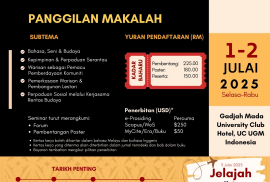
The 4th International Seminar on Malay-Javanese Studies (SEMEJA) 2025 is jointly organized by the Institute of Nature and Malay Civilization (ATMA), Universiti Kebangsaan Malaysia with the Javanese Literature Study Program, Department of Language and Literature, Faculty of Cultural Sciences (FIB), Universitas Gadjah Mada (UGM), and the Department of Museum Malaysia (JMM). SEMEJA IV includes various components designed to foster meaningful dialogue, knowledge sharing, and strategic collaboration. The main focus is on how cultural heritage can contribute to community empowerment and regional unity.
The components of SEMEJA IV include:
Keynote address by visiting scholar – Secretary-General, Ministry of National Unity.
Paper presentation sessions among researchers, postgraduate students, Librarians/Curators/Archivists, government/private sector employees.
Forums featuring experts in related fields.
Poster presentations and exhibitions focusing on practical strategies in utilizing heritage for community empowerment.
Visits to heritage sites that play a role in community empowerment.
Featuring source person for studies of Malay-Javanese heritage
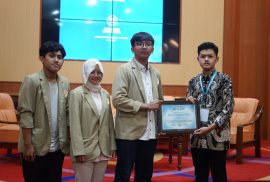
No less than other well-known study programs, it turns out that being a student of Javanese Language, Literature, and Culture can also carry pride and inspire other people around! For example, Dian Nitami (Dian) and Miktahul Ulumudin (Ulum) below. Both are students majoring in Javanese Language, Literature, and Culture, class of 2023 and 2024.
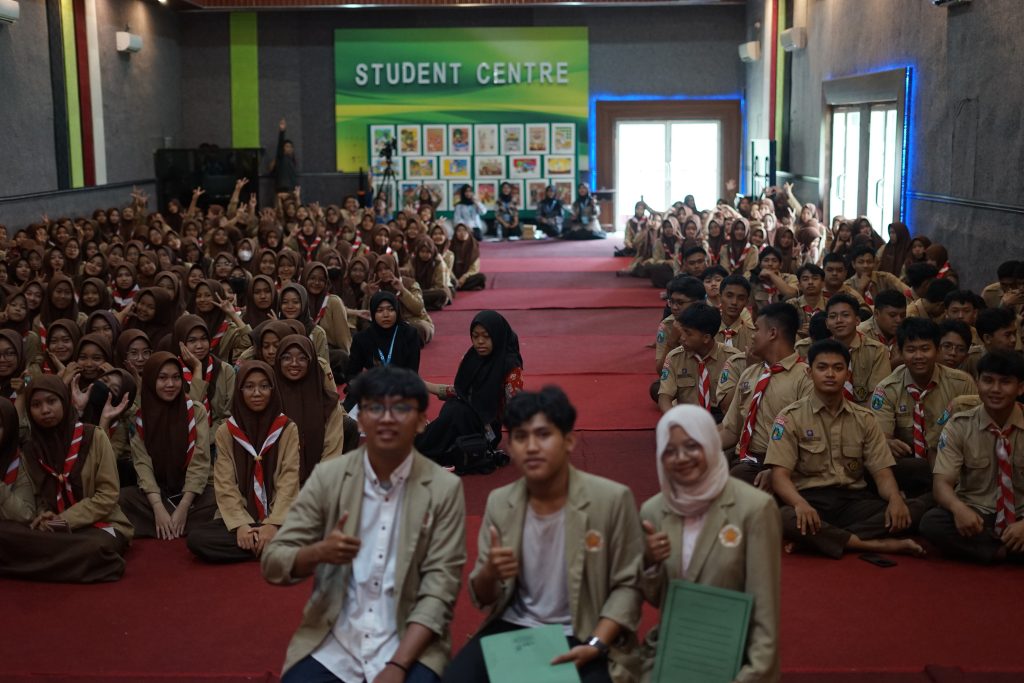
Dian and Ulum were invited to the annual Campus Expo event held by the MAN 1 Tulungagung alumni association, through the Tulungagung Student Communication Forum (FKMT). This Campus Expo was held on Wednesday, January 15, 2025 at MAN 1 Tulungagung. Like Campus Expo events in general, here Dian and Ulum are in charge of educating and sharing experiences about being UGM students. They discussed topics around UGM entrance selection, college fee education, KIP scholarships, and a glimpse of UGM itself.
The Campus Expo itself was attended by 1st - 3rd year, but the seminar session was specifically attended by 3rd year where the class was certainly preparing for the exam to enter college. Dian was invited to be one of the speakers because she was one of the lucky students who had the opportunity to study at UGM with funding assisted by a scholarship. So at this event Dian gave a testimonial that scholarships at UGM are very open to students from any entrance selection path.
From Dian and Ulum's point of view, MAN 1 Tulungagung students were certainly very happy because they could meet their seniors who were studying at UGM. Then the impressive occasion was when the speakers entered, they were greeted with the Pionir celebration song with the enthusiasm of Mantasa (the name for MAN 1 Tulungagung students) overflowing. Even in the closing session, it was enlivened again by the Pionir celebration dance so that this indicated that MAN 1 Tulungagung students were really enthusiastic about participating in this seminar session.
For Dian, the impression gained from this experience was a sense of joy because this was the first time Dian had the opportunity to be a speaker who of course could educate and motivate the MAN students.
With this valuable story from Dian and Ulum, it is hoped that this can be an inspiration for other student to always be able to provide benefits and spread positive enthusiasm to people around them, that being part of the family of Javanese Language, Literature, and Culture students is a pride and not less cool than other majors.
In order to introduce sesajen to students of the Javanese Language, Literature and Culture Study Program and preserve Javanese culture, the Javanese Language, Literature and Culture Study Program held a workshop with the theme of Javanese sesajen, successfully held on Wednesday, December 4, 2024. The workshop was attended by the lecturers of the Tata Cara course R. Bima Slamet Raharja, S.S. M.A., and Dr. Rudy Wiratama, S.I.P. M.A., as well as students of the Javanese Language, Literature, and Culture Study Program class of 2023, who were enthusiastic to explore further the meanings of offerings in Javanese tradition. The resource person presented was a cultural activist who has very extensive knowledge of sesajen, Faizal Noor Singgih, S.T.P. explained the various types of sesajen and their symbolic meanings.
Javanese people mostly interpret an object as a symbol, one of which is an sesajen used as a form of offering that is usually used in traditional ceremonies or spiritual rituals, has an important role in the lives of Javanese people. The essence of sesajen is as a symbol of ngawruhi or giving reminders to ancestral spirits, nature, or as a form of gratitude and prayer for the blessings given by Almighty God.
The workshop aims to introduce the importance of the sesajen tradition and how to make it properly in accordance with the cultural values contained in it. The workshop participants were given the opportunity to directly see various kinds of sesajen with their respective meanings. In the explanation of the speaker, Faizal Noor Singgih, S.T.P., said, “Through this workshop, we hope that students can better understand the essence of sesajen, not only as objects used in rituals, but also as part of a cultural heritage that must be preserved because Javanese people really believe in symbols, one of which is this sesajen used to show prayer and gratitude.”
Each type of sesajen has its own meaning. Sesajen made from natural materials such as flowers, fruits, rice and leaves have deep symbolism, reflecting the harmony of humans with the surrounding nature. The speaker explained about the various kinds of sesajen and the meanings they contain. One of the sesajen that is at least provided during the traditional ceremony is the pisang sanggan, which is a banana totaling 1 catch. Sanggan comes from the word “sangga” which means buffer or support which is interpreted as the basis of all series of ceremonies. pisang sanggan are usually equipped with coins which mean prayers to God asking to complete everything if something is missing and there are also roses as a symbol of wewangen or fragrance for the ancestors.
Pisang sanggan with flowers and coins
In addition to pisang sanggan, one form of sesajen that is often served is tumpeng robyong which is a savory rice and some complementary side dishes. Tumpeng robyong is very identical with eggs, shallots, and red chilies that are skewered into a single unit. It serves as a symbol of fertility, prosperity, and harmony between humans and nature. Usually served in happy events such as celebrations, tumpeng robyong is expected to be a symbol that the owner hopes that all events run smoothly and are assisted by many people. The use of savory rice in this tumpeng symbolizes the Javanese people to always remember the Prophet Muhammad SAW.
The form of tumpeng robyong
Faizal Noor Singgih, S.T.P. also added that “desa mawa cara, negara mawa tata” so each region must have different forms and contents of sesajen. Sesajen is not interpreted as something that leads to polytheism. However, it teaches Javanese people how to symbolize a prayer and give it meaning.
One of the workshop participants, Bagus Ulinnuha, revealed that he learned many new things about the meanings of offerings in more detail thanks to this workshop. “I just found out that every element in the sesajen has a very deep meaning. I am very lucky to have the opportunity to participate in this,” he said.
Explanation from the speaker: Faizal Noor Singgih, S.T.P.
The preservation of this sesajen tradition is considered important, considering that more and more young people are starting to alienate from their cultural roots. This workshop is expected to be a starting point for the community to better appreciate the cultural heritage that has been passed down by the ancestors and remove the negative stigma regarding sesajen. It is hoped that with this workshop the Javanese community, especially the younger generation, will be able to understand more deeply the meaning of the symbols that have been passed down by the ancestors and can implement them in their daily lives.