The Javanese Language, Literature, and Culture Study Program held a workshop titled “Exploring the Types and Meanings of Culture from Sesajen” on Thursday, November 27, 2025, at the Margono 4th floor lobby. This event was attended by Dr. R. Bima Slamet Raharja, S.S., M.A., as the lecturer in charge of the course, as well as students from the Javanese Language, Literature, and Culture Study Program and various other study programs. The guest speaker was Faizal Noor Singgih, S.T.P., a cultural practitioner and ceremonial master of ceremonies.
In his presentation, Faizal Noor Singgih explained various aspects of offerings, ranging from types and functions to cultural meanings. He emphasized that offerings in Javanese tradition are essentially a form of prayer or hope to God Almighty through a series of symbols contained within them. In addition to being a spiritual tool, offerings also serve as a medium of social communication, a form of respect from the Javanese people towards their environment, and an expression of the local community's culture.
The participants were enthusiastic, saying that this activity provided them with new insights into offerings as part of Javanese culture. The workshop was closed with a prayer and a meal together.
Through this workshop, it is hoped that students will gain a deeper understanding of Javanese culture. The presence of speakers from the cultural sector is considered to enrich perspectives, both in terms of theory and practice. Thus, cooperation from various parties is essential to continue studying, preserving, and reviving Javanese culture.
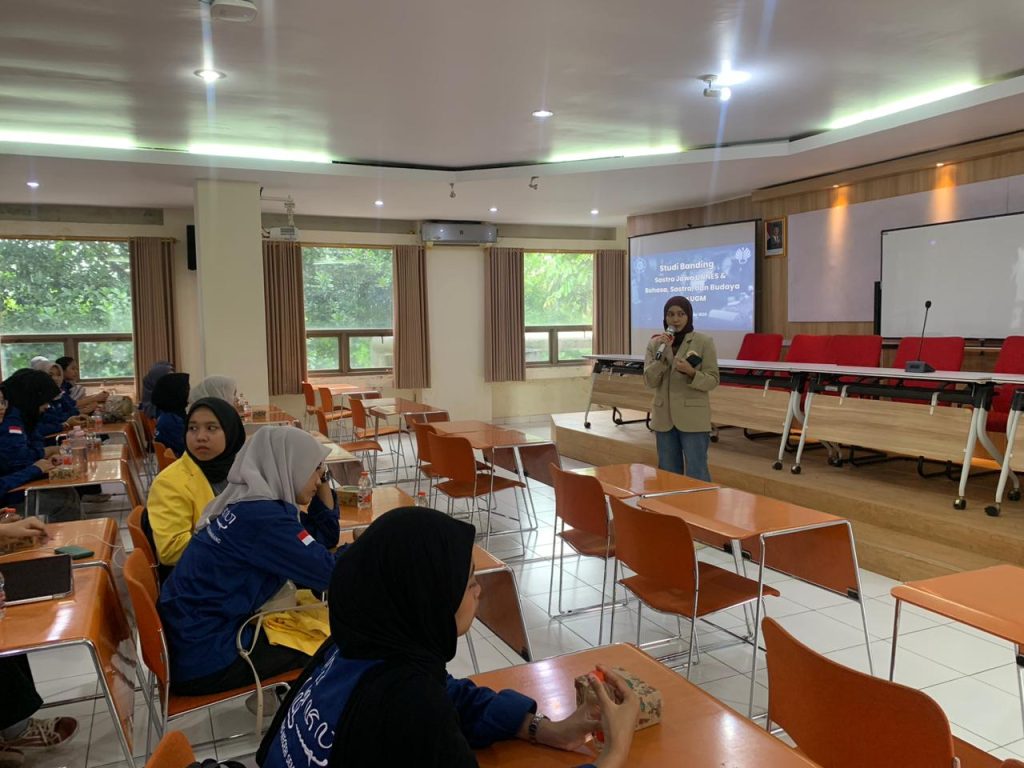
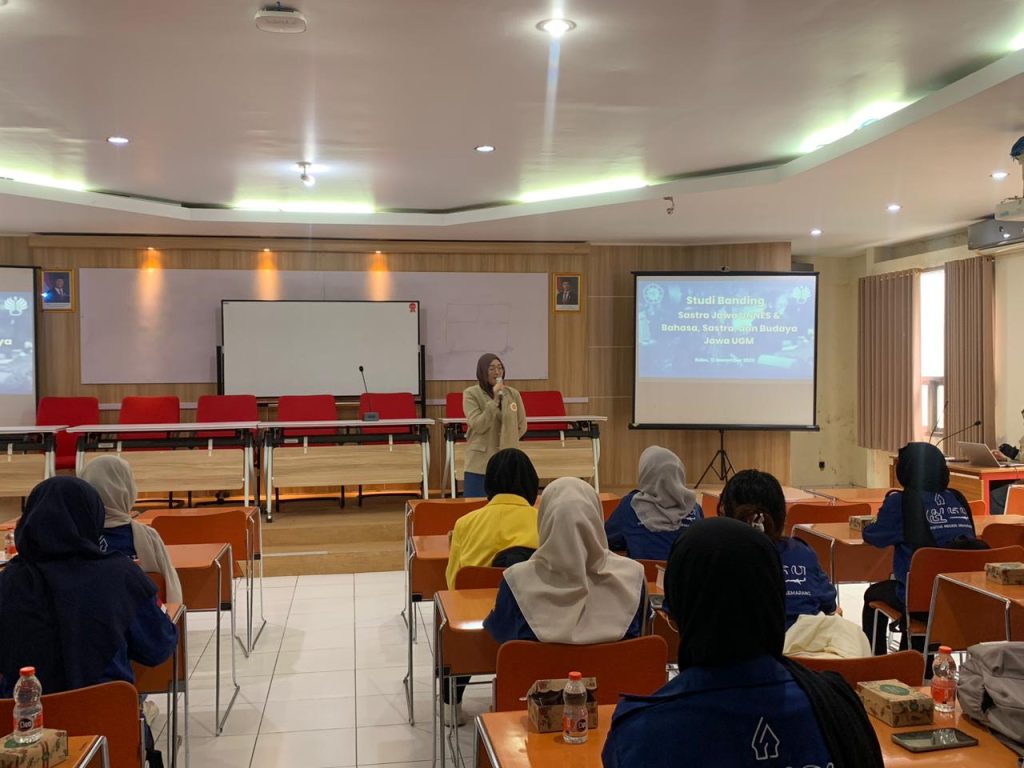
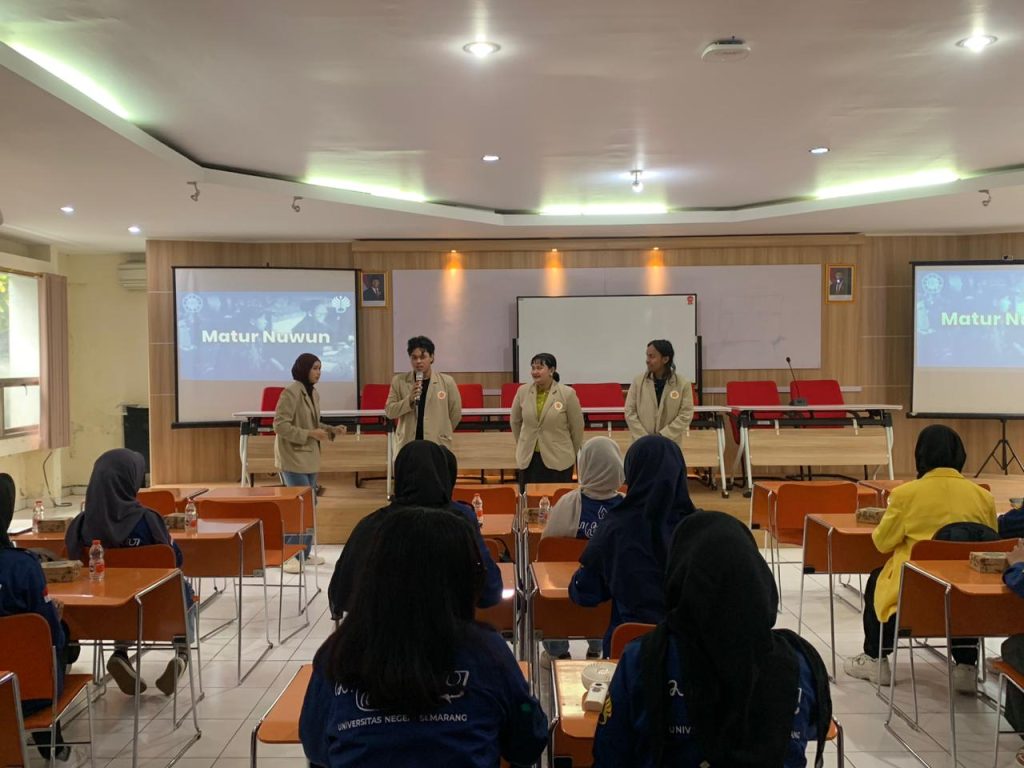
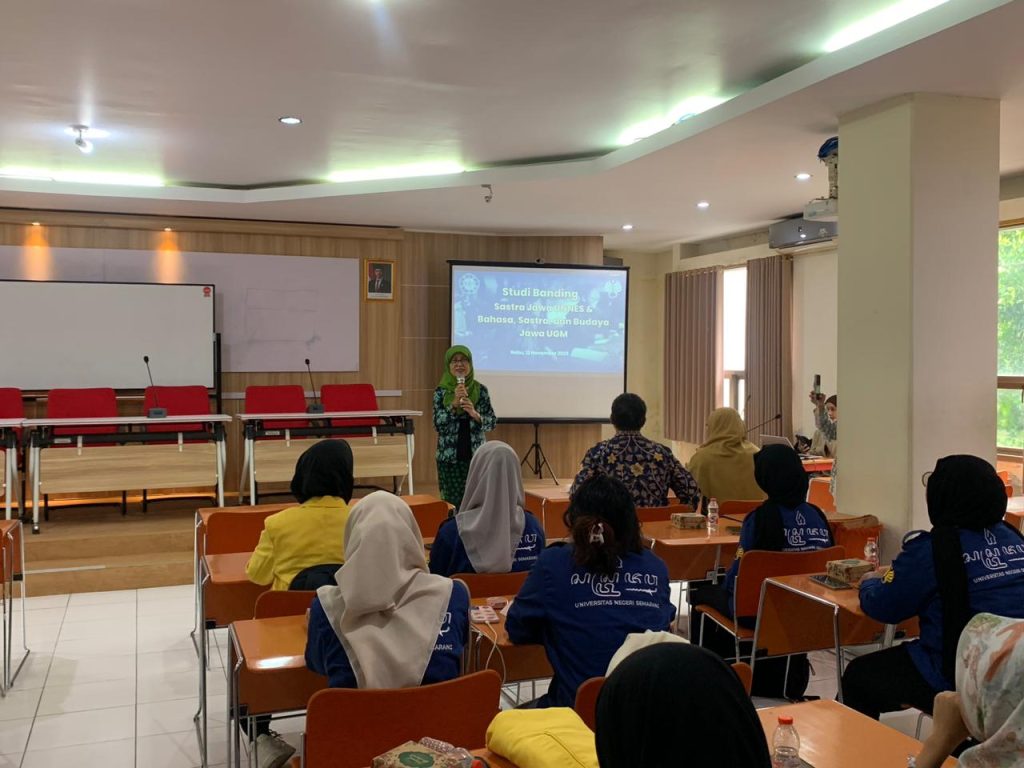
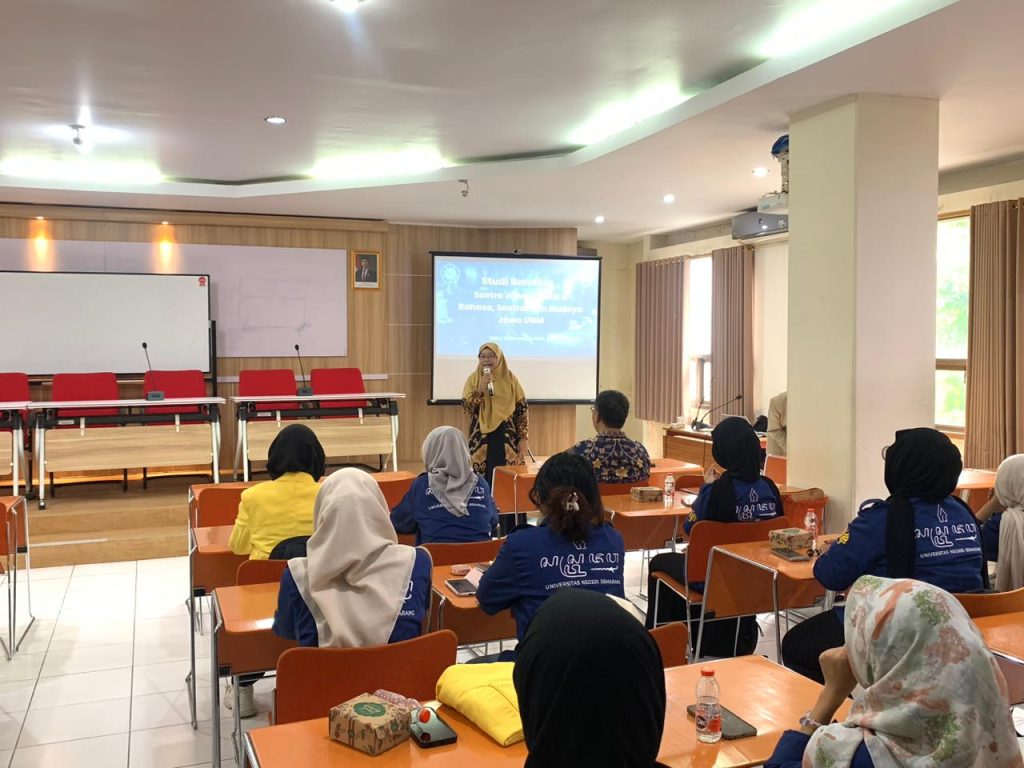
Yogyakarta, November 12, 2025 — The Javanese Literature Study Program, Semarang State University (UNNES), conducted a comparative study with the Javanese Language, Literature, and Culture Study Program, Gadjah Mada University (UGM). The event, held in the Multimedia Room on the 2nd floor of Margono Building, Faculty of Cultural Sciences (FIB) UGM, served as a platform for networking and knowledge exchange among students from both universities.
Forty UNNES Javanese Literature students from the class of 2023 attended the event and were welcomed by nine UGM Javanese Language, Literature, and Culture students from the class of 2022, including Alfonsus Dipa Wicaksana, Anggit Galuh Ajar Amanah, Fauzan Adi Fadlurahman, Haryo Untoro, Muhammad Siswoyo, Novia Hikmatul Mubarokah, Pesdhi Sekar Hayumay, Saktia Hidayah, and Yasmin Nabiha Sahda.
The event was opened by Yasmin Nabiha Sahda, who introduced the agenda. Next, Novia Hikmatul Mubarokah presented the profile of the UGM Javanese Language, Literature, and Culture Study Program, including the curriculum, student activities, and various academic and non-academic programs that have been organized. A similar presentation was then delivered by a representative of UNNES students who introduced the structure and activities of the Javanese Literature Study Program.
The next session was filled with a “Study Interest Discussion” activity, featuring three UGM student representatives: Fauzan Adi Fadlurahman (Philology), Muhammad Siswoyo (Linguistics), and Saktia Hidayah (Literature). They gave an introduction to their respective fields of study, followed by an interactive discussion. UNNES students enthusiastically asked various questions about learning methods, tips for completing assignments, and the direction of studies in these fields. A warm and friendly atmosphere was created through dialogue, jokes, and the sharing of experiences among participants.
Towards the end of the event, remarks were delivered by the Head of the Javanese Language, Literature, and Culture Study Program at UGM, Dr. Daru Winarti, M.Hum., and a representative from the Javanese Literature Study Program at UNNES, Dr. Prembayun Miji Lestari, M.Hum. Both emphasized the importance of collaboration between students and educational institutions in strengthening the development of knowledge and preservation of Javanese culture.
Opening remarks from the Head of the Javanese Language, Literature, and Culture Study Program, Dr. Daru Winarti, M.Hum.
Opening remarks from the representative of the UNNES Javanese Literature Study Program lecturers, Dr. Prembayun Miji Lesatri, M.Hum.
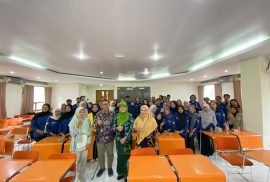
The event concluded with a joint documentation session as a symbol of unity and commitment to continue cooperation.
Through this comparative study, it is hoped that the relationship between the two study programs will become closer and more productive. In addition to broadening the academic horizons of students, this activity is also a concrete step in the joint effort to preserve and develop Javanese cultural heritage in higher education.
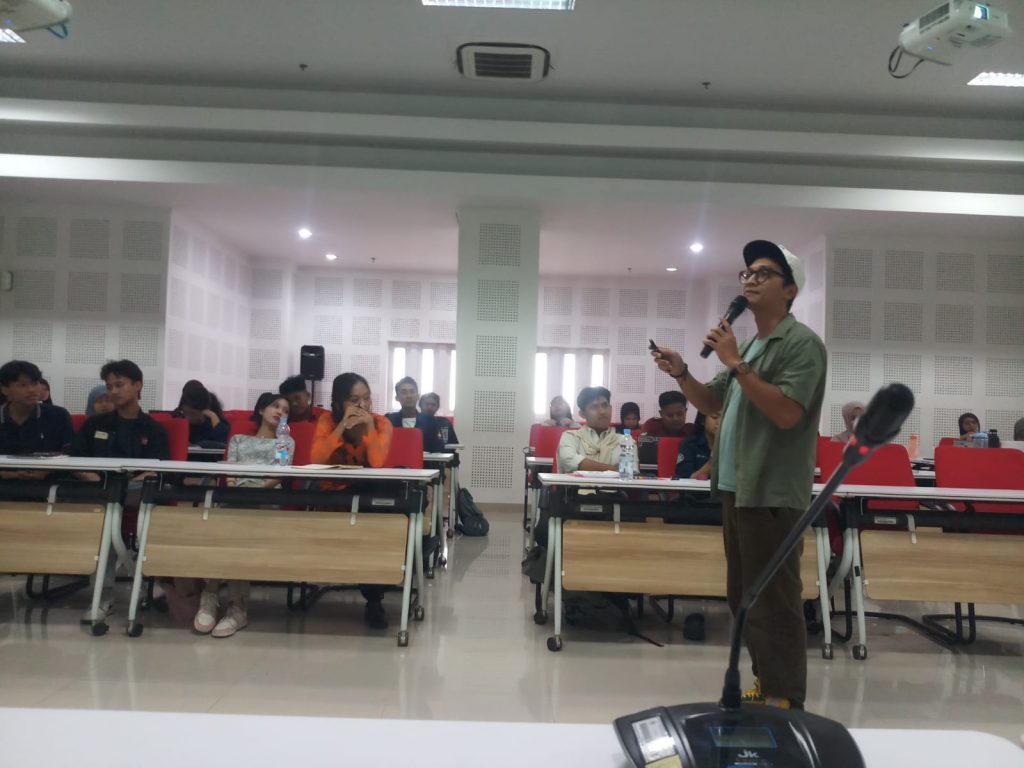
The relevance of the Javanese language and literature amid contemporary challenges was the main topic in the Javanese Literature History course in the Javanese Language, Literature, and Culture Study Program. The lecture, which took place on Monday, November 10, 2025, featured an alumnus, practitioner, and observer of Javanese culture, Paksi Raras Alit, S.S., M.A., as a guest speaker.
The course, taught by Dr. R. Bima Slamet Raharja, M.A., was attended by all students from the class of 2024. The presence of Paksi Raras Alit aimed to provide a practical perspective on the sustainability of literary heritage in the modern era.
In his presentation, Paksi Raras Alit emphasized that the teachings and knowledge contained in Javanese culture are still very relevant to current social conditions. He cited his latest work, a book entitled Ajaran Bahagia dari Jawa: Filosofi untuk Hidup Tenang dan Legawa (Teachings of Happiness from Java: Philosophy for a Peaceful and Contented Life). The book was written in order to explore the Javanese philosophy of life to achieve happiness. According to him, the wisdom contained in Javanese literature can offer guidance or knowledge towards inner peace.
This activity was very well received by the students. Their enthusiasm was evident from the variety of questions they asked, despite the limited discussion time. Shabrina Fitra Azzahra, one of the course participants, shared her views in an online interview on November 21, 2025. She stated that she discovered various other perspectives on Javanese literature.
This activity not only increased knowledge, but also boosted the enthusiasm of students in the Javanese Language, Literature, and Culture Study Program. This enthusiasm was manifested in their determination to nguri-uri ‘preserve’ and ngurip-urip ‘revitalize’ Javanese culture. Through a strong commitment to preservation and cooperation with various parties, it is hoped that the valuable messages and information contained in Javanese literary works can be “reintroduced” and bring tangible benefits to the wider community.
Students from the Javanese Language, Literature, and Culture Study Program participated in a Focus Group Discussion (FGD) on mapping ancient manuscripts organized by the Library and Archives Office (Dinpersip) of Salatiga City, Central Java, on Tuesday, October 28, 2025. The event took place in the Regional Secretariat room of the Salatiga City Library and Archives Office. The students were accompanied by their supervising lecturer, Yosephin Apriastuti Rahayu, S.S., M.Hum., a lecturer in the Javanese Language, Literature, and Culture Study Program who specializes in philology.
The event began with an opening and remarks from the Mayor of Salatiga and the Head of the Library and Archives Office. In her remarks, the Head of the Library and Archives Office of Salatiga City, Sri Sarwanti, S.H., M.Si., said that there were 37 ancient manuscripts in the Salatiga area. Of these, five manuscripts have been transcribed and translated. All manuscript data has been digitized and stored in the Khastara system owned by the National Library of the Republic of Indonesia or Perpusnas.
The event was interspersed with macapat songs and continued with a presentation on the mapping and preservation of ancient manuscripts, especially those still stored in communities or non-institutions.
One of the interesting points was presented by Dr. Munawar Holil, S.S., M.Hum., a lecturer in philology from the Regional Literature Study Program for Javanese Literature, University of Indonesia. He provided information about the discovery of a manuscript containing the story of Sri Tanjung, with a different version of the story compared to the popular one. This manuscript was found by residents at an antique market.
This FGD activity was enthusiastically welcomed by the students. In an interview on November 4, 2025, one of the participants, Novia Hikmatul Mubarokah, said that this activity provided valuable experience regarding the process of archiving manuscripts. “I feel very happy and interested, because the FGD discussed ancient manuscripts from the city of Salatiga that have been documented by the archives office,” she said.
Mapping ancient manuscripts is considered an important step in preserving the nation's cultural and intellectual heritage. Manuscripts are not only traces of culture, but also reflect the civilization of the archipelago, containing values, ideas, literary works, and religious knowledge from the past.
The participation of students from the Javanese Language, Literature, and Culture Study Program in this activity is expected to motivate the younger generation to continue preserving manuscripts, exploring the information contained within them, and developing this knowledge so that it can be useful to society. In addition, cooperation between various parties, from the government, academics, communities, to the public, is expected to continue as an effort to care for and preserve the cultural heritage of the Indonesian nation.
Yogyakarta, November 29, 2025 — The Department of Javanese Language, Literature, and Culture, Faculty of Cultural Sciences, Gadjah Mada University (FIB UGM), held an event titled “Dari Kertas Naik ke Pentas: Workshop Alih Wahana Epos Jawa-Islam dari Teks Sastra ke Lakon Pertunjukan” [From Paper to Stage: Workshop on Adapting Javanese-Islamic Epics from Literary Texts to Performance Play] in the Gamelan Room, Margono Building, 4th floor of FIB UGM. This public event attracted participants from various backgrounds, including students, academics, arts and culture enthusiasts, and the general public.
This workshop served as a cross-disciplinary discussion forum that combined perspectives from literature, history, and performing arts, particularly in the context of Menak puppet theater, a cultural heritage that represents a fusion of Islamic values, Javanese traditions, and puppet theater arts. Three speakers were present at this event, namely Dr. Drs. Sudibyo, M.Hum. (Head of the Department of Language and Literature, FIB UGM), Kusnanta Riwus Ginanjar, S.Sn. (actor, scriptwriter, director, and Menak puppet show puppeteer), and Rinal Khaidar Ali, ST., M.Eng. (Menak puppet show activist). The event was moderated by Dr. Rudy Wiratama, S.I.P., M.A., lecturer at the Javanese Language, Literature, and Culture Study Program.
Presentation of material by Kusnanta Riwus Ginanjar, S.Sn.
The first presentation was delivered by Kusnanta Riwus Ginanjar, S.Sn. He discussed the existence of Menak puppet theater from an artistic perspective and its function as a learning medium. In addition, Kusnanta emphasized the importance of adapting classical literary works so that they do not remain merely as written texts. This is done so that these works can continue to be preserved and known to the wider community.
Presentation of material by Rinal Khaidar, ST.,M.Eng.
The second speaker, Rinal Khaidar Ali, ST., M.Eng., highlighted the current condition of Menak puppet theater in Indonesia, particularly in the Java region. He said that its existence is currently in decline. “There are no longer any Menak puppet craftsmen in Yogyakarta, located in the Sentolo area. Even in Kebumen, their numbers are dwindling,” he explained.
Presentation of material by Dr. drs. Sudibyo, M.Hum.
The third session was presented by Dr. Sudibyo, M.Hum., who discussed the historical dimensions of the Menak story. He explained that the Menak epic originated in Persia based on the heroic story of Amir Hamzah bin Abdul Muthalib, the uncle of the Prophet Muhammad. The story then spread to the Arab and Malay worlds before finally being adapted into Javanese culture. Later, during the Mataram Kartasura Sultanate, this story was rewritten in Javanese by carik Narawita and then updated by the poet Yasadipura. According to him, this adaptation process was not merely a translation, but also a creative form of cultural contextualization with the addition of interludes.
To conclude, this event featured a Menak golek puppet show entitled “Menak Iskandar” by Dr. Rudy Wiratama, S.I.P., M.A. The story is sourced from Serat Iskandar Jawi or Caritanira Iskandar, which was composed at the Kartasura Palace in 1729 AD by order of Kangjeng Ratu Mas Balitar, the queen consort of Pakubuwana I.
Wayang golek performance of the Menak story “Menak Iskandar”
The story tells of the journey of Prabu Iskandar Zulkarnain, King of Ngerum, in his efforts to conquer the eastern and western worlds in order to spread the teachings of the Prophet Ibrahim. However, his struggle was hindered by King Ubur of Jabarsah and the army of giant worshippers Ya'juj and Ma'juj. Based on the advice of Prophet Kilir, Iskandar built a great wall that enclosed Ja-Makjuja until the end of time. Nevertheless, Iskandar was still worried that Ja-Makjuja would escape one day. He asked Prophet Kilir for the elixir of life. Prophet Kilir then departed for the land of Lulmat in the country of Jaminambar, where a lake called Ma'ul Hayat was located. Next, Prophet Kilir drank the water, performed ablution, and prayed at the edge of the lake. After finishing his prayers, by God's will, Prophet Kilir gained immortality without having the chance to give the water to Iskandar. Iskandar, who was waiting for Prophet Kilir at the cave entrance, then realized that no power is eternal except that of Allah. He returned to the kingdom of Ngerum with his entire army.
This workshop is a tangible manifestation of academic and cultural efforts to revive Menak puppet theater as a literary and performing arts heritage in Indonesia. Through this activity, it is hoped that cross-disciplinary awareness can be built regarding the importance of preserving traditions while developing new forms that are relevant to the present day. Furthermore, the synergy between academics, artists, and the community is expected to continue to be encouraged so that Menak puppet theater art and literature remain a source of inspiration, cultural identity, and a living educational tool within the community.