• University
  • Academic Portal
  • University Library
  • Webmail
  • Arnawa
  • UM UGM
  • English
    • Bahasa Indonesia
    • English
Universitas Gadjah Mada Javanese Language, Literature, and Culture Program
Department of Language and Literature
Faculty of Cultural Sciences
Universitas Gadjah Mada
  • Home
  • Profile
    • Vision & Mission
    • Objective
    • Excellence
    • Career Prospects
    • Teaching Staff
  • Academic
    • Curriculum Flow
    • Courses Description
    • Distribution of Courses
    • Academic Calendar
    • COURSE AND ADMINISTRATION INFORMATION
    • Learning Outcomes
    • INTERNATIONAL CONFERENCES AND ACTIVITIES
  • KPPB
    • Collaboration
    • Research
      • Teaching Staff Research
      • Javanese Studies Archive – Arnawa
    • Service
      • Community Services
      • Podcast (Anarka Lālitya)
    • Scholarship
  • Student Affair
    • Student Satisfaction Survey
    • HMJ Kamastawa
    • Student’s Activity
    • Student’s Creations
    • Youtube Channel
    • Instagram
  • Alumnus
    • Alumnus Profile
  • Contact
  • Home
  • Ambal Warsa
Arsip:

Ambal Warsa

69th Ambal Warsa Celebration for the Javanese Language, Literature, and Culture Study Program: Laku Darma, Anggayuh Mulya

Ambal WarsaNewsSDGSStudentStudent's Activity Monday, 14 October 2024

69 years of existence as part of the Faculty of Cultural Sciences, Gadjah Mada University, the Javanese Language, Literature, and Culture Study Program held a celebration for its anniversary on Saturday, October 12, 2024. This event invited all lecturers and students of the Javanese Language, Literature, and Culture Study Program. This event also invited several retired lecturers, such as ⁠Drs. Soeharto Mangkusudarmo, M.Hum. and ⁠Drs. Anung Tedjowirawan, M.A.

Like a long-lost family reunion, all the invited guests were seen enjoying the Ambal Warsa event. The arrival of retired lecturers also became an opportunity to relieve longing for lecturers who had not seen each other for a long time. Dr. Daru Winarti, M.Hum as the Head of Study Program expressed proudness in the Javanese Language, Literature, and Culture Study Program which has been established for 69 years and has reached this point by producing many very talented and accomplished undergraduates.

Greetings from the Head of the Javanese Language, Literature, and Culture Study Program

Drs. Soeharto Mangkusudarmo, M.Hum and ⁠Drs. Anung Tedjowirawan, M.A. as retired lecturers provided a lot of motivation, experience, and lessons. They convey many things related to the interests of the Linguistics, Literature, and Philology majors. The Javanese Language, Literature, and Culture Study Program has created great undergraduates and Human Resources who are able to plan the future well, said one of the retired lecturers.

Sharing with the Head of Study Program and retired lecturers

A birthday celebration event would not be complete without cutting tumpeng. In Javanese culture, cutting tumpeng is better known as kedhuk tumpeng. The reason for choosing kedhuk tumpeng instead of cutting tumpeng lies in its meaning, the meaning of cutting tumpeng is like cutting the relationship between humans and their God.

Kedhuk tumpeng  by the Head of Study Program and retired lecturers

This Ambal Warsa was also entertained by special performances from students of the Javanese Language, Literature, and Culture Study Program from the 2022 to 2024 intake. Abimanyu Mahendra, one of the performing students, said that he was very happy to be able to entertain the invited guests. It felt nostalgic to sing old songs that were hits in their time. Dr. Sulistyowati, M.Hum., one of the lecturers from the Javanese Language, Literature, and Culture Study Program, also enlivened the entertainment by contributing a song entitled Sewu Kutha, created by Didi Kempot.

Entertainment performance by students

Ambal Warsa was ended with a poetry reading by Dr. Arsanti Wulandari, M.Hum. The poem was taken from an anthology of poems created by lecturers while they were students. Many prayers were said for the Javanese Language, Literature, and Culture Study Program for the future, "Hopefully the Javanese Language, Literature, and Culture Study Program will always be successful, continue to advance, and create great undergraduates, aamiin," said Maylafaizza, a student from the class of 2023.

Group photo of all invited guests

For 69 years, the Javanese Language, Literature, and Culture Study Program has contributed to the exploration, development, preservation, and utilization of a national identity in the form of Nusantara culture, especially Javanese culture. Contributions to knowledge and benefits that have been carried out by the Javanese Language, Literature, and Culture Study Program. In addition, collaboration from various activities also participates in the development and dissemination of this knowledge. This Ambal Warsa activity is not just a commemorative event, but also a self-reflection and a spark of enthusiasm to continue to provide the best for Gadjah Mada University and our country, Indonesia.

Gugur Gunung 11 Webinar: History, Function, and Existence of Javanese Fables

Ambal WarsaCollege StudentNewsSDGSStudent Thursday, 14 September 2023

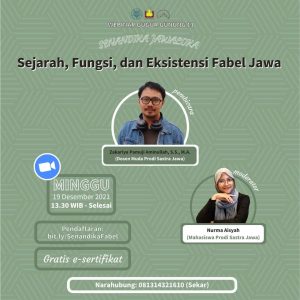
On Sunday (December 19, 2021), the Javanese Literature Program held the second webinar as a continuation of a series of events. The webinar titled "History, Function, and Existence of Javanese Fables" was moderated by Nurma Aisyah, a student of the Javanese Literature Program from class of 2021, and accompanied by one of the Javanese Literature lecturers, Zakariya Pamuji Aminullah, S.S., M.A., as the speaker.

The "History, Function, and Existence of Javanese Fables" webinar delved into the journey of birds and monkeys from the Sanskrit tradition to the Middle Javanese era. Mr. Zakariya presented that fables are stories about animals that behave like humans. The story of animals made like humans is a metaphorical depiction. Fables predominantly feature characters that are either human or deities. Usually, the animal characters used in fables play crucial roles in society, such as cows, horses, snakes, goats, birds, and others. The webinar also discussed the Pancatantra, a literary work that takes the form of framed stories.

After the presentation session, the webinar proceeded with a Q&A session. There were eight questioners, each with one question. One of the interesting questions, which might also be a common inquiry from the public, came from Irfan Wahyu, a Javanese Literature student. Irfan asked about the popularity of fables, specifically those involving the character "kancil" (mouse deer), and why fables are mainly targeted at children. Mr. Zakariya explained that Indonesian education has not adapted to fables effectively. Some efforts have been made by libraries to implement the transliteration of manuscripts, and academic communities are encouraged to disseminate these transliterations to the wider public. From the perspective of researchers, they face a significant responsibility in transforming the contents of manuscripts into works that can be accessible to the broader society.

The conclusion drawn from the "History, Function, and Existence of Javanese Fables" webinar is that fables serve as a medium between humans and animals. Meanwhile, the Pancatantra has political motives and has spread widely across the world. The popular story of birds and monkeys, despite having various versions, shares a common message.

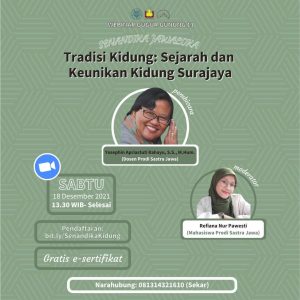
Gugur Gunung Webinar 11 “The Tradition of Kidung: History and Uniqueness of Kidung Surajaya”

Ambal WarsaCollege StudentNewsSDGSStudent Thursday, 14 September 2023

On Saturday, December 18, 2021, the Javanese Literature program held a webinar titled "The Tradition of Kidung: History and Uniqueness of Kidung Surajaya." The webinar was one of two webinars organized to celebrate the anniversary of the Javanese Literature study program. This particular webinar was part of the 11th Gugur Gunung event. The first day of the webinar was moderated by Refiana Nur Pawesti, a Javanese Literature student class of 2020. The presentation was delivered by one of the expert Javanese Literature lecturers, Yosephin Apriastuti Rahayu, S.S., M.Hum.

In the first day's webinar, it was explained that Kidung Surajaya had been previously researched by Ms. Kartika Setyawati, a Javanese Literature lecturer at Universitas Gadjah Mada. The kidung was examined as part of her dissertation. At the beginning of the webinar, Ms. Apriastuti discussed the characteristics of kidung based on Zoetmulder's perspective in Kalangwan. One of Zoetmulder's opinions conveyed by Ms. Apriastuti was that most kidung texts were written in Bali. Zoetmulder also revealed that kidung texts typically contain excerpts of stories.

Ms. Apriastuti explained that Kidung Surajaya is part of the Merapi-Merbabu manuscript collection, which is only found in the National Library of Indonesia. It consists of seven pupuh (a type of poetic meter) with the metrical pattern of macapat. The text was written in the 17th century based on the long version colophon written in Buda script and Mid-Javanese language. Kidung Surajaya has two versions, the long version (D, F, H manuscripts) and the short version (B, E, G, I, J manuscripts). The long version contains around 87 lempir (leaves) with approximately 798 stanzas, while the short version contains 4-14 lempir.

In summary, Kidung Surajaya narrates the journey of Ki Singamada, who is grieving after the passing of his parents. The remarkable aspects of Kidung Surajaya are the advice from the teachers, the protagonist's journey, depictions of nature, the Surajaya initiation ceremony, various flora and fauna, betel leaf, food and drinks served, time indicators, and more. The kidung also provides insights into the agricultural practices of society, the surrounding natural environment, types of flowers, characteristics of women in the past, and much more.

Upon careful observation and analysis, implicit meanings can be found in the names of the characters. For instance, the name Surawani/Surajaya means a brave and victorious person, while the name Hantakarana Ragasamaya means a body that is resilient.

After studying the text, it can be concluded that the purpose of writing Kidung Surajaya was to bring comfort, alleviate sorrow, portray the essence of love, showcase beauty and self-expression, and increase praise. Based on the content and meanings shared, Kidung Surajaya provides many valuable lessons for reflection in life. Its uniqueness and life advice make it worthy of further study and exploration.

The 66th Javanese Literary Anniversary Celebration

Ambal WarsaCollege StudentNewsSDGSStudentStudent's ActivityStudent's Work Monday, 11 September 2023

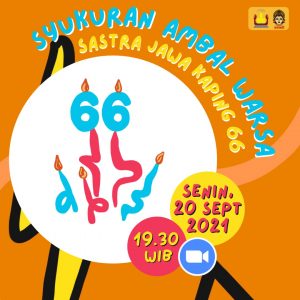
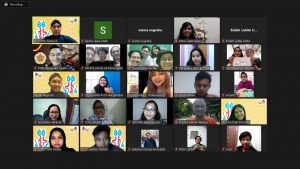
Yogyakarta – The 66th anniversary of the Javanese Literature Study Program (Ambal Warsa) was commemorated by holding a joint celebration through the zoom meeting on September 20, 2021.

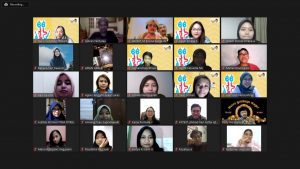
The celebration event was attended by the entire Javanese Literature family, both active and full-time lecturers, students, and alumnus from various generations. The event was carried out very well due to the enthusiasm of the participants which added to the excitement of commemorating the 66th anniversary of the Javanese Literature Study Program.

The event began with an opening by the master of ceremonies. Next is the speech given by the Head of the Javanese Literature Study Program. After that, active student representatives of the 2018, 2019, 2020, and 2021 batches gave impressions, messages, and hopes. Then, it was continued with reading the online bulletin magazine, intermezzo from Mr/Ms. Lecturer, as well as video presentation performances from Javanese Literature students. Then, it was closed with a prayer reading and a group photo, and closing by the master of ceremonies.

The following is a snapshot of the festive moment of the 66th Ambal Warsa Celebration :

Authors: Vighna Rivattyannur H. and Anggra Dini

Editor: Anggra Dini


Performance of the 2019 Class in the 66th Ambal Warsa of Javanese Literature UGM

Ambal WarsaCollege StudentSDGSStudentStudent's ActivityStudent's Work Thursday, 31 August 2023

In order to celebrate the 66th anniversary of the Javanese Literature Study Program, the class of 2019 (TRAWAGAMA) presents a unique work in the form of a video singing a song Cintaku popularized by Chrisye together. The actual work is also the realization of the work program of the Interest and Talent Division of the Javanese Literature Student Association, the Javanese Literature Student Family (HMJ KAMASTAWA) carries the concept of a meeting theme virtual neatly packaged. The main attraction in this performance is the song Cintaku by Chrisye translated into Javanese entitled Tresnaku. read more

Sarining Rasa (66th Anniversary of Javanese Literature)

Ambal WarsaCollege StudentSDGSStudentStudent's ActivityStudent's Work Thursday, 31 August 2023

As part of the work program of the Interests and Talents Division of the Javanese Literature Student Association, the Javanese Literature Student Family (HMJ KAMASTAWA) which also celebrates the 66th anniversary of the Javanese Literature Study Program, class of 2020 (RUKMAGAMA) presents a work entitled Sarining Rasa. This work presents a performance of Ketawang Widyasmara Pl.5 with the creation of geguritan (Javanese poetry) in the middle. Sarining Rasa was the closing surprise of the Javanese Literary Ambal Warsa Thanksgiving event via Zoom meeting last September 20, 2021. read more
What is “Gugur Gunung”?

Ambal WarsaNewsSDGSStudentStudent's ActivityStudent's Work Thursday, 31 August 2023

Gugur Gunung is a commemoration of the anniversary of the Javanese Literature study program which is one of the annual programs that is routinely held. The event is usually held regularly in October. Not only as a commemoration event, but Gugur Gunung is also a bridge to help strengthen ties between the academic community of the Javanese Literature study program. Through a series of events prepared, all members of the academic community can join and enliven this annual event.

Various events were arranged in such a way as to make the anniversary of the Javanese Literature study program even more lively. The series of events that complement the anniversary of the Javanese Literature study program included a competition to make cultural-themed posters, a competition to make cultural infographics, a webinar, and at the peak of the event ended with an art performance from students of the Javanese Literature study program.

Gugur Gunung event is one of the biggest annual events held by the Javanese Literature Study program. In addition to commemorating the birthday of the Javanese Literature study program, Gugur Gunung is also a symbol to express gratitude to God because the Javanese Literature study program continues to prosper to this day.


Recent Post

  • The Challenge Facing Young Puppeteer Rafi Nur Fauzy in Performing Wayang Gedhog on National Puppetry Day
    December 4, 2025
  • HMJ Kamastawa Grand Meeting: Wreksi Pinandhita Elected as Chairperson for the 2026 Term
    December 4, 2025
  • Exploring the Types and Meanings of Sesajen Culture in the Javanese Language, Literature, and Culture Study Program Workshop
    November 28, 2025
  • Comparative Study of Javanese Literature at UNNES and Javanese Language, Literature, and Culture at UGM: Strengthening Friendship and Collaboration for Sustainable Javanese Culture
    November 13, 2025
  • Discussing the Relevance of Javanese Literature Today in Javanese Literature History Lectures
    November 11, 2025

Calender

January 2026
M T W T F S S
 1234
567891011
12131415161718
19202122232425
262728293031  
« Dec    
  • Fakultas Ilmu Budaya
  • Ujian Masuk UGM
  • PPSMB
  • Alumni
  • Jurnal Humaniora
January 2026
M T W T F S S
 1234
567891011
12131415161718
19202122232425
262728293031  
« Dec    

News

  • The Challenge Facing Young Puppeteer Rafi Nur Fauzy in Performing Wayang Gedhog on National Puppetry Day
    December 4, 2025
  • HMJ Kamastawa Grand Meeting: Wreksi Pinandhita Elected as Chairperson for the 2026 Term
    December 4, 2025
  • Exploring the Types and Meanings of Sesajen Culture in the Javanese Language, Literature, and Culture Study Program Workshop
    November 28, 2025
Universitas Gadjah Mada

Javanese Language, Literature, and Culture Program
Department of Language and Literature
Faculty of Cultural Sciences
Universitas Gadjah Mada


Sosiohumaniora St., Bulaksumur, Yogyakarta
Telp : 0274-901134 Ext. 110, Fax : 0274-550451, WhatsApp : 081211911281
Email : nusantara@ugm.ac.id

© 2025 Javanese Language, Literature, and Culture Program FIB UGM

KEBIJAKAN PRIVASI/PRIVACY POLICY