• University
  • Academic Portal
  • University Library
  • Webmail
  • Arnawa
  • UM UGM
  • English
    • Bahasa Indonesia
    • English
Universitas Gadjah Mada Javanese Language, Literature, and Culture Program
Department of Language and Literature
Faculty of Cultural Sciences
Universitas Gadjah Mada
  • Home
  • Profile
    • Vision & Mission
    • Objective
    • Excellence
    • Career Prospects
    • Teaching Staff
  • Academic
    • Curriculum Flow
    • Courses Description
    • Distribution of Courses
    • Academic Calendar
    • COURSE AND ADMINISTRATION INFORMATION
    • Learning Outcomes
    • INTERNATIONAL CONFERENCES AND ACTIVITIES
  • KPPB
    • Collaboration
    • Research
      • Teaching Staff Research
      • Javanese Studies Archive – Arnawa
    • Service
      • Community Services
      • Podcast (Anarka Lālitya)
    • Scholarship
  • Student Affair
    • Student Satisfaction Survey
    • HMJ Kamastawa
    • Student’s Activity
    • Student’s Creations
    • Youtube Channel
    • Instagram
  • Alumnus
    • Alumnus Profile
  • Contact
  • Home
  • 2024
  • July
  • 12
Arsip 2024:

12 July

Seputar Jawa: Getting To Know The Various Methods Of Herbal Medicine According To The Serat Primbon Jampi Jawi

NewsSDGS Friday, 12 July 2024

Image source: Kemeparekraf.go.id

What comes to mind when you hear the word jamu? A traditional drink? A drink brought by mbok jamu? Or perhaps the popular phrase 'beras kencur'? True, jamu is widely known as a traditional medicine in the form of a drink that is a manifestation of Javanese culture. However, what if jamu or Javanese traditional medicine methods are not only drunk? Does mahadaya know about it?

Referring to Wulandari (2011) in her scientific article entitled Serat Primbon Jampi Jawi Koleksi Perpustakaan Dewantara Kirti Griya (Taman Siswa): Sebuah Dokumentasi Pengobatan Tradisional, there is an ancient manuscript in printed Javanese script that records the medical knowledge of the elders. The manuscript is entitled Serat Primbon Jampi Jawi. The manuscript of Serat Primbon Jampi Jawi discusses medicine, from various kinds of diseases, how to treat them, and to various plants and their properties. This book was published by Tan Khoen Swie Publisher in 1933 and is a manuscript from the Taman Siswa Library collection.

In the manuscript of Serat Primbon Jampi Jawi, there are several methods of traditional Javanese medicine with uses other than drinking. Here is the description:


1.Tapel

Tapel is a form of jamu or medicine that can be used by rubbing it on the stomach (Poerwadarminta, 1939, in Wulandari, 2011).  There are 16 diseases that can be cured by this method. However, the author will mention only five in this article, namely a child with diarrhea, a child with worms, an elderly person who feels tight in the stomach, and an elderly person who cannot pass gas or urine. The following examples are related to diseases and treatment with tapel, as follows:

Tiyang sepuh seneb padharanipun; Cangkok tigan ayam ingkang sampun netes, jae, kapipis kaemoran lisah sulung, kaangge napeli padharan.

Translation:

(A poultice for an old man who feels tight in his stomach): The shell of a hatched chicken egg, ginger, mashed and mixed with sulung oil, is used to rub on the stomach.


2. Boreh

Jamu boreh is similar to tapel, the difference being that the herbs are liquefied and then rubbed all over the body. The following are some of the illnesses that can be cured, including a child who has sawan, a child who has sawan in any place, a child who has a fever and worms come out, someone who has a cold fever, etc. An example of a disease and its treatment is as follows:

Lare sawanen sadhengah sawan: ron wungu, santen kapipis kangge amborehi badan sakojur.

Translation:

Children affected by sawan in any place: wungu leaves, coconut milk, mashed and applied all over the body.


3. Cekok

Some mahadaya might be wondering if this jamu is served by force or not. The answer is yes. The presentation of jamu cekok is by forcibly squeezing the jamu with a cloth over the mouth, usually for small children (Compilation Team, 2002, in Wulandari, 2011). The function of this jamu is for health or an attempt to cure disease. Some of the things that are treated include children with diarrhea, children with fever all over the body, children with internal heat, children with sawan, etc. An example of an explanation of jamu cekok for an illness is:

Lare sakit kenging sawan; dringo bengle, kunir, jinten cemeng, mesoyi, kemukus, brambang kapipis kacekokaken.

Translation:

A child who is sick (with) sawan,: dringo, bengle turmeric, black cumin, mesoyi, kemukus, shallots mashed and choked.


4. Sembur

Jamu sembur? That's right, Mahadaya didn't read it wrong. Although it sounds 'out of the ordinary', it is. Some of the diseases that can be treated in this way include, among others, children affected by sawan, children sick with cough, children who often cry at night, someone who has chest pain and tightness, etc. The following is an example of an explanation of an illness and its treatment with sembur, namely:

Lare sakit watuk: sekar blimbing wuluh, jinten, mesoyi, kencur, kabenem, kamamah kasemburaken padharanipun.

Translation:

A sick child coughs: belimbing wuluh flowers, cumin, mesoyi, kencur, chewed, and sprayed in the stomach (sick child).


BIBLIOGRAPHY

Wulandari, A. (2011, December). Serat Primbon Jampi Jawi Collection of Dewantara Kirti Griya Library (Taman Siswa): A Documentation of Traditional Medicine. Jurnal Manuskrip Nusantara, 2(2), 30-56. https://doi.org/10.37014/jumantara.v2i2.135

LIST OF IMAGES

Kemenparekraf.go.id. (t.t.). Jamu, Ramuan Herbal Khas Indonesia yang Mendunia. Accessed from https://kemenparekraf.go.id/ragam-ekonomi-kreatif/jamu-ramuan-herbal-khas-indonesia-yang-mendunia

Two Lecturers and a Student of Javanese Language, Literature, and Culture Join the International Intensive Course in Old Javanese Language

College StudentNewsSDGSStudent Friday, 12 July 2024

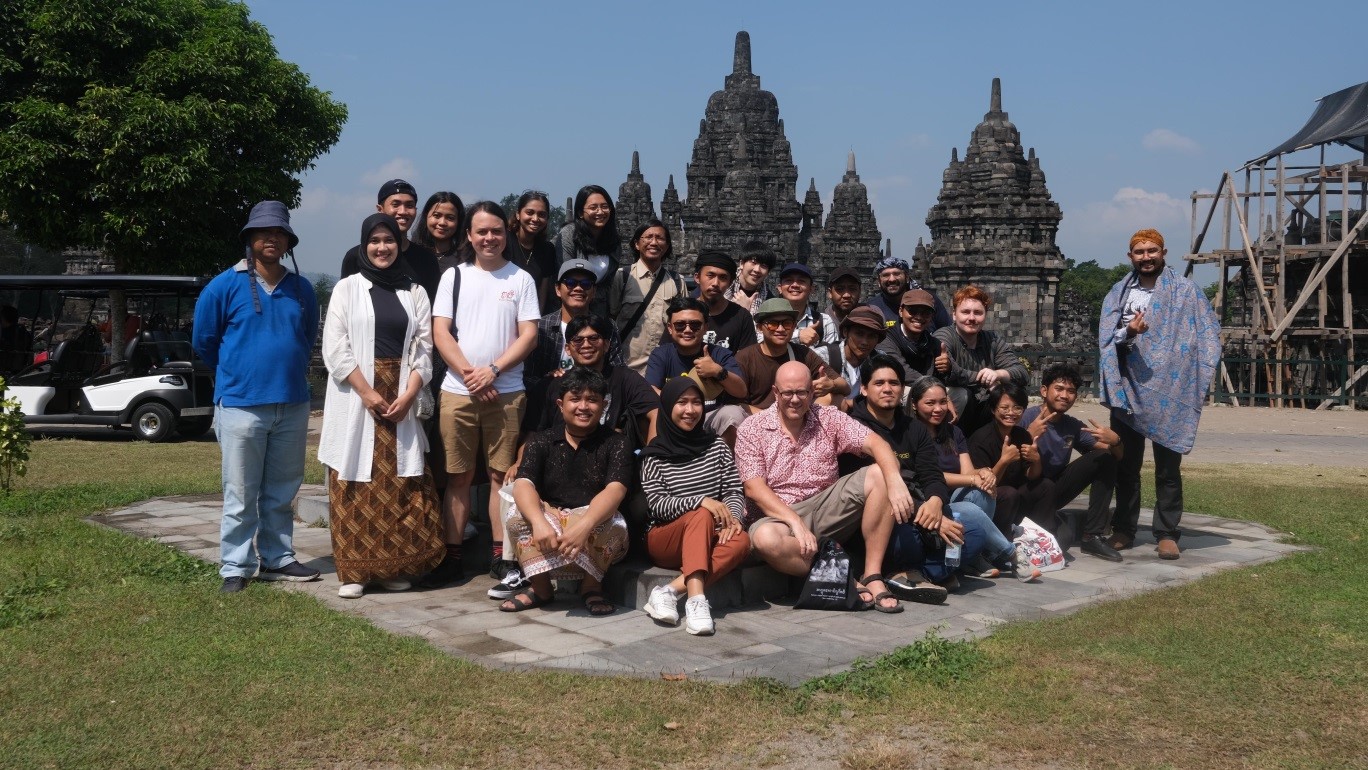
The National Library and École française d'Extrême-Orient (EFEO) collaborated and held an international intensive course in Old Javanese on July 01-10, 2024. This activity took place at The Cangkringan Jogja Villas & Spa, Umbulharjo, Cangkringan, Sleman, Yogyakarta, and was attended by 25 participants from various backgrounds. Experts in the field of Old Javanese were present to train the participants to understand the intricacies of the Old Javanese language.

The Javanese Language, Literature, and Culture Study Program, Faculty of Cultural Sciences, Universitas Gadjah Mada (FIB UGM), participated in this activity. Two lecturers of the Javanese Language, Literature, and Culture Study Program, namely Nurmalia Habibah, S.S., M.A., and Zakariya Pamuji Aminullah, S.S., M.A., attended as lecturers. In addition, Haryo Untoro, a student from the same study program, became one of the participants in the intensive course.

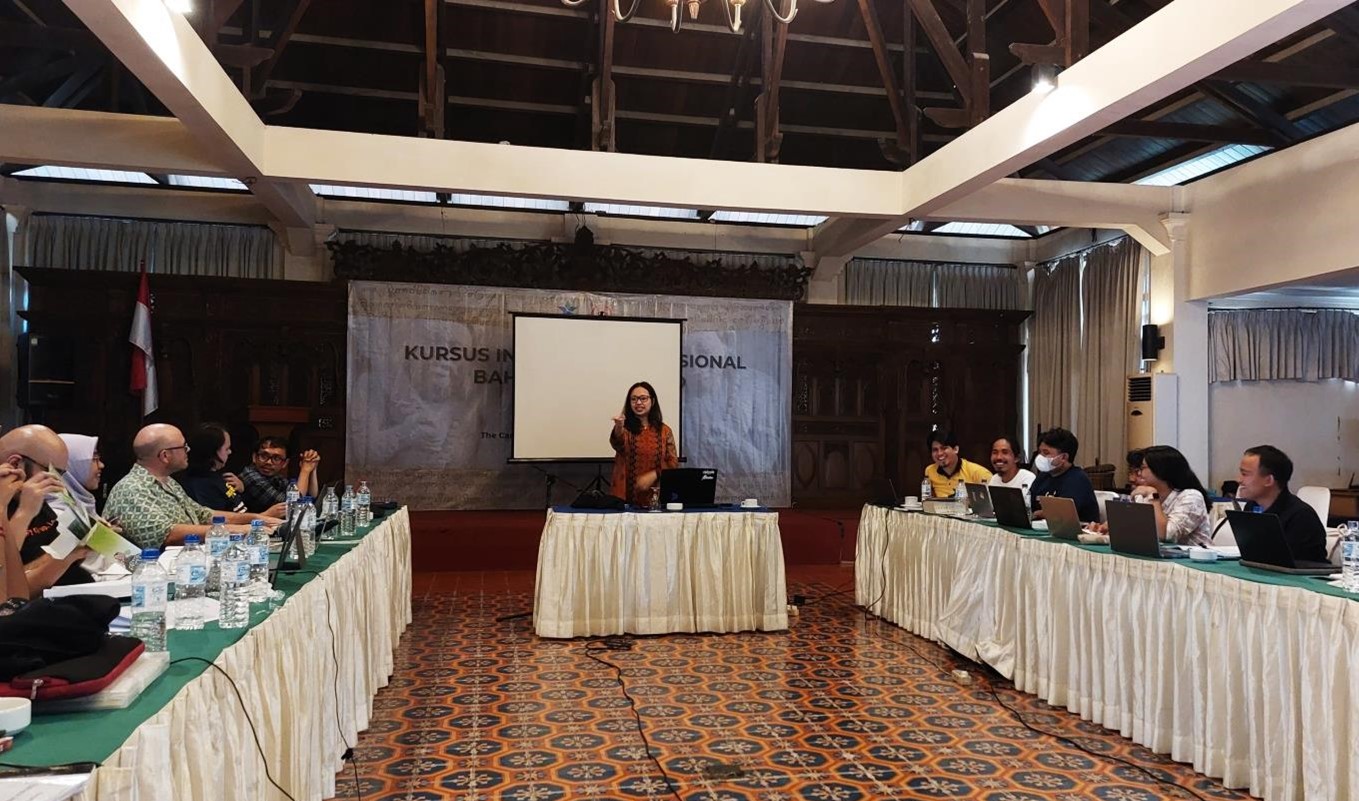
Nurmalia Habibah, S.S., M.A., guided the participants in studying the text of Adiparwa

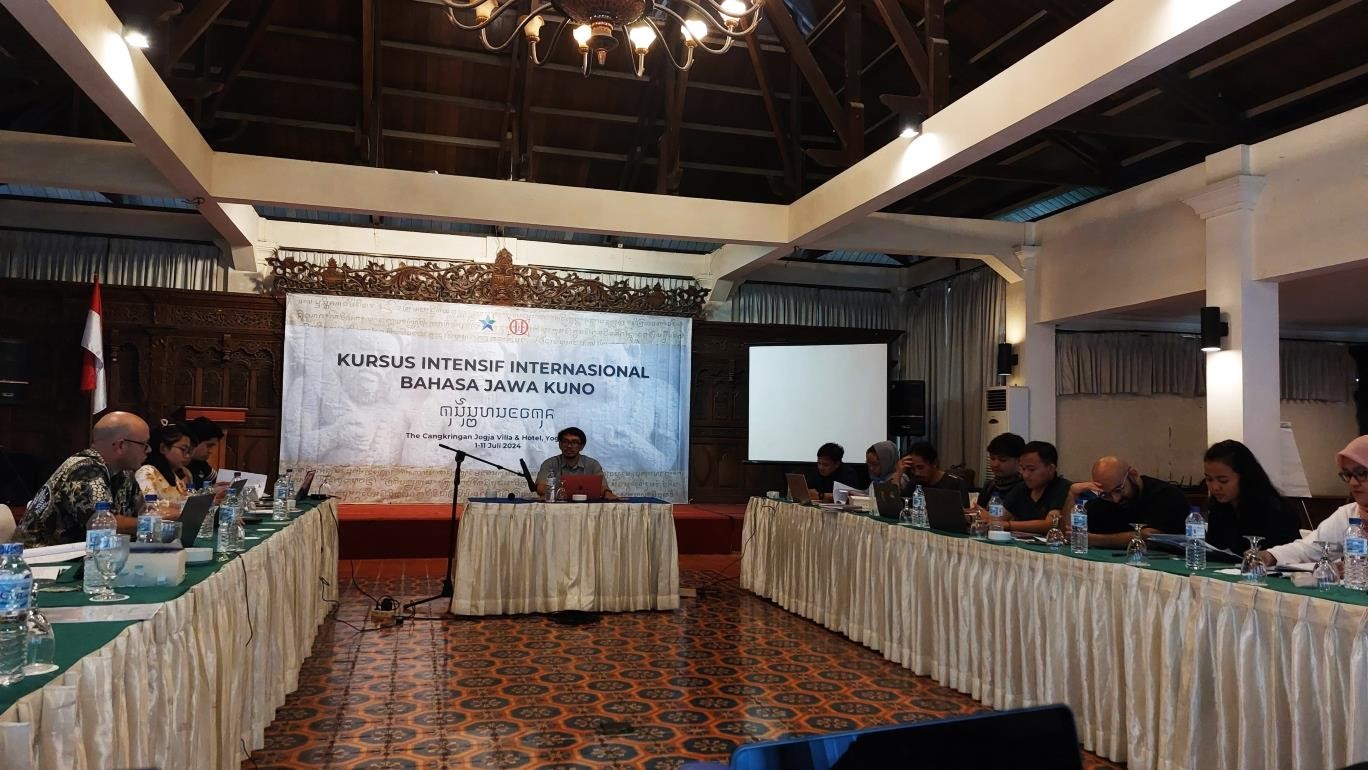
Learning the Kakawin Ramayana text with Zakariya Pamuji Aminullah, S.S., M.A.

For 10 days, the participants practiced the Old Javanese language. In the first five days, the first thing to understand was the morphosyntax of the Old Javanese language. The next five days, the participants began to explore works that use the Old Javanese language, such as Adiparwa, Kakawin Ramayana, Pararaton, Landa Inscription, and others. In addition, participants also participated in an excursion program to several ancient sites of the Hindu-Buddhist period, namely Sewu Temple, Plaosan Temple, and Ratu Boko Temple.

The intensive course in Old Javanese aims to train philologists in the field of Old Javanese and encourage international collaboration in this rare field. The field of Old Javanese plays an important role in revealing various treasures of the past, both in culture, knowledge, history, and other matters. Exploring these treasures is an effort to reveal the identity of the nation and improve the quality of education. To achieve these goals, cooperation from various parties is needed to realize the sustainability of the Old Javanese field and be relevant to the times.

Recent Post

  • Seputar Jawa: Banten Javanese Dialect, a Dialect that Exists at the Westernmost of Javanese Island
    March 10, 2026
  • Seputar Jawa: Forms of Javanese Proverbs
    March 9, 2026
  • Graduating in 3.5 Years: The Strategy of Three Students from the Javanese Language, Literature, and Culture Study Program at UGM in Completing Their Studies
    March 2, 2026
  • Seputar Jawa: Basa Kedhaton and Basa Bagongan, Typical Speech Varieties of the Surakarta and Yogyakarta Palaces
    March 2, 2026
  • Three Students from the Javanese Language, Literature, and Culture Study Program Successfully Graduated in 3.5 Years
    February 26, 2026

Calender

July 2024
M T W T F S S
1234567
891011121314
15161718192021
22232425262728
293031  
« May   Aug »
  • Fakultas Ilmu Budaya
  • Ujian Masuk UGM
  • PPSMB
  • Alumni
  • Jurnal Humaniora
July 2024
M T W T F S S
1234567
891011121314
15161718192021
22232425262728
293031  
« May   Aug »

News

  • Seputar Jawa: Banten Javanese Dialect, a Dialect that Exists at the Westernmost of Javanese Island
    March 10, 2026
  • Seputar Jawa: Forms of Javanese Proverbs
    March 9, 2026
  • Graduating in 3.5 Years: The Strategy of Three Students from the Javanese Language, Literature, and Culture Study Program at UGM in Completing Their Studies
    March 2, 2026
Universitas Gadjah Mada

Javanese Language, Literature, and Culture Program
Department of Language and Literature
Faculty of Cultural Sciences
Universitas Gadjah Mada


Sosiohumaniora St., Bulaksumur, Yogyakarta
Telp : 0274-901134 Ext. 110, Fax : 0274-550451, WhatsApp : 081211911281
Email : nusantara@ugm.ac.id

© 2025 Javanese Language, Literature, and Culture Program FIB UGM

KEBIJAKAN PRIVASI/PRIVACY POLICY