• University
  • Academic Portal
  • University Library
  • Webmail
  • Arnawa
  • UM UGM
  • English
    • Bahasa Indonesia
    • English
Universitas Gadjah Mada Javanese Language, Literature, and Culture Program
Department of Language and Literature
Faculty of Cultural Sciences
Universitas Gadjah Mada
  • Home
  • Profile
    • Vision & Mission
    • Objective
    • Excellence
    • Career Prospects
    • Teaching Staff
  • Academic
    • Curriculum Flow
    • Courses Description
    • Distribution of Courses
    • Academic Calendar
    • COURSE AND ADMINISTRATION INFORMATION
    • Learning Outcomes
    • INTERNATIONAL CONFERENCES AND ACTIVITIES
  • KPPB
    • Collaboration
    • Research
      • Teaching Staff Research
      • Javanese Studies Archive – Arnawa
    • Service
      • Community Services
      • Podcast (Anarka Lālitya)
    • Scholarship
  • Student Affair
    • Student Satisfaction Survey
    • HMJ Kamastawa
    • Student’s Activity
    • Student’s Creations
    • Youtube Channel
    • Instagram
  • Alumnus
    • Alumnus Profile
  • Contact
  • Home
  • 2024
  • December
Arsip 2024:

December

Temu Budaya Nusantara XXX: Manggala Gadjah Mada Ancala Raksi Budaya

ImbasadiNewsOtherSDGSStudent's Activity Wednesday, 18 December 2024

Temu Budaya Nusantara is an annual event of IMBASADI (Association of Regional Language and Literature Students throughout Indonesia), whose venue is rotated according to the plenary meeting. As a result of the XXIX Nusantara Culture Gathering National Conference at I Gusti Bagus Sugriwa State Hindu University, Bangli, on November 8, 2023, Gadjah Mada University (UGM) was chosen as the host of the Temu Budaya Nusantara XXX in 2024 under the Javanese Language, Literature and Culture Study Program, Faculty of Cultural Sciences, Gadjah Mada University.

The Temu Budaya Nusantara XXX in 2024 be held on November 11-15, 2024. Proudly, the Javanese Language, Literature and Culture Study Program welcomed the delegation guests. The participants enthusiastically followed the series of Temu Budaya Nusantara XXX 2024 events from the first day to the end of the event.

This year's Temu Budaya Nusantara carries the theme “Manggala Gadjah Mada: Ancala Raksi Budaya”. With deep meaning to the majesty of Maha Patih Gajah Mada, and the fragrance of culture. As such, many activities were carried out that were closely related to the cultures of each delegation present. The delegations present included Bugis Makassar Regional Literature (Hassanudin University), Javanese Language Education (Sebelas Maret University), Javanese Language Education (PGRI Semarang University), Batak Literature (University of North Sumatra), Religious Literature and Balinese Language Education (I Gusti Bagus Sugriwa State Hindu University), Regional Literature (Sebelas Maret University), Balinese Language Education (Ganesha Education University), Javanese Language and Literature Education (Semarang State University), and finally, Javanese Language, Literature, and Culture (Gadjah Mada University).

Temu Budaya Nusantara XXX began with the opening of the event which was held directly at Soegondo Auditorium, 7th floor, Faculty of Cultural Sciences, Gadjah Mada University. Beginning with the Golek Ayun-Ayun Jugag dance, followed by showing the teaser of Temu Budaya Nusantara XXX and several remarks starting from the representative of the Head of the Javanese Language, Literature and Culture Study Program, Dr. Sri Ratna Saktimulya, M.Hum., remarks from the chief executive of Temu Budaya Nusantara XXX, Bima Muslih, and others.

Performance of Golek Ayun-Ayun Jugag Dance by students of Javanese Language, Literature, and Culture Study Program.


Temu Budaya Nusantara XXX was opened with the symbolic opening of Gajah Mada's wayang by the representative of the Head of the Javanese Language, Literature and Culture Study Program, Dr. Sri Ratna Saktimulya, M.Hum. The opening was also enlivened by an exhibition of regional musical instruments and a traditional culinary festival from each delegation's home region. Then the event continued with delegation orientation to get to know each other and perform their best yells. In the evening, the delegates participated in a series of Cultural Performances which contained performances of script readings in the regional language of each delegate.

Dr. Sri Ratna Saktimulya, M.Hum. symbolically opened the Temu Budaya Nusantara XXX.

There are a lot of competitions held in this Temu Budaya Nusantara XXX. The competitions that have been held include the Batik Design Competition which is carried out online with an assessment system through the calculation of the most likes on the Instagram account @manggala.gadjahmada. In addition to the batik design competition, Temu Budaya Nusantara XXX also held other competitions, including the National Scientific Writing competition, Fairy Tale Competition, TikTok Nusantara Competition, Documentary Competition, and Essay Competition. Another activity that is no less interesting is Tilik UGM, where delegation participants take a series of UGM campus tours and learn the history of Gadjah Mada University.

Awarding of competition winners was held on the fourth day of Temu Budaya Nusantara XXX. The awarding night also featured a puppet show called Gajahmada Kridha (Ra Kuti Balela) masterminded by a student of the Javanese Language, Literature and Culture Study Program class of 2023, Ki Rafi Nur Fauzy. All delegates participated in the awarding night which was also the closing of the Temu Budaya Nusantara XXX. Many members of the public also watched the Gajadmada Kridha puppet show.

Trophies of the winners of the Temu Budaya Nusantara XXX series of competitions

On the last day, the delegates participated in a series of Cultural Tourism activities to Pakualaman Temple. The delegates and some of the organizers of Temu Budaya Nusantara toured Pura Pakualaman accompanied by several lecturers from the Javanese Language, Literature and Culture Study Program and ended with the return of the delegates to their hometowns.

Temu Budaya Nusantara XXX is a representation of the young generation who actively participate in preserving their respective cultures. Coming from different regional backgrounds, cultures, and customs, IMBASADI is able to unite this diversity. With the implementation of Temu Budaya Nusantara XXX, it shows that there are still many students who are concerned with regional culture and have the skills to develop it, it is fitting for the new generation to promote the diversity of regional cultures in Indonesia with their abilities.

Great Deliberation of the Javanese Language, Literature and Culture Department Student Association and Election of Candidates for Chairman for the 2025/2026 Period

College StudentNewsOtherSDGSStudentStudent's Activity Tuesday, 17 December 2024

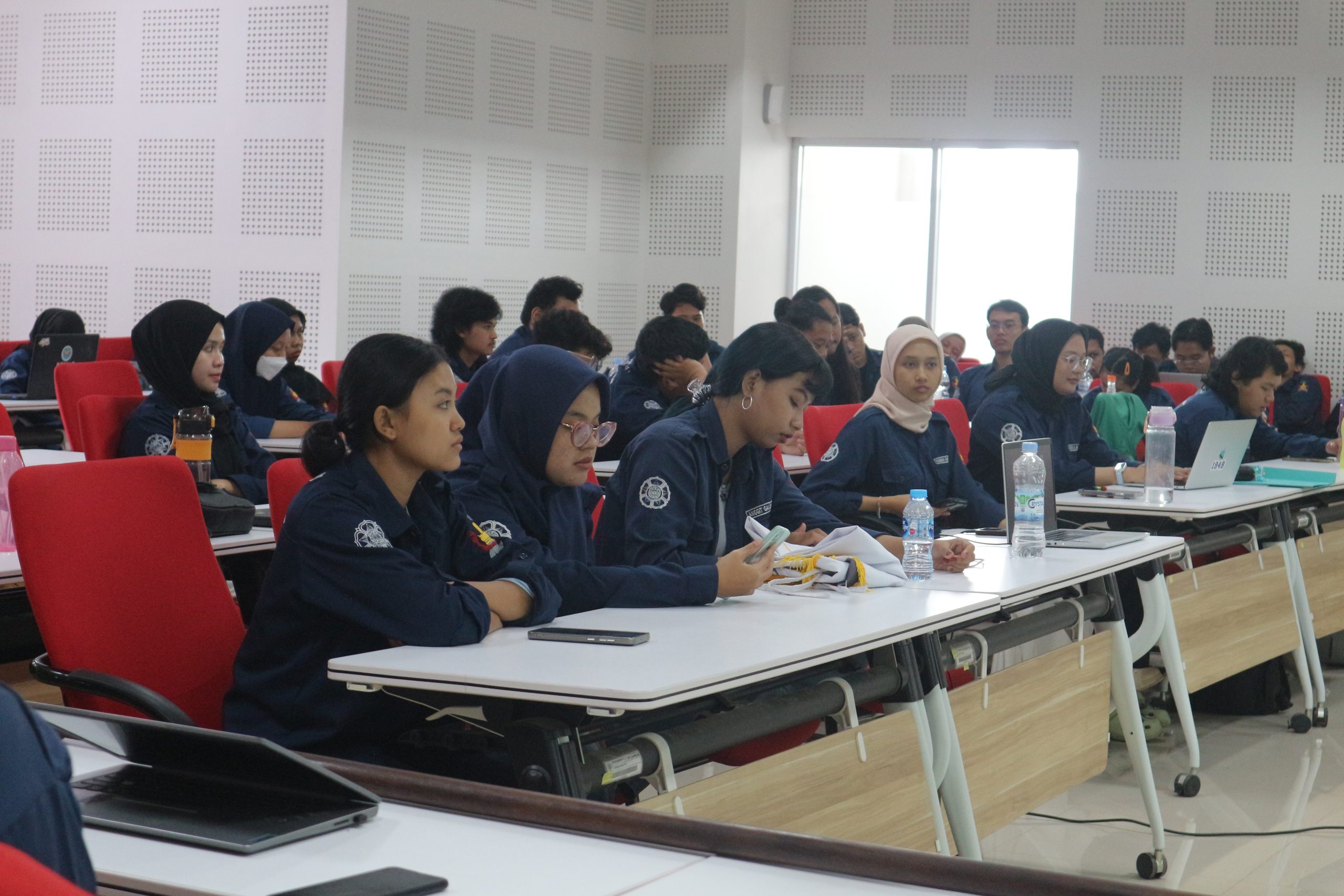
Yogyakarta, December 14, 2024 - The Student Association of the Javanese Language, Literature and Culture Student Family (HMJ Kamastawa) Study Program. Literature, and Javanese Culture held a big year-end deliberation to read out all the accountability sheets (LPJ) of the events that had been carried out in the 2024/2025 period, agreeing on the Basic Bylaws (ADRT), and determining the chairman of HMJ Kamastawa for the 2025/2026 period. The event took place in room 709 Soegondo Building from 08.00 WIB to 17.00 WIB.

The event was opened by Nadiffa Setya (class of 2023) as Master of Ceremony followed by singing Indonesia Raya and Gadjah Mada Hymn, followed by remarks by the Head of the Javanese Language, Literature and Culture Study Program Dr. Daru Winarti, M.Hum. and Kamastawa Advisor, Imam Prakoso, S.S., M.A. who attended the event online. The discussion of LPJ and ADRT was led by Saktia Hidayah (class of 2022) as the first presidium, Haryo Untoro (class of 2022) as the second presidium, and Dhiny Maulina (class of 2022) as the notetaker.

The first discussion began with the reading of accountability sheets (LPJ) for several activities that have been carried out by HMJ Kamastawa such as Gugur Gunung, Abhiseka Kramasisya and Temu Budaya Nusantara. The LPJ was read by the chief executive of each event. Then continued with the reading of the LPJ of each division of HMJ Kamastawa, which is:

- Chairman

- Vice Chair

- Secretary

- Treasurer

- Human Resources Division (HR)

- Public Relations and Organization Division (RPO)

- Social Society Division (Sosmas)

- Media and Information Division (Medinfo)

- Scientific Division

- Entrepreneurship and Logistics Division (Kewirugistik)

- Interest and Talent Division (Mikat)

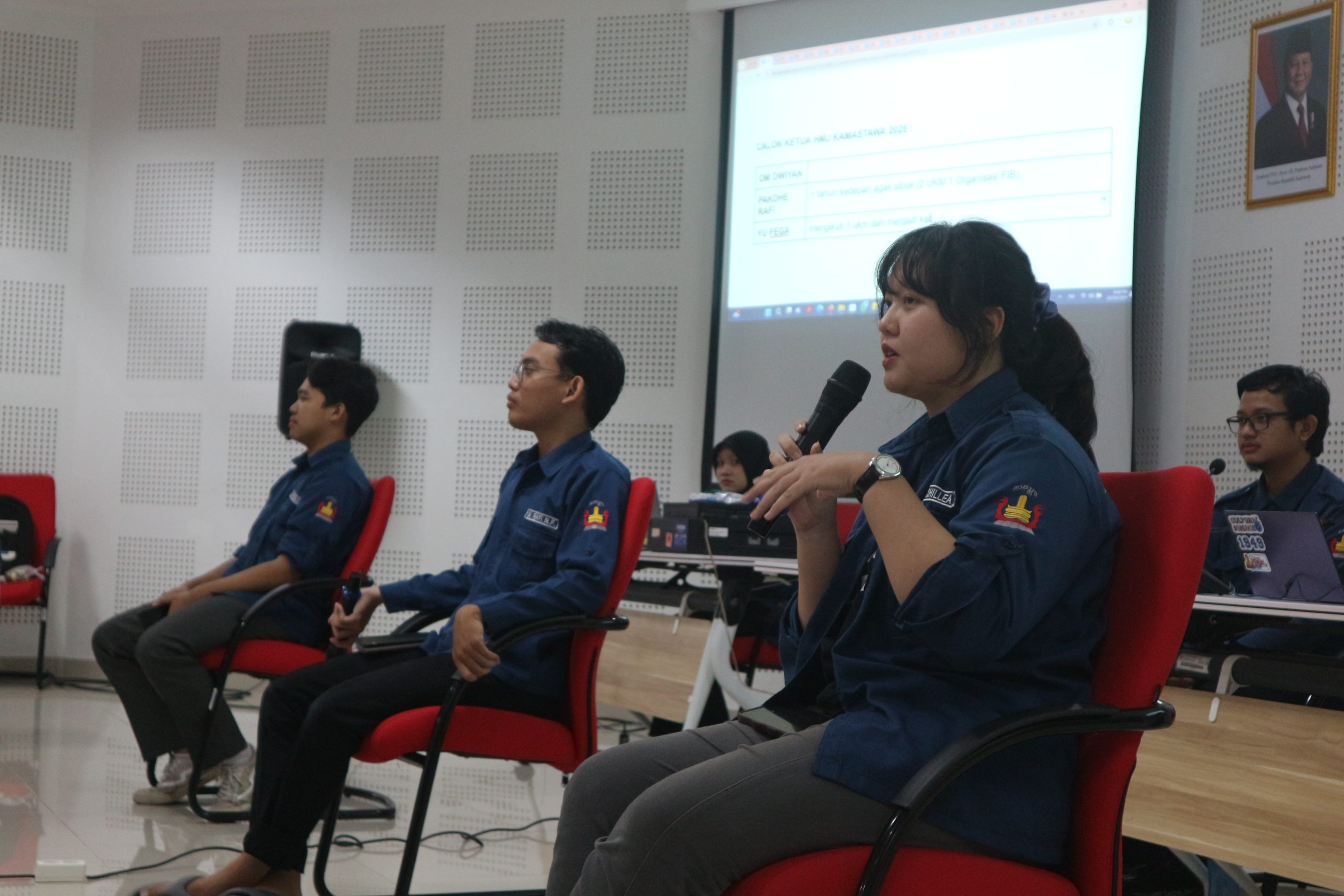
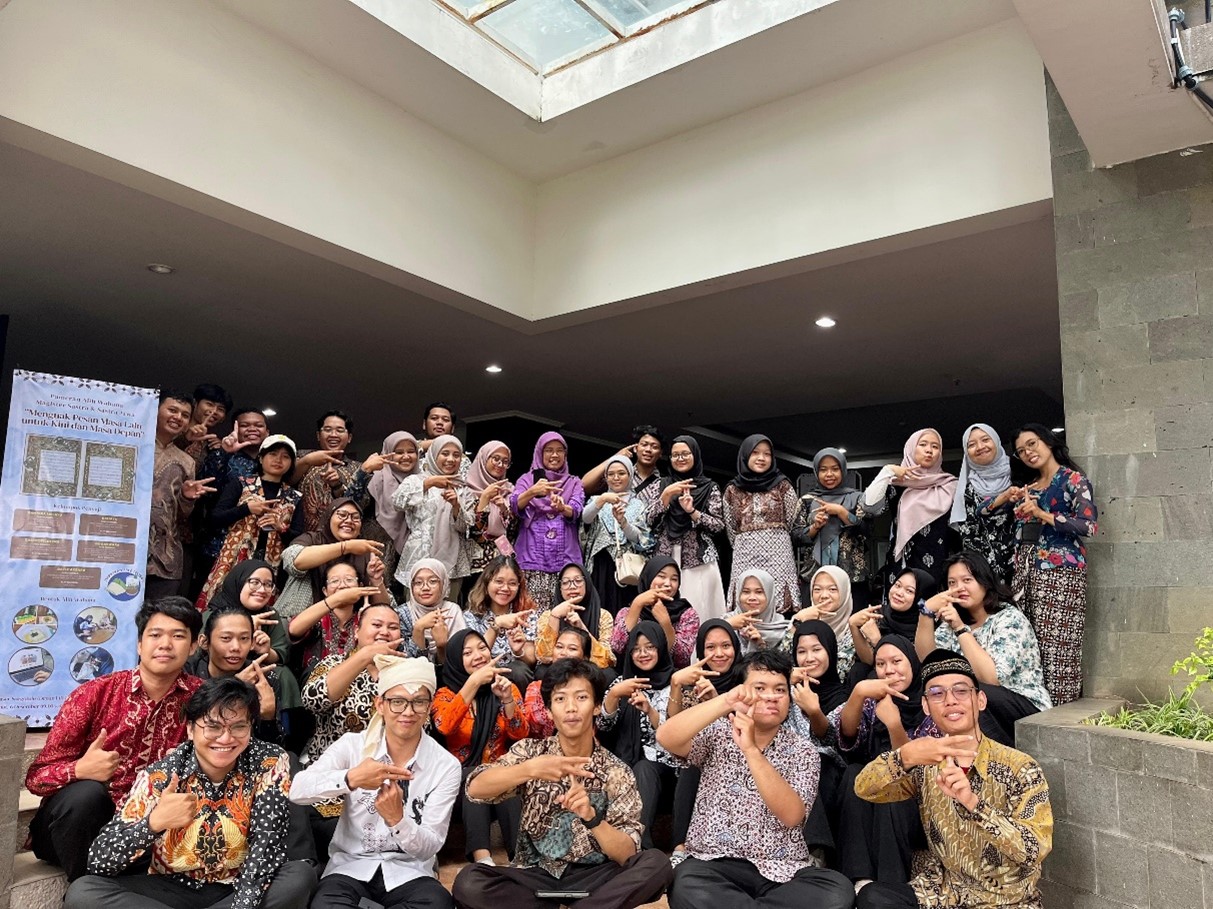
The event was paused with a prayer break and lunch. Followed by a discussion about the election of the new chairman of HMJ Kamastawa for the 2025/2026 period. There were three candidates proposed, namely M. Rafi Nur Fauzy, Fega Achillea Maydena, and Dwiyan Teguh Darmawan, all three of whom are students of the Javanese Language, Literature and Culture Study Program class of 2023. The three of them read the vision and mission that will be held for one period. After reading the vision and mission, entering the question and answer session, each candidate received questions from the chairman and several members of HMJ Kamastawa. Then continued with the deliberation session, with the deliberation of all participants, Dwiyan Teguh Darmawan was determined as the Chairman of HMJ Kamastawa for the 2025/2026 period. The discussion of the determination of the chairman of HMJ Kamastawa ended the entire series of Great Deliberation events. The Great Conference was closed with a group photo documentation session.

.

Deliberation teaches students to socialize with others, communicate, and express opinions. It is hoped that with this deliberation, students will be able to learn to organize well and carry out their responsibilities.

Non-academic Achievements of Javanese Language, Literature and Culture Study Program Students: BAND WANGOEN enlivened various events at Universitas Gadjah Mada

College StudentNewsSDGSStudent's ActivityStudent's Work Tuesday, 10 December 2024

In the midst of a busy academic routine, a number of students of the Javanese Language, Literature and Culture Study Program have made extraordinary achievements in the non-academic field. They are members of a band called Band Wangoen which has recently stolen a lot of attention with its keroncong genre. The band, which consists of 7 students, has shown dedication, creativity, and a high spirit of teamwork. Band Wangoen means “to be appropriate (in terms of goodness)” it is hoped that with this name Band Wangoen can entertain with wangun in every performance.

At one of Gadjah Mada University's events, Integrated Career Days held in November, Band Wangoen managed to present a beautiful performance. Performing pop songs with keroncong arrangements made them appear different from the others. This achievement not only shows their talent, but also their ability to manage time well between studies and non-academic activities.

“Actually, we all have busy schedules, but making music and being an artist is a fun thing to do. We learn to manage our time well, take advantage of every opportunity to practice, and stay focused on our academic assignments,” said Amtenaring Gulang, the cak’s player and student of the Javanese Language, Literature and Culture Study Program class of 2022 who initiated the formation of the band, adding that it was not easy to find group members who had an interest in keroncong music and were talented to play and sing Javanese songs.

The keroncong genre and Javanese songs performed also show the role of Javanese Language, Literature and Culture Study Program students in preserving Javanese culture. Keroncong music and Javanese songs are rare to be heard by the current generation, it is fitting to preserve and introduce them so that their existence does not decline. One of the Javanese dolanan songs was also performed on stage, entitled “Gethuk” the song was sung beautifully by the vocalist Dian Patmisari. Tembang dolanan has an important role in Javanese society, especially for children, indirectly the content of dolanan songs contains moral and life values that can be a teaching of character building.

Wangoen Band performance in Integrated Career Days event

Apart from performing at Integrated Career Days 2024, Band Wangoen also had the opportunity to perform 8 songs at the Malam Alumni event as a series of Nitilaku 2024, namely the 75th Anniversary of Universitas Gadjah Mada and the 15th lustrum. This time, Band Wangoen invited Lala Atila, a sinden, singer, and student of the Language, Literature and Culture Study Program class of 2021 as a vocalist. Lala Atila's melodious voice managed to create an intimate atmosphere among the alumni of Universitas Gadjah Mada who were present. The event, which was also attended by Basuki Hadimuljono, Head of the 2nd Nusantara Capital Authority, went smoothly with the warm accompaniment of keroncong music by the Wangoen Band.

Wangoen Band's performance at Alumni Night 2024

The success of Band Wangoen also shows the importance of balance between academic and non-academic activities. The band members proved that with good time management, they can excel not only in the classroom but also outside the classroom. It is hoped that their success will become an example for all students to be more active in exploring their potential in various fields. With increasingly steady steps, Band Wangoen shows that the world of lectures is not only a place to gain knowledge, but also a place to develop talents and achieve success in various aspects of life.

Philology Exhibition: A Way to Reveal the Message of the Past for the Present and Future

College StudentNewsSDGSStudentStudent's Activity Monday, 9 December 2024

Excerpted in full from: hystoryana.blogspot.com

Philology, as the study of manuscripts and classical texts, plays an important role in preserving the cultural and historical heritage of a nation. One of the interesting aspects of philology is the effort to understand and translate manuscripts, which means transforming ancient texts from their original format to new forms that are more accessible and easier to learn, such as in the form of illustrated stories, batik cloth, and so on.

Paleography is a scientific discipline that studies the character of ancient writings in manuscripts. As a science that supports the specialization of Philology, Paleography is a compulsory course for the Language, Literature and Culture Study Program.

On Friday, December 6, 2024 the Javanese Language, Literature and Culture Study Program held an exhibition initiated by the lecturers of the Philology course, Dr. Sri Ratna Saktimulya M.Hum,. and Dr. Arsanti Wulandari M.Hum,. The exhibition involved Master of Literature students in the Philology course and the undergraduate students of Javanese Language, Literature and Culture Study Program for the Paleography course. The philological exhibition “Mengalih Wahana Naskah” aims to introduce the public to the importance of ancient manuscripts in the formation of Indonesian history and culture. The manuscripts not only serve as historical documents, but also as a means of understanding the noble values and wisdom passed down by our ancestors. This exhibition also explores how these manuscripts transformed from handwritten texts into more attractive illustrated texts and wearable batik cloth. It is a means to introduce to the public that ancient manuscripts are not just text documents, but also works of art that contain high aesthetic value.

Students of the Javanese Language, Literature and Culture Study Program in the Philology Exhibition

“Very happy to be able to organize this exhibition, previously we, the class of 2023, were asked to make batik cloth, then it will be exhibited today, it's fun to try making batik cloth and at the same time get a grade for the Final Semester Examination” said Muhammad Rizki, one of the students of the Language, Literature and Culture Study Program.

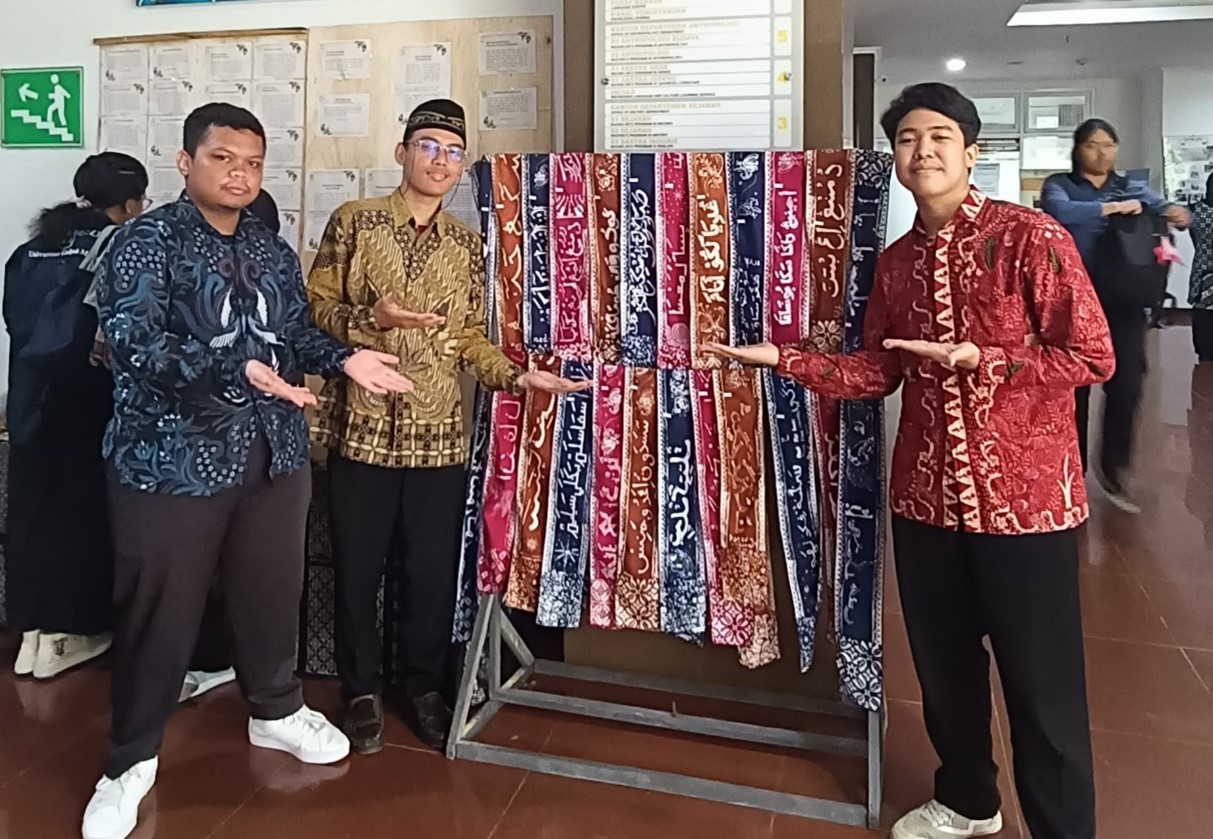
The exhibition showcased batik cloths that had previously been made by students of the Javanese Language, Literature and Culture Study Program in the Switching Workshop. The long sash batik cloths were written based on the interests of each student. There are 3 scripts that can be chosen to write the proposition sentences that have been made. Javanese script, Pegon script, and Balinese script, each has its own uniqueness and beauty. Dr. Arsanti Wulandari M.Hum, revealed that this project will be taken as the fulfillment of the Final Examination of Paleography course in 2024. There are also illustrated stories made by Master of Literature students.

Students of Javanese Language, Literature, and Culture Study Program Make  Batik for the Exhibition

It is hoped that the Philology exhibition: Alih Wahana is able to introduce many people to the existence of Philology as a useful science for life. Ancient manuscripts can be absorbed with the science of Philology to prepare for present and future life. In addition, this exhibition is one way to preserve ancient manuscripts in Javanese culture.

Sesajen Workshop: Removing the Negative Stigma of Sesajen and Preserving Local Culture

College StudentNewsStudent's ActivityWorkshop Monday, 9 December 2024

In order to introduce sesajen to students of the Javanese Language, Literature and Culture Study Program and preserve Javanese culture, the Javanese Language, Literature and Culture Study Program held a workshop with the theme of Javanese sesajen, successfully held on Wednesday, December 4, 2024. The workshop was attended by the lecturers of the Tata Cara course R. Bima Slamet Raharja, S.S. M.A., and Dr. Rudy Wiratama, S.I.P. M.A., as well as students of the Javanese Language, Literature, and Culture Study Program class of 2023, who were enthusiastic to explore further the meanings of offerings in Javanese tradition. The resource person presented was a cultural activist who has very extensive knowledge of sesajen, Faizal Noor Singgih, S.T.P. explained the various types of sesajen and their symbolic meanings.

Javanese people mostly interpret an object as a symbol, one of which is an sesajen used as a form of offering that is usually used in traditional ceremonies or spiritual rituals, has an important role in the lives of Javanese people. The essence of sesajen is as a symbol of ngawruhi or giving reminders to ancestral spirits, nature, or as a form of gratitude and prayer for the blessings given by Almighty God.

The workshop aims to introduce the importance of the sesajen tradition and how to make it properly in accordance with the cultural values contained in it. The workshop participants were given the opportunity to directly see various kinds of sesajen with their respective meanings. In the explanation of the speaker, Faizal Noor Singgih, S.T.P., said, “Through this workshop, we hope that students can better understand the essence of sesajen, not only as objects used in rituals, but also as part of a cultural heritage that must be preserved because Javanese people really believe in symbols, one of which is this sesajen used to show prayer and gratitude.”

Each type of sesajen has its own meaning. Sesajen made from natural materials such as flowers, fruits, rice and leaves have deep symbolism, reflecting the harmony of humans with the surrounding nature. The speaker explained about the various kinds of sesajen and the meanings they contain. One of the sesajen that is at least provided during the traditional ceremony is the pisang sanggan, which is a banana totaling 1 catch. Sanggan comes from the word “sangga” which means buffer or support which is interpreted as the basis of all series of ceremonies. pisang sanggan are usually equipped with coins which mean prayers to God asking to complete everything if something is missing and there are also roses as a symbol of wewangen or fragrance for the ancestors.

Pisang sanggan with flowers and coins

In addition to pisang sanggan, one form of sesajen that is often served is tumpeng robyong which is a savory rice and some complementary side dishes. Tumpeng robyong is very identical with eggs, shallots, and red chilies that are skewered into a single unit. It serves as a symbol of fertility, prosperity, and harmony between humans and nature. Usually served in happy events such as celebrations, tumpeng robyong is expected to be a symbol that the owner hopes that all events run smoothly and are assisted by many people. The use of savory rice in this tumpeng symbolizes the Javanese people to always remember the Prophet Muhammad SAW.

The form of tumpeng robyong

Faizal Noor Singgih, S.T.P. also added that “desa mawa cara, negara mawa tata” so each region must have different forms and contents of sesajen. Sesajen is not interpreted as something that leads to polytheism. However, it teaches Javanese people how to symbolize a prayer and give it meaning.

One of the workshop participants, Bagus Ulinnuha, revealed that he learned many new things about the meanings of offerings in more detail thanks to this workshop. “I just found out that every element in the sesajen has a very deep meaning. I am very lucky to have the opportunity to participate in this,” he said.

Explanation from the speaker: Faizal Noor Singgih, S.T.P.

The preservation of this sesajen tradition is considered important, considering that more and more young people are starting to alienate from their cultural roots. This workshop is expected to be a starting point for the community to better appreciate the cultural heritage that has been passed down by the ancestors and remove the negative stigma regarding sesajen. It is hoped that with this workshop the Javanese community, especially the younger generation, will be able to understand more deeply the meaning of the symbols that have been passed down by the ancestors and can implement them in their daily lives.

Recent Post

  • Seputar Jawa: Banten Javanese Dialect, a Dialect that Exists at the Westernmost of Javanese Island
    March 10, 2026
  • Seputar Jawa: Forms of Javanese Proverbs
    March 9, 2026
  • Graduating in 3.5 Years: The Strategy of Three Students from the Javanese Language, Literature, and Culture Study Program at UGM in Completing Their Studies
    March 2, 2026
  • Seputar Jawa: Basa Kedhaton and Basa Bagongan, Typical Speech Varieties of the Surakarta and Yogyakarta Palaces
    March 2, 2026
  • Three Students from the Javanese Language, Literature, and Culture Study Program Successfully Graduated in 3.5 Years
    February 26, 2026

Calender

December 2024
M T W T F S S
 1
2345678
9101112131415
16171819202122
23242526272829
3031  
« Nov   Jan »
  • Fakultas Ilmu Budaya
  • Ujian Masuk UGM
  • PPSMB
  • Alumni
  • Jurnal Humaniora
December 2024
M T W T F S S
 1
2345678
9101112131415
16171819202122
23242526272829
3031  
« Nov   Jan »

News

  • Seputar Jawa: Banten Javanese Dialect, a Dialect that Exists at the Westernmost of Javanese Island
    March 10, 2026
  • Seputar Jawa: Forms of Javanese Proverbs
    March 9, 2026
  • Graduating in 3.5 Years: The Strategy of Three Students from the Javanese Language, Literature, and Culture Study Program at UGM in Completing Their Studies
    March 2, 2026
Universitas Gadjah Mada

Javanese Language, Literature, and Culture Program
Department of Language and Literature
Faculty of Cultural Sciences
Universitas Gadjah Mada


Sosiohumaniora St., Bulaksumur, Yogyakarta
Telp : 0274-901134 Ext. 110, Fax : 0274-550451, WhatsApp : 081211911281
Email : nusantara@ugm.ac.id

© 2025 Javanese Language, Literature, and Culture Program FIB UGM

KEBIJAKAN PRIVASI/PRIVACY POLICY