• University
  • Academic Portal
  • University Library
  • Webmail
  • Arnawa
  • UM UGM
  • English
    • Bahasa Indonesia
    • English
Universitas Gadjah Mada Javanese Language, Literature, and Culture Program
Department of Language and Literature
Faculty of Cultural Sciences
Universitas Gadjah Mada
  • Home
  • Profile
    • Vision & Mission
    • Objective
    • Excellence
    • Career Prospects
    • Teaching Staff
  • Academic
    • Curriculum Flow
    • Courses Description
    • Distribution of Courses
    • Academic Calendar
    • COURSE AND ADMINISTRATION INFORMATION
    • Learning Outcomes
    • INTERNATIONAL CONFERENCES AND ACTIVITIES
  • KPPB
    • Collaboration
    • Research
      • Teaching Staff Research
      • Javanese Studies Archive – Arnawa
    • Service
      • Community Services
      • Podcast (Anarka Lālitya)
    • Scholarship
  • Student Affair
    • Student Satisfaction Survey
    • HMJ Kamastawa
    • Student’s Activity
    • Student’s Creations
    • Youtube Channel
    • Instagram
  • Alumnus
    • Alumnus Profile
  • Contact
  • Home
  • 2024
  • page. 2
Arsip:

2024

Abhiseka Kramasisya 2024: Committee Creativity and Family Solidarity of Javanese Language, Literature, and Culture Study Program

AlumnusCollege StudentNewsSDGSStudentStudent's Activity Tuesday, 22 October 2024

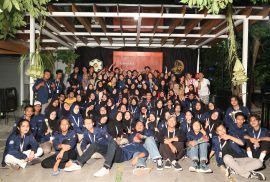
Abhiseka kramasisya is an annual event organized by the Javanese Language, Literature and Culture Study Program to inaugurate new students of the Javanese Literature Study Program. In 2024, Abhiseka Kramasisya was held in 2 days, on October 19-20, 2024 with 45 new students of the Javanese Language, Literature and Culture Study Program participating. Abhiseka Kramasisya 2024 used the theme “Sedya, Darma, Guna” each word in the theme has its own sentence which means very deep and is expected to be in accordance with the new students who will be inaugurated.

“Sedya” in Sedya Tuhu Gayuh Widya means the full intention to reach knowledge. “Darma” in Darma Bekti Kang Utama means goodness that is prioritized. “Guna” in the sentence Guna Mring Nuswantara means useful for the country, nation, and all of Nusantara. With the formation of this philosophical theme, it is hoped that new students will always absorb the meaning so that they can carry out the “Sedya, Darma, Guna” and be able to preserve the noble values of Javanese culture and maintain the existence of culture in the Nusantara, especially Javanese culture.

Before the day of Abhiseka Kramasisya, all committees and participants conducted a First Gathering which was intended to establish good communication between the committee and participants. The First Gathering which was held on September 8, 2024 became a place for bonding and getting to know each other.

On September 21, 2024 a Technical Meeting was held to explain the technical implementation of the D-day of Abhiseka Kramasisya 2024. With the aim of introducing a little Javanese knowledge, all new students were divided into 4 groups with the names Damarwulan, Centhini, Wedharaga, and Ambiya. The naming of these groups comes from the names of manuscripts in Java. The Technical Meeting also explained some of the technical implementation of the entire series of Abhiseka Kramasisya 2024.

The first day of Abhiseka Kramasisya 2024 was held in the Auditorium of Soegondo Building, Faculty of Cultural Sciences, Universitas Gadjah Mada with a series of symbolic opening events with “Asa Lokatara”. A box containing balloons that will fly a piece of cloth with the inscription Abhiseka Kramasisya 2024. Asa Lokatara means a dream that flies high, a prayer for all new students so that their dreams can be achieved. Asa Lokatara was opened by Dr. Daru Winarti M.Hum, as the Head of the Javanese Language, Literature and Culture Study Program and accompanied by Zidna Nabila as the Chief of Abhiseka Kramasisya 2024.

“Asa Lokatara” symbolic opening of Abhiseka Kramasisya 2024

After the symbolic opening, the event continued with the introduction of the study program which was filled by several representatives of the lecturers. Abhiseka Kramasisya 2024 also invited alumnus as talk show speakers. One of the speakers presented was Rizky Inggar who plunged into the entertainment world and had several programs on television such as Main Hakim Sendiri and Rumah Bulekkk. The speaker conveyed the career he had gone through, aiming to motivate new students to have the enthusiasm to carry out education and find their talent interests. Entering the last part of Abhiseka Kramasisya on the first day, closed by Gilang Cahya Nusantara as the Head of the Kamastawa Association presenting material on the introduction of the Department Student Association (Himpunan Mahasiswa Jurusan) which will later be followed by new students.
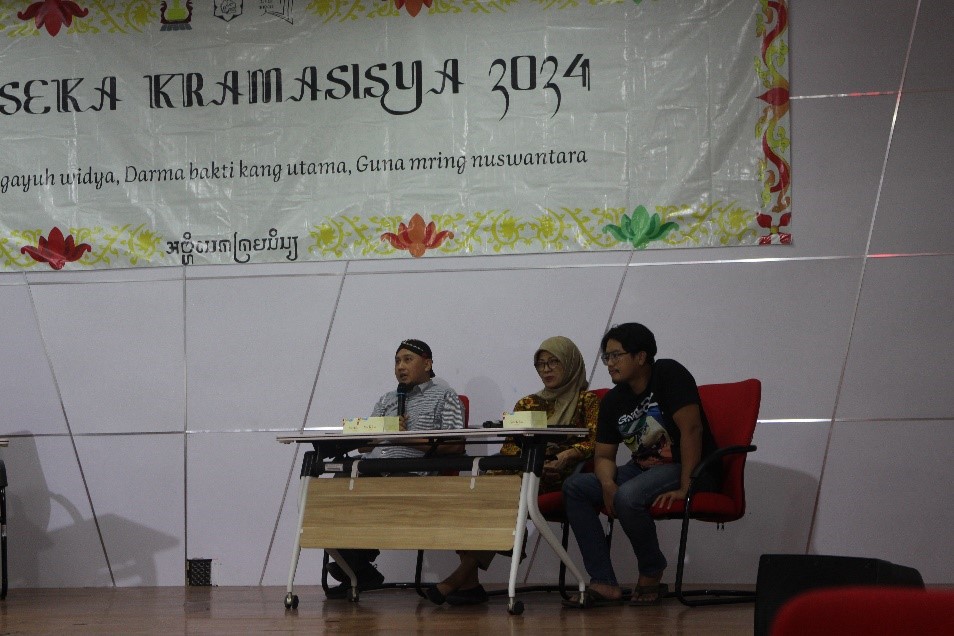
Study program seminar by several lecturers

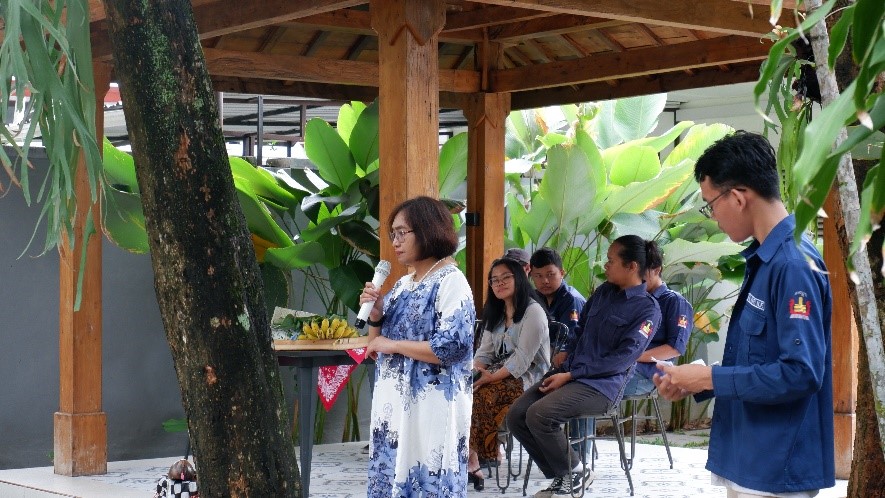
The second day of the Abhiseka Kramasisya series was held in the hallway of the Margono Building, Faculty of Cultural Sciences, Universitas Gadjah Mada. The rainy conditions made the committee have to think of ways to keep the event running smoothly. The plan for “Lelaya Wiyata” or cultural exploration had to be replaced with a quiz between groups. There were several changes to the plan. However, everything went smoothly. The event continued with the movement of all participants and committees to Pusaka Jawa (Javanese Studies Center) located on Jl. Bungur, Bulaksumur No. F9 to continue the Siraman inauguration procession. The Siraman procession is the main part of the Abhiseka Kramasisya. The procession was led by lecturer representative Dr. Sulistyowati, M.Hum. accompanied by the Head of the KAMASTAWA. With the implementation of the Siraman procession, participants have officially become part of the Javanese Language, Literature and Culture Study Program Family. All participants also received the corsa of the Javanese Literature Student Family Department Student Association.
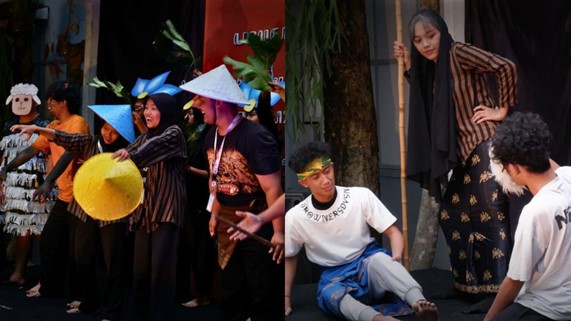
The event was closed with an art performance by Abhiseka Kramasisya 2024 participants. Participants displayed the creativity of each group performing dances, songs, dramas, and so on. This session was lively, warm, and showed the kinship of the Javanese Language, Literature and Culture Study Program. The end of the art performance was followed by the symbolic closing of “Abinawa Prasraya” in the form of a door that can rotate 180 degrees showing the acceptance of new students adding color to the Language, Literature and Culture Study Program.
The series of Abhiseka Kramasisya 2024, expects new students of the Javanese Language, Literature and Culture Study Program to love local cultural products, especially Javanese culture, and to preserve them. Students who have been confirmed are expected to develop and improve educational, research, and community service activities so as to create superior, outstanding, and dignified student characters.

ABHISEKA KRAMASISYA 2023: MARSUDI, NGLAMPAHI, MURAKABI

College StudentNewsSDGSStudentStudent's ActivityStudent's Work Wednesday, 16 October 2024

Abhiseka Kramasisya is a tradition held annually to inaugurate new students of the Javanese Literature Study Program. On Saturday, October 14, 2023, Abhiseka Kramasisya was attended by 47 new students of the Javanese Language, Literature, and Culture Study Program. The theme carried out in the 2023 Abhiseka Kramasisya activity was "Marsudi, Nglampahi, Murakabi". The theme was inspired by a Javanese philosophy containing positive meanings in it.   

"Marsudi" is interpreted as uniting towards a harmony and balance. In this case, new students are expected to put aside all differences and be determined to unite to become a family of students of Javanese Language, Literature, and Culture who are in harmony with the goal, namely, seeking and gathering knowledge. "Nglampahi" means living knowledge for oneself. With the joining of students as part of the Javanese Language, Literature, and Culture Study Program at Gadjah Mada University, it is hoped that it can bring goodness to oneself. "Murakabi" is interpreted as the knowledge possessed by oneself being beneficial to others so that it is part of the activity of preserving and maintaining the noble values of Javanese culture and being able to continue the effort to maintain the existence of Javanese culture.

Before the series of 2023 Abhiseka Kramasisya activities were carried out, a technical meeting was held by the committee to introduce the participants, namely the 2023 batch of students, about Abhiseka Kramasisya. In addition, the 47 participants were divided into four groups, namely Saptaarga, Indrakila, Talkanda, and Kendhalisada. The names of the four groups were taken from the names of the hermitages of the pandhitas in wayang figures.

The series of 2023 Abhiseka Kramasisya activities began with registration, "Sesareng" or outbound, "Sartaka" or alumni talk show, "Semedi" or study program seminar, inauguration, "Kala Nrtya" or art performance, "Abhimata" or awards, and closing. The registration series was carried out from 06.30-07.20 WIB. After that, it was continued with "Sesareng" or outbound which was held in Greenland FIB UGM. The "Sesareng" activity was full of joy because it was filled with several games such as sarong volleyball, water relay, and so on. The Sesareng series lasted until 09.00 WIB.   

The next activity was the opening of the 2023 Abhiseka Kramasisya activities which took place at the Javanese Study Center of Gadjah Mada University (PUSAKA JAWA UGM). After that, it was continued with "Sartaka" or a talk show with alumni of the Javanese Language, Literature, and Culture Study Program. The event was held at 10.10 WIB-11.45 WIB. There were two alumni who shared their experiences, college tips, and a description after graduating from the world of lectures, namely Vanis, S.S., and Mahmud Hidayat, S.S.  

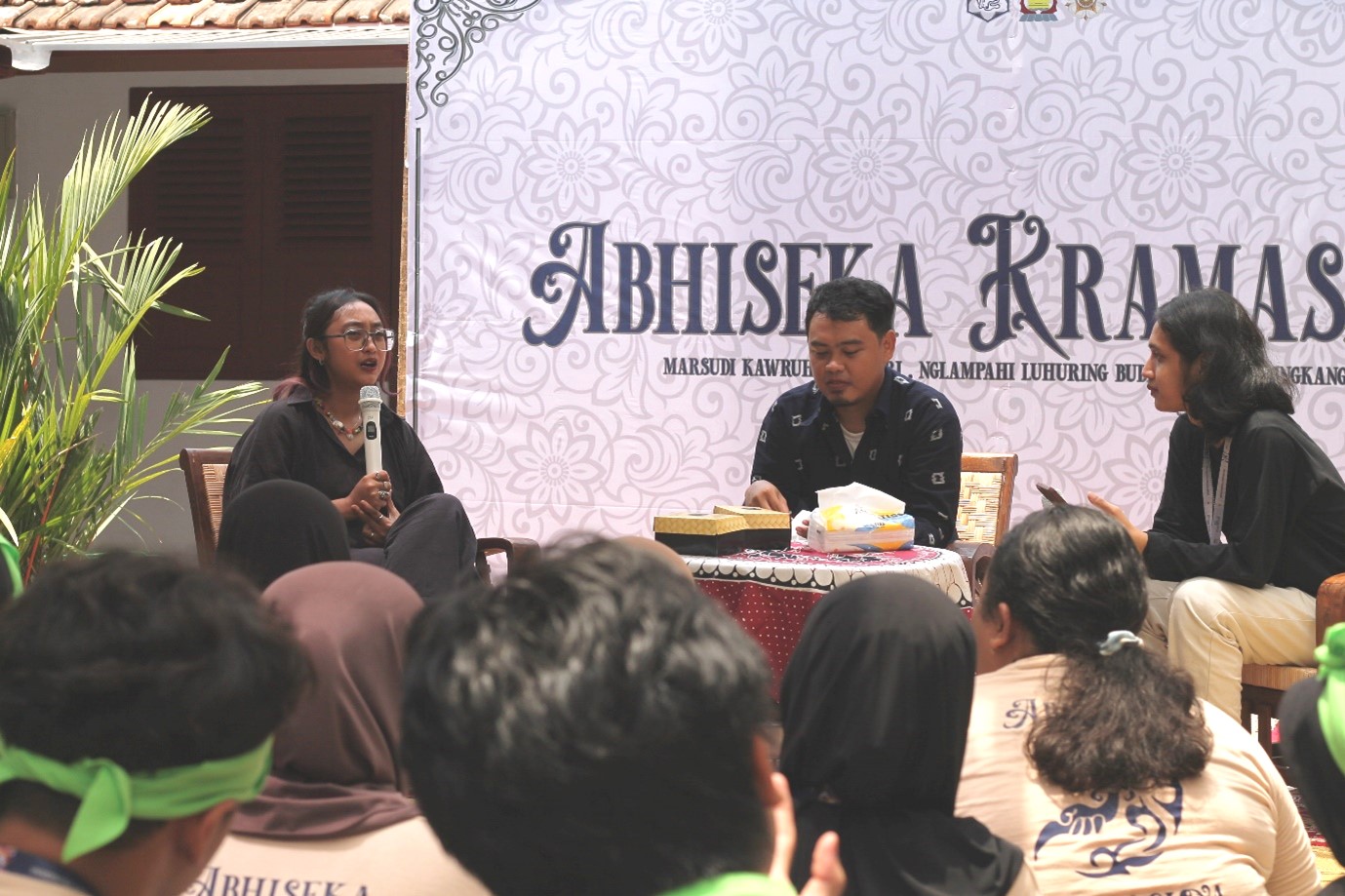
"Sartaka" Session


The next event was "Semedi" or a study program seminar. The "Semedi" session took place at 13.00 WIB-14.50 WIB. In the study program seminar, participants gained a deeper understanding of the three areas of specialization in the Javanese Language, Literature, and Culture Study Program, namely philology, linguistics, and literature. The three areas of specialization were explained by the lecturers who taught each of these areas of specialization. The lecturers who attended the activity included Dr. Daru Winarti, M.Hum., Dr. Djarot Heru Santoso, M.Hum., Dr. Sri Ratna Saktimulya, M,Hum., Dr. Arsanti Wulandari, M.Hum., R. Bima Slamet Raharja, S.S., M.Hum., Nurmalia Habibah, S.S., M.A., and Imam Prakoso, S.S., M.A. Various questions were asked by the participants to the lecturers, illustrating a deep curiosity about each of the three areas of specialization.

"Semedi" Session

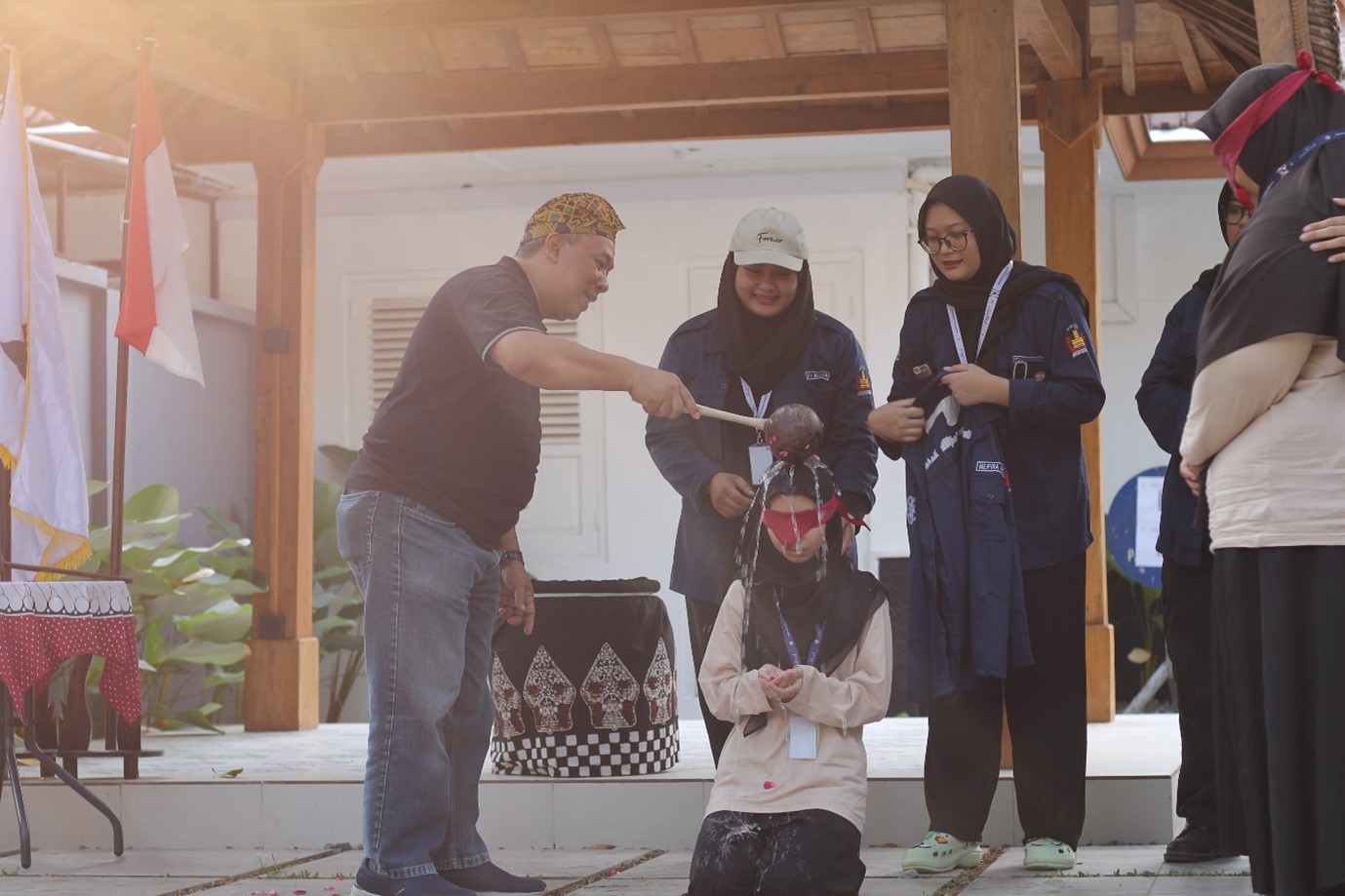
Afterward was the core event of Abhiseka Kramasisya, namely the inauguration. The inauguration session took place at 15.20 WIB-17.00 WIB and was carried out by carrying out the siraman procession. Participants took turns undergoing the siraman procession. With the implementation of the siraman procession, participants officially became part of the Javanese Language, Literature, and Culture Study Program Family. In addition, the participants also received the  Himpunan Mahasiswa Jurusan Keluarga Mahasiswa Sastra Jawa (HMJ Kamastawa) korsa. 

"Siraman" Session

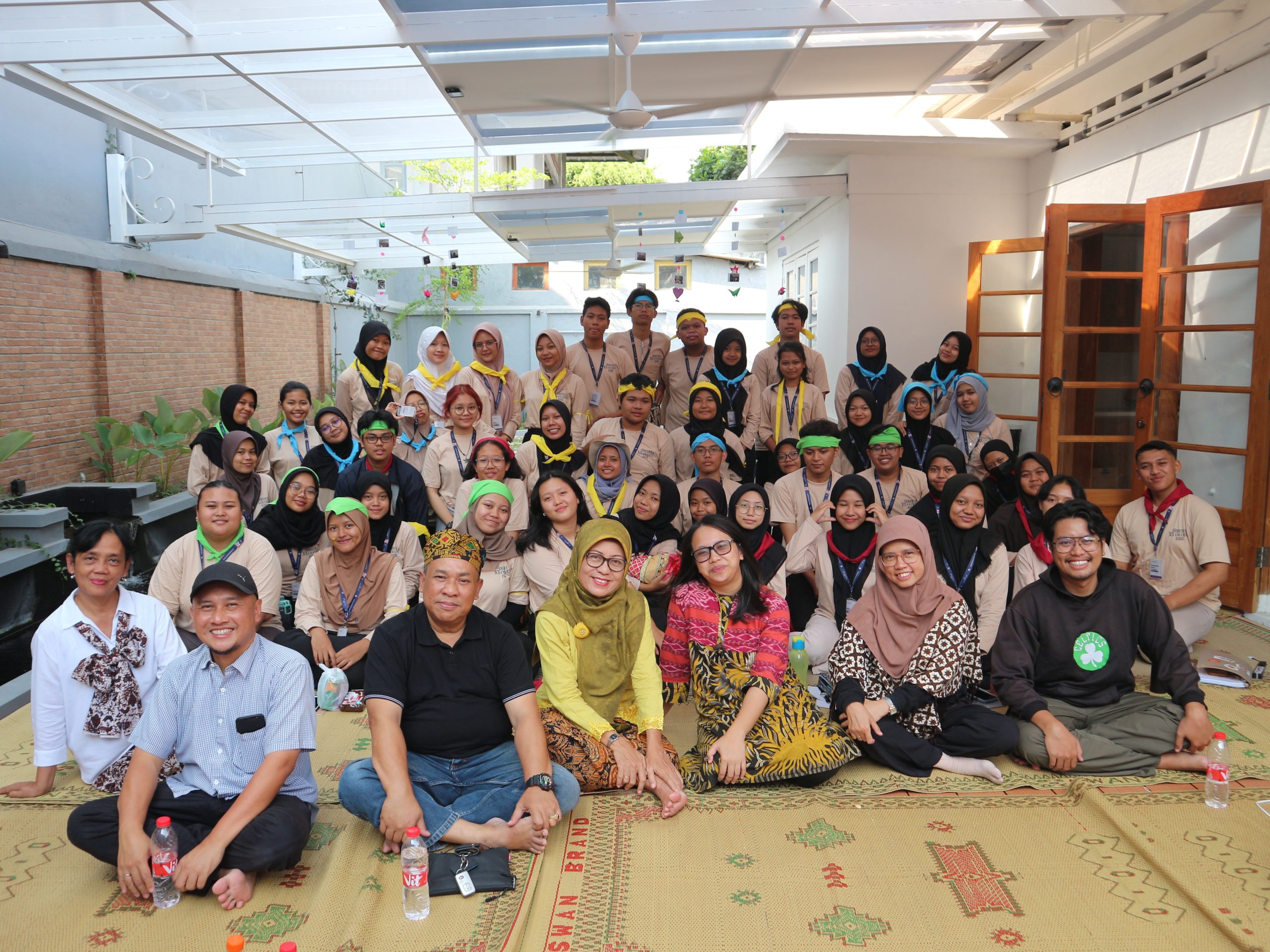
The next session was "Kala Nrtya" or an art performance which was held at 18.20 WIB-19.30 WIB. In this session, the participants who had been divided into four groups had to present a performance, be it drama, music, dance, etc. The atmosphere at the art performance was very lively and so warm, and the appearance of the four groups was very stunning. After "Kala Nrtya", the next session was "Abhimata" or awarding. The Abhimata session contained several nominations, including the most exciting group, the most compact group, and other nominations. The last session was the closing which ended with a group photo, with the intention of capturing the moment of togetherness.

"Kala Nrtya" Session

With the implementation of the 2023 Abhiseka Kramasisya series, it is hoped that new students of the Javanese Language, Literature, and Culture Study Program can love their homeland more and participate in the preservation of the archipelago's culture, especially Javanese culture. It is hoped that the inaugurated students can channel their concern for the archipelago's culture through educational, research, and community service activities so as to create superior, accomplished, dignified student characters, and participate in improving the quality of education in Indonesia.

69th Ambal Warsa Celebration for the Javanese Language, Literature, and Culture Study Program: Laku Darma, Anggayuh Mulya

Ambal WarsaNewsSDGSStudentStudent's Activity Monday, 14 October 2024

69 years of existence as part of the Faculty of Cultural Sciences, Gadjah Mada University, the Javanese Language, Literature, and Culture Study Program held a celebration for its anniversary on Saturday, October 12, 2024. This event invited all lecturers and students of the Javanese Language, Literature, and Culture Study Program. This event also invited several retired lecturers, such as ⁠Drs. Soeharto Mangkusudarmo, M.Hum. and ⁠Drs. Anung Tedjowirawan, M.A.

Like a long-lost family reunion, all the invited guests were seen enjoying the Ambal Warsa event. The arrival of retired lecturers also became an opportunity to relieve longing for lecturers who had not seen each other for a long time. Dr. Daru Winarti, M.Hum as the Head of Study Program expressed proudness in the Javanese Language, Literature, and Culture Study Program which has been established for 69 years and has reached this point by producing many very talented and accomplished undergraduates.

Greetings from the Head of the Javanese Language, Literature, and Culture Study Program

Drs. Soeharto Mangkusudarmo, M.Hum and ⁠Drs. Anung Tedjowirawan, M.A. as retired lecturers provided a lot of motivation, experience, and lessons. They convey many things related to the interests of the Linguistics, Literature, and Philology majors. The Javanese Language, Literature, and Culture Study Program has created great undergraduates and Human Resources who are able to plan the future well, said one of the retired lecturers.

Sharing with the Head of Study Program and retired lecturers

A birthday celebration event would not be complete without cutting tumpeng. In Javanese culture, cutting tumpeng is better known as kedhuk tumpeng. The reason for choosing kedhuk tumpeng instead of cutting tumpeng lies in its meaning, the meaning of cutting tumpeng is like cutting the relationship between humans and their God.

Kedhuk tumpeng  by the Head of Study Program and retired lecturers

This Ambal Warsa was also entertained by special performances from students of the Javanese Language, Literature, and Culture Study Program from the 2022 to 2024 intake. Abimanyu Mahendra, one of the performing students, said that he was very happy to be able to entertain the invited guests. It felt nostalgic to sing old songs that were hits in their time. Dr. Sulistyowati, M.Hum., one of the lecturers from the Javanese Language, Literature, and Culture Study Program, also enlivened the entertainment by contributing a song entitled Sewu Kutha, created by Didi Kempot.

Entertainment performance by students

Ambal Warsa was ended with a poetry reading by Dr. Arsanti Wulandari, M.Hum. The poem was taken from an anthology of poems created by lecturers while they were students. Many prayers were said for the Javanese Language, Literature, and Culture Study Program for the future, "Hopefully the Javanese Language, Literature, and Culture Study Program will always be successful, continue to advance, and create great undergraduates, aamiin," said Maylafaizza, a student from the class of 2023.

Group photo of all invited guests

For 69 years, the Javanese Language, Literature, and Culture Study Program has contributed to the exploration, development, preservation, and utilization of a national identity in the form of Nusantara culture, especially Javanese culture. Contributions to knowledge and benefits that have been carried out by the Javanese Language, Literature, and Culture Study Program. In addition, collaboration from various activities also participates in the development and dissemination of this knowledge. This Ambal Warsa activity is not just a commemorative event, but also a self-reflection and a spark of enthusiasm to continue to provide the best for Gadjah Mada University and our country, Indonesia.

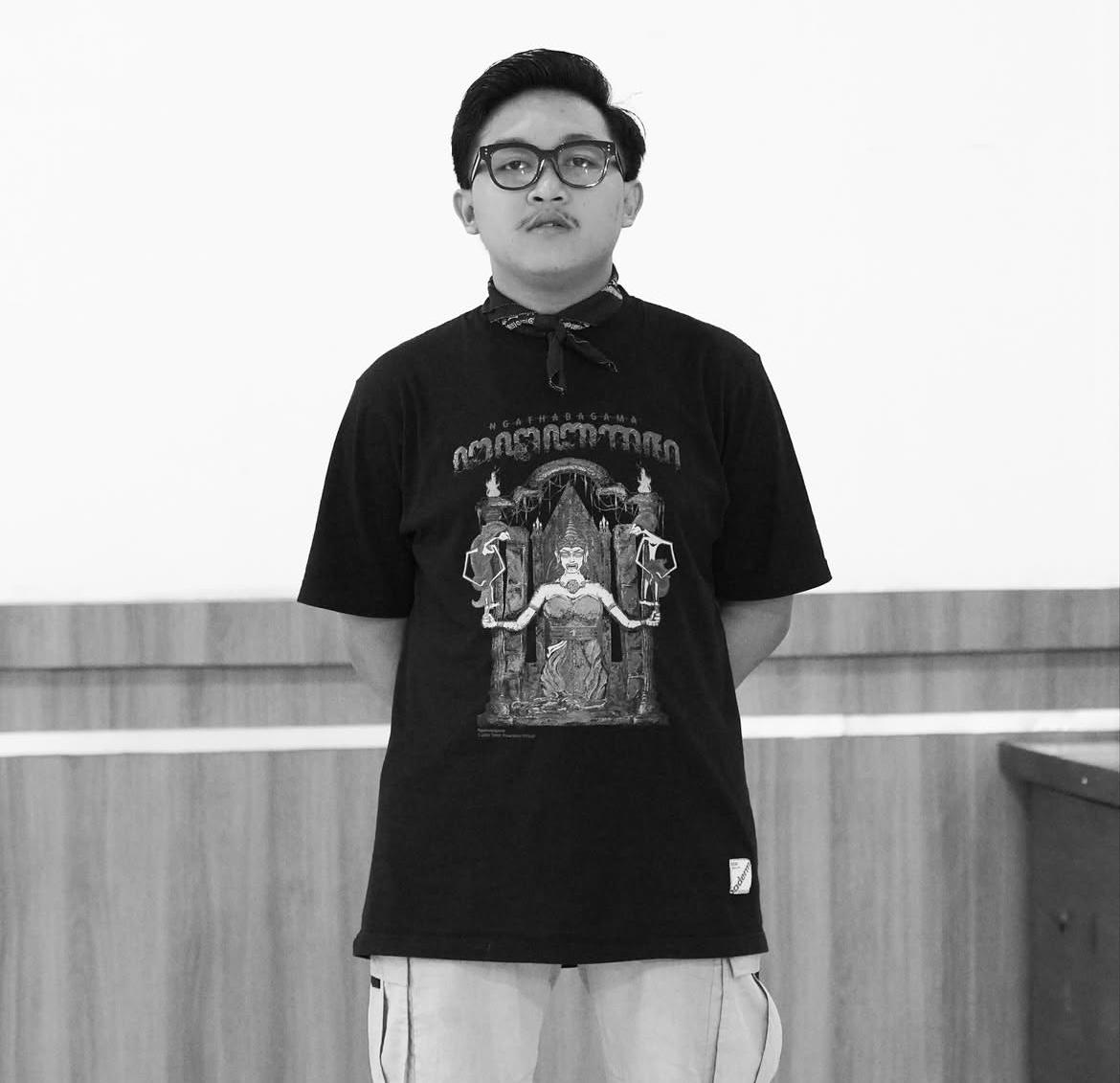
Rafael Raga’s “Ngathabagama” Theater Successfully Becomes the Best Presenter in the 2024 DIY Theater Festival

NewsOtherSDGSStudentStudent's ActivityStudent's Work Tuesday, 1 October 2024

Cited directly from tby.jogjaprov.go.id

Rafael Raga Budi Panuntun, a student of the Javanese Language, Literature and Culture Study Program class of 2021, successfully became the scriptwriter and director of a theater entitled “Ngathabagama” with the theme Panji which brought Sleman Regency to win the overall champion and best presenter in the 2024 DIY Provincial Theater Festival. Ngathabagama Theater was nominated as the best presenter, best director, best music director, best artistic director, best ensemble, and brought home the rotating trophy of the DIY Theater Festival.

Rafael Raga Quoted from instagram account @rafaelragabp

Raga's success should be an inspiration, in the midst of his academic busyness, Raga can still work and create a beautiful theater and become the best presenter. The process carried out by Raga is quite long, starting from initiating ideas, writing scripts, and so on. Ngathabagama Theater is a theater that was formed by accident, starting from a theater festival at the Sleman Regency level. Kapanewon Minggir has been the champion in Sleman Regency for 2 consecutive years. In 2023, Kapanewon Minggir presented a theater titled "Hagbala" with the theme of Yogyakarta, History and, Romanticism which was also written and directed by Rafael Raga Budi Panuntun, even 50% of this theater is self-made, starting from production, music, artistic, fashion, and others. Hagbala succeeded in winning the 1st place at the Sleman Regency level and the 3rd place at the DIY Province level.

After successfully becoming a champion with Hagbala in 2023. In 2024, Rafael Raga and Kapanewon Minggir advance to participate in the theater festival again in Sleman Regency. Raising Ngathabagama as the title of the presented theater, again succeeded in becoming the champion. Raga revealed that he wrote his script and ideas during KKN (Real Work Lecture) activities. This shows that with all his busyness, Raga was able to create an extraordinary work that was unexpectedly led him to become the best presenter in the 2024 DIY Theater Festival.

The theme of the 2024 DIY Theater Festival refers to the technical instructions from the DIY Cultural Service (Kundha Kabudayan) which is Panji. Panji's romance and love with Sekartaji are brought into a theater. However, Raga revealed that he wanted Ngathabagama to be taken from another point of view, namely that the story of Panji and Sekartaji who always got a blessing from a nature or can be called the absolute destiny of God. Raga did research and found that Panji and Sekartaji always get a destiny that separates them, whether separated by time, someone, or circumstances.

The script that Raga wrote did not escape Raga's consultation with the lecturer of the Javanese Language, Literature, and Culture Study Program, Dr. Rudy Wiratama, S.I.P., M.A., an academic and Wayang Gedhog practitioner who uses the theme of Panji and Sekartaji. With the conversation that Raga did with Dr. Rudy Wiratama, S.I.P., M.A., will strengthen the story and can be held accountable for its validation.

After doing a lot of research and discussion, Raga found that Panji and Sekartaji are always separated by fate, one of them is separated by the god Bathara Kala which is represented as Kala is time. Raga got an unusual idea, which is working on the Panji theater this time by showing Bathari Durga or the mother of Bathara Kala who gives wiradat to Panji and Sekartaji and separates the two of them to get a stronger essence.

Raga crossed between Wayang Gedhog and Wayang Purwa to find out the weakness of Bathari Durga. The weakness of Bathari Durga is Semar or Sang Hyang Ismaya, Semar can defeat Bathari Durha by reciting the way of the guardian, to prevent further evil. Caraka walik is a Javanese script (Hanacaraka) that is read backwards, believed to be able to ward off bad things, Raga took the title of the theater this time from the first line of caraka walik, Ngathabagama.

Many Javanese chronicles, both fiction and non-fiction, place the central story of Panji and Sekartaji. Raga's knowledge of various kinds of Javanese literary works made him confident to write this script. The story of Panji and Sekartaji has not only become the wealth of the Nusantara but for the whole of Southeast Asia. There are also many essences of Wayang Purwa that are raised for Ngathabagama theater, such as Semar, Bathari Durga, the role of the gods, the urning of the nature of the wiradat, a romance story that has many relationships with literary works, and local wisdom such as the use of caraka walik which is widely known to expel or restore bad circumstances.

Not only the presentation of Ngathabagama theater, Raga also created an original soundtrack for Ngathabagama with the title "Kalasmara" which supports the dialogue between Panji and Sekartaji. This Kalasmara was created by Raga to archive theatrical presentations that have been carried out so that they still have a different essence. Raga added that he did not want a stage to only end in 30 minutes to 1 hour on stage, but to have another form of work that can forever be a memory and archive in the future.

The story of Raga in the creation of performing arts based on Javanese literary works is expected to be able to inspire students of the Javanese Language, Literature, and Culture Study Program to be able to create and utilize the knowledge that has been obtained. Many works of art can be created equipped with knowledge from the Javanese Language, Literature, and Culture Study Program.

Kamastawa Teaching and Sharing is Back: Sharing Laughter, Knowledge, and Sustenance at PYI Orphanage

College StudentNewsSDGSStudentStudent's Activity Monday, 23 September 2024

As a form of community service, the Javanese Language, Literature, and Culture Student Association (Kamastawa) held another “Kamastawa Teaching and Sharing” event on Sunday, October 22, 2024. This event is the result of collaboration between the social and community division (sosmas) and the scientific division, with the aim of having a positive impact on society, especially for children at the Wirobrajan branch of the PYI Yatim and Zakat Orphanage, Yogyakarta.

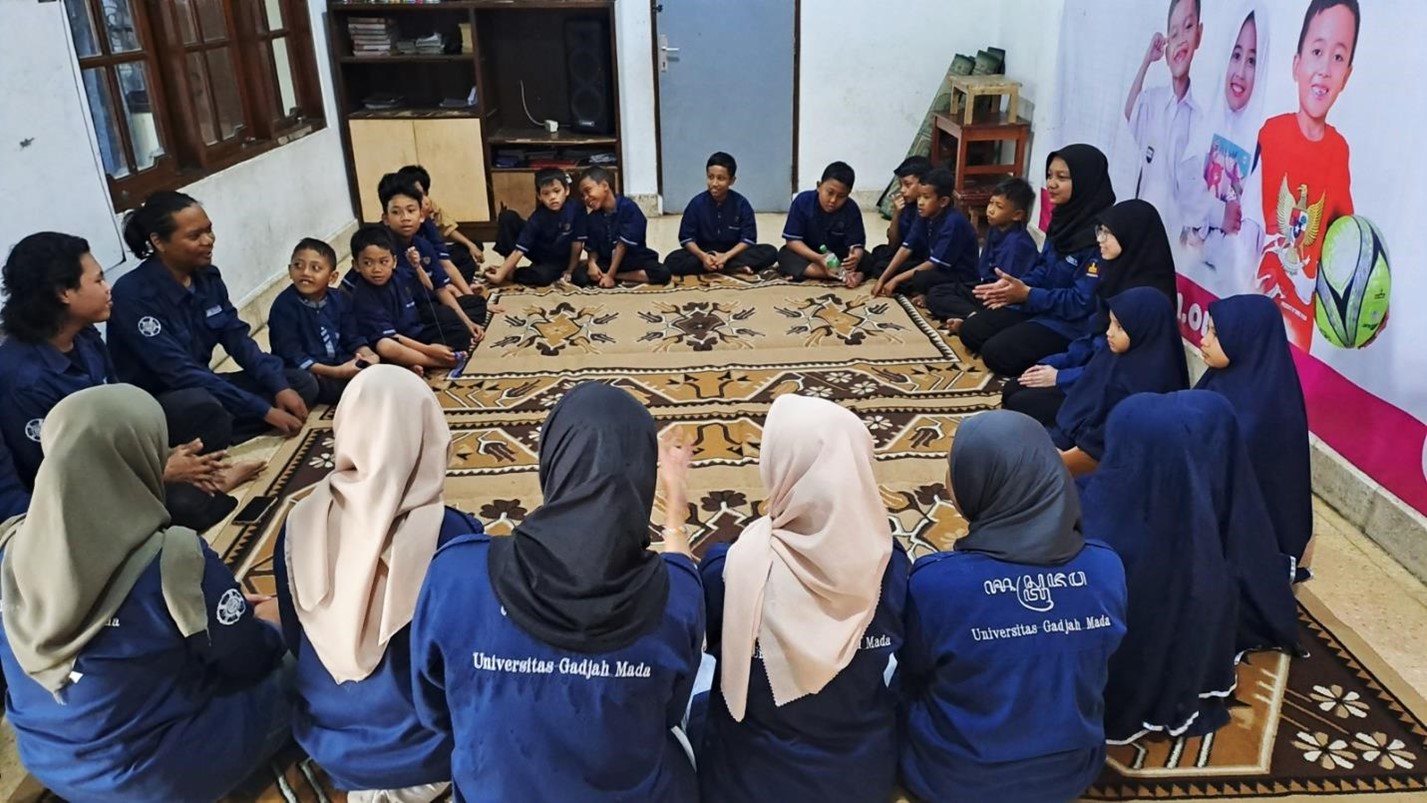
There were 16 children from grade 1 elementary to 1 junior high school involved in the event. The event opened at 09.00 AM WIB with an opening session and introductions. During the event, students and children had the opportunity to play together, creating a cheerful atmosphere with jokes and laughter. This togetherness became an important foundation in building intimacy between students and participants.


Opening session and introductions

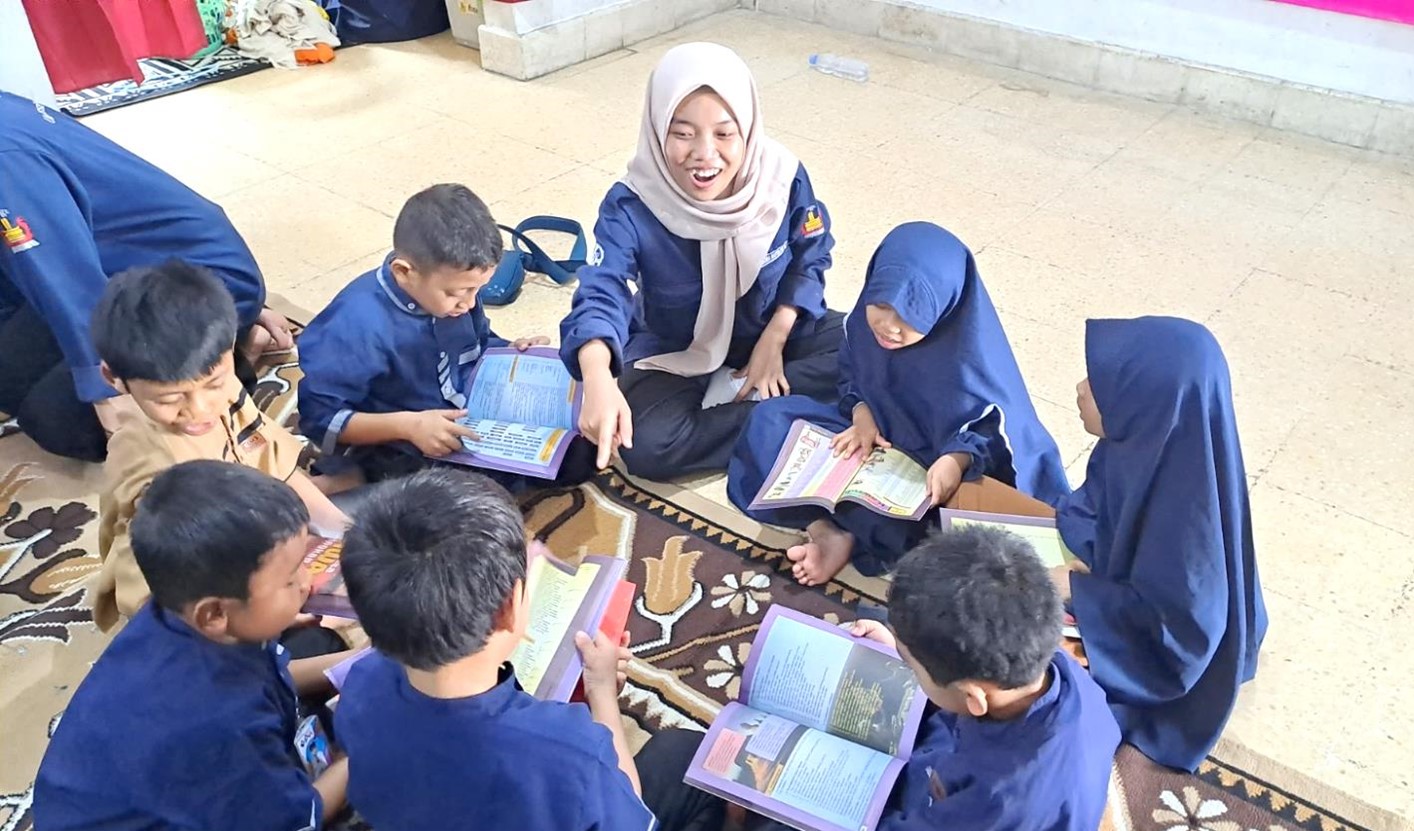
After the introductory session and games, the event continued with teaching and learning activities. Participants were divided into three groups according to educational level: group 1 for grades 1-2 elementary school, group 2 for grades 3-4 elementary school, and group 3 for grades 5 elementary school to 1 junior high school. Each group received materials tailored to their age and level of understanding, ranging from daily Javanese conversation, Javanese script writing, Javanese assignment consultation, and so on. Various teaching methods were used by the students to make learning fun and easy for the children to understand.

Teaching-learning session

After the learning session was over, it was time for ice breaking, where the participants were invited to sing together the song aja ndomblong aja and follow the guessing game with prizes. This session succeeded in sparking the children to be active in an exciting way.

Giving prizes to participants who won the guessing game

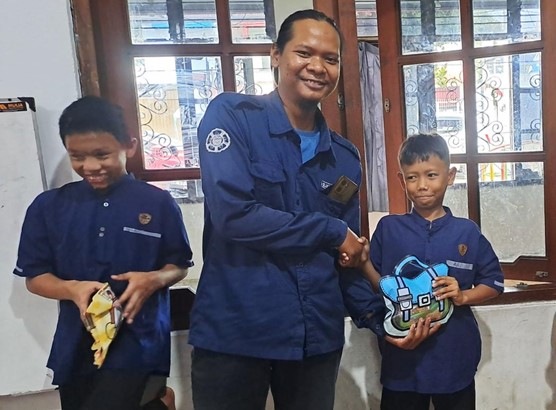
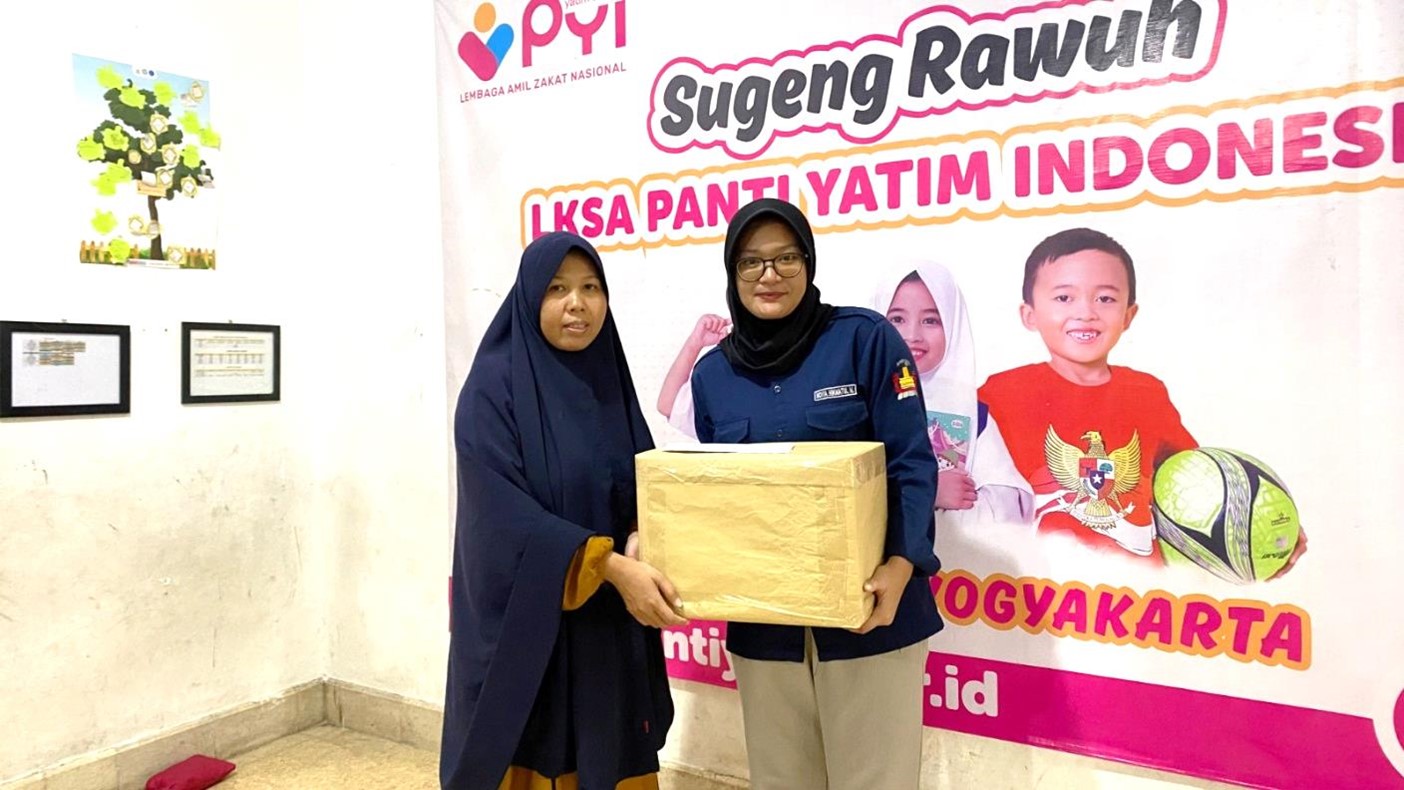
The children's enthusiasm could be felt from the beginning to the end of the activity, especially during the distribution of small gifts as an appreciation for the participants' activeness. In addition, Kamastawa also provided Pepak Basa Jawa books and reading books as a form of support for the participants future educational development. It is hoped that participants can easily access knowledge and enrich their insights, including those related to knowledge and preservation of Javanese culture.

Donation of reading books to the orphanage

The gifts given may be considered simple. However, prayers, hopes, and sincere intentions to share will live on and become the foundation in the implementation of the 'Kamastawa teach and share' program now and in the future.

Pangkur

College StudentMacapatStudentStudent's Work Wednesday, 18 September 2024

Dening: M. Rafi Nur Fauzy

akeh wong kang padha têka

nggawa darma amêjang mring sireki

nyata goro kumatungkul

kagunggung sukeng tyasnya

datan dunung ing sarak sanyatanipun

mula sire den prayitna

nulya amundura kaki

Asmarandana

MacapatStudentStudent's Work Wednesday, 18 September 2024

Dening: Fauzan Adi Fadurrahman

Sinasmita sêrat iki

minangka criyos sih smra

pêpengêt kang wus kadados

wit ing wyata gajah mada

nagri Ngayogyakarta

kang candrasêngkalanipun

wrêkseng tlaga bêdhah tunggal


nendra raka laksanani

den wêwayang suryanira

kalaning rêm netra katon

manising esêm gupita

syara mrêdu bêbungah

pijana datan ngrêridhu

yahagen kang raka rasa

Seputar Jawa: Records of Disease Outbreaks and Cure Methods in Javanese Written Literature

NewsSDGS Wednesday, 18 September 2024

Quoted in full from: cebu.fkkmk.ugm.ac.id

Recently, the World Health Organization (WHO) declared Monkeypox a global health emergency. The disease, which was first transmitted to humans in 1970 in the Republic of Congo, has been detected in Indonesia, and as of August 17, 2024, there were 88 confirmed cases (Rokom, 2024).  This incident reminds us of the COVID-19 pandemic that hit the world in 2020.

The history of disease outbreaks is not new. The Asian Flu (1957-1958), Spanish Flu (1918-1920), and The Black Death (1346-1353) (Kautsar, 2024), are just some examples of major outbreaks that have hit the world. In addition to major epidemics, various small endemics also often occur in certain regions.

Various disease outbreaks have been recorded in manuscripts and written records. Taruna Dharma Jati, Muhammad Ibu Prarista, Zalsabila Purnama, & Zakariya Pamuji Aminullah (2022) in a scientific article entitled Lawe Wĕnang Singid: The Red Thread of Pagĕblug Handling Continuity in the Perspective of Javanese Literature explains that Javanese written literature has contained information in the form of traces and handling of physical and cosmological plagues in Javanese oral and written literature.

Some manuscripts that contain information on the physical treatment of disease outbreaks include Naskah Ngelmu Kawarasan by Sardjita (1920), Naskah Lĕlĕmbut Kolerah by Samsimihardja (1914), and Naskah Lĕlara Gudhig by Sardjita (1921). These texts provide guidance on the prevention and treatment of various diseases that once plagued society in their day.


  • Manuscript of Ngelmu Kawarasan

The Ngelmu Kawarasan manuscript contains knowledge about diseases such as malaria, smallpox, bubonic plague, and tuberculosis. One part of the manuscript explains how to deal with bubonic plague:


[...] Rekadaya kangge nanggulangi pes, botĕn wontĕn malih kajawi tikus-tikus punika kĕdah dipuntumpĕs. Griya-griya ingkang kĕrĕp dipunrĕsiki. Sarta sampun nyimpĕni sisa tedha

“There is nothing more effective against bubonic plague than culling rats, cleaning houses frequently, and not storing leftover food.”

This guide shows the importance of environmental hygiene as a preventive measure against infectious diseases such as bubonic plague, which is transmitted by rats.


  • Manuscript of Lĕlĕmbut Kolerah

The Lĕlĕmbut Kolerah manuscript focuses on ways to avoid cholera. Here is one of the contents of the manuscript:

[...] Prentah nagara dikon ngombe banyu bening wedang ora kĕna mamangan kang ora matĕng, ora kalawan diratĕngi adus ing bangawan.

“The state commandment says to drink boiled water, not to eat raw food, and to bathe frequently in the river.”

Here, there is an emphasis on drinking boiled water and personal hygiene as preventive measures.


  • Manuscript of Lĕlara Gudhig 

The Lĕlara Gudhig manuscript explains how to prevent and cure gudik (gudhig), a contagious skin disease. One of the quotes from this manuscript states:

[...] Supaya wong sing wis waras iku ora kumat maneh. Yen panyegahe lalara gudhig iku arĕp ditindakake supaya wong-wong bumi liya-liyane padha bisa milu. Dheweke kudu dipĕrdi rĕsikan, yaiku: ngrĕksa rĕsiking kulite ing panggonan-panggonan sing pĕrlu. Sedhiyan banyu adus kudu dibecikake. Sarta kudu ambudidaya supaya rĕgane sabun dimurah bangĕt, nganti wong miskin padha kelar sabunan. Wong-wong mau ditĕrangake sing tĕmĕnan, yen ora mung awake bae sing mesthi rĕsikan nanging sandhangan lan paturone uga mangkonoa. [...]

“So that people who are already healthy from scabies do not relapse, prevention of scabies should be carried out so that people in other areas can follow each other. They should be accustomed to clean living, keeping their skin and other places clean. Good water should be provided for bathing, and efforts should be made to reduce the price of soap so that the poor can use it. These people are to be explained seriously, that not only the self must be clean but also the clothes and bedding as well. [...]”

This message highlights the importance of personal hygiene with access to hygiene tools, such as soap, as well as ensuring that clothes and bedding are clean, to prevent skin diseases.

The above are just a few of the various explanations of plague prevention in Javanese literature. Although it can be said to be old stuff, the principles contained are still relevant today, especially in the context of preventing disease outbreaks that are transmitted through unsanitary environments.

Further exploration of ancient Javanese manuscripts is an important step to broaden our horizons on the history of health and medicine in Indonesia. Collaboration between academics, philologists, and health practitioners can help develop the knowledge recorded in these manuscripts, so that it can benefit the wider community.


BIBLIOGRAPHY

Bestari, N.P. (2022, July 24). ). Sejarah Perjalanan Cacar Monyet dari Afrika sampai Mendunia. Cnbcindonesia.com. Accessed from https://www.cnbcindonesia.com/news/20220724153248-4-358100/sejarah-perjalanan-cacar-monyet-dari-afrika-sampai-mendunia.


Jati, T.D., Prarista, M.I., Purnama, Z. & Aminullah, Z.P. (2022). Lawe Wĕnang Singid: Benang Merah Kontinuitas Penanganan Pagĕblug dalam Perspektif Kesusastraan Jawa. Jumantara: Jurnal Manuskrip Nusantara,  13(01), 95-112, from https://doi.org/10.37014/jumantara.v13i1.2847.


Rokom. (2024, August 18). 88 88 Kasus Konfirmasi Mpox di Indonesia, Seksual Sesama Jenis jadi Salah Satu Penyebab. Sehatnegeriku.kemkes.go.id., Accessed from https://sehatnegeriku.kemkes.go.id/baca/rilis-media/20240818/1546252/88-kasus-konfirmasi-mpox-di-indonesia-seksual-sesama-jenis-jadi-salah-satu-penyebab/.


LIST OF IMAGES

Cebu.fkkmk.ugm.ac.id. (2020, August 19). ). CE&BU Bersama PKMK dan Cochrane Indonesia Menyelenggarakan Webinar Mengenai Bukti Ilmiah tentang Penanganan Wabah Pandemik COVID-19. Retrieved from https://cebu.fkkmk.ugm.ac.id/2020/08/19/cebu-bersama-pkmk-dan-cochrane-indonesia-menyelenggarakan-webinar-mengenai-bukti-ilmiah-tentang-penanganan-wabah-pandemik-covid-19/

Javanese Language, Literature, and Culture Study Program Students Mastermind the Puppet Performance of Gajah Mada Suci

College StudentNewsSDGSStudentStudent's ActivityStudent's Work Monday, 9 September 2024

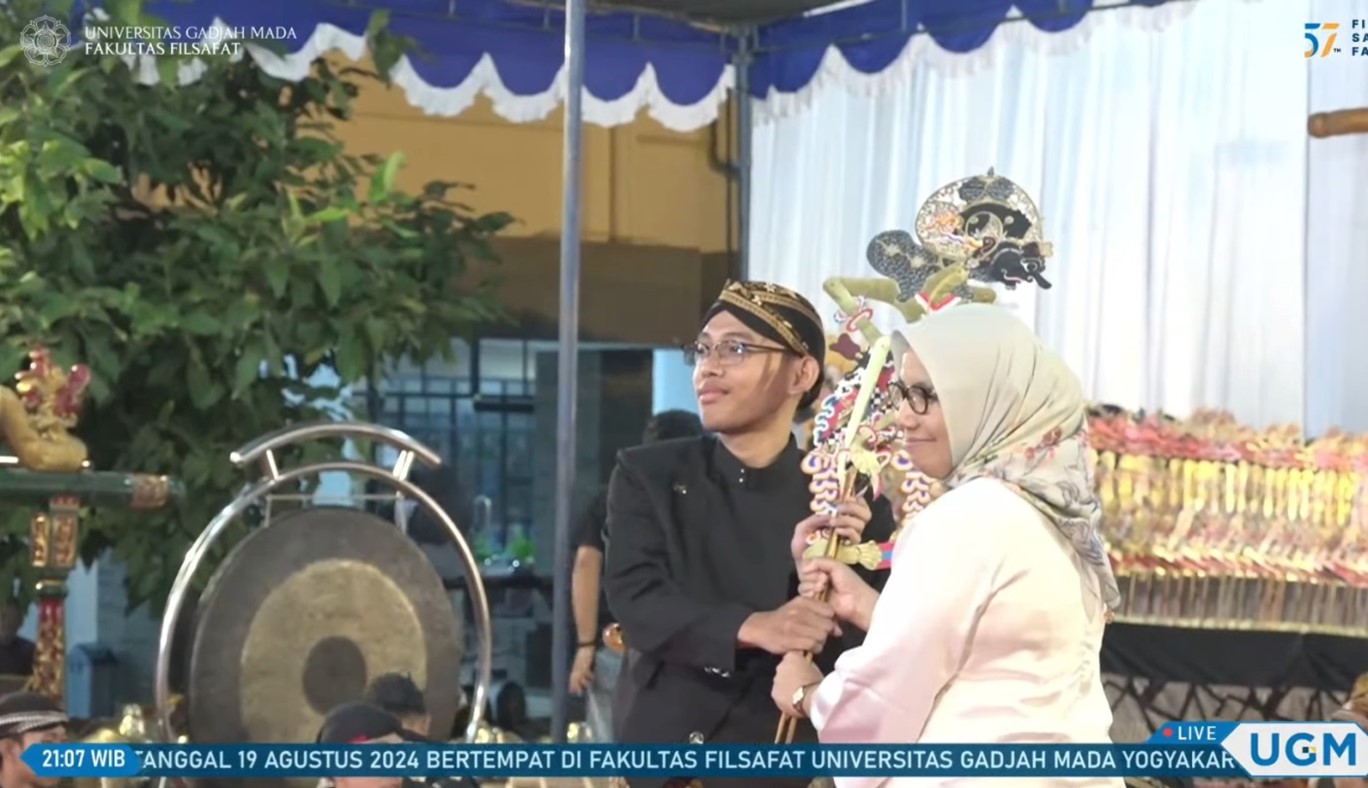
On Monday night (08/19/2024), the Faculty of Philosophy, Universitas Gadjah Mada (UGM), organized a shadow puppet show in the framework of the anniversary of the Faculty of Philosophy. The performance featured a special play, Gajah Mada Suci, which was performed collaboratively by UGM students who are members of the UGM Surakarta Style Javanese Arts Unit (UKJGS). One of the important roles in this performance was carried out by M. Rafi Nur Fauzy, a student of the Javanese Language, Literature, and Culture Study Program class of 2023, chosen to perform a play that was collaboratively worked on by the academics community of Universitas Gadjah Mada.

The script for the performance of Gajah Mada Suci was written by Dr. Rudy Wiratama S.I.P., M.A., lecturer of Javanese Language, Literature and Culture Study Program. Gajah Mada Suci tells the story of the scapegoating of Gajah Mada under the pretext of the failure of the Majapahit Kingdom expansion. The expansion also coincided with the kingdom's internal political turmoil. To make matters worse, Gajah Mada was accused by the elites of trying to remove him from the kingdom. As a result, Gajah Mada felt desperate and afterward he visited the residence of his friend, Mpu Tantular. After a long dialog, Gajah Mada was finally enlightened, that the efforts he had made so far were not in vain. The spirit of Amukti Palapa to unite the archipelago will continue in the next era. 

Handover of the Gajah Mada puppet from the Dean of the Faculty of Philosophy, Dr. Rr. Siti Murtiningsih, S.S., M. Hum, to M. Rafi Nur Fauzy. (Quoted from the Faculty of Philosophy Youtube Channel (01:22:51): https://www.youtube.com/watch?v=03x2lmMinTY).


“The performance of the Gajah Mada Suci is a form of depiction of the Indonesian nation that has experienced an identity crisis by winning over an interest and power through any means. Gajah Mada, who was a knight, finally moksa due to the deviant behavior of the Majapahit elite. After that, the Majapahit Kingdom lost its authority and then receded until it reached its collapse,” explained Rafi in an interview (05/09/2024).


As a special play, Rafi and his fellow UKJGS students practiced hard for a maximum performance. “The performance of Gajah Mada Suci has its own challenges for us. We practiced preparing for the performance in only half a month. Plus, this is my first time to play the Gajah Mada puppet, so it must be carefully prepared.”

“With these challenges, Alhamdulillah, the show can run smoothly. It was a great experience for me,” he continued.  Rafi hopes that the Gajah Mada puppet show will be held continuously because it is the work and identity of UGM as well as containing values that need to be socialized.

The existence of the Gajah Mada puppet is a real effort to promote the history and culture of the archipelago while still applying its relevance to the times. Through culture, we are not only 'displaying' aesthetics, but also reaffirming the nation's identity through noble values for a better Indonesia.

Author: Haryo Untoro


Image Source

Fakultas Filsafat. (2024, August 19). Pagelaran Wayang Kulit Dies Natalis ke-57 Fakultas Filsafat UGM. [01:22:51]. Accessed from https://www.youtube.com/watch?v=03x2lmMinTY.

Ratnaraya Presents Geol Denok Dance at Mangayubagya Graduation of FIB Graduates Period IV of the 2023/2024 Academic Year

College StudentNewsSDGSStudentStudent's Activity Monday, 9 September 2024

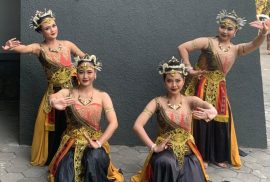
Thursday, August 29, 2024, became a special moment for the Faculty of Cultural Sciences (FIB) Universitas Gadjah Mada with the holding of the Mangayubagya Graduation of Undergraduates period IV of the 2023/2024 academic year. A total of 244 graduates celebrated their graduation, holding a bachelor's degree after completing their studies at FIB. The solemn graduation ceremony was made even more lively with a dance performance from Ratnaraya, a student dance unit of the Javanese Language, Literature and Culture Study Program.

Four students, Audrey Gisela, Ganes Larasati, Novalia Hidayatus S., and Wening Hidayati, presented Geol Denok Dance as part of the graduation ceremony. Geol Denok dance is a typical Semarang dance that depicts the joy of Semarang girls who dance with lively, energetic movements and accompanied by dynamic music. Etymologically, the word “geol” refers to the dance movements of the knees and hips, while “denok” is a term for girls in Semarang.

In an interview with Wening Hidayati, one of the performers, she said that Geol Denok Dance was a new dance for Ratnaraya members. “We try to give our best in this performance, and are very happy to be able to welcome the graduates of FIB UGM with Geol Denok Dance,” said Wening (09/05/2024).

Ratnaraya's performance is not only for entertainment, but also reflects the Faculty's commitment to preserving Nusantara culture, especially Javanese culture. This cultural preservation requires support and collaboration from various parties, and FIB UGM plays an active role by providing the widest possible space for art and cultural exploration, so that the nation's identity remains relevant and provides benefits to people's lives.

1234…6

Recent Post

  • Javanese Script Font Socialization Encourages Digital Javanese Script Use
    April 23, 2026
  • Seputar Jawa: The Digital Javanese Script Keyboard System
    April 13, 2026
  • First Gathering of the Sahacitta Cabinet of the Kamastawa Student Association: A Means of Introduction and Strengthening Togetherness
    April 6, 2026
  • Ghibran Arsha Daffa’ Musaffa’ Named Outstanding Student of the Year in 2026
    March 12, 2026
  • Seputar Jawa: Banten Javanese Dialect, a Dialect that Exists at the Westernmost of Javanese Island
    March 10, 2026

Calender

June 2026
M T W T F S S
1234567
891011121314
15161718192021
22232425262728
2930  
« Apr    
  • Fakultas Ilmu Budaya
  • Ujian Masuk UGM
  • PPSMB
  • Alumni
  • Jurnal Humaniora
June 2026
M T W T F S S
1234567
891011121314
15161718192021
22232425262728
2930  
« Apr    

News

  • Javanese Script Font Socialization Encourages Digital Javanese Script Use
    April 23, 2026
  • Seputar Jawa: The Digital Javanese Script Keyboard System
    April 13, 2026
  • First Gathering of the Sahacitta Cabinet of the Kamastawa Student Association: A Means of Introduction and Strengthening Togetherness
    April 6, 2026
Universitas Gadjah Mada

Javanese Language, Literature, and Culture Program
Department of Language and Literature
Faculty of Cultural Sciences
Universitas Gadjah Mada


Sosiohumaniora St., Bulaksumur, Yogyakarta
Telp : 0274-901134 Ext. 110, Fax : 0274-550451, WhatsApp : 081211911281
Email : nusantara@ugm.ac.id

© 2025 Javanese Language, Literature, and Culture Program FIB UGM

KEBIJAKAN PRIVASI/PRIVACY POLICY