• University
  • Academic Portal
  • University Library
  • Webmail
  • Arnawa
  • UM UGM
  • English
    • Bahasa Indonesia
    • English
Universitas Gadjah Mada Javanese Language, Literature, and Culture Program
Department of Language and Literature
Faculty of Cultural Sciences
Universitas Gadjah Mada
  • Home
  • Profile
    • Vision & Mission
    • Objective
    • Excellence
    • Career Prospects
    • Teaching Staff
  • Academic
    • Curriculum Flow
    • Courses Description
    • Distribution of Courses
    • Academic Calendar
    • COURSE AND ADMINISTRATION INFORMATION
    • Learning Outcomes
    • INTERNATIONAL CONFERENCES AND ACTIVITIES
  • KPPB
    • Collaboration
    • Research
      • Teaching Staff Research
      • Javanese Studies Archive – Arnawa
    • Service
      • Community Services
      • Podcast (Anarka Lālitya)
    • Scholarship
  • Student Affair
    • Student Satisfaction Survey
    • HMJ Kamastawa
    • Student’s Activity
    • Student’s Creations
    • Youtube Channel
    • Instagram
  • Alumnus
    • Alumnus Profile
  • Contact
  • Home
  • UGM
  • UGM
Arsip:

UGM

Javanese Script Font Socialization Encourages Digital Javanese Script Use

College StudentNewsSDGSStudentStudent's ActivityStudent's Work Thursday, 23 April 2026

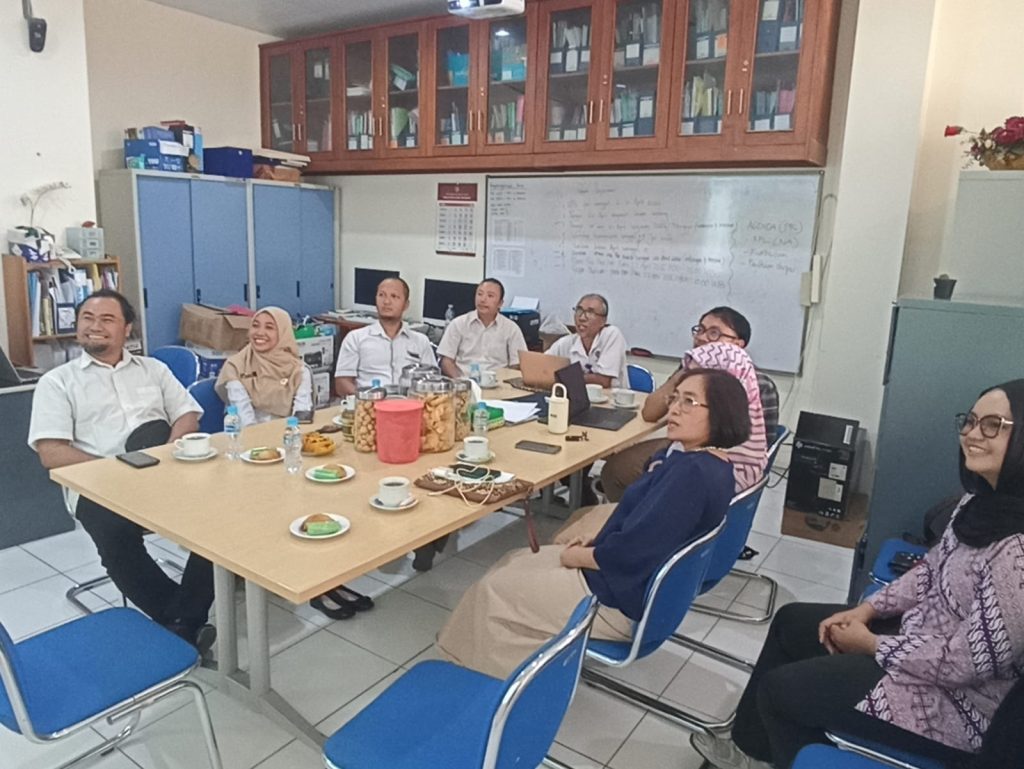
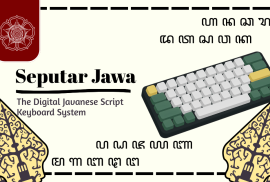
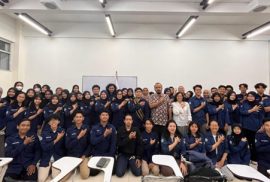
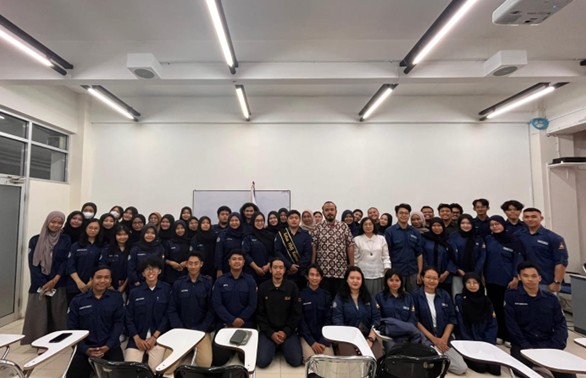
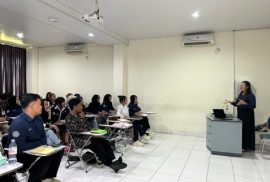
Yogyakarta, Selasa, 22 April 2026 — Program Studi Bahasa, Sastra, dan Budaya Jawa, Fakultas Ilmu Budaya Universitas Gadjah Mada, menyelenggarakan kegiatan sosialisasi fon aksara Jawa di ruang Margono 402. Kegiatan ini ditujukan bagi perwakilan dosen dan mahasiswa sebagai upaya meningkatkan pemahaman penggunaan aksara Jawa dalam ranah digital.

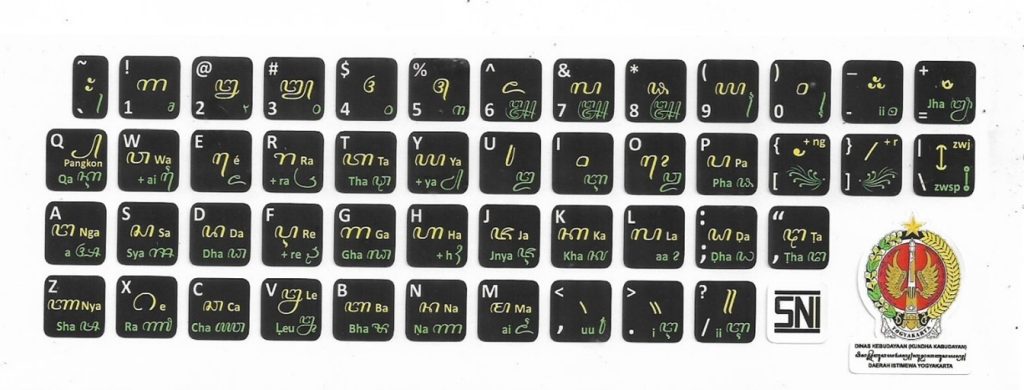
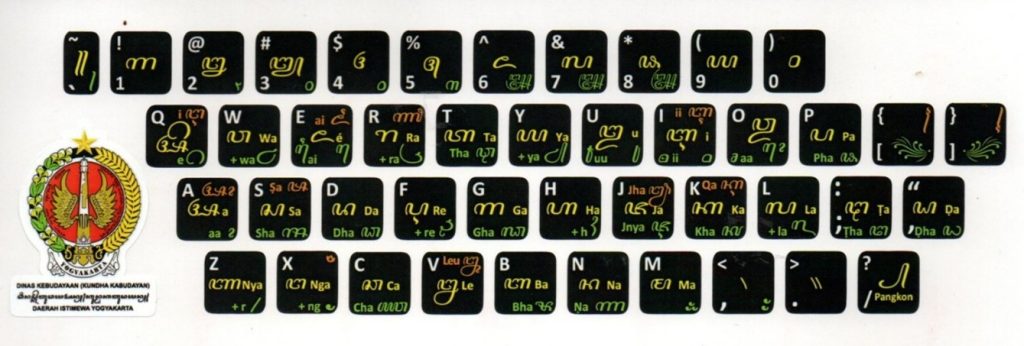
Sosialisasi ini dilatarbelakangi oleh berbagai kendala yang selama ini dihadapi civitas academica dalam penggunaan fon aksara Jawa. Sejumlah permasalahan yang kerap muncul antara lain perbedaan tata letak papan tombol dengan sistem huruf Latin, ketidakterbacaan fon pada perangkat tertentu yang ditandai dengan kemunculan simbol tofu atau kotak (tanda tidak terbaca), hingga perbedaan kompatibilitas antara sistem papan tombol atau keyboard layout seperti Windows dan Macintosh. Kondisi tersebut dinilai menghambat penggunaan aksara Jawa, padahal aksara ini menjadi bagian penting dalam kajian serta preservasi budaya di lingkungan program studi.

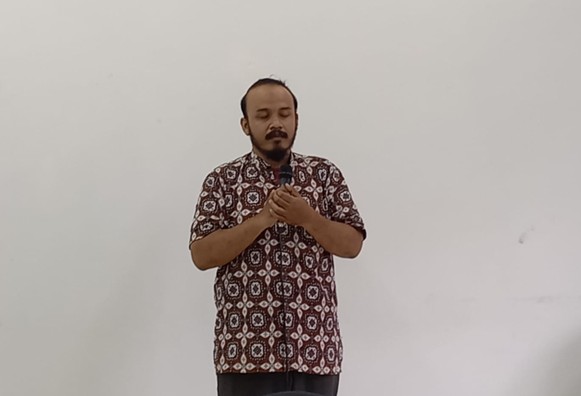
Untuk menjawab persoalan tersebut, kegiatan ini menghadirkan Setya Amrih Prasaja, S.S., M.Pd., alumni Program Studi Bahasa, Sastra, dan Budaya Jawa, yang dikenal sebagai pengembang fon aksara Jawa digital. Selain itu, kegiatan ini juga dihadiri oleh perwakilan Dinas Kebudayaan (Kundha Kabudayan) Daerah Istimewa Yogyakarta sebagai bentuk dukungan terhadap upaya pelestarian budaya melalui teknologi.

Dalam pemaparannya, narasumber menjelaskan proses pengembangan fon dan keyboard layout aksara Jawa, termasuk tantangan teknis yang dihadapi dalam penerapannya di berbagai platform. Ia juga menguraikan langkah-langkah pengenalan aksara Jawa digital di tingkat nasional maupun internasional, serta pengembangan sistem yang dapat dioperasikan pada berbagai perangkat. Tidak hanya itu, peserta juga diperkenalkan pada sejumlah fon aksara Jawa yang dapat diakses secara bebas tanpa kendala lisensi.

Melalui kegiatan ini, peserta diharapkan memperoleh pemahaman yang lebih komprehensif mengenai penggunaan papan tombol dan fon aksara Jawa dalam konteks digital. Lebih lanjut, sosialisasi ini diharapkan dapat mendorong penyebarluasan pengetahuan kepada civitas academica dan khalayak yang lebih luas, sebagai bagian dari upaya pelestarian sekaligus penguatan eksistensi aksara Jawa di era digital.

Penulis           : Haryo Untoro
Editor             : Haryo Untoro

First Gathering of the Sahacitta Cabinet of the Kamastawa Student Association: A Means of Introduction and Strengthening Togetherness

College StudentNewsSDGSStudentStudent's ActivityStudent's Work Monday, 6 April 2026

On Saturday (4/4/2026), the Student Association of the Javanese Language, Literature, and Culture Student Association, or Kamastawa Student Association, held its first meeting, or inaugural meeting, of the Sahacitta Cabinet in the Auditorium on the 7th floor of the Soegondo Building. This event served as a means of building camaraderie among the board members and introducing the organizational structure and work program plans for the next term.

The event began at 7:30 a.m. WIB with an opening reception, followed by a serving of cokekan (rice cake) to open the atmosphere. In addition to all board members and students, the event was also attended by lecturers from the Javanese Language, Literature, and Culture Study Program, Faculty of Cultural Sciences, Gadjah Mada University, as a token of support for student activities.

The event was then officially opened by various Executive Chairs and the Chair of Kamastawa Student Association 2026. On this occasion, the advisor of Kamastawa Student Association, Dr. Rudy Wiratama, S.IP., M.A., also delivered various keynotes and symbolically inaugurated the Sahacitta Cabinet.

Entering the main session, the board introduced the Sahacitta Cabinet by explaining the philosophy of the name, visual identity, and direction of the organization. Etymologically, "Sahacitta" comes from the Sanskrit words "saha," meaning "together," and "citta," meaning "feeling." This naming reflects the spirit of togetherness and a unified consciousness to achieve the organization's goals.

The event continued with an explanation of the division structure and the board members who will implement the work program for the period. Each division explained its function and focus as part of the organization's development efforts, as well as its contribution to the preservation and development of Javanese language, literature, and culture.

The event concluded with a joint documentation session marking the beginning of the Sahacitta Cabinet administration. Through this activity, it is hoped that all board members can work synergistically to strengthen the organization's role, both in the academic environment and in the wider community.

Author            : Haryo Untoro
Editor             : Haryo Untoro

Seputar Jawa: Banten Javanese Dialect, a Dialect that Exists at the Westernmost of Javanese Island

NewsSDGS Tuesday, 10 March 2026

Javanese has often been associated with the regions of Yogyakarta and Surakarta, which are known as the centers of Javanese culture. In addition, people are also familiar with the straightforward East Javanese dialect or the Banyumasan dialect, which is often considered unique by other Javanese speakers. However, not many people realize that Javanese is also alive and thriving outside these main areas, namely in Banten Province, at the western tip of Java Island. In this region, a language variation known as the Banten dialect of Javanese has developed.

In his classification of Javanese dialects, Ras (1994) divides Javanese into three major groups, namely the western, central, and eastern Javanese dialects. The Banten Javanese dialect (BJDB) belongs to the western Javanese dialect group and is often referred to as Serang Javanese or Jaseng, because most of its speakers are located in the city of Serang and Serang Regency (Rohbiah & Mu'awwanah, 2021).

There are several sources that mention different areas of BJDB usage. Research by Danasasmita and Pronggodigdo states that this dialect is used in the former Banten Residency, which includes the regencies of Serang, Pandeglang, and Lebak. Meanwhile, the West Java Provincial Tourism Office also includes the Tangerang area as a region where speakers of this dialect are found (Iskandarwassid, Mulyana, Hudari, et al., 1985). Geographically, the existence of this language is quite unique because it is located between several other language communities, namely Betawi speakers in the Jakarta area, Sundanese speakers in southern Banten, and Lampung speakers across the Sunda Strait (Rohbiah & Mu'awwanah, 2020).

The Influence of History on Dialect Development

The emergence of the Javanese language in Banten cannot be separated from the long historical process of the region. In the early 16th century, the Banten region was still under the rule of the Sunda Kingdom. This situation changed after the Sunda-Portuguese Treaty in 1522. The treaty sparked a conflict that led to the conquest of the Port of Banten in 1526 and Sunda Kelapa in 1527 by the armies of Demak and Cirebon (Iskandarwassid, Mulyana, Hudari, et al., 1985).

After the conquest, Banten was led by Syarif Hidayatullah, who came from Cirebon. However, politically, Banten was actually controlled by the Sultan of Demak. Under the leadership of Syarif Hidayatullah, Banten developed into an Islamic kingdom that was active in the trade and transportation network for Javanese and Islamic traders (Iskandarwassid, Mulyana, Hudari, et al., 1985). Patmadiwiria (1977) added that the settlement of Banten's conquering soldiers from Java also brought with it the Javanese language and culture. Therefore, it can be understood that the Demak and Cirebon Sultanates were the cause or origin of the emergence of the Banten dialect.

The influence of Javanese culture also grew stronger in the 17th century when the Mataram Sultanate expanded its influence to West Java. The spread of Javanese culture at that time occurred not only among the elite, but also among the lower classes (Iskandarwassid, Mulyana, Hudari, et al., 1985).

In addition to historical factors, geographical conditions also shaped the development of BJDB. The existence of the Port of Merak, which served as a connecting route between Java and Sumatra, enabled intensive interaction with the Lampung community. This interaction gave rise to communities of Lampung language speakers in several coastal areas of Banten, such as in the Anyer District. This cultural contact then influenced the vocabulary of the Banten dialect of Javanese (Rohbiah & Mu'awwanah, 2021).

Unique Pronunciation

As a dialect, BJDB has distinctive characteristics, especially in terms of pronunciation and vocabulary. One of the most prominent unique features is the variation in the pronunciation of the phoneme /a/. In a study conducted by Iskandarwassid, Mulyana, Hudari, et al. (1985), it is mentioned that this sound has three different pronunciations, depending on the region of the speaker.

In the areas of Serang City, Cilegon, and the surrounding regions, the phoneme /a/ is often pronounced closer to the sound [ɤ], which is similar to the sound “eu” in Sundanese (Patmadiwiria, 1977; Iskandarwassid, Mulyana, Hudari, et al., 1985). Meanwhile, in the suburbs of Serang, such as Barugbug, Pagelaran, Cikande, and Kragilan, the phoneme /a/ is still pronounced as [a]. In some areas, such as Rancasawah and parts of Cilegon, the phoneme /a/ is pronounced as [ɔ] (Iskandarwassid, Mulyana, Hudari, et al., 1985).

Variations in the sound of the phoneme /a/ occur in several circumstances, including the following (Karia, 1914; Iskandarwassid Mulyana, Hudari, et al., 1985):

  1. The phoneme /a/ in open syllables will produce variations in sound. Examples: sira [sirɤ], ora [orɤ], and kula [kulɤ].
  2. Specifically in the Serang City area and its surroundings, /a/ can be pronounced [ɤ] in one-syllable words, such as mah [mɤh]. However, other one-syllable words such as lah, la, and tah are still pronounced [a].
  3. If /a/ is located in a word with an open syllable, then followed by a suffix, /a/ is pronounced as /a/. Examples: sira [sirɤ] becomes sirane [siranI] and apa [apɤ] becomes apane [apanI].

Distinct Vocabulary

In addition to pronunciation, BJDB also has a number of words that differ from the standard Javanese language used in Yogyakarta and Surakarta. Here are five examples and their pronunciations based on and adapted from Karia (1914), Iskandarwassid, Mulyana, Hudari, et al. (1985), Poerwadarminta (1939), Sulistyowati (2015), and Patmadiwiria (1977):

  1. kastelâ or kêstelâ ‘papaya’, which in standard Javanese is called kates
  2. sirâ ‘you’, which in standard Javanese is called kowe
  3. kepremen ‘how’, which in standard Javanese to kepiye
  4. ayun ‘want’, which in standard Javanese is called arep
  5. ning ‘if’, which in standard Javanese is called yen
  6. derbe ‘have’, which in standard Javanese is called duwe
  7. linggar ‘go’, which in standard Javanese to lungå

These vocabulary differences show that BJDB has unique lexical developments and is not completely identical to standard Javanese.

*For convenience, the author provides special symbols for <a>, which is pronounced [a], <å>, which is pronounced [ɔ], and <â>, which is pronounced [ɤ].

Language Contact Results

The uniqueness of BJDB is also reflected in the large number of words resulting from contact with other languages. Sundanese, Betawi, Malay, and Lampung languages have also influenced the vocabulary of this dialect. Based on Rohbiah & Mu'awwanah (2021), the following are examples of the influence of each of these languages.

  1. From Sundanese, for example, the words kolot, meaning ‘old’, and beuleum, meaning ‘to burn’, are used by BJDB speakers in Binong Village, Pamarayan District, instead of the words tuâ and ngobong in BJDB.
  2. From the Betawi language, there are the words engkong, which means ‘grandfather’, and betot, which means ‘to pull’, which are used by BJDB speakers in Pedaleman Village, Tanara District, instead of using the words ende lanang and narik in BJDB.
  3. The influence of the Malay language can be seen in the use of the word laki to refer to ‘husband’ by BJDB speakers in Kampung Baru & Binong Villages, Pamarayan District, Pontang & Wanayasa Villages, Pontang District, Tanara & Pedaleman Villages, Tanara District, and Anyar & Cikoneng Villages, Anyar District, instead of using the words rayat lanang in BJDB.
  4. The influence of the Lampung language is evident in the words eppak, which means ‘four’, and duwai, which means ‘lake’, used by BJDB speakers in Anyar Village, Anyar District, instead of using the words papat and danau in BJDB.

This phenomenon of absorption usually occurs in areas that have a high intensity of cultural contact with certain language communities.

Bibliography

Iskandarwassid; Mulyana, Y.; Hudari, A; Sjarif, T.K.S. (1985). Struktur Bahasa Jawa Dialek Banten. Jakarta: Departemen Pendidikan dan Kebudayaan.

Karia, M. M. D. (1914). Dialect Djawa Banten. Batavia: G Kolff & Co.

Patmadiwiria, M. (1977). Kamus Dialek Jawa Banten-Indonesia. Jakarta: Departemen Pendidikan dan Kebudayaan.

Poerwadarminta, W.J.S. (1939). Baoesastra Jawa. Batavia: J.B. Wolters’ Uitgevers-Maatschappij N. V. Groningen.

Ras, J.J. (1994). Inleiding tot het Modern Javaans. Leiden: KITLV.

Rohiah, T.S., & Mu’awwanah, U. (2020). Inovasi Leksikal Bahasa Jawa Banten di Perbatasan Kabupaten Serang Provinsi Banten: Kajian Geografis – Linguistik. Serang: Media Madani

Sulistyowati. (2018). Kompleksitas dan Fleksibilitas Realisasi Bunyi Vokal Bahasa Jawa. Mutiara dalam Sastra Jawa Edisi 4, 4(3), 29-45.


List of Figures

Akbar. (2025, October 13th). Keraton Kaibon, Jejak Kejayaan Kesultanan Banten di Kota Serang [Picture]. Serangkota.go.id. https://serangkota.go.id/detailpost/keraton-kaibon-jejak-kejayaan-kesultanan-banten-di-kota-serang.

Author: Haryo Untoro
Editor: Haryo Untoro & Nurul Fajri Rahmani
Thumbnail Maker: Nurul Fajri Rahmani

Three Students from the Javanese Language, Literature, and Culture Study Program Successfully Graduated in 3.5 Years

College StudentNewsSDGSStudentStudent's Activity Thursday, 26 February 2026

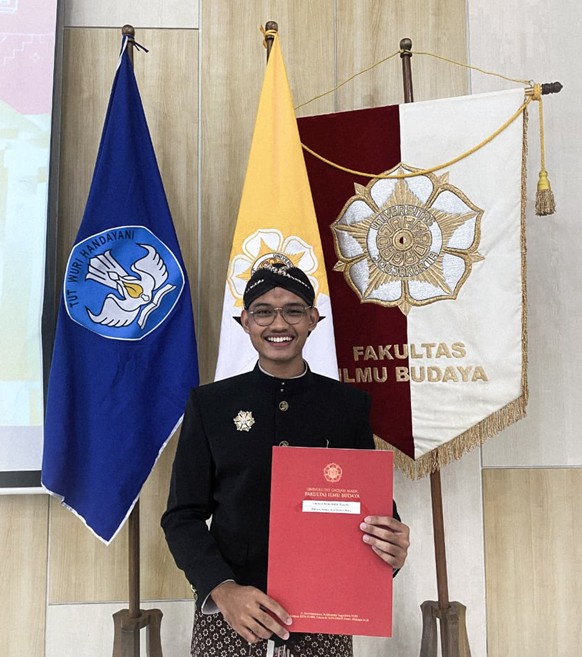
Good news comes from the Javanese Language, Literature, and Culture Study Program, Faculty of Cultural Sciences, Universitas Gadjah Mada. Three students from the program successfully completed their undergraduate studies in 3.5 years or seven semesters, faster than the usual study period of four years or eight semesters. The three students are Yasmin Nabiha Sahda, Hanundita Salma, and Pesdhi Sekar Hayumay. They participated in the graduation ceremony for Period II of the 2025/2026 Academic Year, which was held on Wednesday, February 25, 2026.

The topics of their final projects were related to various aspects of Javanese language, literature, and culture. Yasmin Nabiha Sahda researched the folklore of Putri Ayu Limbasari as part of her oral literature study. Hanundita Salma examined the language used by fishermen in the Cilacap region, which shows the dynamics of language use in coastal communities. Meanwhile, Pesdhi Sekar Hayumay researched the toponymy of hamlets in Kapanewon Samigaluh, located in the Kulon Progo region, highlighting aspects of place naming from a local cultural and historical perspective.

Through dedication and commitment to completing their research, the three students were able to successfully complete their theses in a relatively short period of time. This achievement is expected to inspire and motivate other students, especially those in the Javanese Language, Literature, and Culture Study Program, to continue to excel and plan their studies well so that they can complete their education optimally.

Author: Haryo Untoro
Editor: Haryo Untoro

Handover of HMJ Kamastawa Positions for the 2026/2027 Period

College StudentNewsSDGSStudentStudent's Activity Tuesday, 24 February 2026

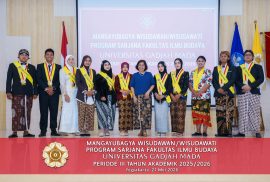
The Student Association of the Department of Javanese Language, Literature, and Culture (HMJ Kamastawa) held a handover ceremony for the 2026/2027 management on Monday (06/23/2026) at Poerbatjaraka Building 203, Faculty of Cultural Sciences, Gadjah Mada University. The event was attended by the HMJ Kamastawa executive board for the 2025/2026 and 2026/2027 periods, as well as faculty representatives from the study program.

Also present at the event were the Head of the Javanese Language, Literature, and Culture Study Program, Dr. Sulistyowati, M.Hum., and the advisor to HMJ Kamastawa, Dr. Rudy Wiratama, S.I.P., M.A. The presence of the study program leaders emphasized the program's support for the continuity of student organizations.

The event began at 4:15 PM and was hosted by Muhammad Bagus Ulinnuha. The series of activities began with the singing of the Indonesian national anthem and the Gadjah Mada hymn.

Opening remarks by Dr. Rudy Wiratama, S.I.P., M.A., as advisor to HMJ Kamastawa

In his speech, Dr. Rudy Wiratama, S.I.P., M.A. emphasized the importance of maintaining achievements in a positive manner and building the widest possible network. He also advised the administrators to always apply the values of guidance, compassion, and nurturing, both with fellow administrators, seniors, and alumni.

Opening remarks by the Head of the Javanese Language, Literature, and Culture Study Program, Dr. Sulistyowati, M.Hum.

Meanwhile, Dr. Sulistyowati, M.Hum. reminded the administrators to remain resilient in facing the dynamics and challenges of the organization. She emphasized the importance of coordination with lecturers and maintaining a balance between achievement, physical and mental health, and harmonious communication within the management.

The main procession of the event consisted of the reading and signing of the minutes by the Chair of HMJ for the 2025/2026 period, Dwiyan Teguh Darmawan, followed by the symbolic handover of office by the Head of the Study Program. Next, the inauguration script was read by Dr. Rudy Wiratama, S.I.P., M.A., and the oath of office was led by the Chair of HMJ for the 2026/2027 period, Wreksi Awinanggya Pinandhita.

Handover of positions to the Kamastawa HMJ management

The event then continued with a symbolic handover of positions to the Kamastawa HMJ management, a message and impressions from the 2025/2026 HMJ period, and a speech from the Chair of the 2026/2027 HMJ period. The series of activities was closed with a group photo session to capture the moment of togetherness.

The handover ceremony for the Kamastawa Student Association for the 2026/2027 period is an important moment for the new board to continue and improve the quality of the organization. It is hoped that the new board will be able to implement flagship programs optimally. Thus, HMJ Kamastawa can continue to play an active role, making positive contributions to nguri-uri ‘preserving’ and ngurip-urip ‘revitalizing’ Javanese culture, as well as maintaining the good reputation of the Javanese Language, Literature, and Culture Study Program. Congratulations and success to the HMJ Kamastawa management for the 2026/2027 period.

Seputar Jawa: Preservation of Javanese Script through the Use of Free Digital Fonts

NewsSDGS Wednesday, 28 January 2026

Javanese script is one of the traditional writing systems in Indonesia that is still known and used today. This script is classified as an abugida or syllabic script and is part of the Kawi script family (Maulana, 2020). Since ancient times, Javanese script has played an important role in documenting various knowledge, cultural values, and literary works recorded in Javanese manuscripts.

Technological developments and globalization have had a significant impact on patterns of communication within society. The increasingly dominant use of the Latin alphabet, particularly among the younger generation, has led to the Javanese script and other regional scripts being marginalized. The lack of use in everyday life has the potential to result in a decline in the ability to read and write Javanese script among future generations.

This situation calls for revitalization efforts that can adapt regional scripts to the changing times. This revitalization is an effort to introduce the script symbolically and encourage its active use today.

One form of Javanese script revitalization that is relevant to technological developments is through the provision of Javanese fonts. Fonts are digital representations of scripts that enable their use on various platforms, such as computers, devices, digital documents, and online media.

The existence of Javanese fonts facilitates the learning and teaching process, as the script can be written, read, and studied in a practical manner. In addition, Javanese fonts also open up opportunities for the use of script as an aesthetic element in graphic design and creative works.

To date, various Javanese fonts are available and accessible through various media. However, in order for their use to be sustainable, both for writing and aesthetic purposes, the use of license-free Javanese fonts is a more appropriate choice.

License-free fonts allow for widespread use without legal barriers or licensing fees. This greatly supports the use of Javanese script by educational institutions, cultural communities, designers, and the general public.

As a form of support for the preservation of Javanese script, in 2020 the Yogyakarta Special Region Cultural Office released a Javanese font developed by Apri Nugroho. There are two types of fonts introduced, namely nyk Ngayogyan and nyk Ngayogyan Jejeg. Both fonts can be downloaded via the following links:

  • Fon nyk Ngayogyan

https://aksaradinusantara.com/fonta/nyk-ngayogyan.font

  • Fon nyk Ngayogyan Jejeg

https://aksaradinusantara.com/fonta/nyk-ngayogyan-jejeg.font


In addition to providing fonts, the developers also provide installation guidelines, typing instructions, and keyboard layouts. These guidelines are intended to make it easier for users to install and use Javanese fonts correctly and consistently.

The use of Javanese script is also linked to Sustainable Development Goals (SDGs) 4 and 17. In the context of SDG 4 on quality education, the existence of Javanese script supports the provision of inclusive, contextual, and locally-based teaching materials, thereby facilitating the learning process and improving students' cultural literacy. Meanwhile, the achievement of these goals cannot be separated from SDG 17 on partnerships for the goals, because the development and utilization of Javanese phonetic script requires collaboration between the government, academics, technology developers, cultural communities, and the wider community.

Author           : Haryo Untoro

Editor             : Haryo Untoro

Bibliography

Maulana, R. (2020). Aksara-Aksara di Nusatara: Seri Ensiklopedia. Writing Tradition Project

Introducing the Cultural Literature Cluster of Universitas Gadjah Mada in the Saba Tilik 6.0 X Saba Education Fair Activity

College StudentNewsSDGSStudentStudent's ActivityStudent's Work Saturday, 24 January 2026

SMAN 1 Bantul held the Saba Tilik 6.0 X Saba Education Fair on Thursday (January 22, 2026). This event aimed to provide motivation and further educational information to students, especially final-year students, so they could gain a broader understanding of the world of higher education and study program options.

Two students from the Javanese Language, Literature, and Culture Study Program, class of 2025 at Universitas Gadjah Mada (UGM), who are also alumni of SMAN 1 Bantul, Nurul Fajri Rahmani and Tri Wulandari, participated as speakers. Their presence allowed them to share their academic experiences and introduce the various study programs at Universitas Gadjah Mada to the students.

In an online interview with Nurul Fajri Rahmani on Friday (January 23, 2026), the material focused on introducing the literary and cultural groups, specifically the Javanese Language, Literature, and Culture Study Program. Fajri also shared his experiences in pursuing higher education through the National Achievement-Based Selection (SNBP) and National Test-Based Selection (SNBT) pathways.

Fajri revealed that the main challenge in the event was students' low interest in the Literature and Culture field. "Therefore, we strive to explain as well as possible the job prospects, academic potential, and the various benefits and interesting experiences that can be gained while studying in the Literature and Culture field," he explained. This explanation is expected to broaden students' horizons and change their perspectives on the study of literature and culture.

For Fajri, participating in the Saba Tilik 6.0 X Saba Education Fair was a truly memorable experience. Besides returning to his alma mater and meeting his classmates, he also had the opportunity to share stories and information about the world of college. He hopes that similar events can continue to be held on an ongoing basis to spark students' interest and enthusiasm in pursuing higher education.

The Saba Tilik 6.0 X Saba Education Fair aligns with the Sustainable Development Goals (SDGs), particularly SDG 4, which focuses on quality education through providing inclusive and equitable access to information on higher education. Providing this information helps students make more conscious and informed educational decisions. More broadly, this activity also intersects with SDG 11 (Sustainable Cities and Human Settlements), namely by increasing literacy and insight in educational communities, which are the foundation for the formation of an informed and sustainable society. The collaboration between secondary schools and universities in this activity also reflects the implementation of SDG 17, namely partnerships to achieve sustainable development goals through synergy between educational institutions.


Author : Haryo Untoro
Editor  : Haryo Untoro
Gamasutra’s Echoes in Preserving the Culture of the Archipelago

College StudentNewsSDGSStudentStudent's ActivityStudent's WorkUncategorized Thursday, 15 January 2026

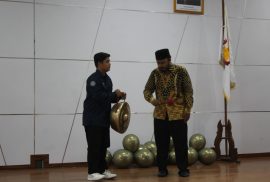
Gamasutra ‘Gamelan Mahasiswa Sastra Nusantara’ is a forum for developing the creativity of students in the Javanese Language, Literature, and Culture Study Program, Faculty of Cultural Sciences, Gadjah Mada University (UGM). Operating under the auspices of the Arts Interest and Talent Division of the Student Association (HMJ) of the Javanese Language, Literature, and Culture Student Community (Kamastawa), this community is committed to preserving gamelan music as part of the cultural wealth of the Indonesian archipelago.

Gamasutra's commitment to traditional arts not only serves as a learning tool for students, but also represents cultural identity in the academic environment. Through its ongoing dedication, Gamasutra has consistently served as an ambassador for the Javanese Language, Literature, and Culture Study Program in various official forums and art festivals, both at the faculty and university levels.

Gamasutra's performance at the UGM Faculty of Philosophy Karawitan Festival

Throughout its journey, Gamasutra has participated in a number of strategic and ceremonial events at Gadjah Mada University. These include the Faculty of Philosophy's Karawitan Festival, the groundbreaking ceremony for the new Faculty of Cultural Sciences building, and supporting the inauguration of the organization through the Grand Launching of HMJ KAMASTAWA. Additionally, Gamasutra is actively involved in inter-institutional networking activities through the Sowan Kadang Sastra Jawa UGM x Universitas Indonesia agenda.

Gamasutra's performance at the UGM X UI Javanese Literature gathering

Amidst the challenges of modernity, Gamasutra continues to demonstrate its existence as a preserver of Javanese culture. This is evidenced by the trust given to Gamasutra as the opening and accompanying act for the 2025 Pionir Kampung Budaya (Pioneer Cultural Village) event and the 4th Semeja International Forum (Malay Javanese Seminar). The international forum will be held at Gadjah Mada University in 2025.

Gamasutra's performance at the Semeja international seminar

By combining technical expertise in karawitan art and cultural literacy, Gamasutra is committed to keeping traditional music alive. This effort is part of strengthening the nation's identity so that it remains dynamic, relevant, and can be passed on to future generations.

Gamasutra's work is in line with Sustainable Development Goal (SDG) 4, namely quality education, through its role as a learning space that encourages the development of student competencies in the fields of traditional music, cultural literacy, and the strengthening of scientific identity in the academic environment. In addition, Gamasutra's involvement in various cross-faculty, institutional, and international forum activities, such as the collaboration between UGM and the University of Indonesia and participation in the Semeja IV International Forum, reflects the implementation of SDG 17, namely strengthening partnerships to achieve sustainable development goals. Through these collaborations, Gamasutra not only expands its academic and cultural networks but also contributes to collective efforts to preserve the inclusive and sustainable culture of the Indonesian archipelago.


Author            : Maysa Putri Fatihah & Haryo Untoro
Editor             : Haryo Untoro


Dr. Sulistyowati, M.Hum., Appointed as Head of the Javanese Language, Literature, and Culture Study Program for the 2026-2030 Period

NewsSDGS Wednesday, 7 January 2026

Quoted in full from: https://www.instagram.com/p/DTZVAzRARUy/?utm_source=ig_web_copy_link&igsh=MzRlODBiNWFlZA==

The Javanese Language, Literature, and Culture Study Program officially recorded a change in leadership on January 7, 2026. The position of Head of the Study Program is now entrusted to Dr. Sulistyowati, M.Hum., who will carry out this mandate for five years, namely for the 2026–2030 period.

Dr. Sulistyowati, M.Hum., replaces Dr. Daru Winarti, M.Hum., who previously served as Head of the Javanese Language, Literature, and Culture Study Program for the 2021–2025 period. During her leadership, Dr. Daru Winarti implemented various academic programs and contributed to strengthening the governance and scientific identity of the study program.

This change in leadership is expected to be a sustainable step in the development of the Javanese Language, Literature, and Culture Study Program. With new leadership, the Javanese Language, Literature, and Culture Study Program is expected to continue to grow and enhance its role, particularly in the fields of teaching, preservation, and development of Javanese language, literature, and culture.


Author           : Haryo Untoro
Editor             : Haryo Untoro
List of Figures

Sastrajawaugm [@sastrajawaugm]. (2026, 12 Januari). [ NDHEREK MANGAYUBAGYA ] Pada tanggal 7 Januari 2026, Dr. Sulistyowati, S.S., M.Hum. resmi dilantik sebagai Kepala Program Studi S1 Bahasa, Sastra, dan Budaya Jawa. Selamat mengemban jabatan akademik, Ibu Sulis🙌 [Foto]. Instagram. https://www.instagram.com/p/DTZVAzRARUy/?utm_source=ig_web_copy_link&igsh=MzRlODBiNWFlZA==

The Challenge Facing Young Puppeteer Rafi Nur Fauzy in Performing Wayang Gedhog on National Puppetry Day

College StudentNewsSDGSStudentStudent's ActivityStudent's Work Thursday, 4 December 2025

The Surakarta Style Javanese Arts Unit (UKJGS) of Universitas Gadjah Mada (UGM) is collaborating with the Student Association of the Department of Puppetry (HMJ Pedhalangan) of the Indonesian Institute of the Arts (ISI) Yogyakarta to hold a collaborative Wayang Gedhog performance in commemoration of National Puppetry Day. The performance will take place on Thursday, November 27, 2025, at 7:00 p.m. WIB at the Pendapa Tari ISI Yogyakarta. This event is a collaborative synergy between young artists from UKJGS UGM and HMJ Pedalangan ISI Yogyakarta in preserving this rare performing art.

The Wayang Gedhog performance to commemorate National Wayang Day was organized by HMJ Pedalangan ISI Yogyakarta, inviting UKJGS UGM to participate. As the coordinator of the Pedhalangan division at UKJGS UGM and a student of the Javanese Language, Literature, and Culture Program at UGM, Muhammad Rafi Nur Fauzy explained that this is a great opportunity to introduce UKJGS's work in the field of pedalangan, while also enlivening the National Wayang Day celebration.

The role of puppeteer in this Wayang Gedhog performance was entrusted to Rafi, accompanied by music from other UKJGS members. This performance featured Wayang Gedhog because Wayang Gedhog performances are rarely staged. This type of puppet show had been dormant for a long time and was revived several decades ago. Wayang Gedhog performances are actually considered stiff because they are constrained by the palace hierarchy in their content. Wayang Gedhog was also featured as an introduction to the rich heritage of puppetry to the general public.

The story of Panji Laleyan Duta (Sayembara Keris Jaka Piturun) was chosen to be performed because it was relevant to the current situation and information that was happening and becoming a hot topic of discussion in society, namely the polemic over the change of king in the Surakarta (Solo) Palace. According to Rafi, we need to question how this Javanese monarchy can survive in the midst of a democratic situation. Not only in the Surakarta Palace, but also in Yogyakarta.

As a student of the Javanese Language, Literature, and Culture Study Program at UGM, Rafi expressed his joy and pride at having the opportunity to perform Wayang Gedhog. Currently, not many puppeteers are willing to perform Wayang Gedhog because the performance is considered difficult due to its fixed accompaniment. Only a few puppeteers understand the performance. With the guidance of Dr. Rudy Wiratama, S.I.P., M.A., a lecturer in the Javanese Language, Literature, and Culture Program, Rafi was able to successfully perform Wayang Gedhog, which is considered difficult.

The Wayang Gedhog performance supports the achievement of SDG point 4 Quality Education and point 8 Decent Work and Economic Growth, namely as a medium of education and introduction to the treasure trove of wayang and enriching knowledge about cultural heritage in the academic environment, as well as an opportunity for the regeneration of performing arts and livelihoods for young artists. Not only that, this performance contributes to the achievement of SDG point 16 Peace, Justice, and Strong Institutions by using the role of art as a means to voice constructive criticism of the leadership polemic in the Surakarta Palace. The participatory collaboration between UKJGS UGM and HMJ Pedhalangan ISI Yogyakarta supports the achievement of SDGs and point 17 Partnerships for the Goals.


Author: Maysa Putri Fatihah

Editor: Haryo Untoro

123…9

Recent Post

  • Javanese Script Font Socialization Encourages Digital Javanese Script Use
    April 23, 2026
  • First Gathering of the Sahacitta Cabinet of the Kamastawa Student Association: A Means of Introduction and Strengthening Togetherness
    April 6, 2026
  • Seputar Jawa: Banten Javanese Dialect, a Dialect that Exists at the Westernmost of Javanese Island
    March 10, 2026
  • Seputar Jawa: Forms of Javanese Proverbs
    March 9, 2026
  • Graduating in 3.5 Years: The Strategy of Three Students from the Javanese Language, Literature, and Culture Study Program at UGM in Completing Their Studies
    March 2, 2026

Calender

April 2026
M T W T F S S
 12345
6789101112
13141516171819
20212223242526
27282930  
« Mar    
  • Fakultas Ilmu Budaya
  • Ujian Masuk UGM
  • PPSMB
  • Alumni
  • Jurnal Humaniora
April 2026
M T W T F S S
 12345
6789101112
13141516171819
20212223242526
27282930  
« Mar    

News

  • Javanese Script Font Socialization Encourages Digital Javanese Script Use
    April 23, 2026
  • First Gathering of the Sahacitta Cabinet of the Kamastawa Student Association: A Means of Introduction and Strengthening Togetherness
    April 6, 2026
  • Seputar Jawa: Banten Javanese Dialect, a Dialect that Exists at the Westernmost of Javanese Island
    March 10, 2026
Universitas Gadjah Mada

Javanese Language, Literature, and Culture Program
Department of Language and Literature
Faculty of Cultural Sciences
Universitas Gadjah Mada


Sosiohumaniora St., Bulaksumur, Yogyakarta
Telp : 0274-901134 Ext. 110, Fax : 0274-550451, WhatsApp : 081211911281
Email : nusantara@ugm.ac.id

© 2025 Javanese Language, Literature, and Culture Program FIB UGM

KEBIJAKAN PRIVASI/PRIVACY POLICY