• University
  • Academic Portal
  • University Library
  • Webmail
  • Arnawa
  • UM UGM
  • English
    • Bahasa Indonesia
    • English
Universitas Gadjah Mada Javanese Language, Literature, and Culture Program
Department of Language and Literature
Faculty of Cultural Sciences
Universitas Gadjah Mada
  • Home
  • Profile
    • Vision & Mission
    • Objective
    • Excellence
    • Career Prospects
    • Teaching Staff
  • Academic
    • Curriculum Flow
    • Courses Description
    • Distribution of Courses
    • Academic Calendar
    • COURSE AND ADMINISTRATION INFORMATION
    • Learning Outcomes
    • INTERNATIONAL CONFERENCES AND ACTIVITIES
  • KPPB
    • Collaboration
    • Research
      • Teaching Staff Research
      • Javanese Studies Archive – Arnawa
    • Service
      • Community Services
      • Podcast (Anarka Lālitya)
    • Scholarship
  • Student Affair
    • Student Satisfaction Survey
    • HMJ Kamastawa
    • Student’s Activity
    • Student’s Creations
    • Youtube Channel
    • Instagram
  • Alumnus
    • Alumnus Profile
  • Contact
  • Home
  • College Student
Arsip:

College Student

Javanese Script Font Socialization Encourages Digital Javanese Script Use

College StudentNewsSDGSStudentStudent's ActivityStudent's Work Thursday, 23 April 2026

Yogyakarta, Selasa, 22 April 2026 — Program Studi Bahasa, Sastra, dan Budaya Jawa, Fakultas Ilmu Budaya Universitas Gadjah Mada, menyelenggarakan kegiatan sosialisasi fon aksara Jawa di ruang Margono 402. Kegiatan ini ditujukan bagi perwakilan dosen dan mahasiswa sebagai upaya meningkatkan pemahaman penggunaan aksara Jawa dalam ranah digital.

Sosialisasi ini dilatarbelakangi oleh berbagai kendala yang selama ini dihadapi civitas academica dalam penggunaan fon aksara Jawa. Sejumlah permasalahan yang kerap muncul antara lain perbedaan tata letak papan tombol dengan sistem huruf Latin, ketidakterbacaan fon pada perangkat tertentu yang ditandai dengan kemunculan simbol tofu atau kotak (tanda tidak terbaca), hingga perbedaan kompatibilitas antara sistem papan tombol atau keyboard layout seperti Windows dan Macintosh. Kondisi tersebut dinilai menghambat penggunaan aksara Jawa, padahal aksara ini menjadi bagian penting dalam kajian serta preservasi budaya di lingkungan program studi.

Untuk menjawab persoalan tersebut, kegiatan ini menghadirkan Setya Amrih Prasaja, S.S., M.Pd., alumni Program Studi Bahasa, Sastra, dan Budaya Jawa, yang dikenal sebagai pengembang fon aksara Jawa digital. Selain itu, kegiatan ini juga dihadiri oleh perwakilan Dinas Kebudayaan (Kundha Kabudayan) Daerah Istimewa Yogyakarta sebagai bentuk dukungan terhadap upaya pelestarian budaya melalui teknologi.

Dalam pemaparannya, narasumber menjelaskan proses pengembangan fon dan keyboard layout aksara Jawa, termasuk tantangan teknis yang dihadapi dalam penerapannya di berbagai platform. Ia juga menguraikan langkah-langkah pengenalan aksara Jawa digital di tingkat nasional maupun internasional, serta pengembangan sistem yang dapat dioperasikan pada berbagai perangkat. Tidak hanya itu, peserta juga diperkenalkan pada sejumlah fon aksara Jawa yang dapat diakses secara bebas tanpa kendala lisensi.

Melalui kegiatan ini, peserta diharapkan memperoleh pemahaman yang lebih komprehensif mengenai penggunaan papan tombol dan fon aksara Jawa dalam konteks digital. Lebih lanjut, sosialisasi ini diharapkan dapat mendorong penyebarluasan pengetahuan kepada civitas academica dan khalayak yang lebih luas, sebagai bagian dari upaya pelestarian sekaligus penguatan eksistensi aksara Jawa di era digital.

Penulis           : Haryo Untoro
Editor             : Haryo Untoro

Seputar Jawa: The Digital Javanese Script Keyboard System

College StudentNewsSDGSStudentStudent's ActivityStudent's Work Monday, 13 April 2026

Typing Javanese script on digital devices is often not as easy as imagined. Instead of displaying the expected letters, the screen often displays a row of blank squares or tofu, a sign that the font is not legible. This problem is not isolated. In addition to font limitations, the differences in typing systems between the Latin alphabet and Javanese script also make it difficult for users to adapt. Furthermore, keyboard layouts vary across operating systems, from Windows to Macintosh to Android. This directly complicates the use and preservation of Javanese script, especially in the digital realm.

A number of Javanese script fonts are already available and can be used freely, such as NyK Ngayogyan and NyK Ngayogyan Jejeg, developed by the Yogyakarta Special Region Cultural Office. However, the problems don't stop at visual appearance. Without a uniform keyboard system, users continue to face obstacles in their daily typing practices.

This situation prompted the development of a Javanese script keyboard system based on the Indonesian script keyboard (SNI 9048). This system was designed with reference to the Serat Wulangreh manuscript as a cultural basis, while also being adapted to the needs of use on various digital devices. Through this standardization, it is hoped that uniformity in typing Javanese script will be achieved, eliminating the need for users to adapt to different systems.

This keyboard system is now available for various devices and is freely accessible to the public. Users can download and install it according to their operating system, whether Windows, Macintosh, or Android. The Javanese script keyboard system can be downloaded from https://wongsayuk.webnode.page/my-work/ or https://wongsaayuk.webnode.page by selecting the download menu. On the page, there is a "Javanese Aksara Keyboard" section, then select the SNI Nataksara system in various formats depending on the device: .exe file for Windows, .dmg file for Macintosh, and .apk file for Android.

After downloading and installing, users are advised to restart their device if the system is not immediately usable. An installation guide (pitoedoeh) is also provided to facilitate the installation process and ensure optimal system use.

Once the system is installed, understanding the keyboard layout is the next important step. Users need to understand the differences between the SNI 9048-based system and the device's native system, particularly on Windows devices. These differences can be seen in the image below.

Javanese script keyboard version SNI 9048
Downloaded from Javanese script keyboard version SNI 9048, by S.A. Prasaja, n.t. wongsayuk (https://wongsayuk.webnode.page/my-work/).

Javanese script keyboard version Windows
Downloaded from Javanese script keyboard version Windows, by S.A. Prasaja, n.t. wongsayuk (https://wongsayuk.webnode.page/my-work/).

The implementation of this standardized keyboard system is a crucial step in addressing the various technical challenges users have faced. Furthermore, the presence of Javanese script in the digital space serves not only as a visual element but also as part of efforts to maintain cultural continuity amidst technological advancements.

Ultimately, preserving Javanese script is not simply a matter of maintaining it; it also requires the courage to develop and adapt it to the times. Continuous support from various parties is key to ensuring that Javanese script not only remains alive but also remains present and empowered within the ever-changing digital ecosystem.


Author            : Haryo Untoro
Editor             : Haryo Untoro


Bibliography

Prasaja, S.A. (t.t.) Papan Tombol Aksara Djawa Versi SNI 9048. Wongsayuk. https://wongsayuk.webnode.page/my-work/

Prasaja, S.A. (t.t.) Papan Tombol Aksara Djawa Versi Windows. Wongsayuk. https://wongsayuk.webnode.page/my-work/

First Gathering of the Sahacitta Cabinet of the Kamastawa Student Association: A Means of Introduction and Strengthening Togetherness

College StudentNewsSDGSStudentStudent's ActivityStudent's Work Monday, 6 April 2026

On Saturday (4/4/2026), the Student Association of the Javanese Language, Literature, and Culture Student Association, or Kamastawa Student Association, held its first meeting, or inaugural meeting, of the Sahacitta Cabinet in the Auditorium on the 7th floor of the Soegondo Building. This event served as a means of building camaraderie among the board members and introducing the organizational structure and work program plans for the next term.

The event began at 7:30 a.m. WIB with an opening reception, followed by a serving of cokekan (rice cake) to open the atmosphere. In addition to all board members and students, the event was also attended by lecturers from the Javanese Language, Literature, and Culture Study Program, Faculty of Cultural Sciences, Gadjah Mada University, as a token of support for student activities.

The event was then officially opened by various Executive Chairs and the Chair of Kamastawa Student Association 2026. On this occasion, the advisor of Kamastawa Student Association, Dr. Rudy Wiratama, S.IP., M.A., also delivered various keynotes and symbolically inaugurated the Sahacitta Cabinet.

Entering the main session, the board introduced the Sahacitta Cabinet by explaining the philosophy of the name, visual identity, and direction of the organization. Etymologically, "Sahacitta" comes from the Sanskrit words "saha," meaning "together," and "citta," meaning "feeling." This naming reflects the spirit of togetherness and a unified consciousness to achieve the organization's goals.

The event continued with an explanation of the division structure and the board members who will implement the work program for the period. Each division explained its function and focus as part of the organization's development efforts, as well as its contribution to the preservation and development of Javanese language, literature, and culture.

The event concluded with a joint documentation session marking the beginning of the Sahacitta Cabinet administration. Through this activity, it is hoped that all board members can work synergistically to strengthen the organization's role, both in the academic environment and in the wider community.

Author            : Haryo Untoro
Editor             : Haryo Untoro
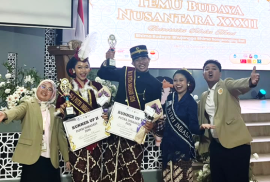
Ghibran Arsha Daffa’ Musaffa’ Named Outstanding Student of the Year in 2026

College StudentNewsSDGSStudentStudent's ActivityStudent's Work Thursday, 12 March 2026

On Tuesday (March 3, 2026), the Faculty of Cultural Sciences (FIB) of Gadjah Mada University (UGM) held an Open Senate Meeting to commemorate its 80th Anniversary. Amidst the solemn celebration, the "Outstanding Student of the 2026 Javanese Language, Literature, and Culture Study Program" award was presented to selected individuals, one of whom was Ghibran Arsha Daffa’ Musaffa’ from the Javanese Language, Literature, and Culture Study Program.

Ghibran's selection as an Outstanding Student was not without reason. Ghibran is known as a student who is actively involved in Javanese culture. Some of his achievements include third place in the Nusantara Cultural Gathering Storytelling Competition, second place in the Youth Ceremony Competition for the Bantul Regency Language and Literature Competition in 2025, and being selected as a finalist for the 2025 Dimas Diajeng Yogyakarta City Competition.

Besides competitions, Ghibran is also active in various other activities. He was involved as an actor in the play "Adisari Cahaya Kasih di Balik Penaklukkan," served as Master of Ceremonies (MC) at the Closing Ceremony of Wonderful Indonesia Wellness, and even served as a storyteller in the Dimas Diajeng Yogyakarta Field Program in Sleman Tourism Village.

However, behind these successes, Ghibran revealed that his journey has been a long process. In an online interview on Friday (April 24, 2026), he shared that his drive to achieve has been growing since elementary school.

"My motivation started with something simple and perhaps funny. Since elementary school, I wanted to earn extra pocket money because our family was financially poor at the time," Ghibran said. He recalls a time when his pocket money was only Rp 2,000 in fourth grade. At that time, his mother challenged him to keep his allowance. From there, she encouraged him to pursue competitions with prizes.

His first victory in the Bantul Regency-wide Ngudar Kawruh Tembang competition was a turning point. From then on, Ghibran realized that achievement wasn't just about money, but also a path to success. His achievements earned him admission to junior high school through the achievement pathway and even opportunities to appear on national media outlets like TVRI.

Entering his studies at UGM, Ghibran set out to make a real contribution to his alma mater. "I may not have been the most outstanding student academically, but I always tried to give the university a 'souvenir' in the form of a trophy," he said. Ultimately, he earned the opportunity to recite poetry before the Indonesian Minister of Education in 2024.

For him, the title of Outstanding Student is not just an award. He feels gratitude, but also a sense of responsibility. This motivates him to continue working hard. "My plans for the future: I want to graduate on time, but still actively participate in competitions. I want to continue being a useful person," he explained.

He also shared the key to his consistency. Since childhood, he has been writing down his goals on a piece of paper and sticking it on his bedroom wall. "Never be ashamed to dream big. For me, dreaming is the first step to achievement. Through hard work and prayer, each dream becomes a reality," he concluded. He also emphasized the importance of gratitude in every step of the process, both during victories and facing failures.


Author            : Haryo Untoro
Editor             : Haryo Untoro
Graduating in 3.5 Years: The Strategy of Three Students from the Javanese Language, Literature, and Culture Study Program at UGM in Completing Their Studies

College StudentNewsSDGSStudentStudent's Activity Monday, 2 March 2026

Graduating in 3.5 years is no longer impossible for students. This is proven by three students from the Javanese Language, Literature, and Culture Program at UGM, namely Yasmin Nabiha Sahda, Pesdhi Sekar Hayumay, and Hanundita Salma. The three students officially graduated on Wednesday, February 25, 2026, after completing their education in only seven semesters.

During an interview on Friday, February 27, 2026, the three shared tips on how students can complete their thesis and graduate quickly. Yasmin Nabiha Sahda (Yasmin) advised students to finalize their research topic by the sixth semester. According to her, this strategy is very effective so that students can immediately focus on studying the literature and developing a research framework without wasting time during the thesis writing process.

In addition to early preparation, interest and time management also greatly influence the thesis writing process. Pesdhi Sekar Hayumay (Pesdhi) emphasized that choosing a research topic that suits one's abilities and personal interests will make the research process run more smoothly. She also added that setting clear work targets and mastering relevant theories can help students stay focused during the research process.

Meanwhile, Hanundita Salma (Hanun) said that a thesis that seems difficult should be broken down into several small stages so that the work feels more focused. Hanundita also highlighted the importance of a supportive group of friends and active communication with lecturers as discussion partners to speed up the process of completing the final assignment.

In addition, these three graduates also shared messages for their fellow students who are still struggling. Yasmin encouraged them to truly use their time in college to enrich themselves with a deep understanding of Javanese literature. Meanwhile, Pesdhi and Hanun agreed that the key to completing a final project is not speed alone, but perseverance in tackling the thesis without losing the joy of the process.

Their experiences demonstrate that a thesis can be completed gradually with proper planning. Through these tips and experiences, it is hoped that they can serve as a reference and inspire students who are planning and completing their thesis projects.


Author                        : Haryo Untoro
Editor                         : Haryo Untoro & Nanda Nursa Alya
Thumbnail Maker    : Haryo Untoro

Three Students from the Javanese Language, Literature, and Culture Study Program Successfully Graduated in 3.5 Years

College StudentNewsSDGSStudentStudent's Activity Thursday, 26 February 2026

Good news comes from the Javanese Language, Literature, and Culture Study Program, Faculty of Cultural Sciences, Universitas Gadjah Mada. Three students from the program successfully completed their undergraduate studies in 3.5 years or seven semesters, faster than the usual study period of four years or eight semesters. The three students are Yasmin Nabiha Sahda, Hanundita Salma, and Pesdhi Sekar Hayumay. They participated in the graduation ceremony for Period II of the 2025/2026 Academic Year, which was held on Wednesday, February 25, 2026.

The topics of their final projects were related to various aspects of Javanese language, literature, and culture. Yasmin Nabiha Sahda researched the folklore of Putri Ayu Limbasari as part of her oral literature study. Hanundita Salma examined the language used by fishermen in the Cilacap region, which shows the dynamics of language use in coastal communities. Meanwhile, Pesdhi Sekar Hayumay researched the toponymy of hamlets in Kapanewon Samigaluh, located in the Kulon Progo region, highlighting aspects of place naming from a local cultural and historical perspective.

Through dedication and commitment to completing their research, the three students were able to successfully complete their theses in a relatively short period of time. This achievement is expected to inspire and motivate other students, especially those in the Javanese Language, Literature, and Culture Study Program, to continue to excel and plan their studies well so that they can complete their education optimally.

Author: Haryo Untoro
Editor: Haryo Untoro

Handover of HMJ Kamastawa Positions for the 2026/2027 Period

College StudentNewsSDGSStudentStudent's Activity Tuesday, 24 February 2026

The Student Association of the Department of Javanese Language, Literature, and Culture (HMJ Kamastawa) held a handover ceremony for the 2026/2027 management on Monday (06/23/2026) at Poerbatjaraka Building 203, Faculty of Cultural Sciences, Gadjah Mada University. The event was attended by the HMJ Kamastawa executive board for the 2025/2026 and 2026/2027 periods, as well as faculty representatives from the study program.

Also present at the event were the Head of the Javanese Language, Literature, and Culture Study Program, Dr. Sulistyowati, M.Hum., and the advisor to HMJ Kamastawa, Dr. Rudy Wiratama, S.I.P., M.A. The presence of the study program leaders emphasized the program's support for the continuity of student organizations.

The event began at 4:15 PM and was hosted by Muhammad Bagus Ulinnuha. The series of activities began with the singing of the Indonesian national anthem and the Gadjah Mada hymn.

Opening remarks by Dr. Rudy Wiratama, S.I.P., M.A., as advisor to HMJ Kamastawa

In his speech, Dr. Rudy Wiratama, S.I.P., M.A. emphasized the importance of maintaining achievements in a positive manner and building the widest possible network. He also advised the administrators to always apply the values of guidance, compassion, and nurturing, both with fellow administrators, seniors, and alumni.

Opening remarks by the Head of the Javanese Language, Literature, and Culture Study Program, Dr. Sulistyowati, M.Hum.

Meanwhile, Dr. Sulistyowati, M.Hum. reminded the administrators to remain resilient in facing the dynamics and challenges of the organization. She emphasized the importance of coordination with lecturers and maintaining a balance between achievement, physical and mental health, and harmonious communication within the management.

The main procession of the event consisted of the reading and signing of the minutes by the Chair of HMJ for the 2025/2026 period, Dwiyan Teguh Darmawan, followed by the symbolic handover of office by the Head of the Study Program. Next, the inauguration script was read by Dr. Rudy Wiratama, S.I.P., M.A., and the oath of office was led by the Chair of HMJ for the 2026/2027 period, Wreksi Awinanggya Pinandhita.

Handover of positions to the Kamastawa HMJ management

The event then continued with a symbolic handover of positions to the Kamastawa HMJ management, a message and impressions from the 2025/2026 HMJ period, and a speech from the Chair of the 2026/2027 HMJ period. The series of activities was closed with a group photo session to capture the moment of togetherness.

The handover ceremony for the Kamastawa Student Association for the 2026/2027 period is an important moment for the new board to continue and improve the quality of the organization. It is hoped that the new board will be able to implement flagship programs optimally. Thus, HMJ Kamastawa can continue to play an active role, making positive contributions to nguri-uri ‘preserving’ and ngurip-urip ‘revitalizing’ Javanese culture, as well as maintaining the good reputation of the Javanese Language, Literature, and Culture Study Program. Congratulations and success to the HMJ Kamastawa management for the 2026/2027 period.

Introducing the Cultural Literature Cluster of Universitas Gadjah Mada in the Saba Tilik 6.0 X Saba Education Fair Activity

College StudentNewsSDGSStudentStudent's ActivityStudent's Work Saturday, 24 January 2026

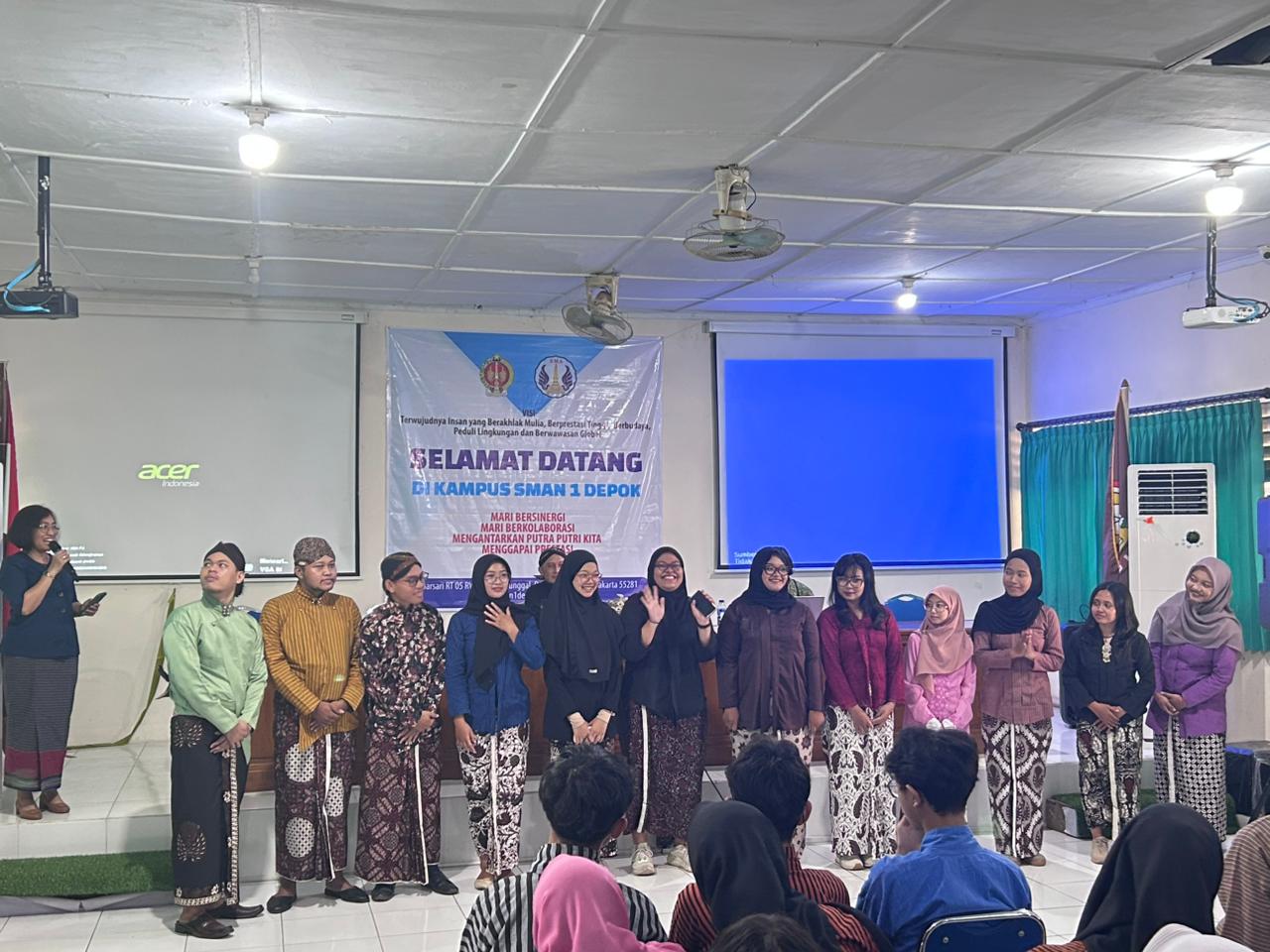
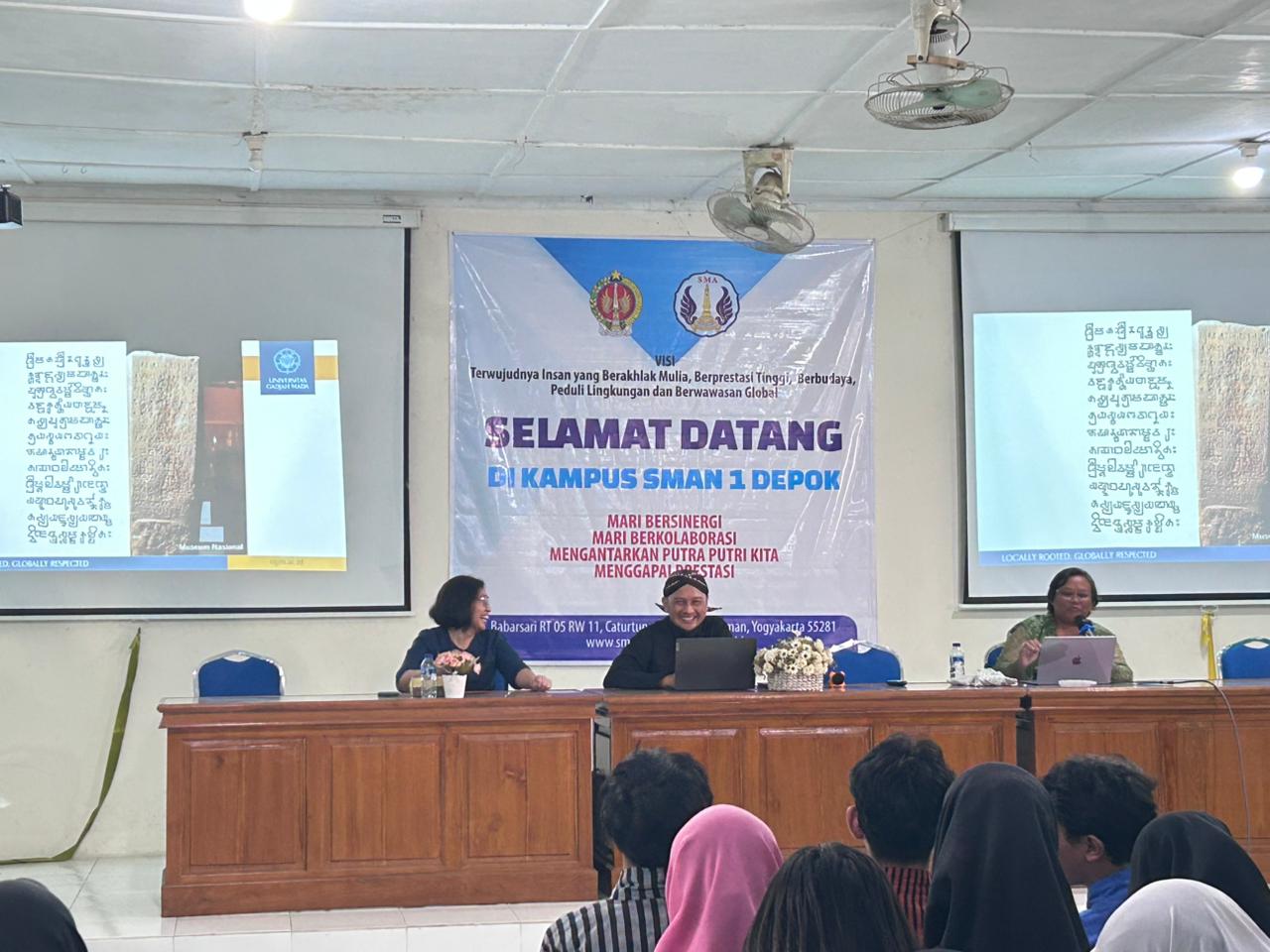
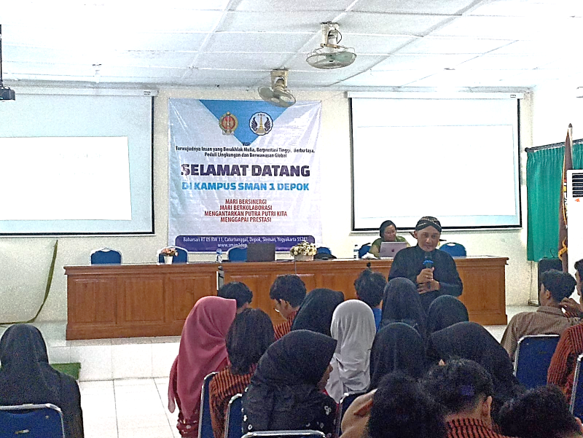
SMAN 1 Bantul held the Saba Tilik 6.0 X Saba Education Fair on Thursday (January 22, 2026). This event aimed to provide motivation and further educational information to students, especially final-year students, so they could gain a broader understanding of the world of higher education and study program options.

Two students from the Javanese Language, Literature, and Culture Study Program, class of 2025 at Universitas Gadjah Mada (UGM), who are also alumni of SMAN 1 Bantul, Nurul Fajri Rahmani and Tri Wulandari, participated as speakers. Their presence allowed them to share their academic experiences and introduce the various study programs at Universitas Gadjah Mada to the students.

In an online interview with Nurul Fajri Rahmani on Friday (January 23, 2026), the material focused on introducing the literary and cultural groups, specifically the Javanese Language, Literature, and Culture Study Program. Fajri also shared his experiences in pursuing higher education through the National Achievement-Based Selection (SNBP) and National Test-Based Selection (SNBT) pathways.

Fajri revealed that the main challenge in the event was students' low interest in the Literature and Culture field. "Therefore, we strive to explain as well as possible the job prospects, academic potential, and the various benefits and interesting experiences that can be gained while studying in the Literature and Culture field," he explained. This explanation is expected to broaden students' horizons and change their perspectives on the study of literature and culture.

For Fajri, participating in the Saba Tilik 6.0 X Saba Education Fair was a truly memorable experience. Besides returning to his alma mater and meeting his classmates, he also had the opportunity to share stories and information about the world of college. He hopes that similar events can continue to be held on an ongoing basis to spark students' interest and enthusiasm in pursuing higher education.

The Saba Tilik 6.0 X Saba Education Fair aligns with the Sustainable Development Goals (SDGs), particularly SDG 4, which focuses on quality education through providing inclusive and equitable access to information on higher education. Providing this information helps students make more conscious and informed educational decisions. More broadly, this activity also intersects with SDG 11 (Sustainable Cities and Human Settlements), namely by increasing literacy and insight in educational communities, which are the foundation for the formation of an informed and sustainable society. The collaboration between secondary schools and universities in this activity also reflects the implementation of SDG 17, namely partnerships to achieve sustainable development goals through synergy between educational institutions.


Author : Haryo Untoro
Editor  : Haryo Untoro
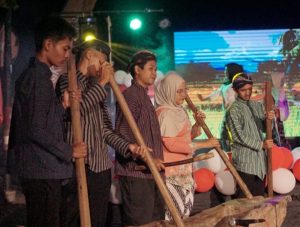
Students of the Javanese Language, Literature, and Culture Study Program Class of 2025 Perform the Drama Weton Waton

College StudentNewsSDGSStudentStudent's ActivityStudent's Work Saturday, 17 January 2026

Students of the Javanese Language, Literature, and Culture Study Program, Class of 2025, Faculty of Cultural Sciences, Gadjah Mada University, staged a drama titled Weton Waton on Tuesday (12/16/2025). The performance took place at the Poerbatjaraka Auditorium, FIB UGM, at 6:00 p.m.

This activity was organized as part of the final exam assignment for the Communicative Spoken Javanese Language course taught by Dr. R. Bima Slamet Raharja, S.S., M.A. The performance of Weton Waton was directed by Safa Rahmatul H. as the production manager.

The drama Weton Waton tells the story of a domestic conflict between a husband and wife triggered by financial problems. The root of the problem lies in the husband's decision to quit his job and get involved in cockfighting gambling. The ongoing conflict then prompts the wife's parents to take the matter to a shaman. In the story, the shaman says that the couple's domestic quarrels are caused by an incompatibility in their weton, which is called tiba pegat.

Through this performance, students sought to convey the message that problems should not be automatically attributed to a person's character or nature based on their weton. In addition, this performance also presented knowledge about the concepts of dina, pasaran, and wuku, which are still believed by some Javanese people to be part of their tradition.

Based on an online interview with Yogi Setiyawan on December 28, 2025, the Weton Waton performance was a final exam assignment that required all students enrolled in the course to be directly involved in the performance. The theme of weton was chosen as an effort to highlight the tradition of calculating weton, dina, pasaran, and wuku that has developed in Javanese society.

“In preparing for the Weton Waton performance, our preparations can be said to still have a number of limitations. The challenges faced include script writing, group division, and funding constraints. From this process, we learned that good and open communication between members is very important in a performance,” said Yogi.

Yogi also expressed his pride in being involved in the premiere performance of the 2025 batch of students from the Javanese Language, Literature, and Culture Study Program. He hopes that this activity can be a first step towards producing better works in the future.

The performance of the Weton Waton drama was not only a means of practicing Javanese language skills orally, but also a platform for students to create and apply their language skills in the form of a performance. In line with the teachings of KGPAA Mangkunegara IV in Serat Wedhatama, which states that ngelmu iku kalakone kanthi laku or knowledge must be implemented through practice, this performance is a tangible manifestation of reviving enthusiasm for the Javanese language while honing students' creativity. Through activities such as this, students are expected to continue to preserve and revive Javanese culture through concrete efforts that benefit the community.

Gamasutra’s Echoes in Preserving the Culture of the Archipelago

College StudentNewsSDGSStudentStudent's ActivityStudent's WorkUncategorized Thursday, 15 January 2026

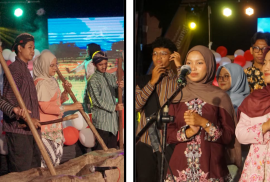
Gamasutra ‘Gamelan Mahasiswa Sastra Nusantara’ is a forum for developing the creativity of students in the Javanese Language, Literature, and Culture Study Program, Faculty of Cultural Sciences, Gadjah Mada University (UGM). Operating under the auspices of the Arts Interest and Talent Division of the Student Association (HMJ) of the Javanese Language, Literature, and Culture Student Community (Kamastawa), this community is committed to preserving gamelan music as part of the cultural wealth of the Indonesian archipelago.

Gamasutra's commitment to traditional arts not only serves as a learning tool for students, but also represents cultural identity in the academic environment. Through its ongoing dedication, Gamasutra has consistently served as an ambassador for the Javanese Language, Literature, and Culture Study Program in various official forums and art festivals, both at the faculty and university levels.

Gamasutra's performance at the UGM Faculty of Philosophy Karawitan Festival

Throughout its journey, Gamasutra has participated in a number of strategic and ceremonial events at Gadjah Mada University. These include the Faculty of Philosophy's Karawitan Festival, the groundbreaking ceremony for the new Faculty of Cultural Sciences building, and supporting the inauguration of the organization through the Grand Launching of HMJ KAMASTAWA. Additionally, Gamasutra is actively involved in inter-institutional networking activities through the Sowan Kadang Sastra Jawa UGM x Universitas Indonesia agenda.

Gamasutra's performance at the UGM X UI Javanese Literature gathering

Amidst the challenges of modernity, Gamasutra continues to demonstrate its existence as a preserver of Javanese culture. This is evidenced by the trust given to Gamasutra as the opening and accompanying act for the 2025 Pionir Kampung Budaya (Pioneer Cultural Village) event and the 4th Semeja International Forum (Malay Javanese Seminar). The international forum will be held at Gadjah Mada University in 2025.

Gamasutra's performance at the Semeja international seminar

By combining technical expertise in karawitan art and cultural literacy, Gamasutra is committed to keeping traditional music alive. This effort is part of strengthening the nation's identity so that it remains dynamic, relevant, and can be passed on to future generations.

Gamasutra's work is in line with Sustainable Development Goal (SDG) 4, namely quality education, through its role as a learning space that encourages the development of student competencies in the fields of traditional music, cultural literacy, and the strengthening of scientific identity in the academic environment. In addition, Gamasutra's involvement in various cross-faculty, institutional, and international forum activities, such as the collaboration between UGM and the University of Indonesia and participation in the Semeja IV International Forum, reflects the implementation of SDG 17, namely strengthening partnerships to achieve sustainable development goals. Through these collaborations, Gamasutra not only expands its academic and cultural networks but also contributes to collective efforts to preserve the inclusive and sustainable culture of the Indonesian archipelago.


Author            : Maysa Putri Fatihah & Haryo Untoro
Editor             : Haryo Untoro
 

123…17

Recent Post

  • Javanese Script Font Socialization Encourages Digital Javanese Script Use
    April 23, 2026
  • Seputar Jawa: The Digital Javanese Script Keyboard System
    April 13, 2026
  • First Gathering of the Sahacitta Cabinet of the Kamastawa Student Association: A Means of Introduction and Strengthening Togetherness
    April 6, 2026
  • Ghibran Arsha Daffa’ Musaffa’ Named Outstanding Student of the Year in 2026
    March 12, 2026
  • Seputar Jawa: Banten Javanese Dialect, a Dialect that Exists at the Westernmost of Javanese Island
    March 10, 2026

Calender

May 2026
M T W T F S S
 123
45678910
11121314151617
18192021222324
25262728293031
« Apr    
  • Fakultas Ilmu Budaya
  • Ujian Masuk UGM
  • PPSMB
  • Alumni
  • Jurnal Humaniora
May 2026
M T W T F S S
 123
45678910
11121314151617
18192021222324
25262728293031
« Apr    

News

  • Javanese Script Font Socialization Encourages Digital Javanese Script Use
    April 23, 2026
  • Seputar Jawa: The Digital Javanese Script Keyboard System
    April 13, 2026
  • First Gathering of the Sahacitta Cabinet of the Kamastawa Student Association: A Means of Introduction and Strengthening Togetherness
    April 6, 2026
Universitas Gadjah Mada

Javanese Language, Literature, and Culture Program
Department of Language and Literature
Faculty of Cultural Sciences
Universitas Gadjah Mada


Sosiohumaniora St., Bulaksumur, Yogyakarta
Telp : 0274-901134 Ext. 110, Fax : 0274-550451, WhatsApp : 081211911281
Email : nusantara@ugm.ac.id

© 2025 Javanese Language, Literature, and Culture Program FIB UGM

KEBIJAKAN PRIVASI/PRIVACY POLICY