• University
  • Academic Portal
  • University Library
  • Webmail
  • Arnawa
  • UM UGM
  • English
    • Bahasa Indonesia
    • English
Universitas Gadjah Mada Javanese Language, Literature, and Culture Program
Department of Language and Literature
Faculty of Cultural Sciences
Universitas Gadjah Mada
  • Home
  • Profile
    • Vision & Mission
    • Objective
    • Excellence
    • Career Prospects
    • Teaching Staff
  • Academic
    • Curriculum Flow
    • Courses Description
    • Distribution of Courses
    • Academic Calendar
    • COURSE AND ADMINISTRATION INFORMATION
    • Learning Outcomes
    • INTERNATIONAL CONFERENCES AND ACTIVITIES
  • KPPB
    • Collaboration
    • Research
      • Teaching Staff Research
      • Javanese Studies Archive – Arnawa
    • Service
      • Community Services
      • Podcast (Anarka Lālitya)
    • Scholarship
  • Student Affair
    • Student Satisfaction Survey
    • HMJ Kamastawa
    • Student’s Activity
    • Student’s Creations
    • Youtube Channel
    • Instagram
  • Alumnus
    • Alumnus Profile
  • Contact
  • Home
  • News
  • page. 18
Arsip:

News

Gugur Gunung Webinar 11 “The Tradition of Kidung: History and Uniqueness of Kidung Surajaya”

Ambal WarsaCollege StudentNewsSDGSStudent Thursday, 14 September 2023

On Saturday, December 18, 2021, the Javanese Literature program held a webinar titled "The Tradition of Kidung: History and Uniqueness of Kidung Surajaya." The webinar was one of two webinars organized to celebrate the anniversary of the Javanese Literature study program. This particular webinar was part of the 11th Gugur Gunung event. The first day of the webinar was moderated by Refiana Nur Pawesti, a Javanese Literature student class of 2020. The presentation was delivered by one of the expert Javanese Literature lecturers, Yosephin Apriastuti Rahayu, S.S., M.Hum.

In the first day's webinar, it was explained that Kidung Surajaya had been previously researched by Ms. Kartika Setyawati, a Javanese Literature lecturer at Universitas Gadjah Mada. The kidung was examined as part of her dissertation. At the beginning of the webinar, Ms. Apriastuti discussed the characteristics of kidung based on Zoetmulder's perspective in Kalangwan. One of Zoetmulder's opinions conveyed by Ms. Apriastuti was that most kidung texts were written in Bali. Zoetmulder also revealed that kidung texts typically contain excerpts of stories.

Ms. Apriastuti explained that Kidung Surajaya is part of the Merapi-Merbabu manuscript collection, which is only found in the National Library of Indonesia. It consists of seven pupuh (a type of poetic meter) with the metrical pattern of macapat. The text was written in the 17th century based on the long version colophon written in Buda script and Mid-Javanese language. Kidung Surajaya has two versions, the long version (D, F, H manuscripts) and the short version (B, E, G, I, J manuscripts). The long version contains around 87 lempir (leaves) with approximately 798 stanzas, while the short version contains 4-14 lempir.

In summary, Kidung Surajaya narrates the journey of Ki Singamada, who is grieving after the passing of his parents. The remarkable aspects of Kidung Surajaya are the advice from the teachers, the protagonist's journey, depictions of nature, the Surajaya initiation ceremony, various flora and fauna, betel leaf, food and drinks served, time indicators, and more. The kidung also provides insights into the agricultural practices of society, the surrounding natural environment, types of flowers, characteristics of women in the past, and much more.

Upon careful observation and analysis, implicit meanings can be found in the names of the characters. For instance, the name Surawani/Surajaya means a brave and victorious person, while the name Hantakarana Ragasamaya means a body that is resilient.

After studying the text, it can be concluded that the purpose of writing Kidung Surajaya was to bring comfort, alleviate sorrow, portray the essence of love, showcase beauty and self-expression, and increase praise. Based on the content and meanings shared, Kidung Surajaya provides many valuable lessons for reflection in life. Its uniqueness and life advice make it worthy of further study and exploration.

Taruna Dharma Jati, the Winner of the Gold Medal in 34th Pimnas Poster Category

College StudentNewsSDGSStudentStudent's ActivityStudent's Work Wednesday, 13 September 2023

Yogyakarta (January 3, 2022) - For a student, achieving remarkable accomplishments is undoubtedly a dream to be realized, especially on a national or even international scale. However, opportunities to achieve such feats may seem challenging at times, be it due to competition or other circumstances.

This is where the story of Taruna Dharma Jati, a student from the Javanese Literature Program at Universitas Gadjah Mada, brings both surprising and joyful news. In 2021, Taruna, along with his team, mentored by Zakariya Pamuji Aminullah, had the opportunity to participate in the Student Creativity Week (Pekan Kreativitas Mahasiswa - PKM) organized by DIKTI. (Direktorat Jenderal Pendidikan Tinggi, Riset, dan Teknologi).

His journey began with a fascination for the world of PKM. The initial spark was ignited when he witnessed the success of his senior, Syahmu Hidayat, a 2017 Javanese Literature student who won gold in Pimnas, with the theme raised according to the knowledge explored in the Javanese Literature study program. This catalyzed for him to delve deeper into the realm of PKM. As he delved into PKM, based on existing phenomena, Taruna understood that PKM provided a platform for various fields of study, including Javanese Literature.

The interest in participating in PKM did not arise solely from observing phenomena. It was the opportunity provided to him by a Javanese Literature lecturer, Zakariya Pamuji Aminullah, often addressed as Mas Zaki, that enabled him to further progress. Moreover, this opportunity led him to become the leader of the team. Achieving an accolade required a long process, involving preparation, revisions, funding, research, and various other stages that eventually led them to their final destination.

According to him, PKM is a forum and event for students to channel their highly innovative ideas in any matter, which hopefully can be useful for the wider community.

In the PKM that he and his team participated in, Taruna focused on the theme of epidemics from the perspective of Javanese literary works. For their research, they collected data from the Surakarta and Yogyakarta regions. They analyzed everything from literary and cultural perspectives to political science and law. Their hard work, dedication, and meticulous execution led them, under his leadership, to win the gold medal in the 34th Pimnas in 2021 in the poster category. He firmly believed that their efforts would not betray the results they achieved.

According to Taruna, the greatest challenge in the process was working with a diverse team due to different backgrounds. Additionally, the chosen subject matter was relatively weighty, requiring the data collected to be condensed and organized meticulously following the established writing guidelines. Precise time management was also crucial in composing the proposal.

Despite facing numerous challenges, he and his team overcame them. Their approach to overcoming challenges was through responsive communication, convincing each other that PKM was a shared responsibility. In terms of condensing the material, they managed it by processing words and putting in extra thought.

Not only do they get tired, but they also gain valuable experience, both academically and non-academically. They acquired new knowledge, especially in their research field, and learned from the teachings of relevant resource persons.

For new students eager to participate in PKM, he advises them not to hesitate, as PKM provides an excellent platform to channel their best "crazy" ideas and elevate the reputation of Javanese Literature.

"Do not be afraid to start, do not feel inferior, because Javanese Literature students actually have a lot of potential that must be developed and optimized, one of which is through this PKM activity" (Taruna, 2022).

Congratulations! Here are the winners of the Gugur Gunung Competition 11

NewsSDGSStudentStudent's ActivityStudent's Work Wednesday, 13 September 2023

The 11th Gugur Gunung Competition as a commemoration of the 66th anniversary of the Javanese Literature Study Program has been successfully carried out  successfully. The entire organizers of the 11th Gugur Gunung would like to thank the participants who have registered for the competition, including: Infographic Javanese Culture, Javanese Script Calligraphy, and Javanese Storytelling. The judges has succeeded in narrowing down the winners in these categories by taking 1st place, 2nd place, and 3rd place. read more

The 66th Javanese Literary Anniversary Celebration

Ambal WarsaCollege StudentNewsSDGSStudentStudent's ActivityStudent's Work Monday, 11 September 2023

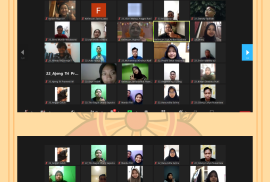
Yogyakarta – The 66th anniversary of the Javanese Literature Study Program (Ambal Warsa) was commemorated by holding a joint celebration through the zoom meeting on September 20, 2021.

The celebration event was attended by the entire Javanese Literature family, both active and full-time lecturers, students, and alumnus from various generations. The event was carried out very well due to the enthusiasm of the participants which added to the excitement of commemorating the 66th anniversary of the Javanese Literature Study Program.

The event began with an opening by the master of ceremonies. Next is the speech given by the Head of the Javanese Literature Study Program. After that, active student representatives of the 2018, 2019, 2020, and 2021 batches gave impressions, messages, and hopes. Then, it was continued with reading the online bulletin magazine, intermezzo from Mr/Ms. Lecturer, as well as video presentation performances from Javanese Literature students. Then, it was closed with a prayer reading and a group photo, and closing by the master of ceremonies.

The following is a snapshot of the festive moment of the 66th Ambal Warsa Celebration :

Authors: Vighna Rivattyannur H. and Anggra Dini

Editor: Anggra Dini


Public Lecture “Modern Javanese Literature: From Padmasusastra to Suparto Brata” with Drs. Akhmad Nugroho, S.U.

NewsSDGS Monday, 11 September 2023

Yogyakarta – The Javanese Literature Study Program at Universitas Gadjah Mada has conducted public lectures with Drs. Akhmad Nugroho, S.U., a retired lecturer at the UGM Javanese Literature Study Program an expert speaker, this lecture discusses more deeply Modern Javanese Literature: From Padmasusastra to Suparto Brata. This activity is open to all UGM academicians and will be held on Tuesday (9/11) through Zoom Meeting.

In this public lecture, one of the Javanese Literature Study Program lecturers, Rudy Wiratama, S.IP., M.A. as the moderator and one of the 2019 Javanese Literature students, namely Eka Pradipta Kalingga Murda as Master of Ceremony (MC). read more

Javanese Literature Study Program Studen Win First Place in the 2021 Disaster Literacy Scientific Poster Competition

College StudentNewsSDGSStudentStudent's ActivityStudent's Work Friday, 8 September 2023

The International Literacy Seminar on Disaster History was organized at the initiation of the National Disaster Management Agency (BNPB), in collaboration with the National Library, the National Archives of the Republic of Indonesia (ANRI), U-INSPIRE Indonesia, and support from the Volcanology Center for Geological Disaster Mitigation (PVMBG) Geological Agency, Ministry of Energy and Mineral Resources, Ministry of Maritime Affairs and Fisheries, Indonesian Institute of Sciences, Syiah Kuala University, University of Indonesia, Bandung Institute of Technology, Higher Education Forum for Disaster Risk Reduction, IABI, Nusantara Manuscript Society (MANASSA), CARI, and Amcolabora Research Institute. This international seminar aims to strengthen the disaster literacy mission so that it becomes a learning, reminder, and reinforcement for people with good quality literacy and builds a new Indonesian civilization that is more resilient in facing disasters.

Through the seminar entitled: “Disaster History Literacy as a Legacy of Resilience of the Past, Present, and Later”, the gluing and rearrangement of various cross-disciplinary learning, expertise, and skills related to disaster history was carried out. This activity was carried out in Ambon City on Wednesday - Thursday, October 13-14 2021.

Picture: Announcement of the winners of the digital scientific poster competition on the official BNPB website

In order to raise public awareness, especially to increase the awareness of the younger generation regarding literacy in disaster history, media that is suitable and liked, and easy to understand is needed. In the digital era like today, the dissemination of digital-based information has become a medium that is easily understood and accepted by the general public. Creativity-based digital media is a product that can be easily disseminated through portals that are available free of charge. BNPB also organizes several side event activities in the form of competitions related to Disaster History Literacy.

This activity is expected to increase public awareness of the importance of studying or knowing the history of disasters and encourage community creativity in translating this information into works. The categories of competitions that were held were as follows (1) Literacy Article Writing Contest for the Elementary School level accompanied by a history teacher at the school; (2) Literacy Literacy Article Writing Contest for the general public; (3) Disaster History Literacy Digital Scientific Poster Competition for students; (4) History of Disaster Literacy Story Map Contest.

Among the many students who took part in the competition, Sahmu Hidayat was one of the 2017 UGM Javanese Literature students who took part in the competition. He won 1st place in the category of Digital Literacy Scientific Poster Competition for Disaster History.

Picture: Digital scientific poster entitled “Citraleka Bancana: Exploring Collective Memory of Disaster in Javanese Script”

The title of the scientific poster he carried was "Citraléka Bancana: Exploring Collective Memory of Disaster in Javanese Script”. The reason behind the idea is because of the many natural disasters that often hit Java. Past events in the form of disasters become a historical record recorded in a traditional Javanese collective memory. This memory is preserved by the Javanese people in several traditional records in the form of manuscripts.

In his opinion, the manuscript contains a citraleka bankana or some kind of hint of a disaster in the past. Generally, these ancient texts explain the types, causes, how to avoid, and what to do when a natural disaster occurs.

One example that is Serat Primbon Palintangan Palindhon Pakedutan which contains a record of knowledge about the occurrence of earthquakes at certain times is considered to indicate events that are bad, good, neutral, or mixed, and have an impact on humans, other living things, and nature. Through the scientific posters he made, he hopes that more and more young people will become aware of the importance of traditional knowledge to deal with the problems that occur amid modernization.

Author: Sahmu Hidayat

Editor: Anggra Dini

Gugur Gunung 11th Labdhasuksma Jawaloka: Anniversary of UGM Javanese Literature Study Program

College StudentNewsSDGSStudent Friday, 1 September 2023

(Gugur Gunung Poster 11 "Labdhasuksma Jawaloka")

Gugur Gunung is an annual event held to celebrate the birthday of the Javanese Literature Study Program. The Gugur Gunung event this time carries the theme "Labdhasuksma Jawaloka". The word labdhasuksma comes from two words, Labdha which means reached, found, and available. Whereas, suksma means subtle, small, and magical. So, when these two words are combined it means 'get subtlety (soul)'. As for the word jawaloka also comes from two words, Java and loka which means world. So that, jawaloka can be interpreted with the world of Java. The series eventually became a unified meaning of "Labdhasuksma Jawaloka" which can be interpreted as 'getting the tenderness of the human heart and soul in the Javanese world'.

Ahead of the main event which will be held in December, there will be a series of competitions with Javanese literary nuances, including the Javanese Storytelling, the Javanese Script Calligraphy Contest, and the Javanese Culture Infographic Poster Contest. For convenience, here is the link for contest conditions and registration:

  1. Java Storytelling Competition

Terms link: http://bit.ly/ToRNdongengJawa

Registration link: http://bit.ly/LombaNdongengJawa

  1. Javanese Script Calligraphy Competition

Terms link: http://bit.ly/ToRKaligrafiAksaraJawa

Registration link: http://bit.ly/LombaKaligrafiAksaraJawa

  1. Javanese Culture Infographic Poster Competition

Terms link: http://bit.ly/ToRPosterKebudayaanJawa

Registration link: http://bit.ly/LombaPosterKebudayaanJawa

Author: Vighna R. Hernawan

What is “Gugur Gunung”?

Ambal WarsaNewsSDGSStudentStudent's ActivityStudent's Work Thursday, 31 August 2023

Gugur Gunung is a commemoration of the anniversary of the Javanese Literature study program which is one of the annual programs that is routinely held. The event is usually held regularly in October. Not only as a commemoration event, but Gugur Gunung is also a bridge to help strengthen ties between the academic community of the Javanese Literature study program. Through a series of events prepared, all members of the academic community can join and enliven this annual event.

Various events were arranged in such a way as to make the anniversary of the Javanese Literature study program even more lively. The series of events that complement the anniversary of the Javanese Literature study program included a competition to make cultural-themed posters, a competition to make cultural infographics, a webinar, and at the peak of the event ended with an art performance from students of the Javanese Literature study program.

Gugur Gunung event is one of the biggest annual events held by the Javanese Literature Study program. In addition to commemorating the birthday of the Javanese Literature study program, Gugur Gunung is also a symbol to express gratitude to God because the Javanese Literature study program continues to prosper to this day.


HMJ KAMASUTRA Changes Its Name to HMJ KAMASTAWA

College StudentNewsSDGSStudentStudent's ActivityStudent's Work Thursday, 31 August 2023

Yogyakarta - On Monday, May 3, 2021, at 03.41 PM WIB, it became a historic moment for KAMASUTRA (Keluarga Mahasiswa Sastra Nusantara), an HMJ (Department Student Association) organization under the auspices of the Javanese Language, Literature and Culture Study Program, Department of Language and Literature, Faculty of Cultural Sciences, Universitas Gadjah Mada (FIB UGM), which has officially changed its name to KAMASTAWA (Keluarga Mahasiswa Sastra Jawa).

Etymologically, KAMASTAWA comes from Sanskrit which consists of the word 'kāma' which means affection and loyalty and 'stawa' which means prayer, hope, and praise. Overall, the meaning of Kamastawa is a hope for the Javanese Literature Student Family to always love each other, love and have a high spirit of loyalty to the Javanese Language, Literature and Study Program.

The process of determining this name change was carried out online through a Zoom Meeting, with the Head of the KAMASTAWA for the 2021/2022 period, Na'il Yuwana Firdaus, as the official signatory of the name change. Furthermore, this decision received approval from the supervisor of the KAMASTAWA, namely a lecturer in Javanese Language, Literature and Culture with a field of study in philology, Zakariya Pamuji Amirullah, S.S., M.A..

This change is in line with the Decree of the Student Association of the Javanese Literature Department, Department of Language and Literature, Faculty of Cultural Sciences, Gadjah Mada University, Yogyakarta Number 001/KAMASTAWA/IV/2021 concerning Changes in the Abbreviation of the KAMASTAWA. The reason behind this name change is to achieve harmony between the Javanese Literature Study Program, Department of Language and Literature, Faculty of Cultural Sciences, Universitas Gadjah Mada, Yogyakarta, and the name of the related student association.

This decision is also based on the results of the KAMASTAWA bylaws session on March 20, 2021 and the results of the Special Member Deliberation of the Javanese Literature Student Family for the 2021/2022 period on April 4, 2021, both of which were held online through Zoom Meeting and Google Meet.

Apart from the name change, there is also a change in the KAMASTAWA  logo, part of the script found at the top of the lingga-yoni which has been adjusted to the new abbreviation. In addition, the script used in the new logo is Old Javanese script, replacing the Dewanagari script in the old logo.

(Old Logo)

(New Logo)

With this name change that reflects a new identity, KAMASTAWA is even more enthusiastic in providing opportunities for its members to study, preserve, and revive the cultural heritage of Java.

Javanese Literature Shares

College StudentNewsSDGSStudentStudent's Work Wednesday, 30 August 2023

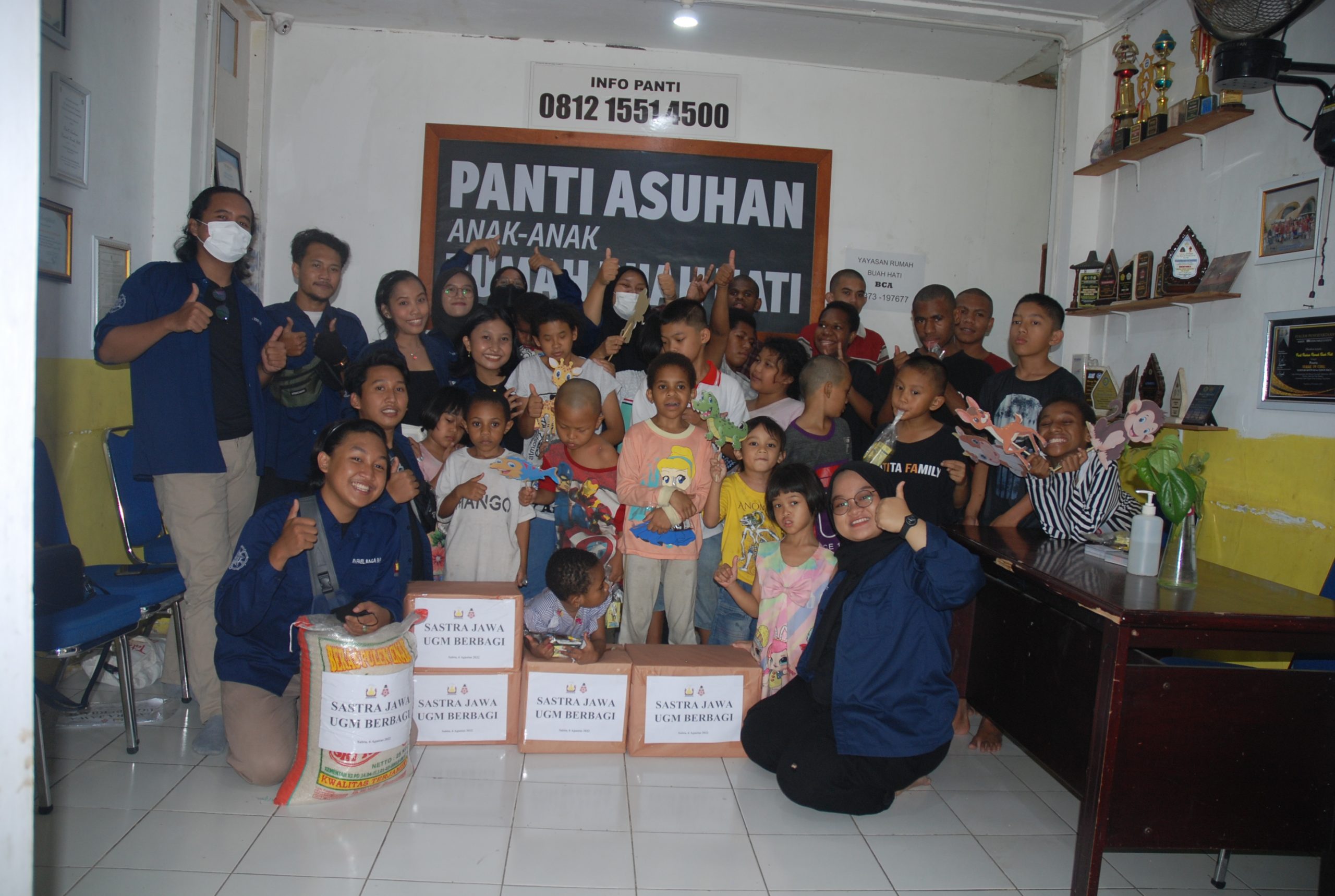
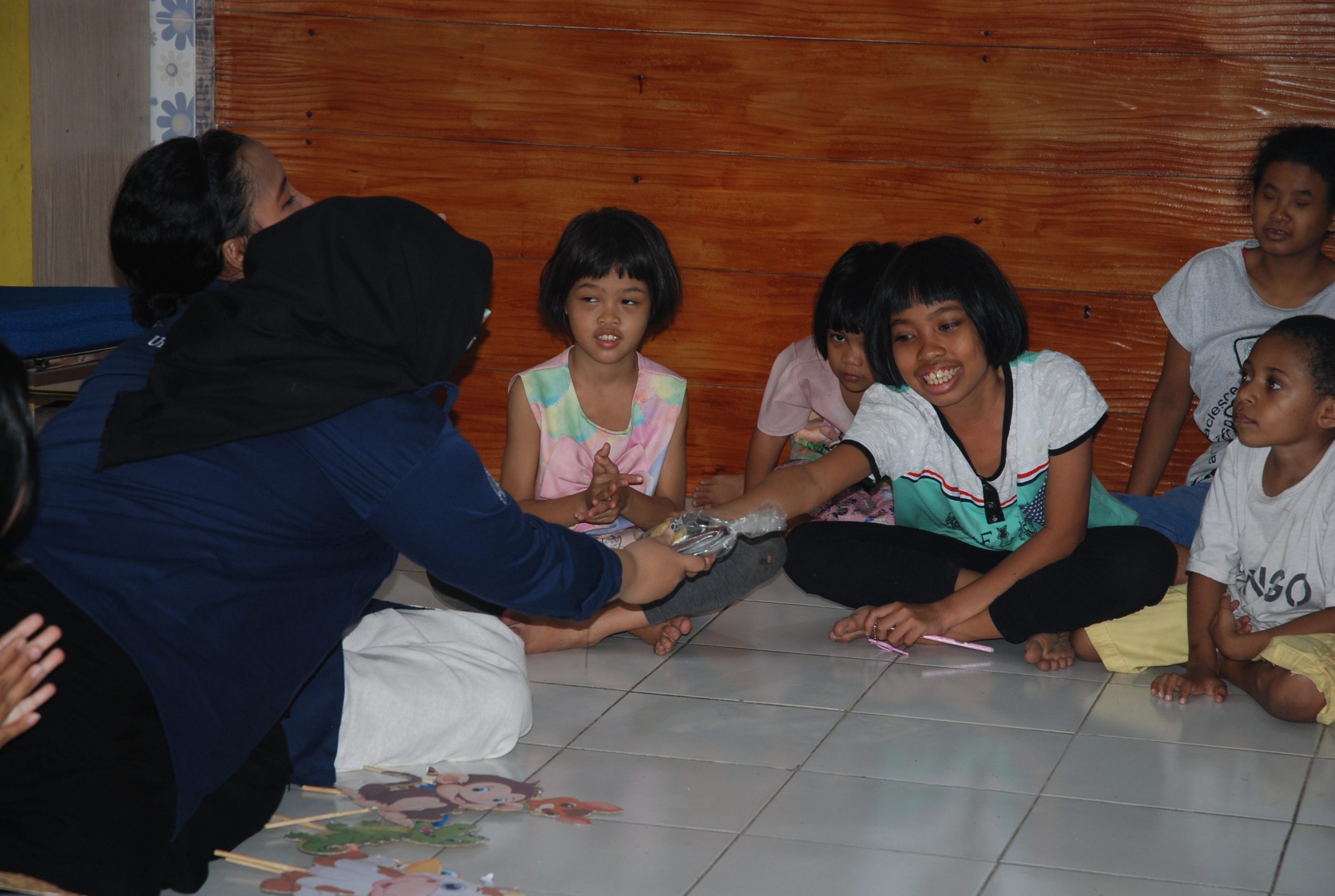
Sunday (08/22/2021), the Javanese Literature Student Family (KAMASTAWA) acted to care for others in the Kulon Progo area, Yogyakarta. This caring activity for others is called Sastra Jawa Berbagi. Sastra Jawa Berbagi is a work program of the KAMASTAWA from the Social Society division. 

Through Sharing Javanese Literature, all academics of the Javanese Literature study program, Faculty of Cultural Sciences, Universitas Gadjah Mada, have the opportunity to contribute by assisting in the form of funds and wearable clothing. The fundraising and decent clothes were carried out by the which started on July 23 to August 10, 2021 with the results of cash amounting to IDR 1,050,000 and 10 large bags of decent clothes.

Many people think that all people in the Yogyakarta area may have guaranteed welfare. However, in reality, there are still many people who need our help and concern, such as the residents of Kalirejo Village, Sangon II, Kokap, Kulon Progo, Yogyakarta. Not only one or two people, but most of the people are retarded, be it mentally, psychologically, or economically.

At that time, KAMASTAWA's friends had the opportunity to directly visit approximately thirty families with special needs. This activity also involved the "Baitunnajah" Social Welfare Institution in Kalirejo Village, Kokap, Kulon Progo, Yogyakarta.

Even though they had to go through an inadequate access road, this did not dampen the KAMASTAWA friends' intention to carry out this activity. The care and sincerity given through the package of basic needs, created smiles for those who received it.. Of course, this gives happiness to KAMASTAWA friends who can directly contribute to these activities.

Writer & editor : Anggra Dini

1…1617181920

Recent Post

  • Javanese Script Font Socialization Encourages Digital Javanese Script Use
    April 23, 2026
  • Seputar Jawa: The Digital Javanese Script Keyboard System
    April 13, 2026
  • First Gathering of the Sahacitta Cabinet of the Kamastawa Student Association: A Means of Introduction and Strengthening Togetherness
    April 6, 2026
  • Ghibran Arsha Daffa’ Musaffa’ Named Outstanding Student of the Year in 2026
    March 12, 2026
  • Seputar Jawa: Banten Javanese Dialect, a Dialect that Exists at the Westernmost of Javanese Island
    March 10, 2026

Calender

May 2026
M T W T F S S
 123
45678910
11121314151617
18192021222324
25262728293031
« Apr    
  • Fakultas Ilmu Budaya
  • Ujian Masuk UGM
  • PPSMB
  • Alumni
  • Jurnal Humaniora
May 2026
M T W T F S S
 123
45678910
11121314151617
18192021222324
25262728293031
« Apr    

News

  • Javanese Script Font Socialization Encourages Digital Javanese Script Use
    April 23, 2026
  • Seputar Jawa: The Digital Javanese Script Keyboard System
    April 13, 2026
  • First Gathering of the Sahacitta Cabinet of the Kamastawa Student Association: A Means of Introduction and Strengthening Togetherness
    April 6, 2026
Universitas Gadjah Mada

Javanese Language, Literature, and Culture Program
Department of Language and Literature
Faculty of Cultural Sciences
Universitas Gadjah Mada


Sosiohumaniora St., Bulaksumur, Yogyakarta
Telp : 0274-901134 Ext. 110, Fax : 0274-550451, WhatsApp : 081211911281
Email : nusantara@ugm.ac.id

© 2025 Javanese Language, Literature, and Culture Program FIB UGM

KEBIJAKAN PRIVASI/PRIVACY POLICY