• University
  • Academic Portal
  • University Library
  • Webmail
  • Arnawa
  • UM UGM
  • English
    • Bahasa Indonesia
    • English
Universitas Gadjah Mada Javanese Language, Literature, and Culture Program
Department of Language and Literature
Faculty of Cultural Sciences
Universitas Gadjah Mada
  • Home
  • Profile
    • Vision & Mission
    • Objective
    • Excellence
    • Career Prospects
    • Teaching Staff
  • Academic
    • Curriculum Flow
    • Courses Description
    • Distribution of Courses
    • Academic Calendar
    • COURSE AND ADMINISTRATION INFORMATION
    • Learning Outcomes
    • INTERNATIONAL CONFERENCES AND ACTIVITIES
  • KPPB
    • Collaboration
    • Research
      • Teaching Staff Research
      • Javanese Studies Archive – Arnawa
    • Service
      • Community Services
      • Podcast (Anarka Lālitya)
    • Scholarship
  • Student Affair
    • Student Satisfaction Survey
    • HMJ Kamastawa
    • Student’s Activity
    • Student’s Creations
    • Youtube Channel
    • Instagram
  • Alumnus
    • Alumnus Profile
  • Contact
  • Home
  • Other
Arsip:

Other

Temu Budaya Nusantara XXX: Manggala Gadjah Mada Ancala Raksi Budaya

ImbasadiNewsOtherSDGSStudent's Activity Wednesday, 18 December 2024

Temu Budaya Nusantara is an annual event of IMBASADI (Association of Regional Language and Literature Students throughout Indonesia), whose venue is rotated according to the plenary meeting. As a result of the XXIX Nusantara Culture Gathering National Conference at I Gusti Bagus Sugriwa State Hindu University, Bangli, on November 8, 2023, Gadjah Mada University (UGM) was chosen as the host of the Temu Budaya Nusantara XXX in 2024 under the Javanese Language, Literature and Culture Study Program, Faculty of Cultural Sciences, Gadjah Mada University.

The Temu Budaya Nusantara XXX in 2024 be held on November 11-15, 2024. Proudly, the Javanese Language, Literature and Culture Study Program welcomed the delegation guests. The participants enthusiastically followed the series of Temu Budaya Nusantara XXX 2024 events from the first day to the end of the event.

This year's Temu Budaya Nusantara carries the theme “Manggala Gadjah Mada: Ancala Raksi Budaya”. With deep meaning to the majesty of Maha Patih Gajah Mada, and the fragrance of culture. As such, many activities were carried out that were closely related to the cultures of each delegation present. The delegations present included Bugis Makassar Regional Literature (Hassanudin University), Javanese Language Education (Sebelas Maret University), Javanese Language Education (PGRI Semarang University), Batak Literature (University of North Sumatra), Religious Literature and Balinese Language Education (I Gusti Bagus Sugriwa State Hindu University), Regional Literature (Sebelas Maret University), Balinese Language Education (Ganesha Education University), Javanese Language and Literature Education (Semarang State University), and finally, Javanese Language, Literature, and Culture (Gadjah Mada University).

Temu Budaya Nusantara XXX began with the opening of the event which was held directly at Soegondo Auditorium, 7th floor, Faculty of Cultural Sciences, Gadjah Mada University. Beginning with the Golek Ayun-Ayun Jugag dance, followed by showing the teaser of Temu Budaya Nusantara XXX and several remarks starting from the representative of the Head of the Javanese Language, Literature and Culture Study Program, Dr. Sri Ratna Saktimulya, M.Hum., remarks from the chief executive of Temu Budaya Nusantara XXX, Bima Muslih, and others.

Performance of Golek Ayun-Ayun Jugag Dance by students of Javanese Language, Literature, and Culture Study Program.


Temu Budaya Nusantara XXX was opened with the symbolic opening of Gajah Mada's wayang by the representative of the Head of the Javanese Language, Literature and Culture Study Program, Dr. Sri Ratna Saktimulya, M.Hum. The opening was also enlivened by an exhibition of regional musical instruments and a traditional culinary festival from each delegation's home region. Then the event continued with delegation orientation to get to know each other and perform their best yells. In the evening, the delegates participated in a series of Cultural Performances which contained performances of script readings in the regional language of each delegate.

Dr. Sri Ratna Saktimulya, M.Hum. symbolically opened the Temu Budaya Nusantara XXX.

There are a lot of competitions held in this Temu Budaya Nusantara XXX. The competitions that have been held include the Batik Design Competition which is carried out online with an assessment system through the calculation of the most likes on the Instagram account @manggala.gadjahmada. In addition to the batik design competition, Temu Budaya Nusantara XXX also held other competitions, including the National Scientific Writing competition, Fairy Tale Competition, TikTok Nusantara Competition, Documentary Competition, and Essay Competition. Another activity that is no less interesting is Tilik UGM, where delegation participants take a series of UGM campus tours and learn the history of Gadjah Mada University.

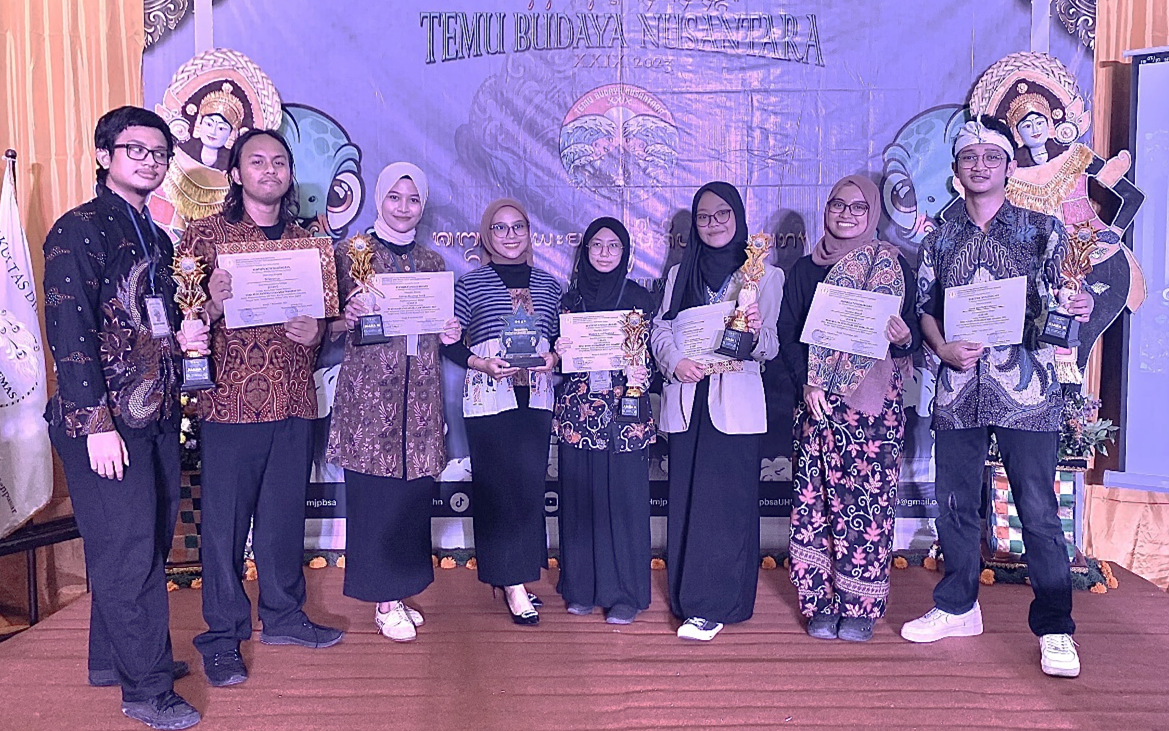
Awarding of competition winners was held on the fourth day of Temu Budaya Nusantara XXX. The awarding night also featured a puppet show called Gajahmada Kridha (Ra Kuti Balela) masterminded by a student of the Javanese Language, Literature and Culture Study Program class of 2023, Ki Rafi Nur Fauzy. All delegates participated in the awarding night which was also the closing of the Temu Budaya Nusantara XXX. Many members of the public also watched the Gajadmada Kridha puppet show.

Trophies of the winners of the Temu Budaya Nusantara XXX series of competitions

On the last day, the delegates participated in a series of Cultural Tourism activities to Pakualaman Temple. The delegates and some of the organizers of Temu Budaya Nusantara toured Pura Pakualaman accompanied by several lecturers from the Javanese Language, Literature and Culture Study Program and ended with the return of the delegates to their hometowns.

Temu Budaya Nusantara XXX is a representation of the young generation who actively participate in preserving their respective cultures. Coming from different regional backgrounds, cultures, and customs, IMBASADI is able to unite this diversity. With the implementation of Temu Budaya Nusantara XXX, it shows that there are still many students who are concerned with regional culture and have the skills to develop it, it is fitting for the new generation to promote the diversity of regional cultures in Indonesia with their abilities.

Great Deliberation of the Javanese Language, Literature and Culture Department Student Association and Election of Candidates for Chairman for the 2025/2026 Period

College StudentNewsOtherSDGSStudentStudent's Activity Tuesday, 17 December 2024

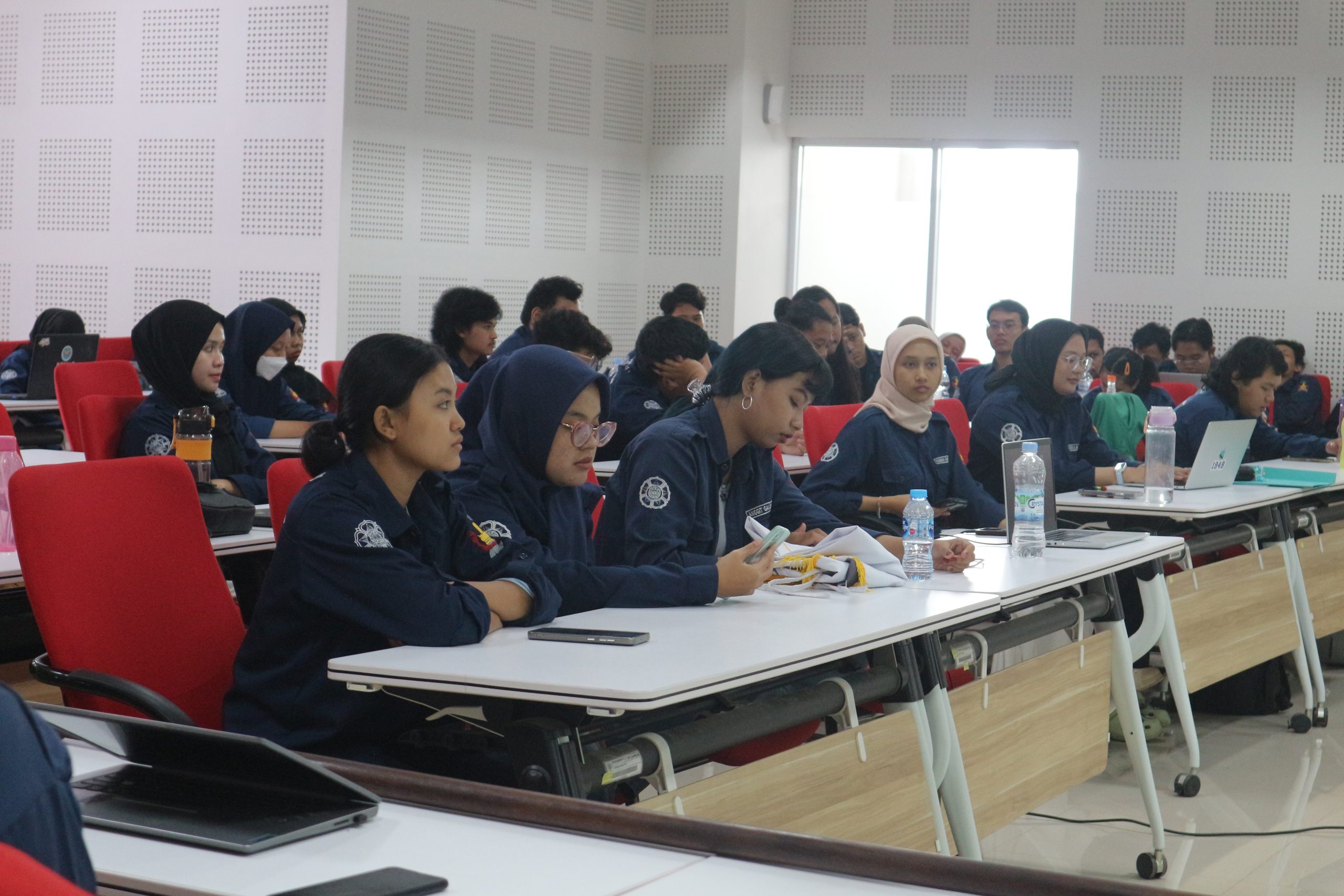
Yogyakarta, December 14, 2024 - The Student Association of the Javanese Language, Literature and Culture Student Family (HMJ Kamastawa) Study Program. Literature, and Javanese Culture held a big year-end deliberation to read out all the accountability sheets (LPJ) of the events that had been carried out in the 2024/2025 period, agreeing on the Basic Bylaws (ADRT), and determining the chairman of HMJ Kamastawa for the 2025/2026 period. The event took place in room 709 Soegondo Building from 08.00 WIB to 17.00 WIB.

The event was opened by Nadiffa Setya (class of 2023) as Master of Ceremony followed by singing Indonesia Raya and Gadjah Mada Hymn, followed by remarks by the Head of the Javanese Language, Literature and Culture Study Program Dr. Daru Winarti, M.Hum. and Kamastawa Advisor, Imam Prakoso, S.S., M.A. who attended the event online. The discussion of LPJ and ADRT was led by Saktia Hidayah (class of 2022) as the first presidium, Haryo Untoro (class of 2022) as the second presidium, and Dhiny Maulina (class of 2022) as the notetaker.

The first discussion began with the reading of accountability sheets (LPJ) for several activities that have been carried out by HMJ Kamastawa such as Gugur Gunung, Abhiseka Kramasisya and Temu Budaya Nusantara. The LPJ was read by the chief executive of each event. Then continued with the reading of the LPJ of each division of HMJ Kamastawa, which is:

- Chairman

- Vice Chair

- Secretary

- Treasurer

- Human Resources Division (HR)

- Public Relations and Organization Division (RPO)

- Social Society Division (Sosmas)

- Media and Information Division (Medinfo)

- Scientific Division

- Entrepreneurship and Logistics Division (Kewirugistik)

- Interest and Talent Division (Mikat)

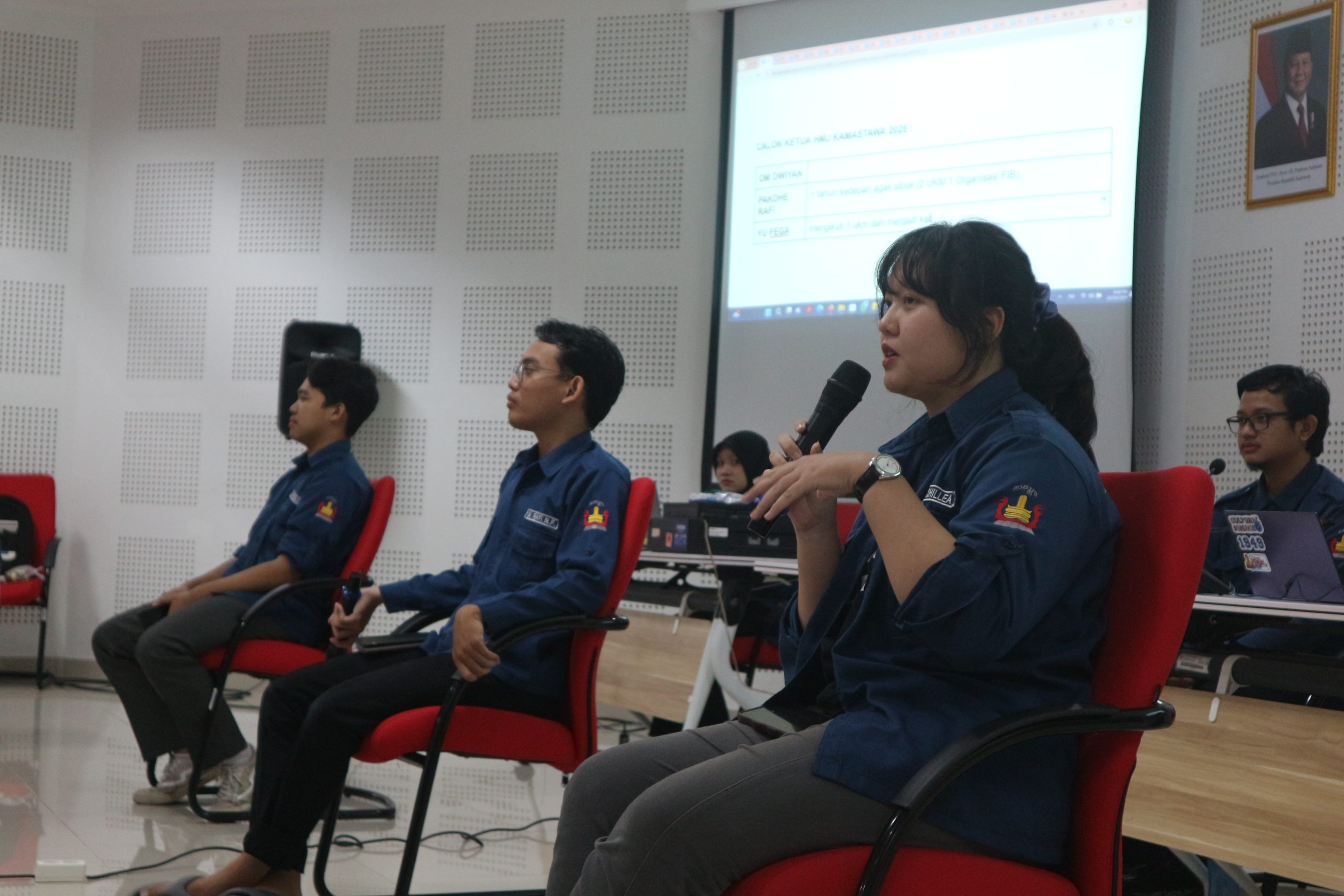
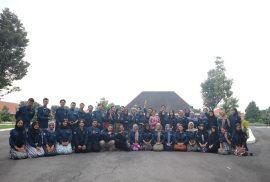
The event was paused with a prayer break and lunch. Followed by a discussion about the election of the new chairman of HMJ Kamastawa for the 2025/2026 period. There were three candidates proposed, namely M. Rafi Nur Fauzy, Fega Achillea Maydena, and Dwiyan Teguh Darmawan, all three of whom are students of the Javanese Language, Literature and Culture Study Program class of 2023. The three of them read the vision and mission that will be held for one period. After reading the vision and mission, entering the question and answer session, each candidate received questions from the chairman and several members of HMJ Kamastawa. Then continued with the deliberation session, with the deliberation of all participants, Dwiyan Teguh Darmawan was determined as the Chairman of HMJ Kamastawa for the 2025/2026 period. The discussion of the determination of the chairman of HMJ Kamastawa ended the entire series of Great Deliberation events. The Great Conference was closed with a group photo documentation session.

.

Deliberation teaches students to socialize with others, communicate, and express opinions. It is hoped that with this deliberation, students will be able to learn to organize well and carry out their responsibilities.
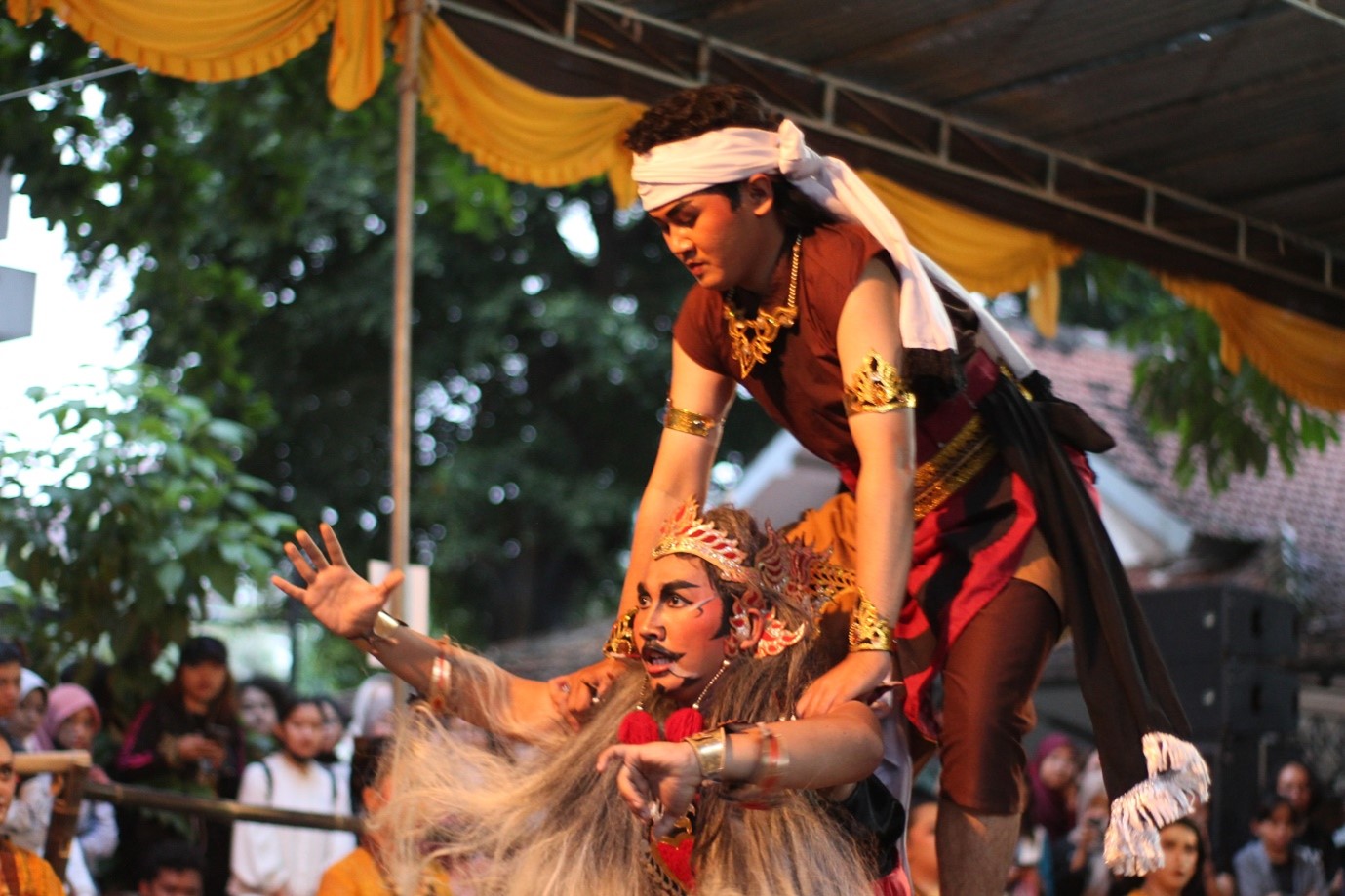
Rafael Raga’s “Ngathabagama” Theater Successfully Becomes the Best Presenter in the 2024 DIY Theater Festival

NewsOtherSDGSStudentStudent's ActivityStudent's Work Tuesday, 1 October 2024

Cited directly from tby.jogjaprov.go.id

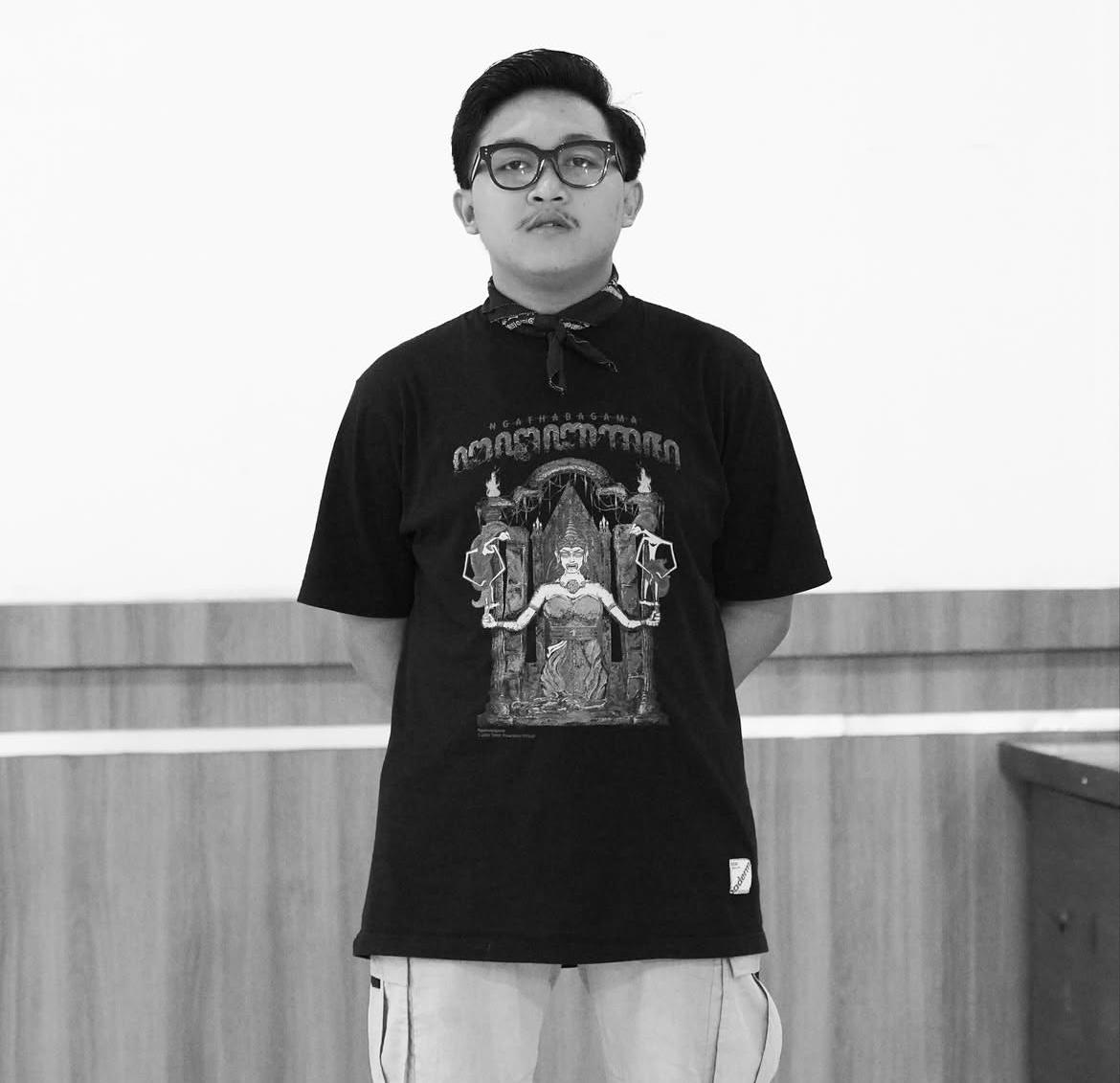
Rafael Raga Budi Panuntun, a student of the Javanese Language, Literature and Culture Study Program class of 2021, successfully became the scriptwriter and director of a theater entitled “Ngathabagama” with the theme Panji which brought Sleman Regency to win the overall champion and best presenter in the 2024 DIY Provincial Theater Festival. Ngathabagama Theater was nominated as the best presenter, best director, best music director, best artistic director, best ensemble, and brought home the rotating trophy of the DIY Theater Festival.

Rafael Raga Quoted from instagram account @rafaelragabp

Raga's success should be an inspiration, in the midst of his academic busyness, Raga can still work and create a beautiful theater and become the best presenter. The process carried out by Raga is quite long, starting from initiating ideas, writing scripts, and so on. Ngathabagama Theater is a theater that was formed by accident, starting from a theater festival at the Sleman Regency level. Kapanewon Minggir has been the champion in Sleman Regency for 2 consecutive years. In 2023, Kapanewon Minggir presented a theater titled "Hagbala" with the theme of Yogyakarta, History and, Romanticism which was also written and directed by Rafael Raga Budi Panuntun, even 50% of this theater is self-made, starting from production, music, artistic, fashion, and others. Hagbala succeeded in winning the 1st place at the Sleman Regency level and the 3rd place at the DIY Province level.

After successfully becoming a champion with Hagbala in 2023. In 2024, Rafael Raga and Kapanewon Minggir advance to participate in the theater festival again in Sleman Regency. Raising Ngathabagama as the title of the presented theater, again succeeded in becoming the champion. Raga revealed that he wrote his script and ideas during KKN (Real Work Lecture) activities. This shows that with all his busyness, Raga was able to create an extraordinary work that was unexpectedly led him to become the best presenter in the 2024 DIY Theater Festival.

The theme of the 2024 DIY Theater Festival refers to the technical instructions from the DIY Cultural Service (Kundha Kabudayan) which is Panji. Panji's romance and love with Sekartaji are brought into a theater. However, Raga revealed that he wanted Ngathabagama to be taken from another point of view, namely that the story of Panji and Sekartaji who always got a blessing from a nature or can be called the absolute destiny of God. Raga did research and found that Panji and Sekartaji always get a destiny that separates them, whether separated by time, someone, or circumstances.

The script that Raga wrote did not escape Raga's consultation with the lecturer of the Javanese Language, Literature, and Culture Study Program, Dr. Rudy Wiratama, S.I.P., M.A., an academic and Wayang Gedhog practitioner who uses the theme of Panji and Sekartaji. With the conversation that Raga did with Dr. Rudy Wiratama, S.I.P., M.A., will strengthen the story and can be held accountable for its validation.

After doing a lot of research and discussion, Raga found that Panji and Sekartaji are always separated by fate, one of them is separated by the god Bathara Kala which is represented as Kala is time. Raga got an unusual idea, which is working on the Panji theater this time by showing Bathari Durga or the mother of Bathara Kala who gives wiradat to Panji and Sekartaji and separates the two of them to get a stronger essence.

Raga crossed between Wayang Gedhog and Wayang Purwa to find out the weakness of Bathari Durga. The weakness of Bathari Durga is Semar or Sang Hyang Ismaya, Semar can defeat Bathari Durha by reciting the way of the guardian, to prevent further evil. Caraka walik is a Javanese script (Hanacaraka) that is read backwards, believed to be able to ward off bad things, Raga took the title of the theater this time from the first line of caraka walik, Ngathabagama.

Many Javanese chronicles, both fiction and non-fiction, place the central story of Panji and Sekartaji. Raga's knowledge of various kinds of Javanese literary works made him confident to write this script. The story of Panji and Sekartaji has not only become the wealth of the Nusantara but for the whole of Southeast Asia. There are also many essences of Wayang Purwa that are raised for Ngathabagama theater, such as Semar, Bathari Durga, the role of the gods, the urning of the nature of the wiradat, a romance story that has many relationships with literary works, and local wisdom such as the use of caraka walik which is widely known to expel or restore bad circumstances.

Not only the presentation of Ngathabagama theater, Raga also created an original soundtrack for Ngathabagama with the title "Kalasmara" which supports the dialogue between Panji and Sekartaji. This Kalasmara was created by Raga to archive theatrical presentations that have been carried out so that they still have a different essence. Raga added that he did not want a stage to only end in 30 minutes to 1 hour on stage, but to have another form of work that can forever be a memory and archive in the future.

The story of Raga in the creation of performing arts based on Javanese literary works is expected to be able to inspire students of the Javanese Language, Literature, and Culture Study Program to be able to create and utilize the knowledge that has been obtained. Many works of art can be created equipped with knowledge from the Javanese Language, Literature, and Culture Study Program.

Kintan Dewinta Putri, a student of the UGM Javanese Language, Literature, and Culture Study Program, Becomes Yogyakarta Cultural Ambassador 2024

College StudentNewsOtherSDGSStudentStudent's Activity Monday, 9 September 2024

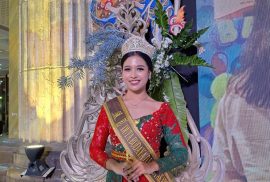
Good news came from the Javanese Language, Literature, and Culture Study Program, Faculty of Cultural Sciences, Universitas Gadjah Mada (FIB UGM). Kintan Dewinta Putri, a student of the program, has been selected as the Princess Cultural Ambassador of Yogyakarta 2024. She was selected along with Duta Andhika, the Son of Yogyakarta Cultural Ambassador 2024, on May 4, 2024, at Sleman City Hall, Yogyakarta.

Based on an interview with Kintan (09/06/2024), being a Yogyakarta Cultural Ambassador is not just a competition, but also must understand and participate in the preservation of Javanese culture, especially the cultural identity of Yogyakarta. “As Yogyakarta Cultural Ambassadors, it is our duty to contribute to the mission of recognizing and preserving arts and culture in Yogyakarta. Examples of activities include being a judge for the Krincing Manis dance studio's class promotion and participating in the Jamasan Pusaka 1 Suro ceremony at the top of Suroloyo, Kulonprogo. In the future, we plan to do community service in Gunung Kidul and other places by teaching about Yogyakarta's culture and arts,” she explained.

Kintan is grateful to have won the title of Yogyakarta Cultural Ambassador 2024 and is proud to be part of the agent of change in the effort to preserve Yogyakarta's culture. She explained that she is currently preparing to participate in the Indonesian Cultural Ambassador event. “Currently, I am preparing myself for the Indonesian Cultural Ambassador event to be held on September 19-21, 2024, in Surabaya. Please pray and support!”

Culture is the result of copyright, taste, and karsa and is an identity for its people. The existence of these various identities is an identity of the Indonesian nation, which is diverse and lives together in harmony. Kintan's achievements are an inspiration for Mahadaya to continue to explore, preserve, and explore the potential of Indonesian culture, and provide benefits to the community.

Seputar Jawa: The Health Benefits of Kitchen Spices

NewsOtherSDGS Thursday, 15 August 2024

Source: rumahmesin.com/bumbu-dapur/

Recently, the “back to nature” lifestyle has become increasingly popular. Not only are people looking for instant results, but they are now increasingly concerned with the process of achieving optimal health. This trend can be seen in the increasing number of people who exercise diligently, pay attention to nutritional intake, and utilize herbal and traditional medicine.

When it comes to traditional medicine, our ancestors already had the right recipe to maintain health. Referring to Wulandari (2011), there is a book entitled Serat Primbon Jampi Jawi published in 1933 by the publisher Tan Khoen Swie, which collects valuable knowledge about traditional medicine, including the efficacy of various kitchen spices for health. Let's discuss some of these herbs that have amazing benefits:


  • Black Cumin

Black cumin is known to have hot properties but feels cool for a while. The benefits of black cumin are very diverse, ranging from removing mucus and dirt in the stomach, to overcoming soreness in the back or joints. To experience its benefits, Mahadaya can try a mixture of crushed black cumin with honey. In addition, black cumin can also be used to cure colds and dizziness due to colds by inhaling black cumin wrapped in mori cloth.

  • Nutmeg

This kitchen spice is not only a flavoring agent but also has health benefits. Nutmeg is known to strengthen the heart, strengthen semen, and treat eye and bone pain.

  • Red Onion

Apart from being a spice that is often used daily, shallots have various health benefits. Dripping crushed shallot water into the eyes can cure blurred vision. In addition, shallots are also effective for preventing hair loss if applied to the head, which often experiences hair loss.

  • Tamarind

This plant, which is often the main ingredient in herbal medicine, has many health benefits. Tamarind is known to reduce body heat if consumed directly. Furthermore, tamarind is effective for relieving shortness of breath and nausea. The trick is to soak the tamarind for three days, then mix the water with sugar and drink it.

  • Lime

Lime, which is commonly used as a complement to soto, has health benefits that are no less great. By drinking a mixture of lime juice and sugar in the morning after waking up, the kitchen spice can neutralize toxins in the stomach. In addition, lime juice can also warm the body.


Some of the explanations above are a small part of the various properties of herbal medicine with this kitchen spice. This then opens our perspective, showing that old manuscripts actually contain a variety of information, one of which is in the health sector. By extracting information from these manuscripts, we are expected to be able to utilize these instructions, disseminate them, and develop them in order to bring goodness to ourselves and our environment.


LITERATURE

Wulandari, A. (2011, December). ). Serat Primbon Jampi Jawi Koleksi Perpustakaan Dewantara Kirti Griya (Taman Siswa): Sebuah Dokumentasi Pengobatan Tradisional. Jumantara: Jurnal Manuskrip Nusantara,2(2), 30-56. https://doi.org/10.37014/jumantara.v2i2.135


LIST OF IMAGES

Vandro. (2016, April 10). Ssst…! Ini Dia 35 Bumbu Dapur Masakan Indonesia, Incaran Dunia... Rumahmesin.com. Accessed from https://www.rumahmesin.com/bumbu-dapur/.

Understanding the Manuscripts of Widyabudaya Collection of Keraton Ngayogyakarta and Widyapustaka Collection of Pura Pakualaman and its Restoration Stages

NewsOtherSDGSStudentStudent's Activity Wednesday, 29 May 2024

On Monday, May 27, 2024, the Javanese Language, Literature and Culture Study Program held a field lecture in the framework of the Codicology course. This activity was held at Widyabudaya Library of Keraton Ngayogyakarta and Widyapustaka Library of Pura Pakualaman. The participants of this activity were students participating in the 2024 Kodikology course, guided by Dr. Sri Ratna Saktimulya, M.Hum., as the lecturer of the course.

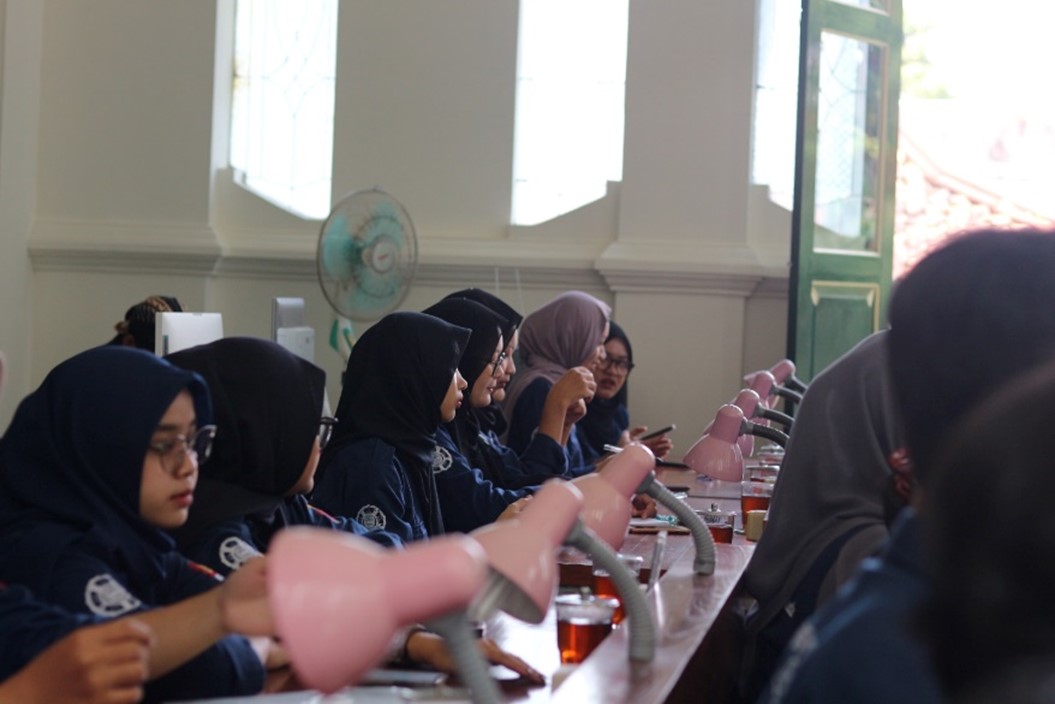
In this field study, students had the opportunity to see and learn firsthand about manuscripts, archives, and preservation efforts. The first location visited was Widyabudaya of Keraton Ngayogyakarta Hadiningrat. Here, students were first entertained with warm tea drinks typical of the Keraton Yogyakarta. After that, they were divided into four groups and guided by the abdi dalem to observe in depth the collection of manuscripts, archives, and the restoration process.

Students observed the explanation and enjoyed the banquet provided by the Keraton Ngayogyakarta.

The second location visited was the Widyapustaka Library of Pura Pakualaman. In this place, the participants were treated to jamu beras kencur and some traditional dishes. After enjoying the meal, the participants were given the opportunity to see the manuscript and archive collections. They also listened to explanations from librarians about the condition, aspects, and preservation of the manuscripts.

Students listen to explanations from the lecturers

The implementation of this field study went well and smoothly. The students were very enthusiastic, as seen from their high curiosity about various manuscript and archive collections, as well as the stages of revitalization. The purpose of this activity is as a preservation event in the form of introducing Indonesian culture, especially Javanese culture, to the younger generation. Thus, it is hoped that the love for the nation's culture in the younger generation will continue to grow and can be realized in real efforts to keep nguri-uri (preserve) and ngurip-urip (revive) the nation's identity.

The existence of various manuscripts and archives is a source of historical traces as well as a mirror of the cultural life of their time. Therefore, preserving historical evidence and extracting information from it needs to be done as a step to understanding the form of culture, knowledge, history, and glory of the archipelago. In addition, synergy from various parties is needed to realize this. This is in line with the fourth and seventeenth points of the Sustainable Development Goals, namely presenting and improving the quality of education and cooperation between partners to achieve goals.


Author           : Nanda Nursa Alya & Haryo Untoro

Editor             : Haryo Untoro

Gugur Gunung 13 Day Two: Jathilan Dance Drama Enlivens Faculty of Cultural Sciences

College StudentNewsOtherSDGSStudentStudent's ActivityStudent's Work Thursday, 16 May 2024

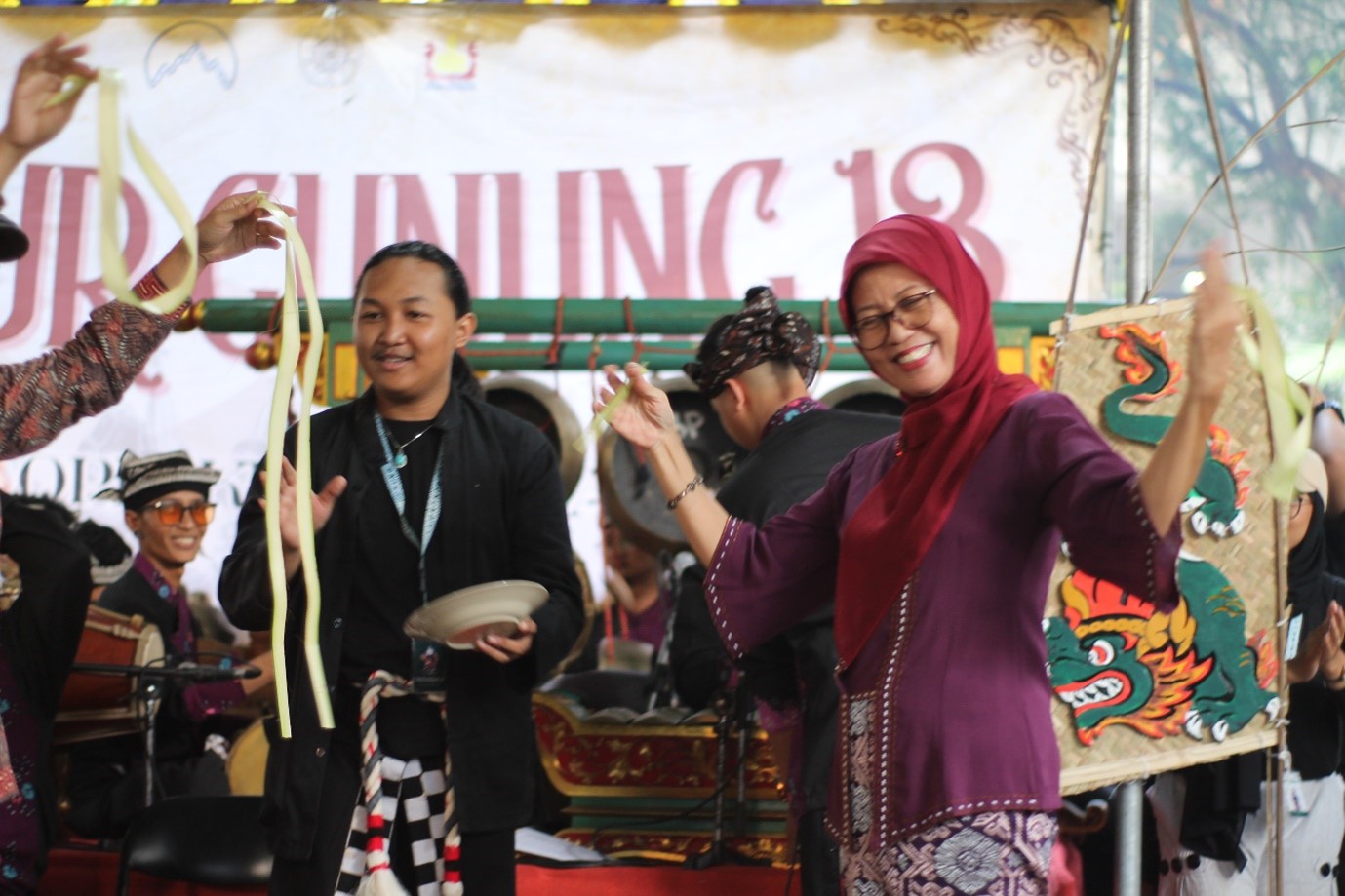
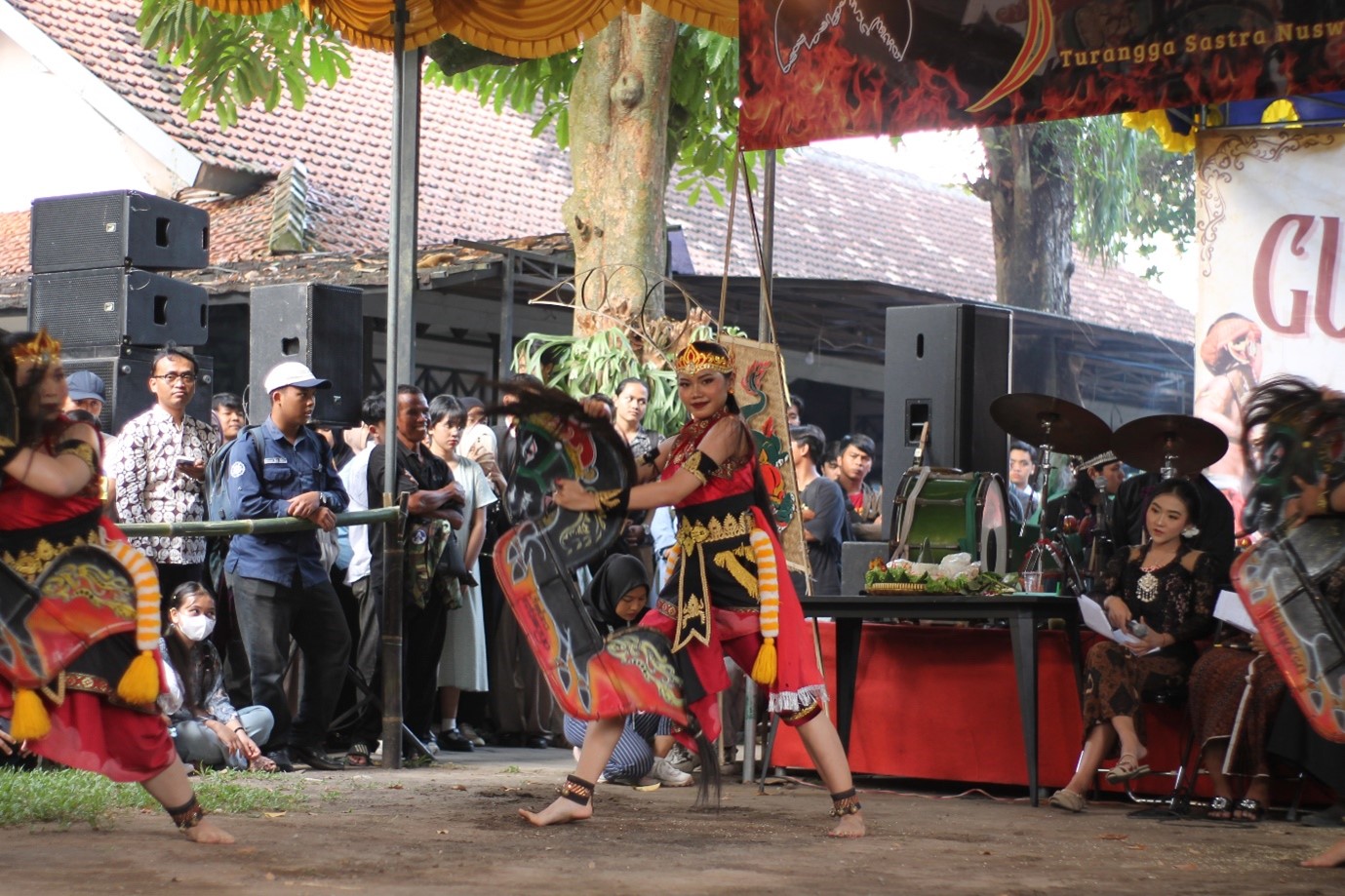
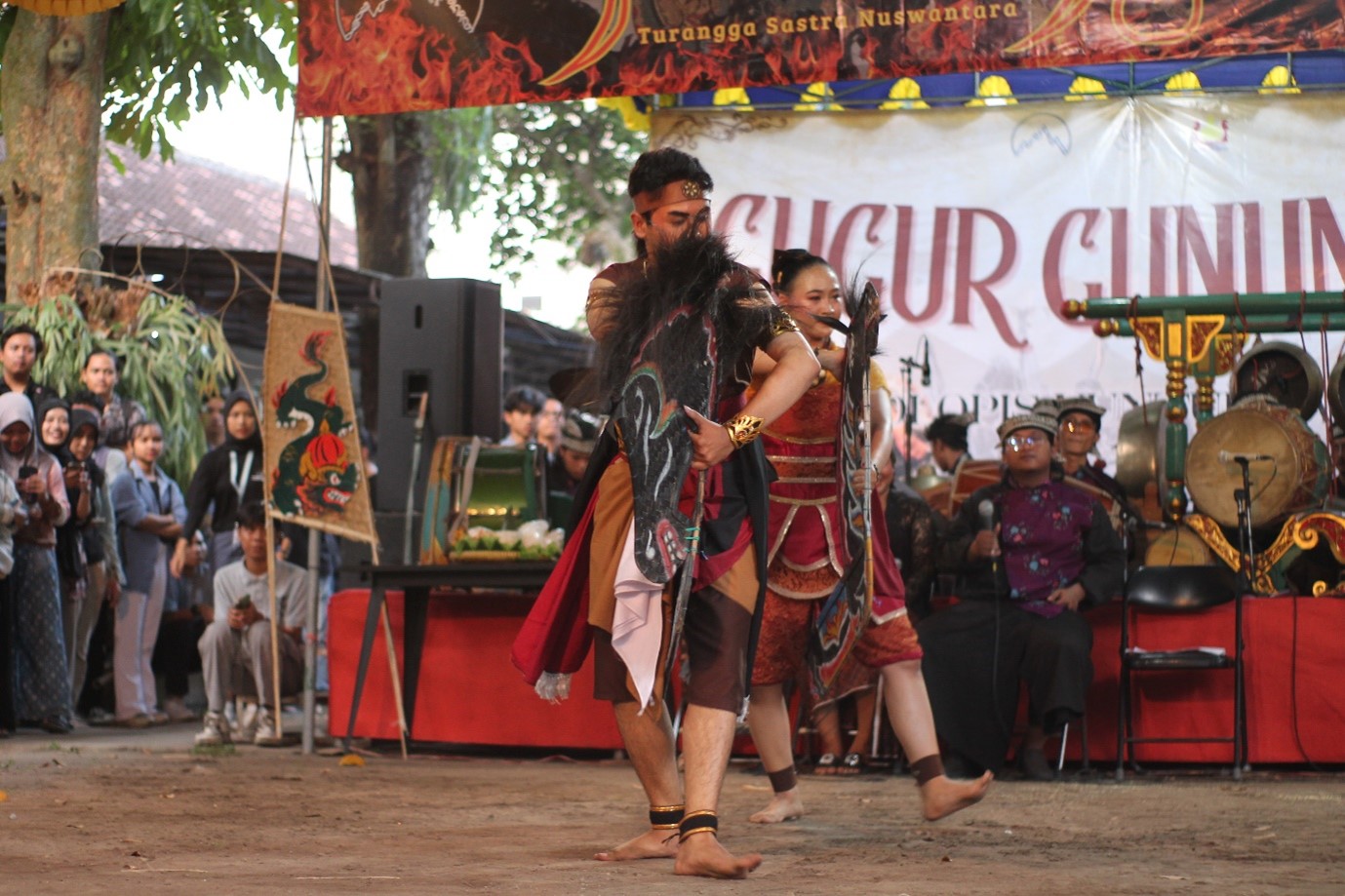
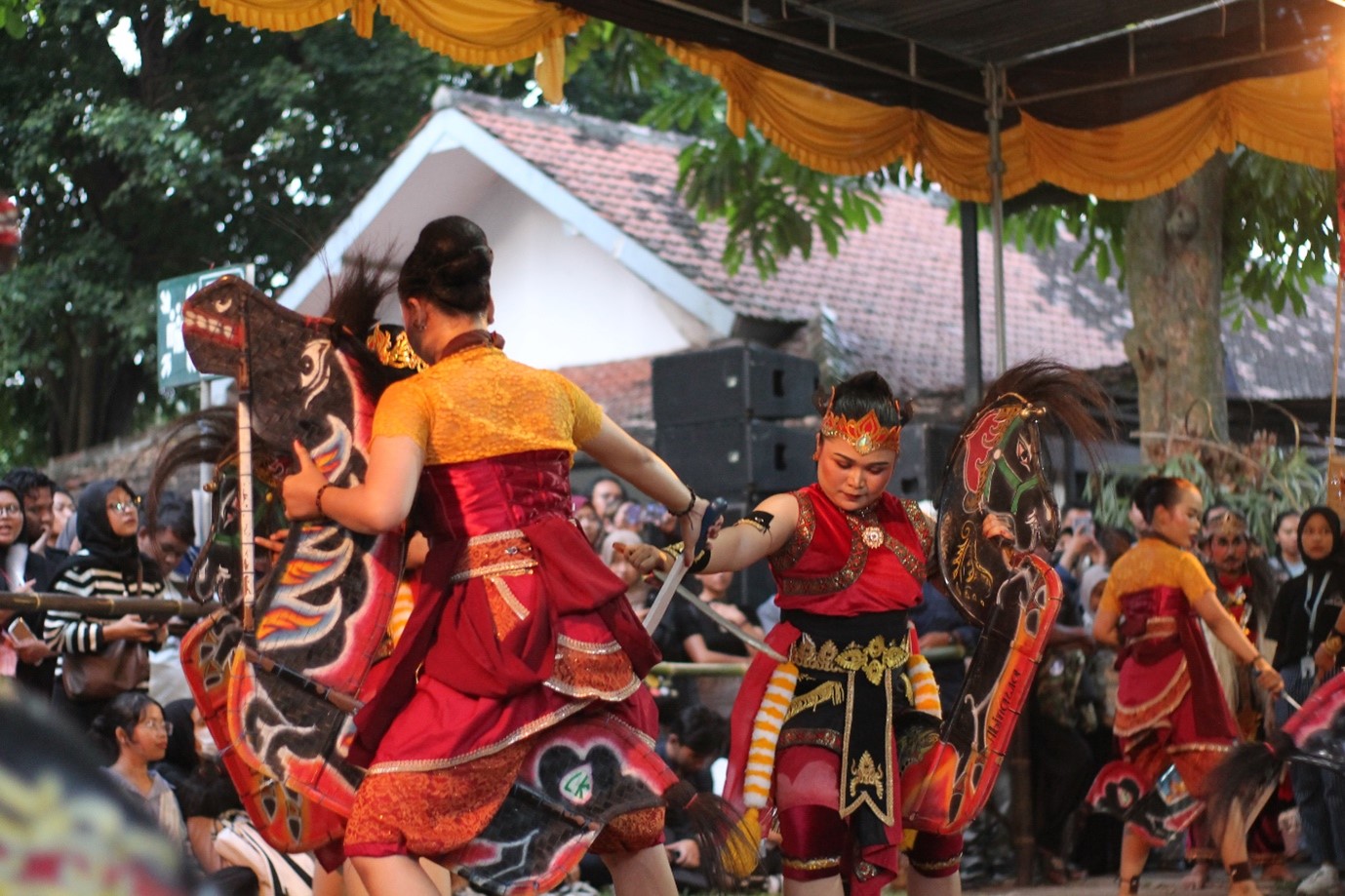
Yogyakarta (05/16/2024) - The second day of Gugur Gunung 13, precisely on Tuesday, May 14, 2024, became an unforgettable moment for all residents of the Faculty of Cultural Sciences, Universitas Gadjah Mada (FIB UGM). Not without reason, because students of the Javanese Language, Literature, and Culture Study Program collaborated in a team called 'Turangga Sastra Nuswantara' to perform Jathilan Dance Drama on the peak day of Gugur Gunung 13.

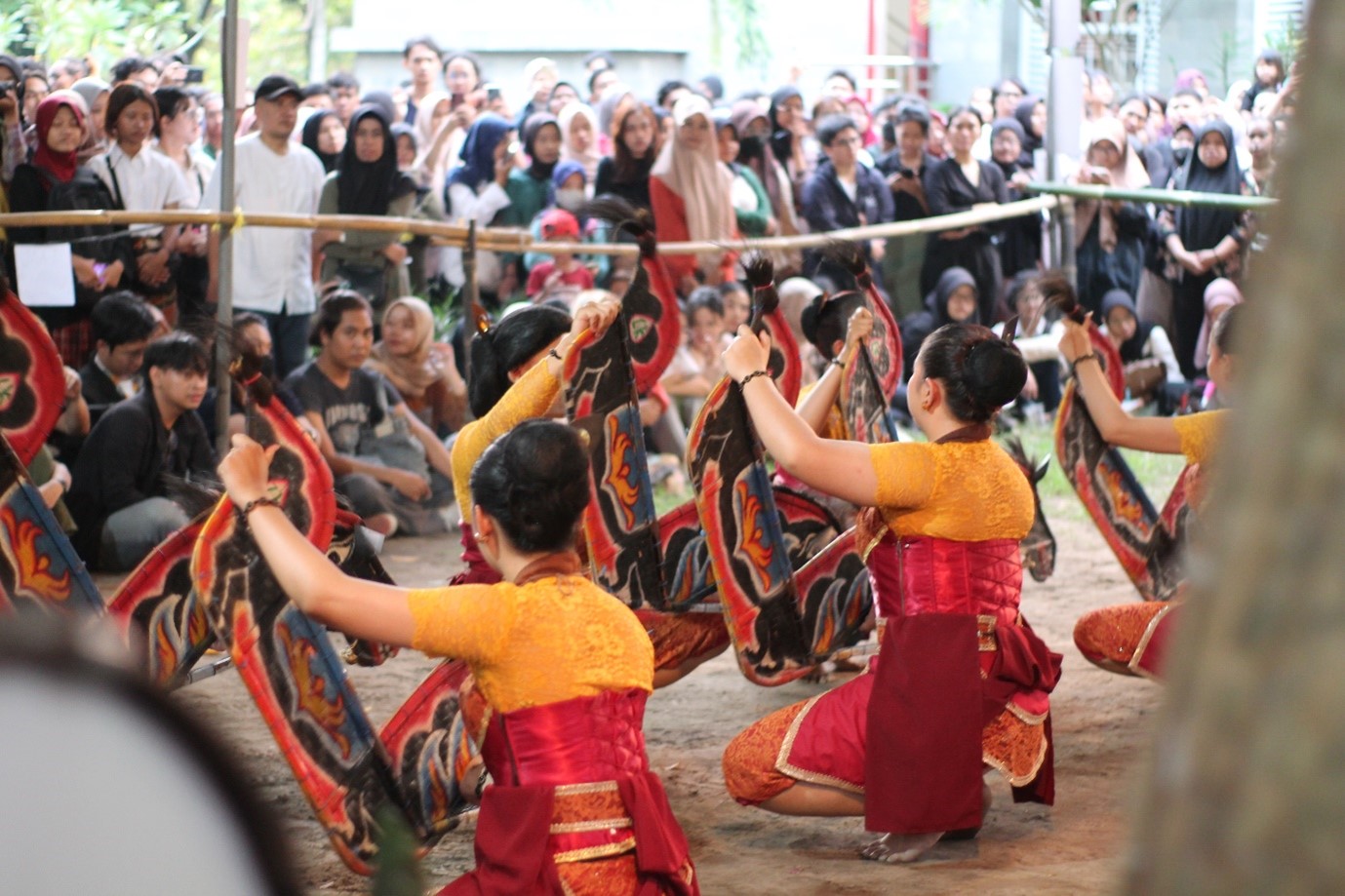
The Jathilan Dance Drama performance was held at 04.00 PM –05.30 PM WIB on the stage located in Greenland. Each side of the stage was packed with members of the academic community who were interested in the Jathilan Dance Drama performance. The performance of popular art became livelier with the presence of Lala Atila as the sinden of the Jathilan Dance Drama.

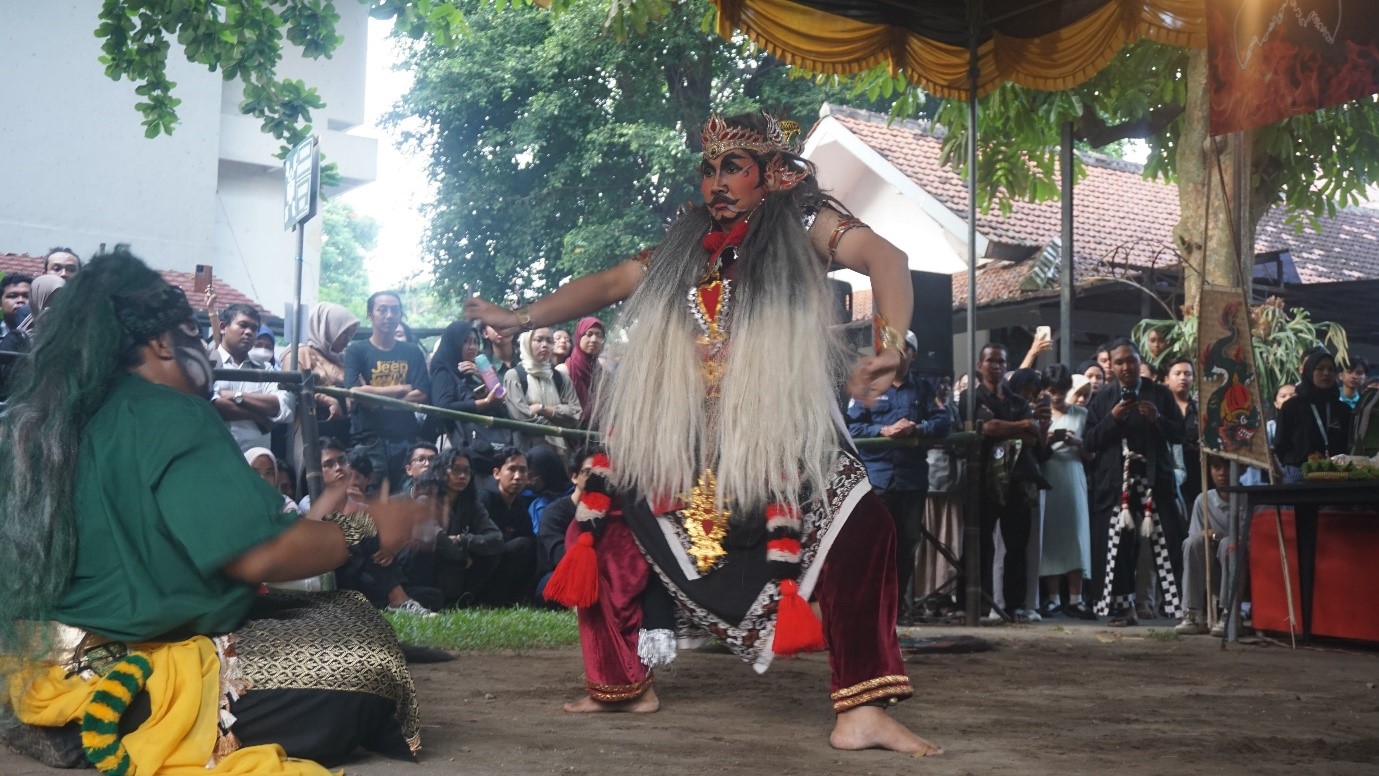
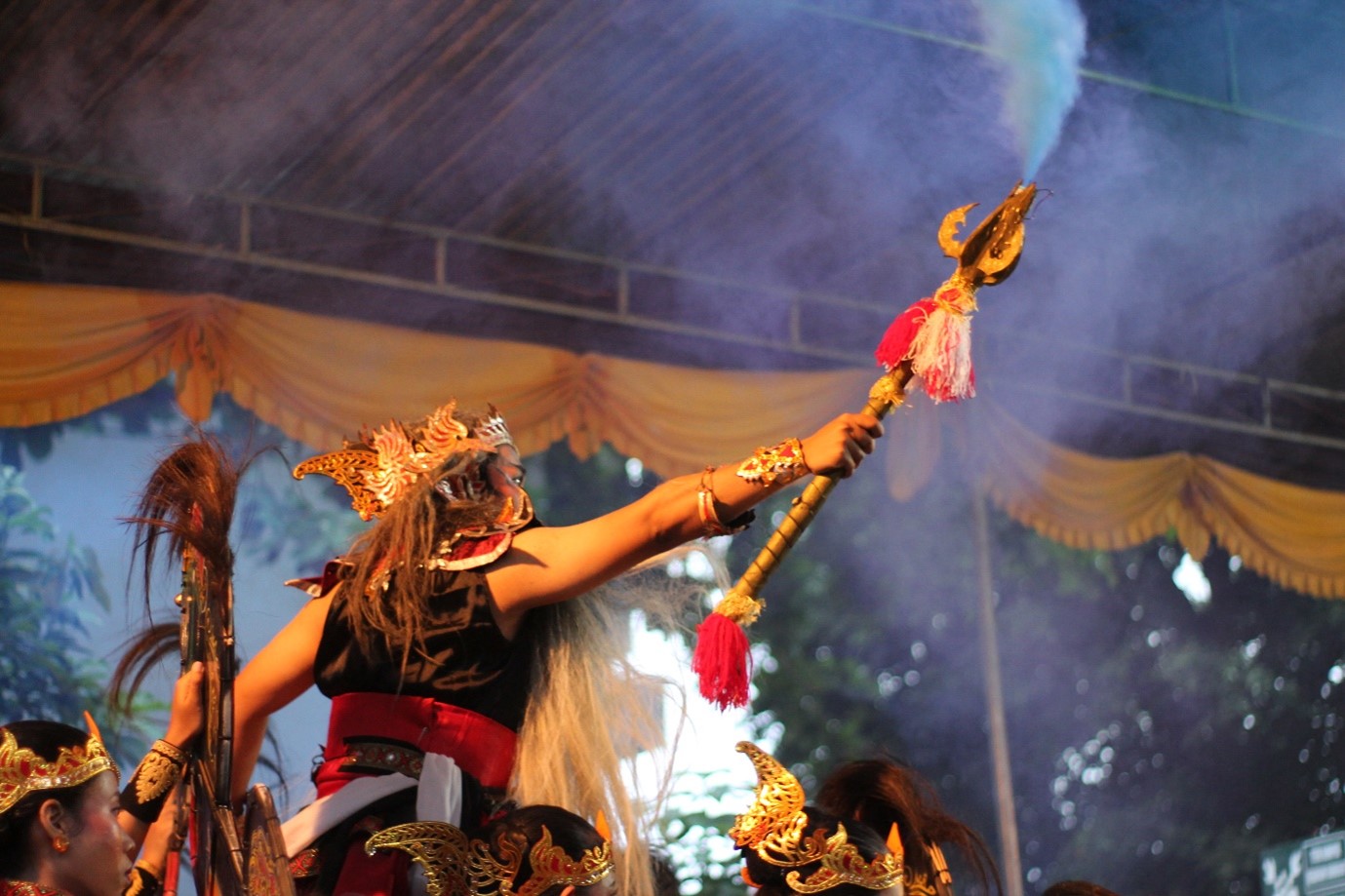
Jathilan Dance Drama is a performance of Jathilan dance, an art that is closely related to the use of jaran kepang, or lumping horse, and contains drama about Javanese mythology. The legend of Javanese mythology is the legend of Ajisaka and his battle with Dewata Cengkar, a giant king in the kingdom of Medang Kamulan. The production of the Jathilan Dance Drama was led by R. Raga Budi Panuntun, a student of the Javanese Language, Literature, and Culture Study Program class of 2021, and directed by Yulian Kethus from the Kidung Cakrawala Art Studio.

Enthusiasm of mahadaya

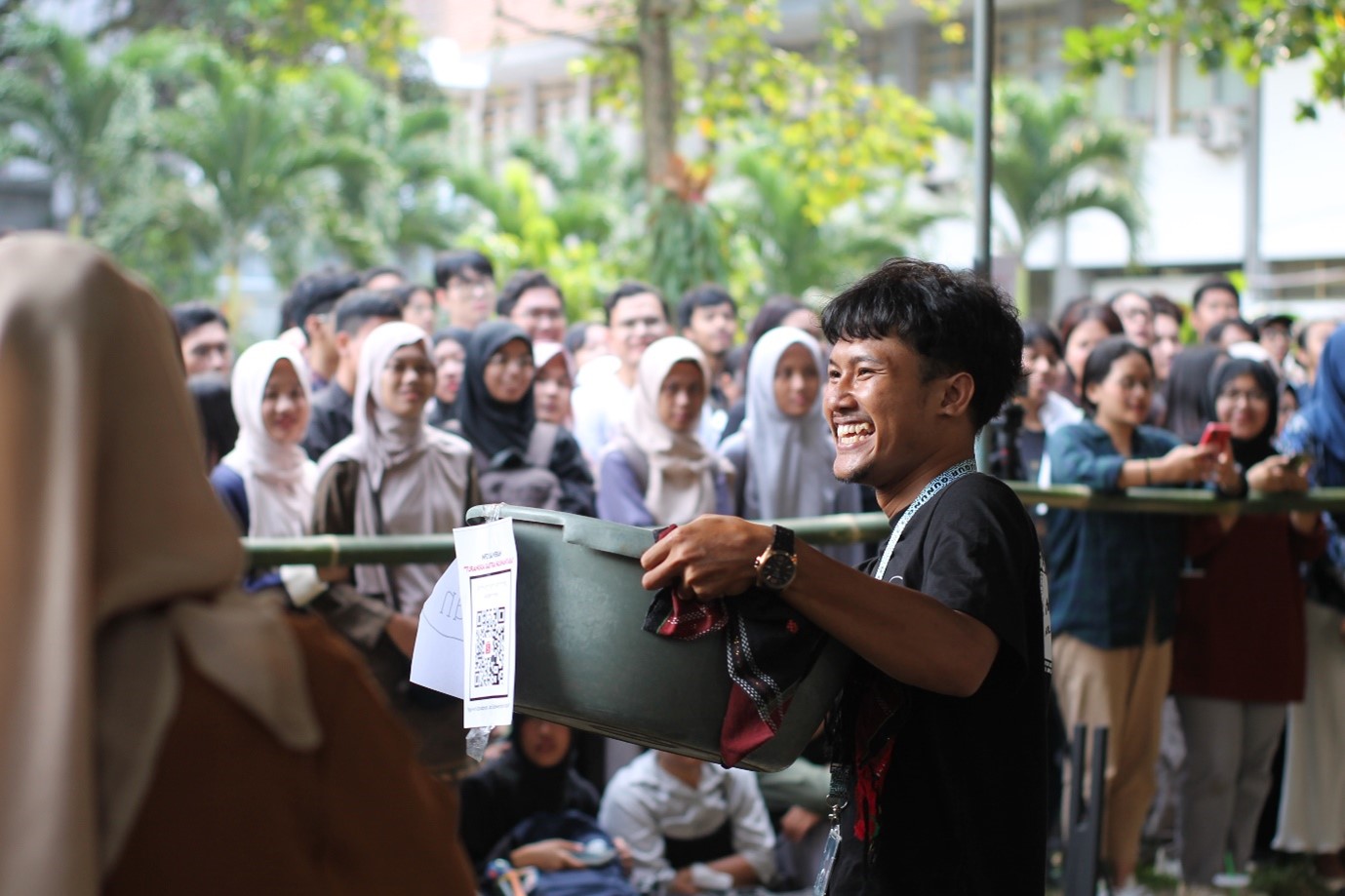
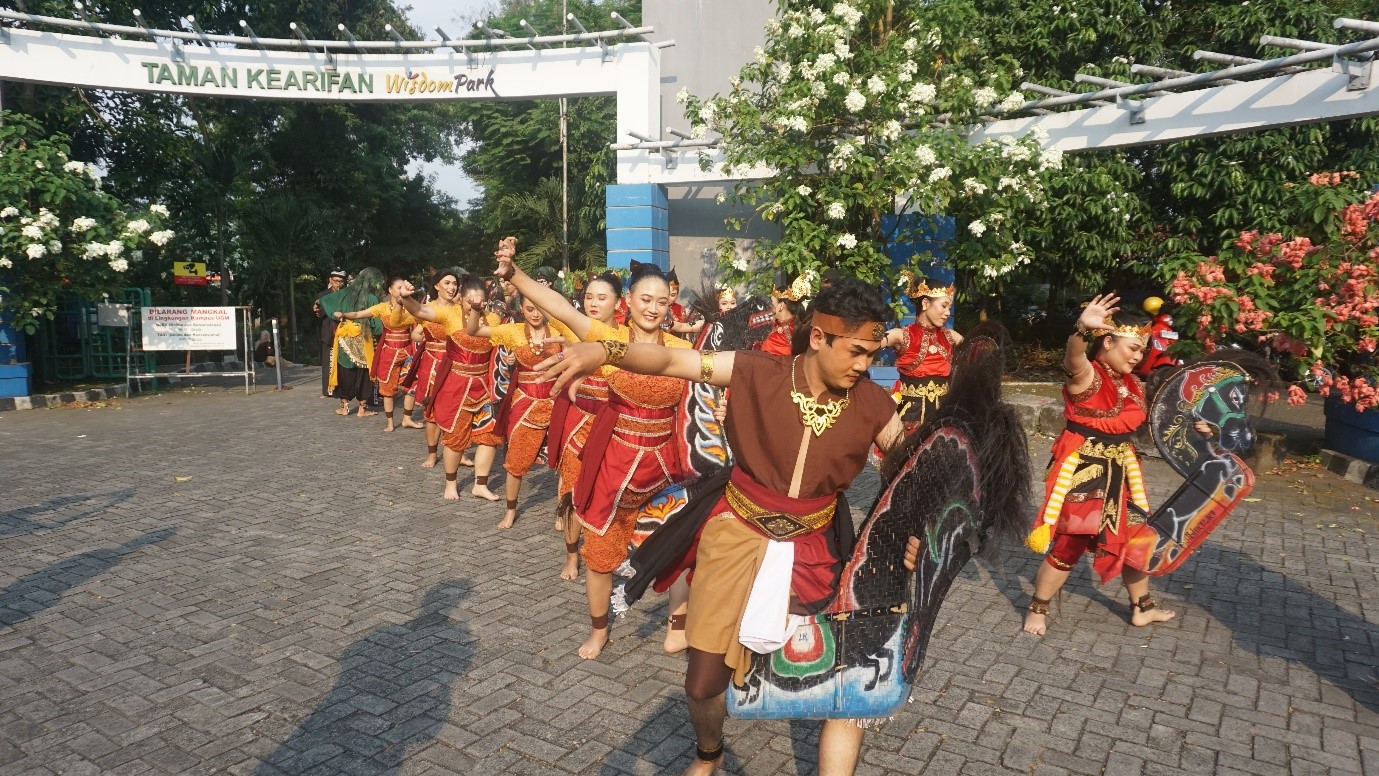
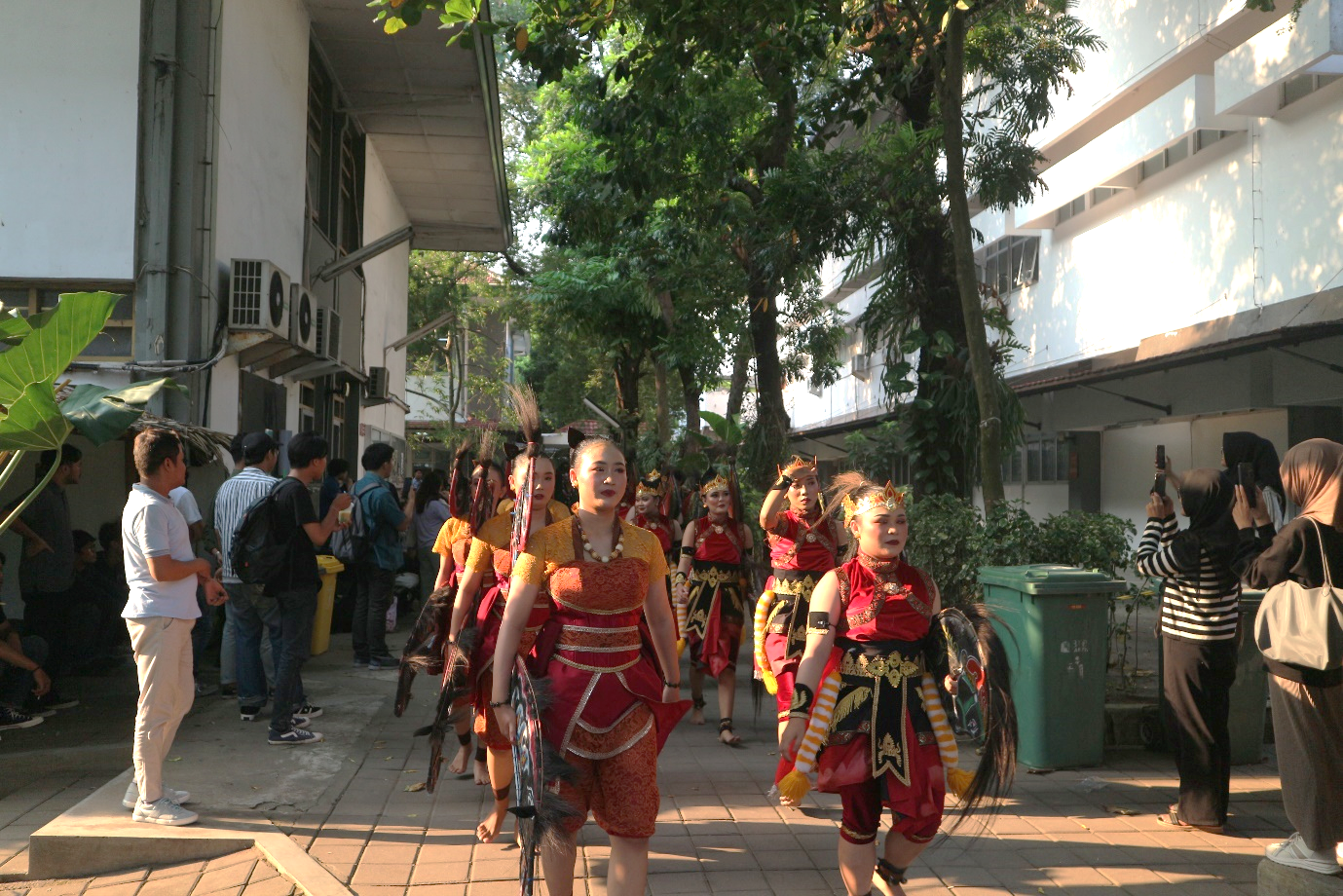
Before the performance began, at 03.00 PM WIB, the performers and staff held a jaran bath and prayer together at Wisdom Park. Afterward, a cultural procession was carried out along the route from Wisdom Park to FIB through the north door.

Kirab Budaya to the Faculty of Cultural Sciences

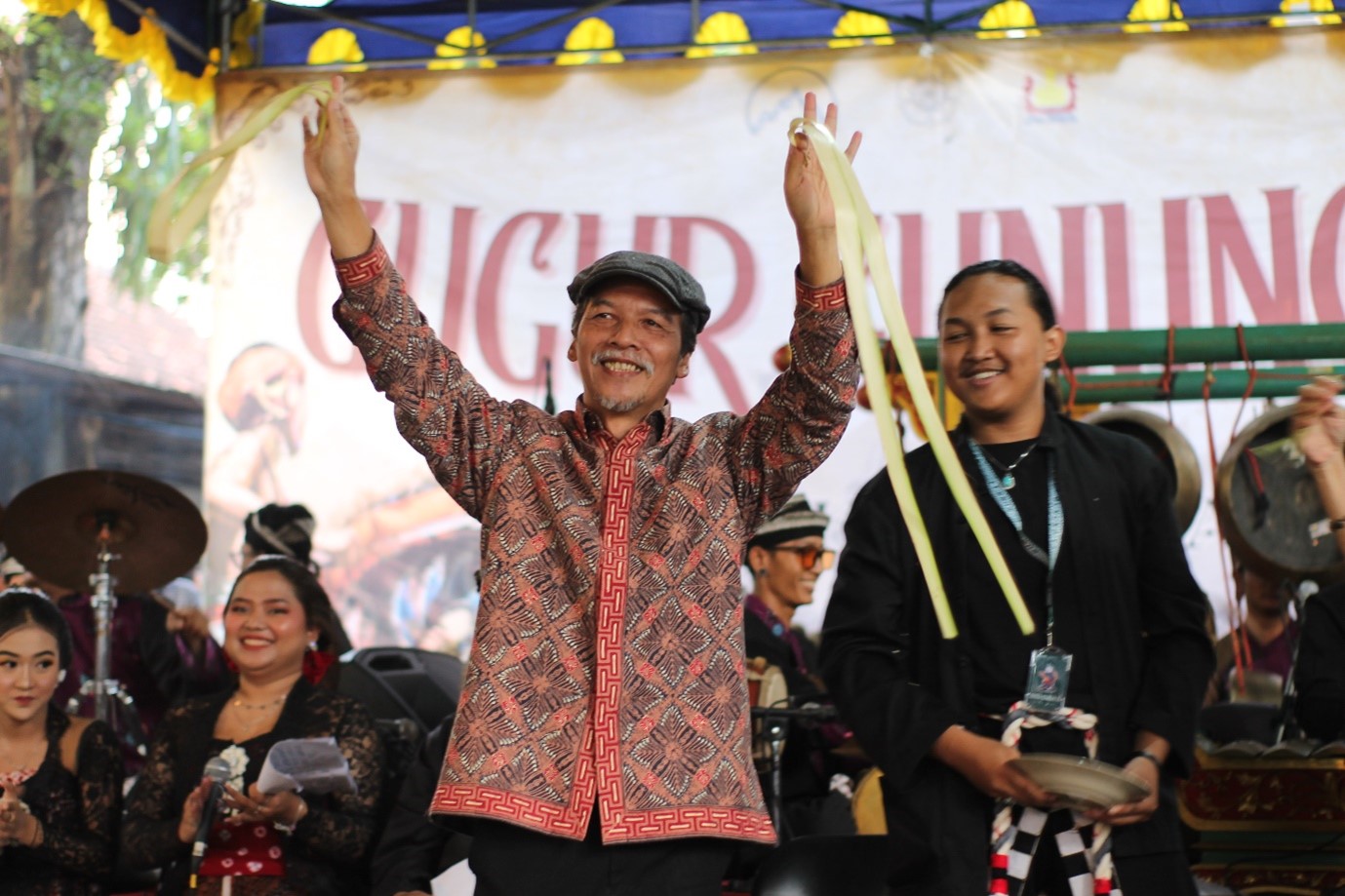
The folk-art performance was opened by R. Sukoco, an alumnus of the Javanese Language, Literature, and Culture Study Program, as the narrator. There were various speeches delivered by Idharul Huda, as the chairman of Gugur Gunung 13, Dr. Daru Winarti, Head of Javanese Language, Literature, and Culture Study Program, and Prof. Dr. Setiadi, S.Sos., M.Si, dean of the Faculty of Cultural Sciences. The event continued with the traditional ceremony of kupat luwar or luwaran kupat, as a form of releasing all things that are not good so that the event can run smoothly.

Kupat Luwar or Luwaran Kupat Procession

The next event was the presentation of the Jathilan Dance Drama which managed to amaze the entire audience. The audience seemed to really enjoy it, even dancing to the music of the Jathilan dance. The highlight of this presentation was the scene of the battle between Aji Saka and Dewata Cengkar. The thrilling battle and Aji Saka's stunning victory drew thunderous applause from all directions.

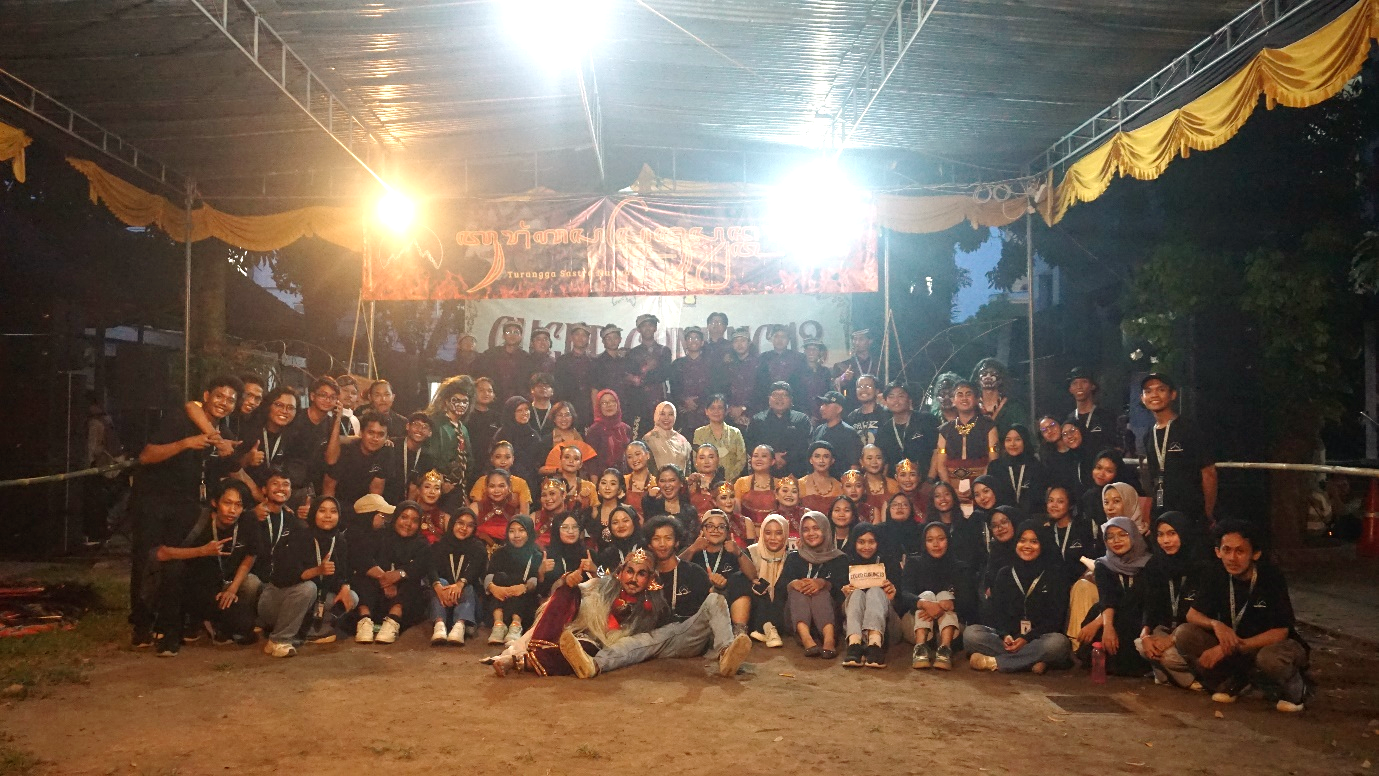
The end of the Jathilan Dance Drama performance also marked the end of the 13th Gugur Gunung. Various beautiful and fun moments have occurred during Gugur Gunung 13. We would like to thank the enthusiasm and support from the Javanese Language, Literature, and Culture Study Program, sponsors, mahadaya, and the entire academic community of the Faculty of Cultural Sciences, Universitas Gadjah Mada. May the culture of the archipelago be preserved and continue to live from time to time. See you at Gugur Gunung 14.

Javanese Language, Literature and Culture Study Program Selected as Host of IMBASADI XXXTH Nusantara Culture Gathering

College StudentNewsOtherSDGSStudent Wednesday, 15 November 2023

The XXIXth Nusantara Cultural Gathering of the Indonesian Language and Literature Students Association (IMBASADI) has been organized by I Gusti Bagus Sugriwa State Hindu University, located on the Bangli campus. The National Conference (Munas) which is the focus of the Nusantara Cultural Gathering activities has produced several decisions, including the determination of the host of the Nusantara Cultural Gathering IX. The results of the National Conference are outlined in Decree Number: 007/Munas-XXIX/Imbasadi/XI/2023 concerning the Determination of the Host of the XXXth National Conference in 2024, stipulating that the Javanese Language, Literature and Culture Study Program, Faculty of Cultural Sciences, Gadjah Mada University, Yogyakarta, is determined to be the Host of the National Conference of the Association of Regional Language and Literature Students throughout Indonesia (Imbasadi) to the XXXth in 2024. The organization of the XXXth Nusantara Culture Gathering can promote, study, and preserve the culture of the archipelago, in accordance with the 4th point in the sustainable development goals, namely improving the quality of education. In addition, it can also be a place to strengthen the relationship between students majoring in regional literature throughout Indonesia. Thus, prayers and support from various parties are requested to participate in the success of the IMBASADI XXXth Nusantara Cultural Gathering which will be held in 2024.

Five Championships Earned by UGM Javanese Language, Literature, and Culture Students in the XXIXth IMBASADI Nusantara Cultural Gathering Activity

College StudentImbasadiNewsOtherSDGSStudent Friday, 10 November 2023

The XXIXth National Cultural Gathering was successfully organized by I Gusti Bagus Sugriwa State Hindu University (UHN) which took place on Sunday-Friday, November 05-10, 2023. The theme of the 2023 National Cultural Gathering was "Sabda Budaya: Mukhti Luwir Nihan Segara", which means "Cultural Echoes: Thundering like the Ocean". The theme intends to highlight the richness of Indonesian culture that is still thundering in the midst of the current era of globalization. The activity lasted for five days with various agendas including the National Deliberation, Wimbakara (Competition), National Seminar, and ended with the Awarding Night as well as the closing of the XXIXth National Cultural Gathering activities.

In this XXIXth National Cultural Gathering, the Javanese Language, Literature and Culture Study Program, Faculty of Cultural Sciences (FIB), Universitas Gadjah Mada (UGM), sent eight delegates to participate in the entire series of events. The UGM delegation consists of Nurma Aisyah (class of 2021) as the head of the delegation, Vighna Rivattyannur Hernawan (class of 2020), Bima Muslih Wicaksono (class of 2022), Haryo Untoro (class of 2022), Kintan Dewinta Putri (class of 2022), Muhammad Siswoyo (class of 2022), Alma Syahwalani (class of 2023), and Meifira Arini Pitaloka (class of 2023).

Here were six activities that were contested, including Cultural Parade, National Scientific Writing Competition (LKTIN), Poetry Musicalization competition, Comic Strip competition, Cultural Tiktok competition, and Cultural Reportage competition. Of the six competitions, the delegation of Universitas Gadjah Mada won five competitions, including:

  • 1st place in the Cultural Reportage competition (Alma Syahwalani)

The Cultural Reportage competition raised the theme of Taman Sari Yogyakarta, a historic water garden site, as a reflection of the splendor and majesty of Indonesian culture that is passed down to this day.

  • 2nd place in the National Scientific Writing Competition (Haryo Untoro and Muhammad Siswoyo)

The National Scientific Writing Competition entitled Reflection of the Entity of the Agrarian Tradition in the Track Record of Cowongan Song Verses, raised the Cowongan ritual song verses as material objects that contain elements of agrarian in the form of various plants and animals. The elements are then associated with their classification in Javanese culture and reveal the inheritance related to the name of the  agrarian elements and the agrarian mythology behind them.

  • 2nd place in Comic Strip competition (Meifira Arini Pitaloka)

The Comic Strip competition with the theme "environmental conservation based on local wisdom" tells the story of young people who want to reforest by paying attention to the philosophy of these plants.

  • 3rd place in the Poetry Musicalization competition (Nurma Aisyah and Bima Muslih Wicaksono)

The Poetry Musicalization Competition raised the theme "Sabda Budaya: Mukhti Luwir Nihan Segara" brought poetry created by Muhammad Siswoyo about the beauty and majesty of the nation's culture. The poem was performed with a recitation combined with singing and musical accompaniment, thus mesmerizing the other participants.

  • 3rd place in Tiktok Nusantara competition (Kintan Dewinta Putri)

Cultural Tiktok competition featuring traditional games, including Dakon or Congklak, Clogs, and games accompanied by dolanan cublek-cublek suweng songs.

The achievement of UGM Javanese Language, Literature, and Culture Study Program in winning various competitions is a concrete manifestation of UGM Javanese Language, Literature, and Culture Students in promoting, appreciating, and preserving the diverse cultures and traditions in Indonesia.

The existence of the XXIXth National Cultural Gathering is expected to motivate students to be interested in promoting the heritage of diverse traditions and cultures in Indonesia. Furthermore, the National Cultural Gathering activities can strengthen relationships and expand relationships between students of regional literature study programs throughout Indonesia.

We would like to thank all those who have participated in the success of this event. Hopefully IMBASADI can continue to accommodate students majoring in regional literature throughout Indonesia in developing and preserving the nation's culture.

Indonesia is diverse, IMBASADI unites.

Examining the History of the Javanese Language, Literature and Culture Study Program, Faculty of Cultural Sciences, Universitas Gadjah Mada

NewsOtherSDGS Saturday, 30 September 2023

Based on the Decree of the Rector of Universitas Gadjah Mada Number 1286/UN1.P/KPT/HUKOR/2022, the Javanese Literature Study Program officially changed its name to the Javanese Language, Literature and Culture Study Program. The change in the name of the Study Program took place on Monday, November 28, 2022. However, the name change of the Study Program is not the first time this has happened. In its history, the development of the Javanese Language, Literature and Culture Study Program cannot be separated from the history of Universitas Gadjah Mada itself.

Referring to the article Knowing the Department of Literature and Culture of UGM by Prof. Dr. Darusprapta (1980), in 1946 there was a foundation called "Jajasan Balai Perguruan Tinggi Gadjah Mada" in Yogyakarta which had two parts:

  1. Faculteit Law and Economics, with Prof. Dr. Djaka Soetana as chairman.
  2. Faculteit Sastra, Filsafat, dan Kebudayaan, with Prof. Dr. R. Prijana as chairman.

At that time, the courses organized did not yet reflect certain majors. However, courses in New Javanese Language and Literature and courses in Old Javanese Language and Literature, which were combined with courses in Sanskrit, were offered.

However, from the end of 1946 to the end of 1949, lectures were stopped because Yogyakarta was occupied by the Dutch military. In late 1949, the "Jajasan Balai Perguruan Tinggi Gadjah Mada" merged with the College of Engineering in Jetis, Yogyakarta; the College of Medicine in Klaten; and the College of Political Science in Sala, to become Universitas Negeri Gadjah Mada. The merger was inaugurated on December 19, 1949, which was later determined as its anniversary date.

After the merger, the Faculty of Literature, Pedagogics, and Philosophy was inaugurated on January 23, 1951, with the following departments:

  1. Eastern Literature
  2. Western Literature
  3. History
  4. Earth Sciences
  5. Pedagogics

The lecture center was located in Bulaksumur, which later became SD / SMP IKIP Yogyakarta. In 1951-1955, the Faculty of Literature, Pedagogics, and Philosophy was chaired by Prof. Drs. Abdullah Sigit.

On 19-09-1955, to complete the composition of Gadjah Mada University, the Faculty of Literature, Pedagogics, and Philosophy then became:

  1. Faculty of Literature and Culture
  2. Faculty of Pedagogics
  3. Faculty of Philosophy

The Faculty of Letters and Culture building is centered at Dalem Wijilan, Yudanegaran 37, Yogyakarta. The Faculty of Literature and Culture was chaired by Prof. Dr. RMNg. Poerbatjaraka in 1955-1960, who was also the Chairman of the Faculty of Letters, Airlangga University (Udayana). The Faculty of Literature and Culture had the following departments:

  1. Eastern Literature
  2. Western Literature
  3. History
  4. Earth Science

In the Department of Eastern Literature, there are sub-majors of Indonesian Literature and sub-majors of Javanese Literature at the doctoral level which then in 1958/1959 the sub-major of Indonesian Literature became the Department of Indonesian Literature chaired by Prof. Drs. Siti Baroroh Baried, and the sub-major of Javanese Literature became the Department of Javanese Literature chaired by Dra. Sukesi Adiwimarta. At the doctoral level of the Javanese Literature Department, New Javanese expertise and Old Javanese expertise were opened. At that time, one student was enrolled in the Javanese Literature Department.

Prof. Dra. Siti Baroroh Baried lan became dean in 1962-1966 and the Department of Javanese Literature was chaired by Drs. M. Ramlan who was the first graduate of the Department of Eastern Literature, Faculty of Literature and Culture, Gadjah Mada University (1958).

In 1964, the Javanese Literature Sub-Department of the Eastern Literature Department graduated a bachelor and in the same year, the Javanese Literature Department changed its name to the Nusantara Literature Department in the hope that the range of knowledge that could be achieved would be wider. At the doctoral level, there are three fields of expertise in the Nusantara Literature Department, namely:

  1. Phlology
  2. Literature
  3. Lingustics

In 1965, the faculty building was moved from Dalum Wijilan Yudanegaran to Karangmalang (now IKIP Negeri Yogyakarta complex). In 1966, the Nusantara Literature Department graduated a bachelor with expertise in Javanese Kuna.

In 1967-1969, the Nusantara Literature Department was chaired by Prof. Dr. Darusuprapto, who was a graduate of the Eastern Literature Department (1964). In 1970-1971, the Nusantara Literature Department was chaired by Drs. Sumarti Suprayitna, a graduate of the Eastern Literature Department (1960) who focused her expertise on Old Javanese language and literature.

On July 1, 1970, the Faculty of Literature and Culture occupied a new building in Gadjah Mada University, Bulaksumur. In 1972-1975, the Department of Archipelago Literature was chaired by Drs. RS. Subalidinata, the first graduate of the Department (1969), who graduated a scholar with expertise in philology.

In the 1976-1977 management period with Dean Drs. Djoko Soekiman, and Head of Department Darusuprapta, the Nusantara Literature Department graduated four scholars. In the next management period, 1976-1979, with Dean Drs. Djoko Soekiman and 1980-1981 with Dean Prof. Dr. Sulastin Sutrisno, the Nusantara Literature Department was chaired by Dra. Sumarti Suprayitna.

The Nusantara Literature Department has been using the credit system since 1974. In 1980, the credit system for S1 and S2 programs began to be implemented with the following division:

  1. Bachelor Studies with 120 credits
  2. Bachelor (S1) with 160 credits
  3. Postgraduate (S2) with 194 credits

In the Bachelor study level (S1), there is a division of expertise in Ancient Java, Middle Java and New Java in the fields of Philology, Literature, and Linguistics.

Based on article 2 of the Decree of the Minister of Education and Culture of the Republic of Indonesia Number: 0553/0/1983 concerning Types and Number of Departments in Faculties within the University of Gadjah Mada, the Nusantara Literature Department was then officially renamed the Regional Literature Department.

In 2005, the Department of Regional Literature again changed its name to Nusantara Literature. This was followed by the change of KMSD (Keluarga Mahasiswa Sastra Daerah) to KAMASUTRA (Keluarga Mahasiswa Sastra Nusantara) on March 3, 2005 (admin, 2014). Evidence of these changes can also be found in the UGM Humanities Journal. On the back cover of the Journal of Humanities Volume 17, Number 1, February 2005, the department's name is still listed as Regional Literature. However, on the back cover of the Journal of Humanities Volume 17, Number 2, June 2005, the name of the department has changed to Nusantara Literature.

Based on Annex II in the Decree of the Rector of Universitas Gadjah Mada Number 437/P/SK/HT/2010 on the Arrangement and Reassignment of Permits for the Implementation of Study Programs at Universitas Gadjah Mada issued on July 5, 2010, the name "Sastra Nusantara" is still officially the name of the Department until November 20, 2012.

In an interview with Imam Prakoso, S.S., M.A., a lecturer in the Javanese Language, Literature and Culture Study Program with a focus on Linguistics, in 2010 a change in the title "department" to "study program" was made. In addition, he said that the study program was still named "Nusantara Literature Study Program", but there was an addition in the form of "Javanese Literature Study".

Based on appendix I in the Decree of the Rector of Universitas Gadjah Mada Number 1184/P/SK/HT/2012 concerning the Extension of Permits for the Implementation of Diploma IV, Undergraduate, and Professional Study Programs at Universitas Gadjah Mada issued on October 1, 2012, the name of the department "Nusantara Literature" was again extended until the period of September 30, 2016.

Then, in appendix II in the Decree of the Rector of Universitas Gadjah Mada Number 1718/UN1.P/SK/HUKOR/2017 concerning the Naming of Study Programs at Universitas Gadjah Mada, issued on November 16, 2017, the Nusantara Literature Study Program officially changed to the Javanese Literature Study Program.

Then, the change in the name of the Study Program was carried out again according to the information in the first paragraph, namely on November 28, 2022, according to attachment I in the Decree of the Chancellor of Universitas Gadjah Mada Number 1286/UN1.P/KPT/HUKOR/2022, the Javanese Literature Study Program officially changed its name to the Javanese Language, Literature and Culture Study Program.

Based on an interview with the Head of the Department of Language, Literature and Culture, Dr. Daru Winarti, M.Hum., the change in the name of the Javanese Literature Study Program to the Javanese Language, Literature and Culture Study Program is because the discussion of "Java" cannot only be related to literature, but cultural elements are also contained in it.

In line with this opinion, Rudy Wiratama S.I.P., M.A., a lecturer in the Javanese Language, Literature and Culture Study Program who focuses on the field of literary studies, explained that literary aspects cannot be separated from cultural aspects. In fact, according to him, there is a possibility for an additional field of study, namely the field of cultural studies.
For further explanation regarding the reasons, description, future outlook, and expectations of the Javanese Language, Literature and Culture Study Program, please visit the following link.

Timeline

The following is a timeline of the official name of this Study Program from time to time:

  1. Faculty of Literature, Pedagogics and Philosophy (March 03, 1946 – December 18, 1949)
  2. Department of Eastern Literature, Faculty of Literature, Pedagogics and Philosophy (2 January 23, 1951)
  3. Department of Eastern Literature, Javanese Literature Sub-Major at doctoral level, Faculty of Literature and Cultural Science (September 19, 1955)
  4. Department of Javanese Literature, Faculty of Literature, Pedagogics, dan Phylosophy (1958/1959)
  5. Department of Nusantara Literature, Faculty of Literature and Cultural Science (1964)
  6. Department of Local Literature, Faculty of Literature (1983)
  7. Department of Nusantara Literature, Faculty of Cultural Science (2005)
  8. Javanese Literature Program, Faculty of Cultural Science (November 16, 2017)
  9. Javanese Language, Literature, and Culture Program, Faculty of Cultural Science (November 22, 2022)

Source

Admin. (2014,  March 3). Keluarga Mahasiswa Sastra Nusantara. FIB. https://fib.ugm.ac.id/keluarga-mahasiswa-sastra-nusantara.

Admin. (2023, July 31). Sejarah. FIB. https://fib.ugm.ac.id/profil/sejarah#:~:text=Fakultas%20Ilmu%20Budaya%20berdiri%20sejak,1949%20sampai%2013%20Agustus%201950).

Musliichah. (2016). Sejarah Fakultas Sastra dan Kebudayaan UGM 1946-1982. Khazanah, 9(2). 46-56.

Suprapta, Daru. (August, 1980). Mengenal Jurusan Sastra Nusantara, Sastra dan Kebudayaan UGM. Badrawada, I(12), 50-59.

12

Recent Post

  • Javanese Script Font Socialization Encourages Digital Javanese Script Use
    April 23, 2026
  • Seputar Jawa: The Digital Javanese Script Keyboard System
    April 13, 2026
  • First Gathering of the Sahacitta Cabinet of the Kamastawa Student Association: A Means of Introduction and Strengthening Togetherness
    April 6, 2026
  • Ghibran Arsha Daffa’ Musaffa’ Named Outstanding Student of the Year in 2026
    March 12, 2026
  • Seputar Jawa: Banten Javanese Dialect, a Dialect that Exists at the Westernmost of Javanese Island
    March 10, 2026

Calender

May 2026
M T W T F S S
 123
45678910
11121314151617
18192021222324
25262728293031
« Apr    
  • Fakultas Ilmu Budaya
  • Ujian Masuk UGM
  • PPSMB
  • Alumni
  • Jurnal Humaniora
May 2026
M T W T F S S
 123
45678910
11121314151617
18192021222324
25262728293031
« Apr    

News

  • Javanese Script Font Socialization Encourages Digital Javanese Script Use
    April 23, 2026
  • Seputar Jawa: The Digital Javanese Script Keyboard System
    April 13, 2026
  • First Gathering of the Sahacitta Cabinet of the Kamastawa Student Association: A Means of Introduction and Strengthening Togetherness
    April 6, 2026
Universitas Gadjah Mada

Javanese Language, Literature, and Culture Program
Department of Language and Literature
Faculty of Cultural Sciences
Universitas Gadjah Mada


Sosiohumaniora St., Bulaksumur, Yogyakarta
Telp : 0274-901134 Ext. 110, Fax : 0274-550451, WhatsApp : 081211911281
Email : nusantara@ugm.ac.id

© 2025 Javanese Language, Literature, and Culture Program FIB UGM

KEBIJAKAN PRIVASI/PRIVACY POLICY