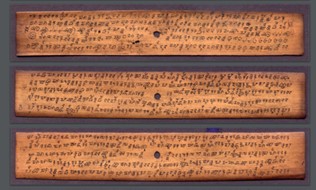
Philology, as the study of manuscripts and classical texts, plays an important role in preserving the cultural and historical heritage of a nation. One of the interesting aspects of philology is the effort to understand and translate manuscripts, which means transforming ancient texts from their original format to new forms that are more accessible and easier to learn, such as in the form of illustrated stories, batik cloth, and so on.
Paleography is a scientific discipline that studies the character of ancient writings in manuscripts. As a science that supports the specialization of Philology, Paleography is a compulsory course for the Language, Literature and Culture Study Program.
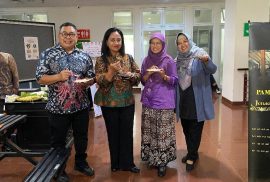
On Friday, December 6, 2024 the Javanese Language, Literature and Culture Study Program held an exhibition initiated by the lecturers of the Philology course, Dr. Sri Ratna Saktimulya M.Hum,. and Dr. Arsanti Wulandari M.Hum,. The exhibition involved Master of Literature students in the Philology course and the undergraduate students of Javanese Language, Literature and Culture Study Program for the Paleography course. The philological exhibition “Mengalih Wahana Naskah” aims to introduce the public to the importance of ancient manuscripts in the formation of Indonesian history and culture. The manuscripts not only serve as historical documents, but also as a means of understanding the noble values and wisdom passed down by our ancestors. This exhibition also explores how these manuscripts transformed from handwritten texts into more attractive illustrated texts and wearable batik cloth. It is a means to introduce to the public that ancient manuscripts are not just text documents, but also works of art that contain high aesthetic value.
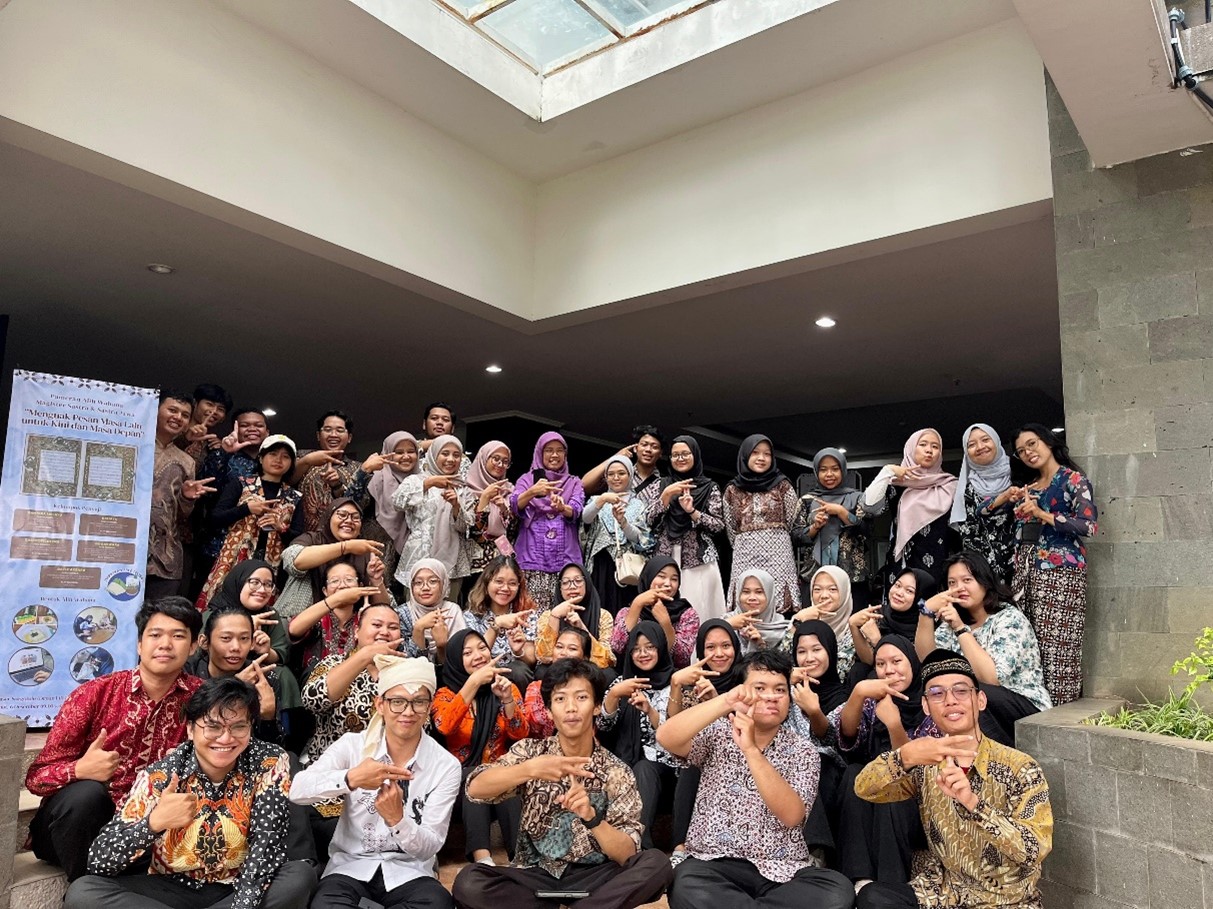
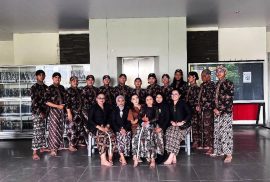
Students of the Javanese Language, Literature and Culture Study Program in the Philology Exhibition
“Very happy to be able to organize this exhibition, previously we, the class of 2023, were asked to make batik cloth, then it will be exhibited today, it's fun to try making batik cloth and at the same time get a grade for the Final Semester Examination” said Muhammad Rizki, one of the students of the Language, Literature and Culture Study Program.
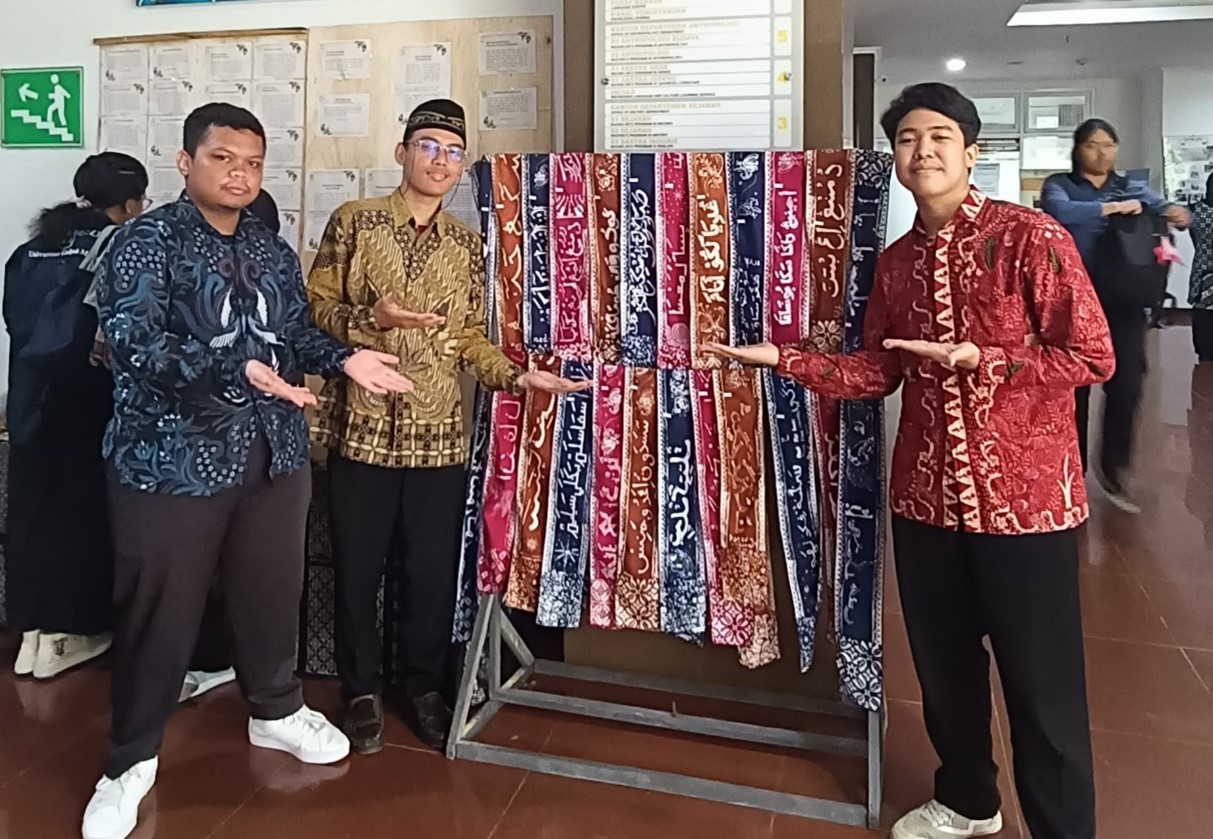
The exhibition showcased batik cloths that had previously been made by students of the Javanese Language, Literature and Culture Study Program in the Switching Workshop. The long sash batik cloths were written based on the interests of each student. There are 3 scripts that can be chosen to write the proposition sentences that have been made. Javanese script, Pegon script, and Balinese script, each has its own uniqueness and beauty. Dr. Arsanti Wulandari M.Hum, revealed that this project will be taken as the fulfillment of the Final Examination of Paleography course in 2024. There are also illustrated stories made by Master of Literature students.
Students of Javanese Language, Literature, and Culture Study Program Make Batik for the Exhibition
It is hoped that the Philology exhibition: Alih Wahana is able to introduce many people to the existence of Philology as a useful science for life. Ancient manuscripts can be absorbed with the science of Philology to prepare for present and future life. In addition, this exhibition is one way to preserve ancient manuscripts in Javanese culture.
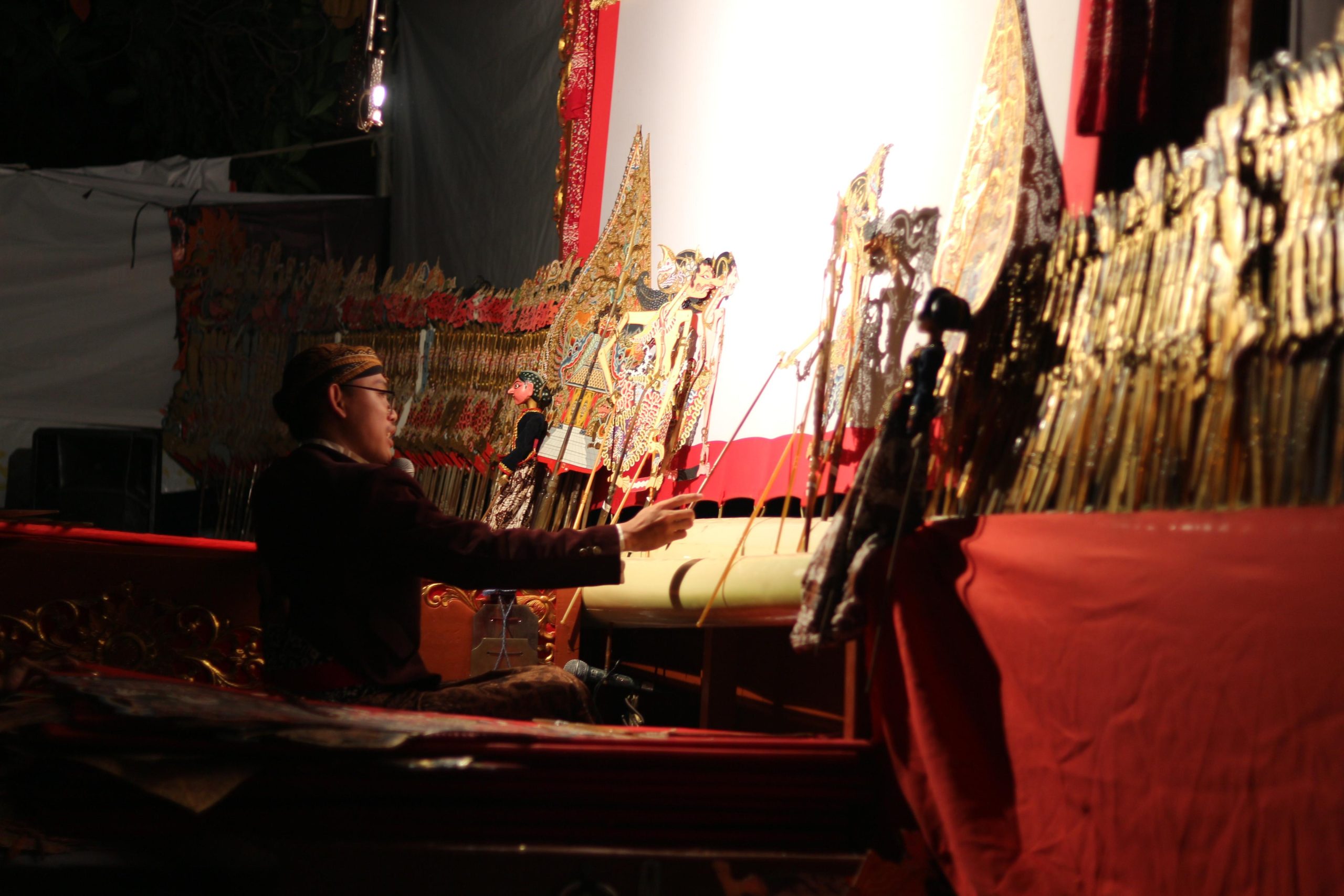
Thursday night (14/11/2024), the Javanese Language, Literature and Culture Study Program held a puppet show with the play Gajahmada Kridha (Ra Kuti Balela). The night was also the night of the awarding to the winners of the Temu Budaya Nusantara XXX competition, this puppet show was also held in commemoration of World Shadow Puppet Day. The puppet performance was held in Greenland, Faculty of Cultural Sciences, Gadjah Mada University. Masterminded by M. Rafi Nur Fauzy, a 2023 student of the Javanese Language, Literature and Culture Study Program and in collaboration with the Surakarta Style Javanese Arts Unit (UKJGS) UGM, the Gajahmada Kridha puppet show went smoothly.
Based on an interview with Rafi, Gadjahmada Kridha (Ra Kuti Balela) tells the story of Gajah Mada's role in suppressing the rebellion of Ra Kuti, a Dharmaputra or courtier at that time. Ra Kuti's rebellion was based on dissatisfaction with King Jayanegara who was very weak and easily manipulated by his subordinates. This made some of his courtiers unhappy, including Ra Kuti. Ra Kuti wanted to restore the dignity of Majapahit at that time. However, it turned out that Ra Kuti's idea was not approved by the community so that the community considered that Ra Kuti was committing a rebellion. When Ra Kuti successfully occupied the capital, Jayanegara was escaped by Bhayangkara's troops. After strategizing, the Bhayangkara troops were able to turn the situation around and Ra Kuti died at the hands of Gajah Mada.
The rebellion carried out by Ra Kuti changed an Gajah Mada who was initially only a commander of soldiers then appointed as patih. The beginning of Ra Kuti's rebellion as Dharmaputra was caused by a divide and conquer, by Mahapati, a cunning person. He made a strategy so that all Majapahit predecessors were finished and Mahapati could steer the country, even though he did not want the position of king. Gajahmada, who knew Mahapati's guise, succeeded in making Mahapati die at the hands of Gajah Mada.
Puppet performance of Gajahmada Kridha (Ra Kuti Balela) by Rafi Nur Fauzy
There were many processes involved in writing the script for this puppet show. With the help of R. Bima Slamet Raharja, S.S., M.A., and Dr. Rudy Wiratama, S.I.P., M.A., as academics and wayang practitioners, Rafi revealed “Initially I read Negara Kertagama but there was no explicit role of Gajah Mada in it. Then in consultation with Mr. Bima and Mr. Rudy, I was advised to read comics, tutur tinular, and Pararaton.” Being able to perform his own hand-drawn sanggit is a proud and enjoyable thing for Rafi. However, unfortunately there is a lack of appreciation from the Faculty of Cultural Sciences regarding this puppet performance. It is a good first step for the Javanese Language, Literature and Culture Study Program to organize a puppet show at the Faculty of Cultural Sciences, especially to introduce students and residents of Universitas Gadjah Mada to puppetry.
It is hoped that with this wayang performance, more and more students and the general public will be interested in puppetry, because basically puppets in this globalization era are more flexible, not fixated on puppetry conventions. It does not require classical wayang, but it can also be contemporary according to each taste. For the younger generation to be able to love wayang from what they find interesting, it can be from the music accompaniment, the story, and the characters. There are many life lessons that can be learned from puppetry, which can be used for later life.
There is a viral song or Javanese song on social media entitled “Lela Ledhung”, this song is very much performed or used as a backsound for a video. Lela Ledhung is a song created by Markasan. The song was intended by Markasan as a lullaby, which later became quite popular in the post-independence period of the Republic of Indonesia. Lela Ledung went viral because of the Yogyakarta Royal Orchestra's performance at the 2024 State Sovereignty Day Concert. Lela Ledhung, which has a pelog tune, was arranged by ML. Widyoyitnowaditro (Joko Suprayitno, S. Sn., M. Sn.) into an orchestra format nicely.
Lela Ledhung is one example of a Javanese dolanan song. Tembang dolanan Jawa is a type of traditional song that is full of cultural values. Known as songs that are often played in children's games, tembang dolanan contain deep philosophies that not only teach moral values, but also preserve local wisdom through music. Tembang dolanan is an important part of the Javanese musical tradition, involving memorable wordplay and tones. The language used in tembang dolanan is simple and easy to pronounce, referring to Winarti (2010) tembang dolanan shows several language functions as a means of communication in Javanese.
Based on Winarti's research (2010) in the Widyaparwa Scientific Journal of Language and Literature on Dolanan Song Lyrics as a Form of Javanese Language Communication, several language functions exist in the song Lela Ledhung, which is:
- Regulatory function
The song Lela Ledhung has a regulatory function located in the lyrics “Cep menenga aja pijer nangis” which means to tell someone, because basically this regulatory function is characterized by the use of command words.
- Interaction function
Interaction words are often found in dolanan songs such as greetings and questions, such as in the lyrics “Anakku sing ayu rupane” which is a greeting for her beautiful-faced child.
- Personal function
Personal functions usually show about themselves, for example showing beautiful traits for their own children.
- Heuristic function
It is the use of language to gain knowledge and is educational in nature, for example “Dadia wanita utama” and “Dadia pendekaring bangsa”.
- Imaginative function
Giving ideas that are imaginative and imaginary, as in the lyrics “Kae bulane ndadari kaya ndhas buta nggilani” gives the imagination that the moon is big like a buta or giant.
- Informative Function
Many dolanan songs use language that contains information, giving statements or explaining something. An example in the song Lela Ledhung is found in the lyrics that if you become the main person, you can raise the degree and name of your parents.
- Poetic Function
A song created must contain elements of beauty in it, such as the use of rhyme and certain language styles or diction, for example “Tak emban slendhang bathik kawung” followed by “Yen nangis mundhak gawe confused” has the same rhyme “ung”.
The functions in Lela Ledhung also apply to other dolanan songs. Although the language used is simple, dolanan songs have many functions and values in them, which can provide teaching and lessons for social life. With the spirit of cultural preservation, Javanese dolanan songs are not only entertainment, but also an effective medium to convey noble teachings that are still relevant for modern life today.
REFERENCE LIST
Winarti, D. (2010). Lirik Lagu Dolanan Sebagai Salah Satu Bentuk Komunikasi Berbahasa Jawa: Analisis Fungsi. Widyaparwa, 38(1), 1-12.
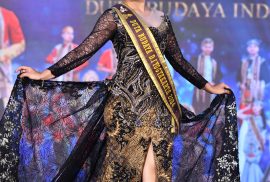
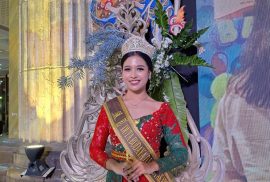
After successfully becoming the Princess Cultural Ambassador of Yogyakarta 2024, Kintan Dewinta Putri, a student of the Javanese Language, Literature and Culture Study Program class of 2022, continued her struggle by representing the Special Region of Yogyakarta in the Indonesian Cultural Ambassador 2024 event. The search for the 2024 Indonesian Cultural Ambassador was held on September 19-21, 2024 in the city of Surabaya, East Java.
During the four-day event, Kintan received a lot of training and workshops such as how to build personal branding and material about skin health. Many activities were carried out by Kintan together with other Cultural Ambassadors from various regions, ranging from photoshoots to city tours. “I was feeling down and overthinking not being able to bring the title, but Alhamdulillah, I was still given the trust as the 1st Runner Up of the 2024 Indonesian Cultural Ambassador,” said Kintan regarding her impression.
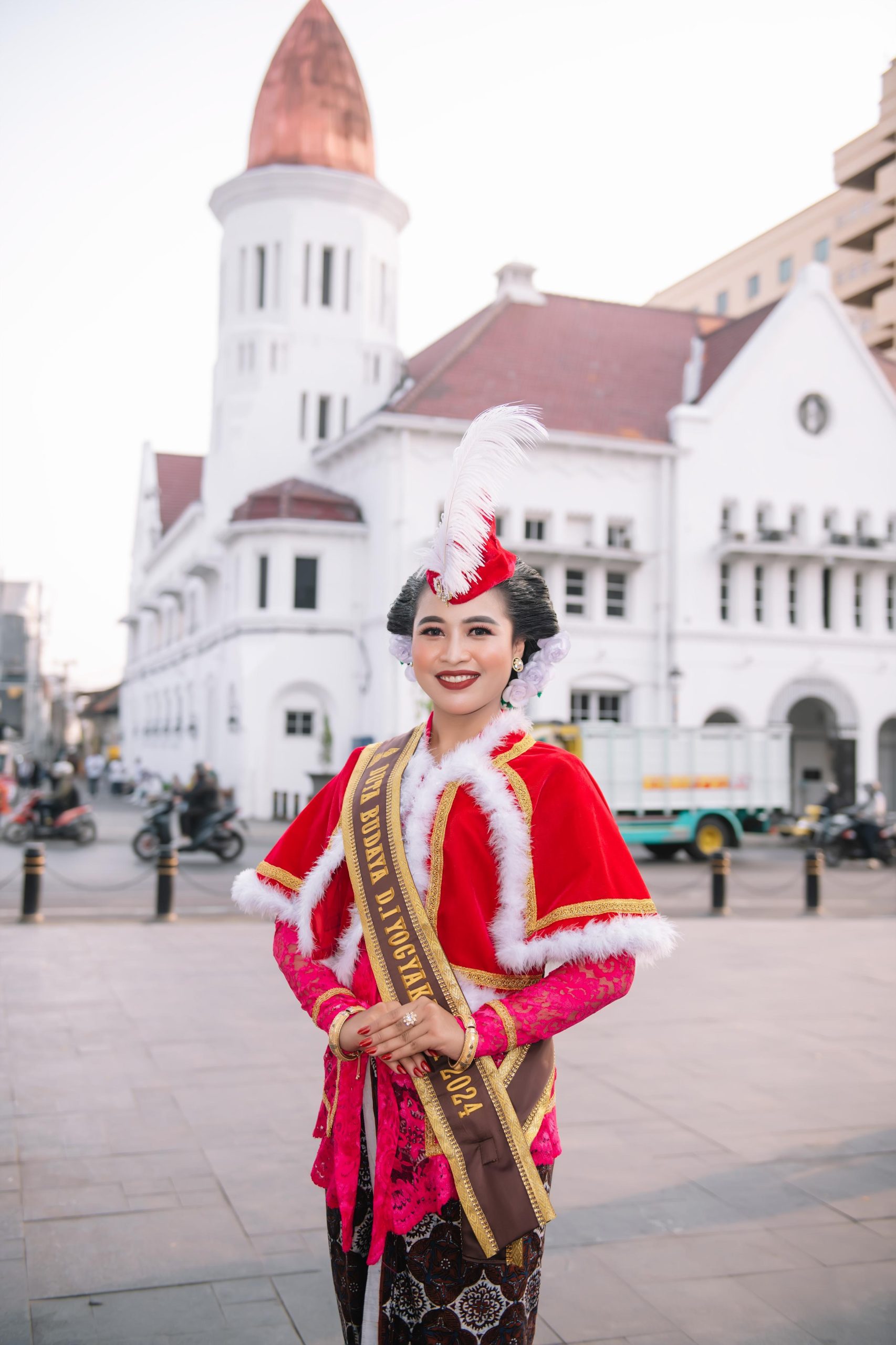
Kintan Dewinta Putri wearing a typical Yogyakarta Besiyaran outfit
Kintan's experiences and achievements are expected to be a motivation for students of the Javanese Language, Literature and Culture Study Program, and be able to benefit the people around both now and in the future. Kintan conveyed a message that all young people should not be ashamed to start something because success must also begin with effort. Kintan added hope that the big family of Indonesian Cultural Ambassadors will be closer, maintained solidarity and unity among the diversity of Indonesian culture.
Kintan's steps as Yogyakarta Cultural Ambassador 2024 and 1st Runner Up Indonesian Cultural Ambassador 2024 should be an example for students and the general public regarding the role of preserving local culture. Not only Cultural Ambassadors have a duty to preserve culture, but it is an obligation for all levels of society. Increasing tolerance and strengthening unity can start as a good first step.
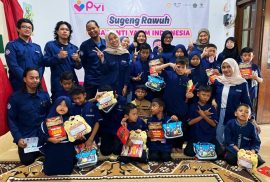
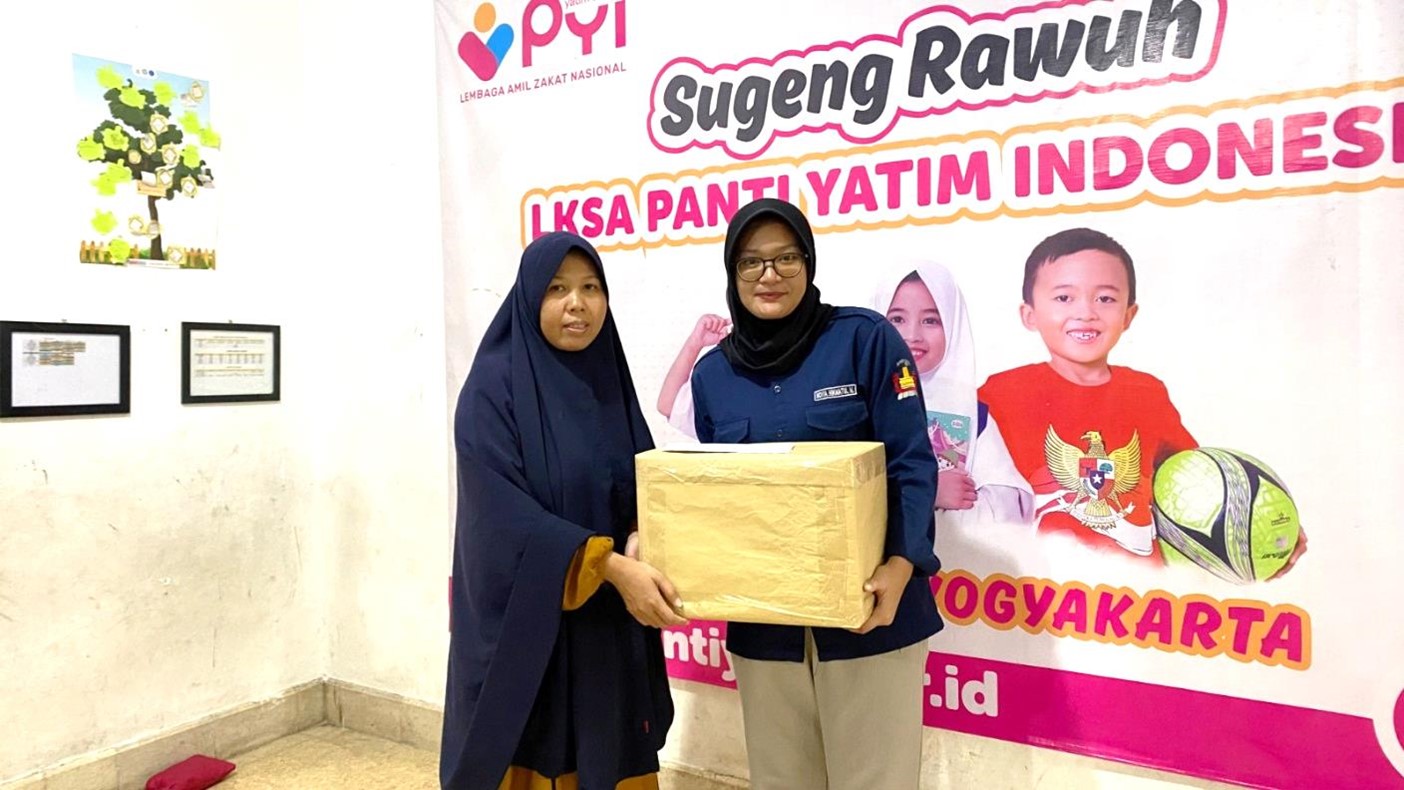
As a form of community service, the Javanese Language, Literature, and Culture Student Association (Kamastawa) held another “Kamastawa Teaching and Sharing” event on Sunday, October 22, 2024. This event is the result of collaboration between the social and community division (sosmas) and the scientific division, with the aim of having a positive impact on society, especially for children at the Wirobrajan branch of the PYI Yatim and Zakat Orphanage, Yogyakarta.
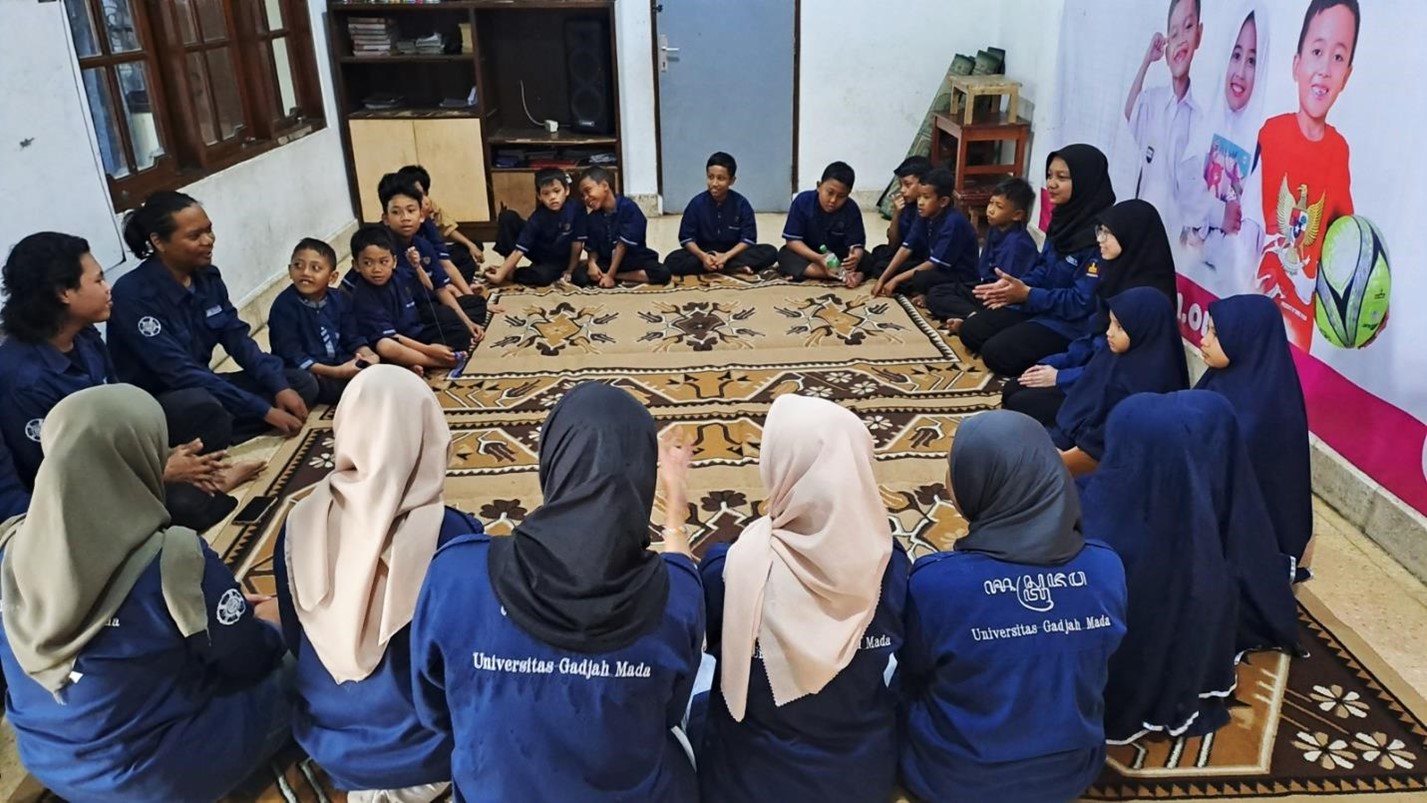
There were 16 children from grade 1 elementary to 1 junior high school involved in the event. The event opened at 09.00 AM WIB with an opening session and introductions. During the event, students and children had the opportunity to play together, creating a cheerful atmosphere with jokes and laughter. This togetherness became an important foundation in building intimacy between students and participants.
Opening session and introductions
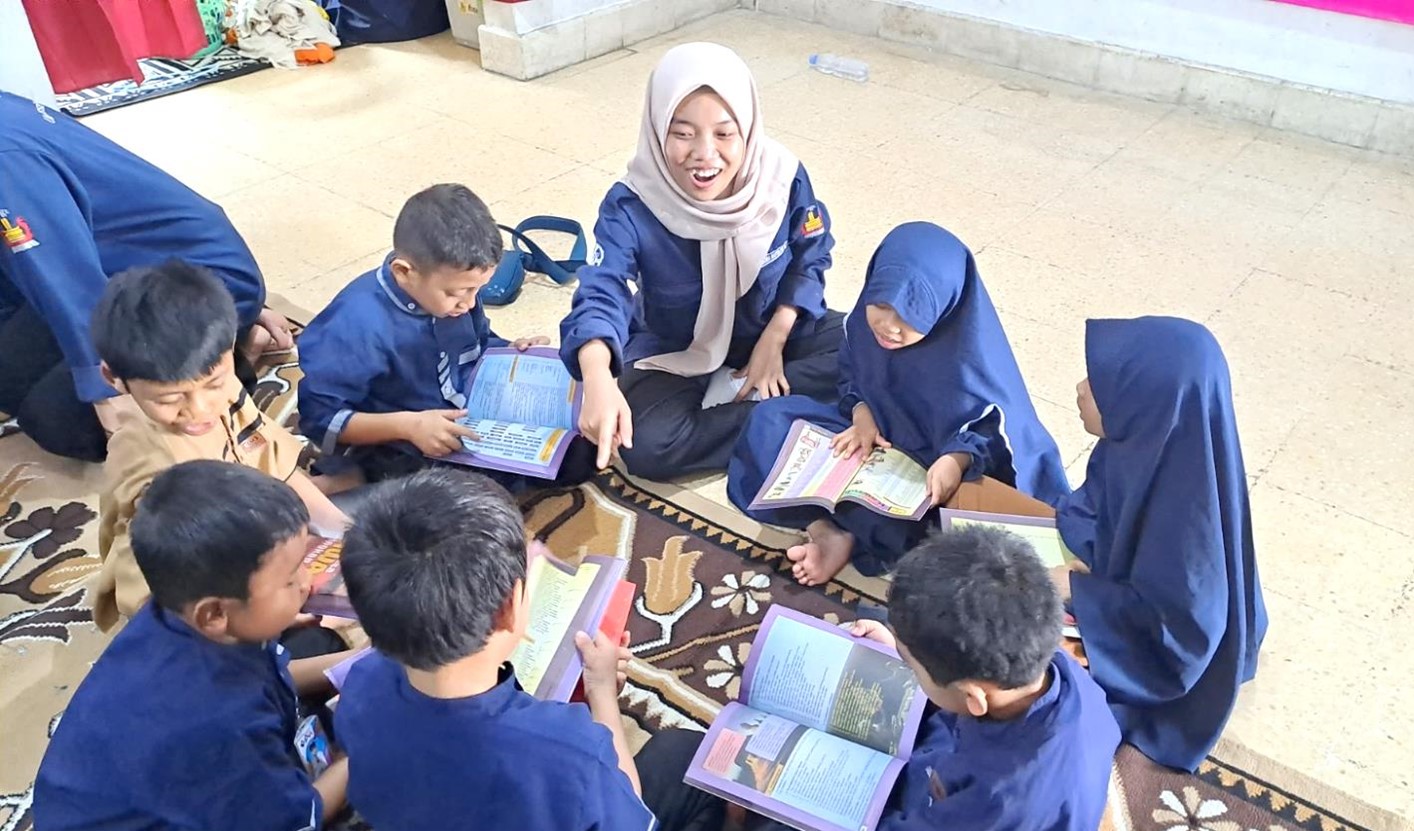
After the introductory session and games, the event continued with teaching and learning activities. Participants were divided into three groups according to educational level: group 1 for grades 1-2 elementary school, group 2 for grades 3-4 elementary school, and group 3 for grades 5 elementary school to 1 junior high school. Each group received materials tailored to their age and level of understanding, ranging from daily Javanese conversation, Javanese script writing, Javanese assignment consultation, and so on. Various teaching methods were used by the students to make learning fun and easy for the children to understand.
Teaching-learning session
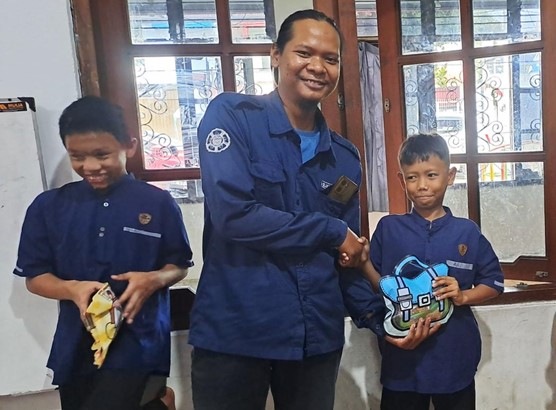
After the learning session was over, it was time for ice breaking, where the participants were invited to sing together the song aja ndomblong aja and follow the guessing game with prizes. This session succeeded in sparking the children to be active in an exciting way.
Giving prizes to participants who won the guessing game
The children's enthusiasm could be felt from the beginning to the end of the activity, especially during the distribution of small gifts as an appreciation for the participants' activeness. In addition, Kamastawa also provided Pepak Basa Jawa books and reading books as a form of support for the participants future educational development. It is hoped that participants can easily access knowledge and enrich their insights, including those related to knowledge and preservation of Javanese culture.
Donation of reading books to the orphanage
The gifts given may be considered simple. However, prayers, hopes, and sincere intentions to share will live on and become the foundation in the implementation of the 'Kamastawa teach and share' program now and in the future.
On Monday night (08/19/2024), the Faculty of Philosophy, Universitas Gadjah Mada (UGM), organized a shadow puppet show in the framework of the anniversary of the Faculty of Philosophy. The performance featured a special play, Gajah Mada Suci, which was performed collaboratively by UGM students who are members of the UGM Surakarta Style Javanese Arts Unit (UKJGS). One of the important roles in this performance was carried out by M. Rafi Nur Fauzy, a student of the Javanese Language, Literature, and Culture Study Program class of 2023, chosen to perform a play that was collaboratively worked on by the academics community of Universitas Gadjah Mada.
The script for the performance of Gajah Mada Suci was written by Dr. Rudy Wiratama S.I.P., M.A., lecturer of Javanese Language, Literature and Culture Study Program. Gajah Mada Suci tells the story of the scapegoating of Gajah Mada under the pretext of the failure of the Majapahit Kingdom expansion. The expansion also coincided with the kingdom's internal political turmoil. To make matters worse, Gajah Mada was accused by the elites of trying to remove him from the kingdom. As a result, Gajah Mada felt desperate and afterward he visited the residence of his friend, Mpu Tantular. After a long dialog, Gajah Mada was finally enlightened, that the efforts he had made so far were not in vain. The spirit of Amukti Palapa to unite the archipelago will continue in the next era.
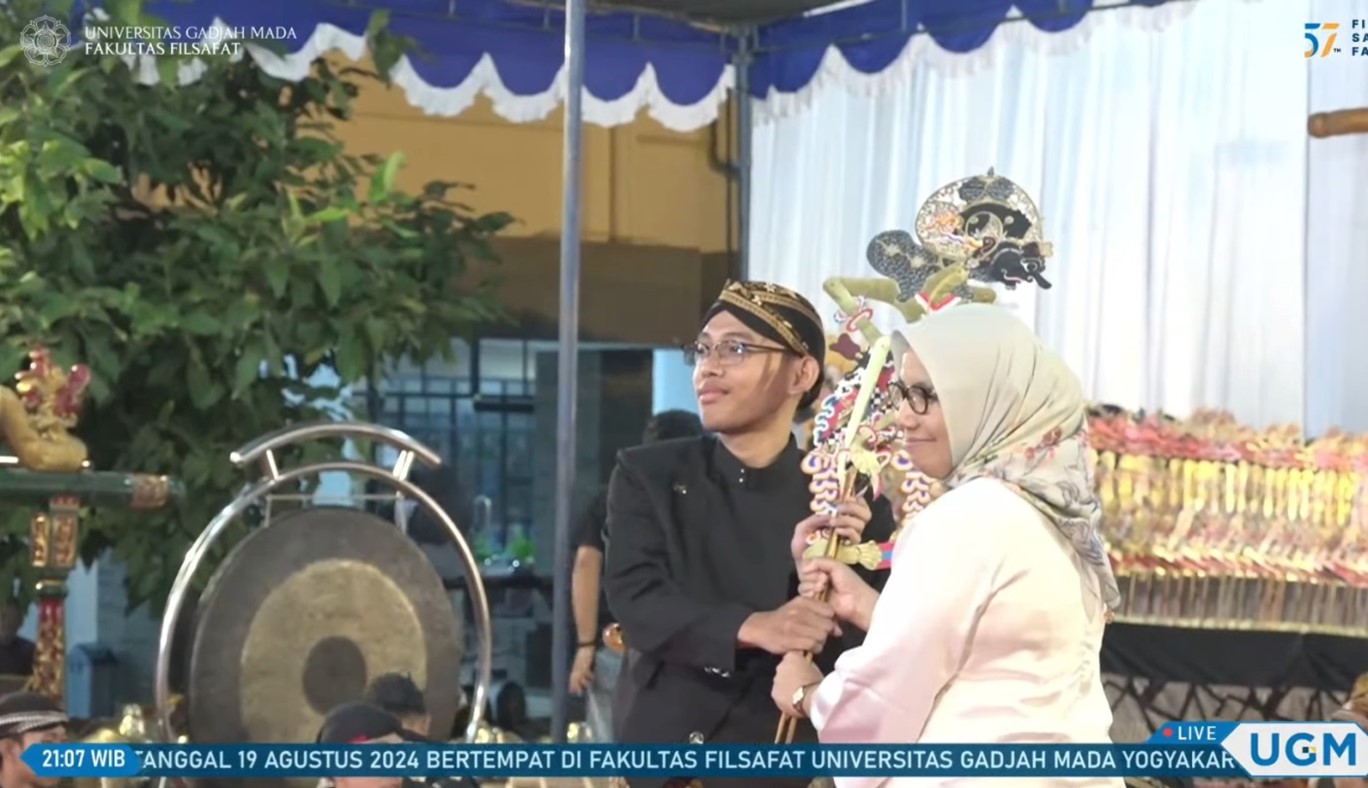
Handover of the Gajah Mada puppet from the Dean of the Faculty of Philosophy, Dr. Rr. Siti Murtiningsih, S.S., M. Hum, to M. Rafi Nur Fauzy. (Quoted from the Faculty of Philosophy Youtube Channel (01:22:51): https://www.youtube.com/watch?v=03x2lmMinTY).
“The performance of the Gajah Mada Suci is a form of depiction of the Indonesian nation that has experienced an identity crisis by winning over an interest and power through any means. Gajah Mada, who was a knight, finally moksa due to the deviant behavior of the Majapahit elite. After that, the Majapahit Kingdom lost its authority and then receded until it reached its collapse,” explained Rafi in an interview (05/09/2024).
As a special play, Rafi and his fellow UKJGS students practiced hard for a maximum performance. “The performance of Gajah Mada Suci has its own challenges for us. We practiced preparing for the performance in only half a month. Plus, this is my first time to play the Gajah Mada puppet, so it must be carefully prepared.”
“With these challenges, Alhamdulillah, the show can run smoothly. It was a great experience for me,” he continued. Rafi hopes that the Gajah Mada puppet show will be held continuously because it is the work and identity of UGM as well as containing values that need to be socialized.
The existence of the Gajah Mada puppet is a real effort to promote the history and culture of the archipelago while still applying its relevance to the times. Through culture, we are not only 'displaying' aesthetics, but also reaffirming the nation's identity through noble values for a better Indonesia.
Author: Haryo Untoro
Image Source
Fakultas Filsafat. (2024, August 19). Pagelaran Wayang Kulit Dies Natalis ke-57 Fakultas Filsafat UGM. [01:22:51]. Accessed from https://www.youtube.com/watch?v=03x2lmMinTY.
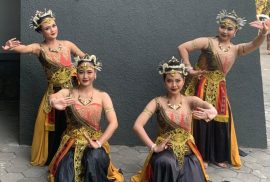
Thursday, August 29, 2024, became a special moment for the Faculty of Cultural Sciences (FIB) Universitas Gadjah Mada with the holding of the Mangayubagya Graduation of Undergraduates period IV of the 2023/2024 academic year. A total of 244 graduates celebrated their graduation, holding a bachelor's degree after completing their studies at FIB. The solemn graduation ceremony was made even more lively with a dance performance from Ratnaraya, a student dance unit of the Javanese Language, Literature and Culture Study Program.
Four students, Audrey Gisela, Ganes Larasati, Novalia Hidayatus S., and Wening Hidayati, presented Geol Denok Dance as part of the graduation ceremony. Geol Denok dance is a typical Semarang dance that depicts the joy of Semarang girls who dance with lively, energetic movements and accompanied by dynamic music. Etymologically, the word “geol” refers to the dance movements of the knees and hips, while “denok” is a term for girls in Semarang.
In an interview with Wening Hidayati, one of the performers, she said that Geol Denok Dance was a new dance for Ratnaraya members. “We try to give our best in this performance, and are very happy to be able to welcome the graduates of FIB UGM with Geol Denok Dance,” said Wening (09/05/2024).
Ratnaraya's performance is not only for entertainment, but also reflects the Faculty's commitment to preserving Nusantara culture, especially Javanese culture. This cultural preservation requires support and collaboration from various parties, and FIB UGM plays an active role by providing the widest possible space for art and cultural exploration, so that the nation's identity remains relevant and provides benefits to people's lives.
Good news came from the Javanese Language, Literature, and Culture Study Program, Faculty of Cultural Sciences, Universitas Gadjah Mada (FIB UGM). Kintan Dewinta Putri, a student of the program, has been selected as the Princess Cultural Ambassador of Yogyakarta 2024. She was selected along with Duta Andhika, the Son of Yogyakarta Cultural Ambassador 2024, on May 4, 2024, at Sleman City Hall, Yogyakarta.
Based on an interview with Kintan (09/06/2024), being a Yogyakarta Cultural Ambassador is not just a competition, but also must understand and participate in the preservation of Javanese culture, especially the cultural identity of Yogyakarta. “As Yogyakarta Cultural Ambassadors, it is our duty to contribute to the mission of recognizing and preserving arts and culture in Yogyakarta. Examples of activities include being a judge for the Krincing Manis dance studio's class promotion and participating in the Jamasan Pusaka 1 Suro ceremony at the top of Suroloyo, Kulonprogo. In the future, we plan to do community service in Gunung Kidul and other places by teaching about Yogyakarta's culture and arts,” she explained.
Kintan is grateful to have won the title of Yogyakarta Cultural Ambassador 2024 and is proud to be part of the agent of change in the effort to preserve Yogyakarta's culture. She explained that she is currently preparing to participate in the Indonesian Cultural Ambassador event. “Currently, I am preparing myself for the Indonesian Cultural Ambassador event to be held on September 19-21, 2024, in Surabaya. Please pray and support!”
Culture is the result of copyright, taste, and karsa and is an identity for its people. The existence of these various identities is an identity of the Indonesian nation, which is diverse and lives together in harmony. Kintan's achievements are an inspiration for Mahadaya to continue to explore, preserve, and explore the potential of Indonesian culture, and provide benefits to the community.
Recently, the “back to nature” lifestyle has become increasingly popular. Not only are people looking for instant results, but they are now increasingly concerned with the process of achieving optimal health. This trend can be seen in the increasing number of people who exercise diligently, pay attention to nutritional intake, and utilize herbal and traditional medicine.
When it comes to traditional medicine, our ancestors already had the right recipe to maintain health. Referring to Wulandari (2011), there is a book entitled Serat Primbon Jampi Jawi published in 1933 by the publisher Tan Khoen Swie, which collects valuable knowledge about traditional medicine, including the efficacy of various kitchen spices for health. Let's discuss some of these herbs that have amazing benefits:
Black Cumin
Black cumin is known to have hot properties but feels cool for a while. The benefits of black cumin are very diverse, ranging from removing mucus and dirt in the stomach, to overcoming soreness in the back or joints. To experience its benefits, Mahadaya can try a mixture of crushed black cumin with honey. In addition, black cumin can also be used to cure colds and dizziness due to colds by inhaling black cumin wrapped in mori cloth.
Nutmeg
This kitchen spice is not only a flavoring agent but also has health benefits. Nutmeg is known to strengthen the heart, strengthen semen, and treat eye and bone pain.
Red Onion
Apart from being a spice that is often used daily, shallots have various health benefits. Dripping crushed shallot water into the eyes can cure blurred vision. In addition, shallots are also effective for preventing hair loss if applied to the head, which often experiences hair loss.
Tamarind
This plant, which is often the main ingredient in herbal medicine, has many health benefits. Tamarind is known to reduce body heat if consumed directly. Furthermore, tamarind is effective for relieving shortness of breath and nausea. The trick is to soak the tamarind for three days, then mix the water with sugar and drink it.
Lime
Lime, which is commonly used as a complement to soto, has health benefits that are no less great. By drinking a mixture of lime juice and sugar in the morning after waking up, the kitchen spice can neutralize toxins in the stomach. In addition, lime juice can also warm the body.
Some of the explanations above are a small part of the various properties of herbal medicine with this kitchen spice. This then opens our perspective, showing that old manuscripts actually contain a variety of information, one of which is in the health sector. By extracting information from these manuscripts, we are expected to be able to utilize these instructions, disseminate them, and develop them in order to bring goodness to ourselves and our environment.
Vandro. (2016, April 10). Ssst…! Ini Dia 35 Bumbu Dapur Masakan Indonesia, Incaran Dunia... Rumahmesin.com.Accessed from https://www.rumahmesin.com/bumbu-dapur/.
Wednesday morning, July 31, 2024, became a historic moment for the 2024 batch of students of the Faculty of Cultural Sciences (FIB) at Universitas Gadjah Mada. As part of the campus introduction process, they were welcomed to the Pionir Kampung Budaya 2024 event, which was held for two days from July 31 to August 1, 2024. The event was designed to introduce new students to academic life at FIB UGM, where Mahadaya will study for the next four years.
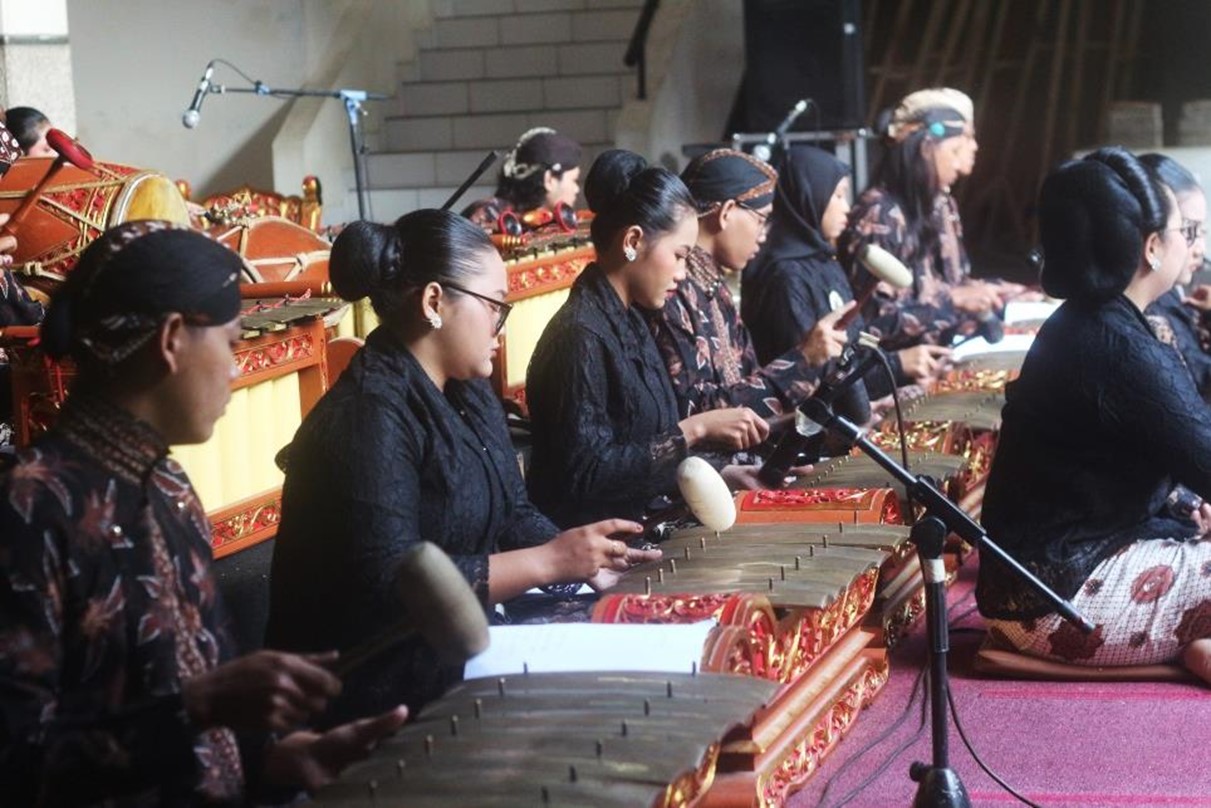
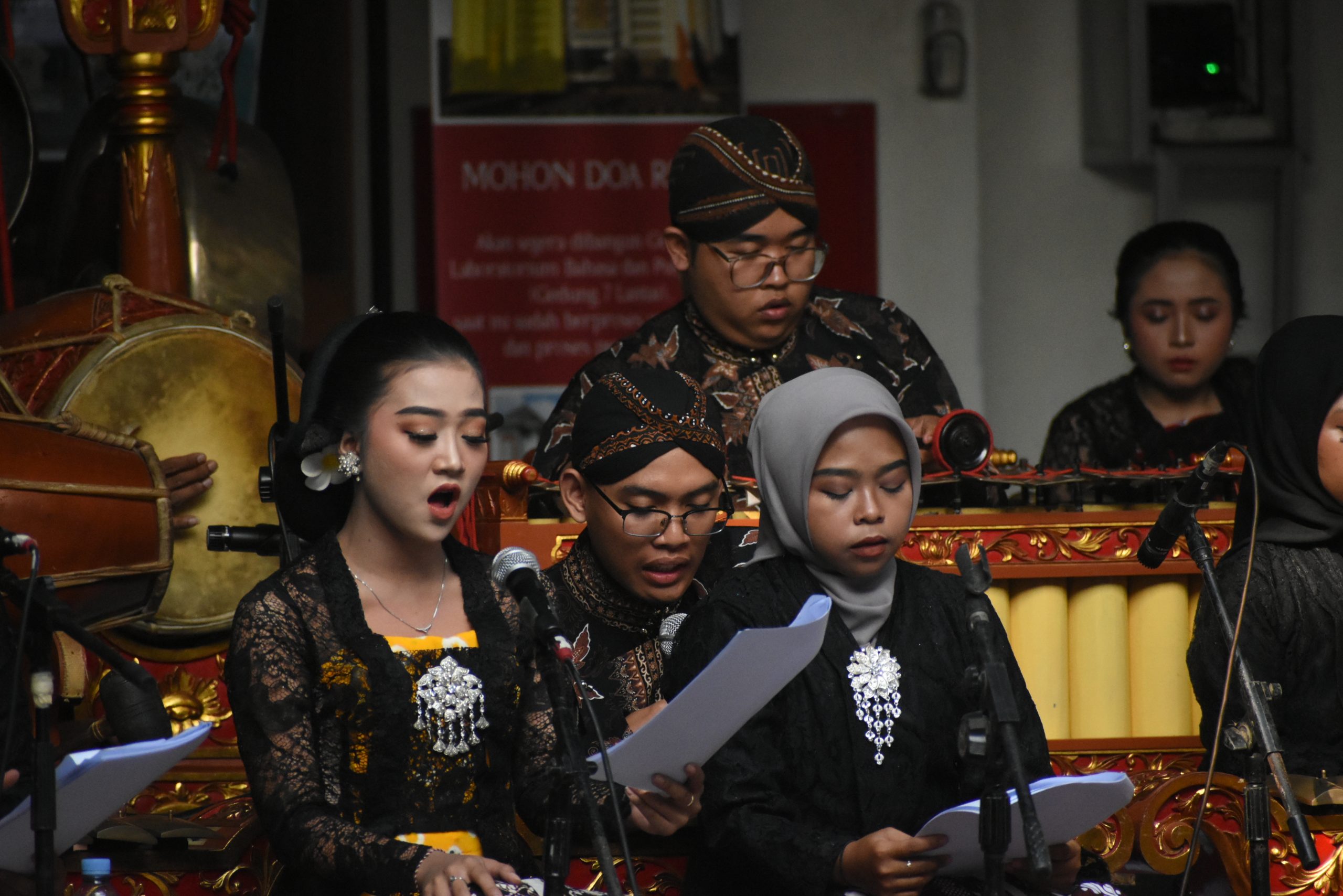
The opening of Pionir Kampung Budaya 2024 was enlivened by the strains of gamelan performed by Gamasutra (Gamelan Sastra Nusantara), an art unit that serves as a forum for students of the Javanese Language, Literature, and Culture Study Program. Gamasutra played an important role in welcoming the mahadaya, presenting a solemn atmosphere and the nobility of Indonesian culture.
Gamasutra's Performance at Pionir Kampung Budaya 2024
In addition to welcoming the mahadaya, Gamasutra also accompanied the presence of the Chairman of the Pionir Kampung Budaya 2024, the President of the Student Executive Board (LEM) 2024, the Dean of FIB UGM and staff, as well as the Heads of Study Programs from various departments. The peak moment of Gamasutra's performance was when it enlivened the procession of gunungan removal, marking the official opening of Pionir Kampung Budaya 2024. Some of the songs performed by Gamasutra in the event include Gending Gati Padhasih, Gangsaran, and Ayak Vertikal which are the works of Ki Dr. Drs. Sukisno, M.Sn.
The Faculty of Cultural Sciences at UGM, as the frontline in cultural studies, shows its commitment in preserving Indonesia's cultural heritage by providing ample space for the development of arts and cultural interests among students. This effort is in line with the implementation of the Sustainable Development Goals (SDGs), especially the 4th point on improving the quality of education and the 17th point on partnerships to achieve goals.
Gamasutra's performance in Pionir Kampung Budaya 2024 is not only an entertainment event, but also a very important means of cultural introduction and preservation. Mahadaya class of 2024 also got a deep first impression of campus life that is rich in cultural values and traditions, which Mahadaya will continue to encounter and develop during its dynamics at the Faculty of Cultural Sciences at UGM.