Image source: Kemeparekraf.go.id
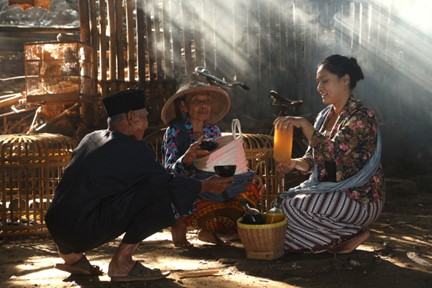
What comes to mind when you hear the word jamu? A traditional drink? A drink brought by mbok jamu? Or perhaps the popular phrase 'beras kencur'? True, jamu is widely known as a traditional medicine in the form of a drink that is a manifestation of Javanese culture. However, what if jamu or Javanese traditional medicine methods are not only drunk? Does mahadaya know about it?
Referring to Wulandari (2011) in her scientific article entitled Serat Primbon Jampi Jawi Koleksi Perpustakaan Dewantara Kirti Griya (Taman Siswa): Sebuah Dokumentasi Pengobatan Tradisional, there is an ancient manuscript in printed Javanese script that records the medical knowledge of the elders. The manuscript is entitled Serat Primbon Jampi Jawi. The manuscript of Serat Primbon Jampi Jawi discusses medicine, from various kinds of diseases, how to treat them, and to various plants and their properties. This book was published by Tan Khoen Swie Publisher in 1933 and is a manuscript from the Taman Siswa Library collection.
In the manuscript of Serat Primbon Jampi Jawi, there are several methods of traditional Javanese medicine with uses other than drinking. Here is the description:
1.Tapel
Tapel is a form of jamu or medicine that can be used by rubbing it on the stomach (Poerwadarminta, 1939, in Wulandari, 2011). There are 16 diseases that can be cured by this method. However, the author will mention only five in this article, namely a child with diarrhea, a child with worms, an elderly person who feels tight in the stomach, and an elderly person who cannot pass gas or urine. The following examples are related to diseases and treatment with tapel, as follows:
Tiyang sepuh seneb padharanipun; Cangkok tigan ayam ingkang sampun netes, jae, kapipis kaemoran lisah sulung, kaangge napeli padharan.
Translation:
(A poultice for an old man who feels tight in his stomach): The shell of a hatched chicken egg, ginger, mashed and mixed with sulung oil, is used to rub on the stomach.
2. Boreh
Jamu boreh is similar to tapel, the difference being that the herbs are liquefied and then rubbed all over the body. The following are some of the illnesses that can be cured, including a child who has sawan, a child who has sawan in any place, a child who has a fever and worms come out, someone who has a cold fever, etc. An example of a disease and its treatment is as follows:
Lare sawanen sadhengah sawan: ron wungu, santen kapipis kangge amborehi badan sakojur.
Translation:
Children affected by sawan in any place: wungu leaves, coconut milk, mashed and applied all over the body.
3. Cekok
Some mahadaya might be wondering if this jamu is served by force or not. The answer is yes. The presentation of jamu cekok is by forcibly squeezing the jamu with a cloth over the mouth, usually for small children (Compilation Team, 2002, in Wulandari, 2011). The function of this jamu is for health or an attempt to cure disease. Some of the things that are treated include children with diarrhea, children with fever all over the body, children with internal heat, children with sawan, etc. An example of an explanation of jamu cekok for an illness is:
Lare sakit kenging sawan; dringo bengle, kunir, jinten cemeng, mesoyi, kemukus, brambang kapipis kacekokaken.
Translation:
A child who is sick (with) sawan,: dringo, bengle turmeric, black cumin, mesoyi, kemukus, shallots mashed and choked.
4. Sembur
Jamu sembur? That's right, Mahadaya didn't read it wrong. Although it sounds 'out of the ordinary', it is. Some of the diseases that can be treated in this way include, among others, children affected by sawan, children sick with cough, children who often cry at night, someone who has chest pain and tightness, etc. The following is an example of an explanation of an illness and its treatment with sembur, namely:
Lare sakit watuk: sekar blimbing wuluh, jinten, mesoyi, kencur, kabenem, kamamah kasemburaken padharanipun.
Translation:
A sick child coughs: belimbing wuluh flowers, cumin, mesoyi, kencur, chewed, and sprayed in the stomach (sick child).
BIBLIOGRAPHY
Wulandari, A. (2011, December). Serat Primbon Jampi Jawi Collection of Dewantara Kirti Griya Library (Taman Siswa): A Documentation of Traditional Medicine. Jurnal Manuskrip Nusantara, 2(2), 30-56. https://doi.org/10.37014/jumantara.v2i2.135
LIST OF IMAGES
Kemenparekraf.go.id. (t.t.). Jamu, Ramuan Herbal Khas Indonesia yang Mendunia. Accessed from https://kemenparekraf.go.id/ragam-ekonomi-kreatif/jamu-ramuan-herbal-khas-indonesia-yang-mendunia