Good news comes from the Javanese Language, Literature, and Culture Study Program, Faculty of Cultural Sciences, Universitas Gadjah Mada. Three students from the program successfully completed their undergraduate studies in 3.5 years or seven semesters, faster than the usual study period of four years or eight semesters. The three students are Yasmin Nabiha Sahda, Hanundita Salma, and Pesdhi Sekar Hayumay. They participated in the graduation ceremony for Period II of the 2025/2026 Academic Year, which was held on Wednesday, February 25, 2026.
The topics of their final projects were related to various aspects of Javanese language, literature, and culture. Yasmin Nabiha Sahda researched the folklore of Putri Ayu Limbasari as part of her oral literature study. Hanundita Salma examined the language used by fishermen in the Cilacap region, which shows the dynamics of language use in coastal communities. Meanwhile, Pesdhi Sekar Hayumay researched the toponymy of hamlets in Kapanewon Samigaluh, located in the Kulon Progo region, highlighting aspects of place naming from a local cultural and historical perspective.
Through dedication and commitment to completing their research, the three students were able to successfully complete their theses in a relatively short period of time. This achievement is expected to inspire and motivate other students, especially those in the Javanese Language, Literature, and Culture Study Program, to continue to excel and plan their studies well so that they can complete their education optimally.
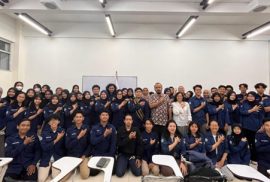
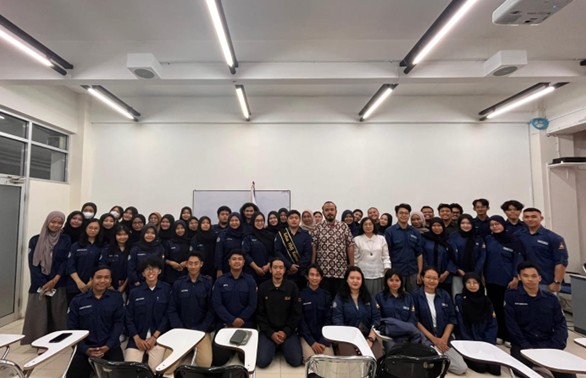
The Student Association of the Department of Javanese Language, Literature, and Culture (HMJ Kamastawa) held a handover ceremony for the 2026/2027 management on Monday (06/23/2026) at Poerbatjaraka Building 203, Faculty of Cultural Sciences, Gadjah Mada University. The event was attended by the HMJ Kamastawa executive board for the 2025/2026 and 2026/2027 periods, as well as faculty representatives from the study program.
Also present at the event were the Head of the Javanese Language, Literature, and Culture Study Program, Dr. Sulistyowati, M.Hum., and the advisor to HMJ Kamastawa, Dr. Rudy Wiratama, S.I.P., M.A. The presence of the study program leaders emphasized the program's support for the continuity of student organizations.
The event began at 4:15 PM and was hosted by Muhammad Bagus Ulinnuha. The series of activities began with the singing of the Indonesian national anthem and the Gadjah Mada hymn.
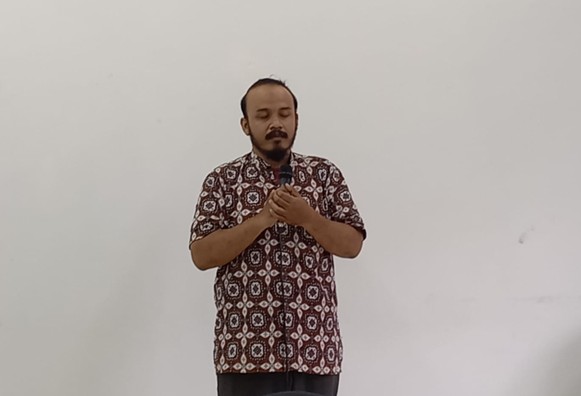
Opening remarks by Dr. Rudy Wiratama, S.I.P., M.A., as advisor to HMJ Kamastawa
In his speech, Dr. Rudy Wiratama, S.I.P., M.A. emphasized the importance of maintaining achievements in a positive manner and building the widest possible network. He also advised the administrators to always apply the values of guidance, compassion, and nurturing, both with fellow administrators, seniors, and alumni.
Opening remarks by the Head of the Javanese Language, Literature, and Culture Study Program, Dr. Sulistyowati, M.Hum.
Meanwhile, Dr. Sulistyowati, M.Hum. reminded the administrators to remain resilient in facing the dynamics and challenges of the organization. She emphasized the importance of coordination with lecturers and maintaining a balance between achievement, physical and mental health, and harmonious communication within the management.
The main procession of the event consisted of the reading and signing of the minutes by the Chair of HMJ for the 2025/2026 period, Dwiyan Teguh Darmawan, followed by the symbolic handover of office by the Head of the Study Program. Next, the inauguration script was read by Dr. Rudy Wiratama, S.I.P., M.A., and the oath of office was led by the Chair of HMJ for the 2026/2027 period, Wreksi Awinanggya Pinandhita.
Handover of positions to the Kamastawa HMJ management
The event then continued with a symbolic handover of positions to the Kamastawa HMJ management, a message and impressions from the 2025/2026 HMJ period, and a speech from the Chair of the 2026/2027 HMJ period. The series of activities was closed with a group photo session to capture the moment of togetherness.
The handover ceremony for the Kamastawa Student Association for the 2026/2027 period is an important moment for the new board to continue and improve the quality of the organization. It is hoped that the new board will be able to implement flagship programs optimally. Thus, HMJ Kamastawa can continue to play an active role, making positive contributions to nguri-uri ‘preserving’ and ngurip-urip ‘revitalizing’ Javanese culture, as well as maintaining the good reputation of the Javanese Language, Literature, and Culture Study Program. Congratulations and success to the HMJ Kamastawa management for the 2026/2027 period.
Dr. Arsanti Wulandari, M.Hum., lecturer in the Javanese Language, Literature, and Culture Study Program in the field of Philology, was one of the speakers at the Focus Group Discussion (FGD) entitled “Islam in Javanese Babad: Efforts to Revitalize Mataraman Islam”. The event was organized by PPM Aswaja Nusantara in the PPM Aswaja Nusantara Mlangi Hall on Friday (February 6, 2026) from 1:30 p.m. to 4:30 p.m.
In her presentation, Dr. Arsanti Wulandari, M.Hum. explained the connection between literary works, particularly Babad Ngayogyakarta, and the development and existence of Islam in the Yogyakarta Palace. She explained that Babad Ngayogyakarta was written during the reign of Sri Sultan Hamengkubuwana (HB) V and was transcribed again during the reign of HB VII. The manuscript was written in Javanese script and contains expressions of Islamic teachings that developed within the Yogyakarta Palace.
The chronicle covers the period of HB IV-V, starting from the childhood of HB IV until the coronation of HB V. During this period, Prince Diponegoro is also described as the guardian of HB IV until the outbreak of the Diponegoro war. Prince Diponegoro is also described as a figure who upheld Islamic teachings and revived them in the life of the Yogyakarta Sultanate.
One example cited was Prince Diponegoro's role in providing Islamic education to Hamengkubuwana IV. This education included the obligation to study the Qur'an, understand fiqh, and instill values of struggle. Dr. Arsanti Wulandari, M.Hum. also explained that Diponegoro's concept of struggle was reflected in the war against colonialism, which was based on the spirit of upholding Islamic teachings, including the call of sabilullah as a motivator for the troops.
Through a study of the literary work Babad Ngayogyakarta, various important information can be found, ranging from historical facts, literary forms, to information about the existence of Islam in Java. He described the existence of Islam at that time in three (3) words, namely manjing ‘enter’, ajur ‘melt’, and ajer ‘walk together’.
Information related to literature and history of the past can be found in various manuscripts. In this case, philology plays an important role in uncovering the information contained in ancient manuscripts so that it can be understood and utilized by today's society. In addition, philological studies are also part of efforts to preserve and protect regional languages, literature, and cultures in Indonesia.
This FGD activity is in line with the Sustainable Development Goals (SDGs), particularly point 4 on quality education, point 11 on sustainable cities and communities, and point 17 on partnerships to achieve development goals.