• University
  • Academic Portal
  • University Library
  • Webmail
  • Arnawa
  • UM UGM
  • English
    • Bahasa Indonesia
    • English
Universitas Gadjah Mada Javanese Language, Literature, and Culture Program
Department of Language and Literature
Faculty of Cultural Sciences
Universitas Gadjah Mada
  • Home
  • Profile
    • Vision & Mission
    • Objective
    • Excellence
    • Career Prospects
    • Teaching Staff
  • Academic
    • Curriculum Flow
    • Courses Description
    • Distribution of Courses
    • Academic Calendar
    • COURSE AND ADMINISTRATION INFORMATION
    • Learning Outcomes
    • INTERNATIONAL CONFERENCES AND ACTIVITIES
  • KPPB
    • Collaboration
    • Research
      • Teaching Staff Research
      • Javanese Studies Archive – Arnawa
    • Service
      • Community Services
      • Podcast (Anarka Lālitya)
    • Scholarship
  • Student Affair
    • Student Satisfaction Survey
    • HMJ Kamastawa
    • Student’s Activity
    • Student’s Creations
    • Youtube Channel
    • Instagram
  • Alumnus
    • Alumnus Profile
  • Contact
  • Home
  • News
  • Dr. Arsanti Wulandari, M.Hum., Becomes Speaker in FGD “Islam in Javanese Babad: Efforts to Revitalize Mataraman Islam”

Dr. Arsanti Wulandari, M.Hum., Becomes Speaker in FGD “Islam in Javanese Babad: Efforts to Revitalize Mataraman Islam”

  • News, SDGS
  • 10 February 2026, 10.39
  • Oleh: haryountoro
  • 0

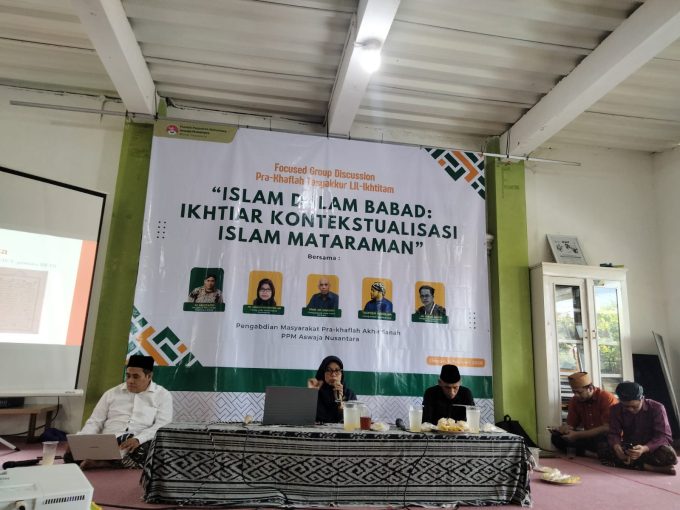
Dr. Arsanti Wulandari, M.Hum., lecturer in the Javanese Language, Literature, and Culture Study Program in the field of Philology, was one of the speakers at the Focus Group Discussion (FGD) entitled “Islam in Javanese Babad: Efforts to Revitalize Mataraman Islam”. The event was organized by PPM Aswaja Nusantara in the PPM Aswaja Nusantara Mlangi Hall on Friday (February 6, 2026) from 1:30 p.m. to 4:30 p.m.

In her presentation, Dr. Arsanti Wulandari, M.Hum. explained the connection between literary works, particularly Babad Ngayogyakarta, and the development and existence of Islam in the Yogyakarta Palace. She explained that Babad Ngayogyakarta was written during the reign of Sri Sultan Hamengkubuwana (HB) V and was transcribed again during the reign of HB VII. The manuscript was written in Javanese script and contains expressions of Islamic teachings that developed within the Yogyakarta Palace.

The chronicle covers the period of HB IV-V, starting from the childhood of HB IV until the coronation of HB V. During this period, Prince Diponegoro is also described as the guardian of HB IV until the outbreak of the Diponegoro war. Prince Diponegoro is also described as a figure who upheld Islamic teachings and revived them in the life of the Yogyakarta Sultanate.

One example cited was Prince Diponegoro's role in providing Islamic education to Hamengkubuwana IV. This education included the obligation to study the Qur'an, understand fiqh, and instill values of struggle. Dr. Arsanti Wulandari, M.Hum. also explained that Diponegoro's concept of struggle was reflected in the war against colonialism, which was based on the spirit of upholding Islamic teachings, including the call of sabilullah as a motivator for the troops.

Through a study of the literary work Babad Ngayogyakarta, various important information can be found, ranging from historical facts, literary forms, to information about the existence of Islam in Java. He described the existence of Islam at that time in three (3) words, namely manjing ‘enter’, ajur ‘melt’, and ajer ‘walk together’.

Information related to literature and history of the past can be found in various manuscripts. In this case, philology plays an important role in uncovering the information contained in ancient manuscripts so that it can be understood and utilized by today's society. In addition, philological studies are also part of efforts to preserve and protect regional languages, literature, and cultures in Indonesia.

This FGD activity is in line with the Sustainable Development Goals (SDGs), particularly point 4 on quality education, point 11 on sustainable cities and communities, and point 17 on partnerships to achieve development goals.
Tags: BABAD NGAYOGYAKARTA FGD JAVANESE LANGUAGE javanese language literature and culture program JAVANESE LITERATURE PANGERAN DIPONEGORO PHILOLOGY SDGS 11: SUSTAINABLE CITIES AND COMMUNITIES SDGS 17: PARTNERSHIPS FOR THE GOALS SDGS 4: QUALITY EDUCATION

Leave A Comment Cancel reply

Your email address will not be published. Required fields are marked *

*

Recent Post

  • Seputar Jawa: Banten Javanese Dialect, a Dialect that Exists at the Westernmost of Javanese Island
    March 10, 2026
  • Seputar Jawa: Forms of Javanese Proverbs
    March 9, 2026
  • Graduating in 3.5 Years: The Strategy of Three Students from the Javanese Language, Literature, and Culture Study Program at UGM in Completing Their Studies
    March 2, 2026
  • Seputar Jawa: Basa Kedhaton and Basa Bagongan, Typical Speech Varieties of the Surakarta and Yogyakarta Palaces
    March 2, 2026
  • Three Students from the Javanese Language, Literature, and Culture Study Program Successfully Graduated in 3.5 Years
    February 26, 2026

Calender

April 2026
M T W T F S S
 12345
6789101112
13141516171819
20212223242526
27282930  
« Mar    
  • Fakultas Ilmu Budaya
  • Ujian Masuk UGM
  • PPSMB
  • Alumni
  • Jurnal Humaniora
April 2026
M T W T F S S
 12345
6789101112
13141516171819
20212223242526
27282930  
« Mar    

News

  • Seputar Jawa: Banten Javanese Dialect, a Dialect that Exists at the Westernmost of Javanese Island
    March 10, 2026
  • Seputar Jawa: Forms of Javanese Proverbs
    March 9, 2026
  • Graduating in 3.5 Years: The Strategy of Three Students from the Javanese Language, Literature, and Culture Study Program at UGM in Completing Their Studies
    March 2, 2026
Universitas Gadjah Mada

Javanese Language, Literature, and Culture Program
Department of Language and Literature
Faculty of Cultural Sciences
Universitas Gadjah Mada


Sosiohumaniora St., Bulaksumur, Yogyakarta
Telp : 0274-901134 Ext. 110, Fax : 0274-550451, WhatsApp : 081211911281
Email : nusantara@ugm.ac.id

© 2025 Javanese Language, Literature, and Culture Program FIB UGM

KEBIJAKAN PRIVASI/PRIVACY POLICY