• University
  • Academic Portal
  • University Library
  • Webmail
  • Arnawa
  • UM UGM
  • English
    • Bahasa Indonesia
    • English
Universitas Gadjah Mada Javanese Language, Literature, and Culture Program
Department of Language and Literature
Faculty of Cultural Sciences
Universitas Gadjah Mada
  • Home
  • Profile
    • Vision & Mission
    • Objective
    • Excellence
    • Career Prospects
    • Teaching Staff
  • Academic
    • Curriculum Flow
    • Courses Description
    • Distribution of Courses
    • Academic Calendar
    • COURSE AND ADMINISTRATION INFORMATION
    • Learning Outcomes
    • INTERNATIONAL CONFERENCES AND ACTIVITIES
  • KPPB
    • Collaboration
    • Research
      • Teaching Staff Research
      • Javanese Studies Archive – Arnawa
    • Service
      • Community Services
      • Podcast (Anarka Lālitya)
    • Scholarship
  • Student Affair
    • Student Satisfaction Survey
    • HMJ Kamastawa
    • Student’s Activity
    • Student’s Creations
    • Youtube Channel
    • Instagram
  • Alumnus
    • Alumnus Profile
  • Contact
  • Home
  • Post by
  • page. 8
Post by :

haryountoro

Seputar Jawa: Getting To Know The Various Methods Of Herbal Medicine According To The Serat Primbon Jampi Jawi

NewsSDGS Friday, 12 July 2024

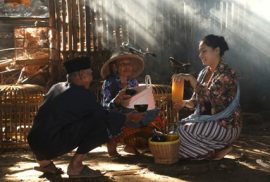
Image source: Kemeparekraf.go.id

What comes to mind when you hear the word jamu? A traditional drink? A drink brought by mbok jamu? Or perhaps the popular phrase 'beras kencur'? True, jamu is widely known as a traditional medicine in the form of a drink that is a manifestation of Javanese culture. However, what if jamu or Javanese traditional medicine methods are not only drunk? Does mahadaya know about it?

Referring to Wulandari (2011) in her scientific article entitled Serat Primbon Jampi Jawi Koleksi Perpustakaan Dewantara Kirti Griya (Taman Siswa): Sebuah Dokumentasi Pengobatan Tradisional, there is an ancient manuscript in printed Javanese script that records the medical knowledge of the elders. The manuscript is entitled Serat Primbon Jampi Jawi. The manuscript of Serat Primbon Jampi Jawi discusses medicine, from various kinds of diseases, how to treat them, and to various plants and their properties. This book was published by Tan Khoen Swie Publisher in 1933 and is a manuscript from the Taman Siswa Library collection.

In the manuscript of Serat Primbon Jampi Jawi, there are several methods of traditional Javanese medicine with uses other than drinking. Here is the description:


1.Tapel

Tapel is a form of jamu or medicine that can be used by rubbing it on the stomach (Poerwadarminta, 1939, in Wulandari, 2011).  There are 16 diseases that can be cured by this method. However, the author will mention only five in this article, namely a child with diarrhea, a child with worms, an elderly person who feels tight in the stomach, and an elderly person who cannot pass gas or urine. The following examples are related to diseases and treatment with tapel, as follows:

Tiyang sepuh seneb padharanipun; Cangkok tigan ayam ingkang sampun netes, jae, kapipis kaemoran lisah sulung, kaangge napeli padharan.

Translation:

(A poultice for an old man who feels tight in his stomach): The shell of a hatched chicken egg, ginger, mashed and mixed with sulung oil, is used to rub on the stomach.


2. Boreh

Jamu boreh is similar to tapel, the difference being that the herbs are liquefied and then rubbed all over the body. The following are some of the illnesses that can be cured, including a child who has sawan, a child who has sawan in any place, a child who has a fever and worms come out, someone who has a cold fever, etc. An example of a disease and its treatment is as follows:

Lare sawanen sadhengah sawan: ron wungu, santen kapipis kangge amborehi badan sakojur.

Translation:

Children affected by sawan in any place: wungu leaves, coconut milk, mashed and applied all over the body.


3. Cekok

Some mahadaya might be wondering if this jamu is served by force or not. The answer is yes. The presentation of jamu cekok is by forcibly squeezing the jamu with a cloth over the mouth, usually for small children (Compilation Team, 2002, in Wulandari, 2011). The function of this jamu is for health or an attempt to cure disease. Some of the things that are treated include children with diarrhea, children with fever all over the body, children with internal heat, children with sawan, etc. An example of an explanation of jamu cekok for an illness is:

Lare sakit kenging sawan; dringo bengle, kunir, jinten cemeng, mesoyi, kemukus, brambang kapipis kacekokaken.

Translation:

A child who is sick (with) sawan,: dringo, bengle turmeric, black cumin, mesoyi, kemukus, shallots mashed and choked.


4. Sembur

Jamu sembur? That's right, Mahadaya didn't read it wrong. Although it sounds 'out of the ordinary', it is. Some of the diseases that can be treated in this way include, among others, children affected by sawan, children sick with cough, children who often cry at night, someone who has chest pain and tightness, etc. The following is an example of an explanation of an illness and its treatment with sembur, namely:

Lare sakit watuk: sekar blimbing wuluh, jinten, mesoyi, kencur, kabenem, kamamah kasemburaken padharanipun.

Translation:

A sick child coughs: belimbing wuluh flowers, cumin, mesoyi, kencur, chewed, and sprayed in the stomach (sick child).


BIBLIOGRAPHY

Wulandari, A. (2011, December). Serat Primbon Jampi Jawi Collection of Dewantara Kirti Griya Library (Taman Siswa): A Documentation of Traditional Medicine. Jurnal Manuskrip Nusantara, 2(2), 30-56. https://doi.org/10.37014/jumantara.v2i2.135

LIST OF IMAGES

Kemenparekraf.go.id. (t.t.). Jamu, Ramuan Herbal Khas Indonesia yang Mendunia. Accessed from https://kemenparekraf.go.id/ragam-ekonomi-kreatif/jamu-ramuan-herbal-khas-indonesia-yang-mendunia

Two Lecturers and a Student of Javanese Language, Literature, and Culture Join the International Intensive Course in Old Javanese Language

College StudentNewsSDGSStudent Friday, 12 July 2024

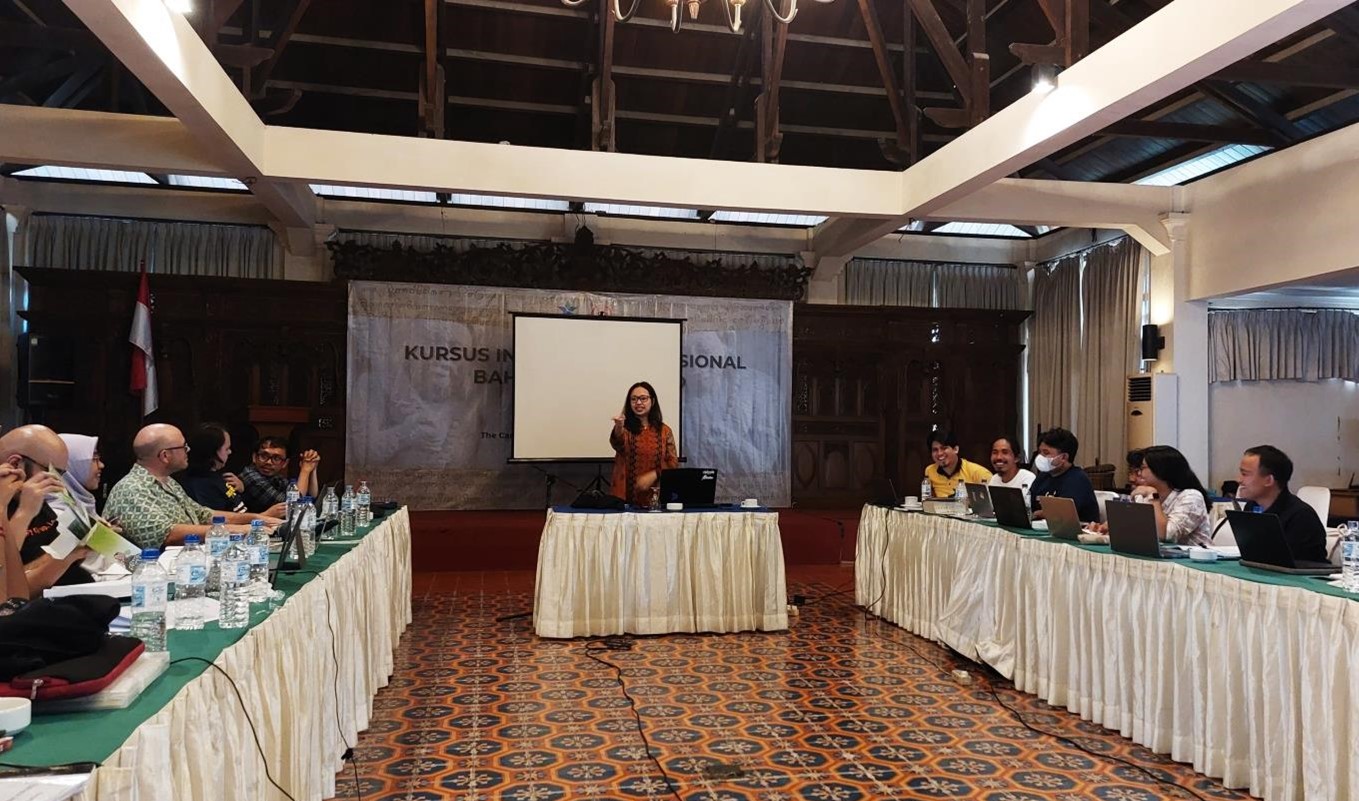
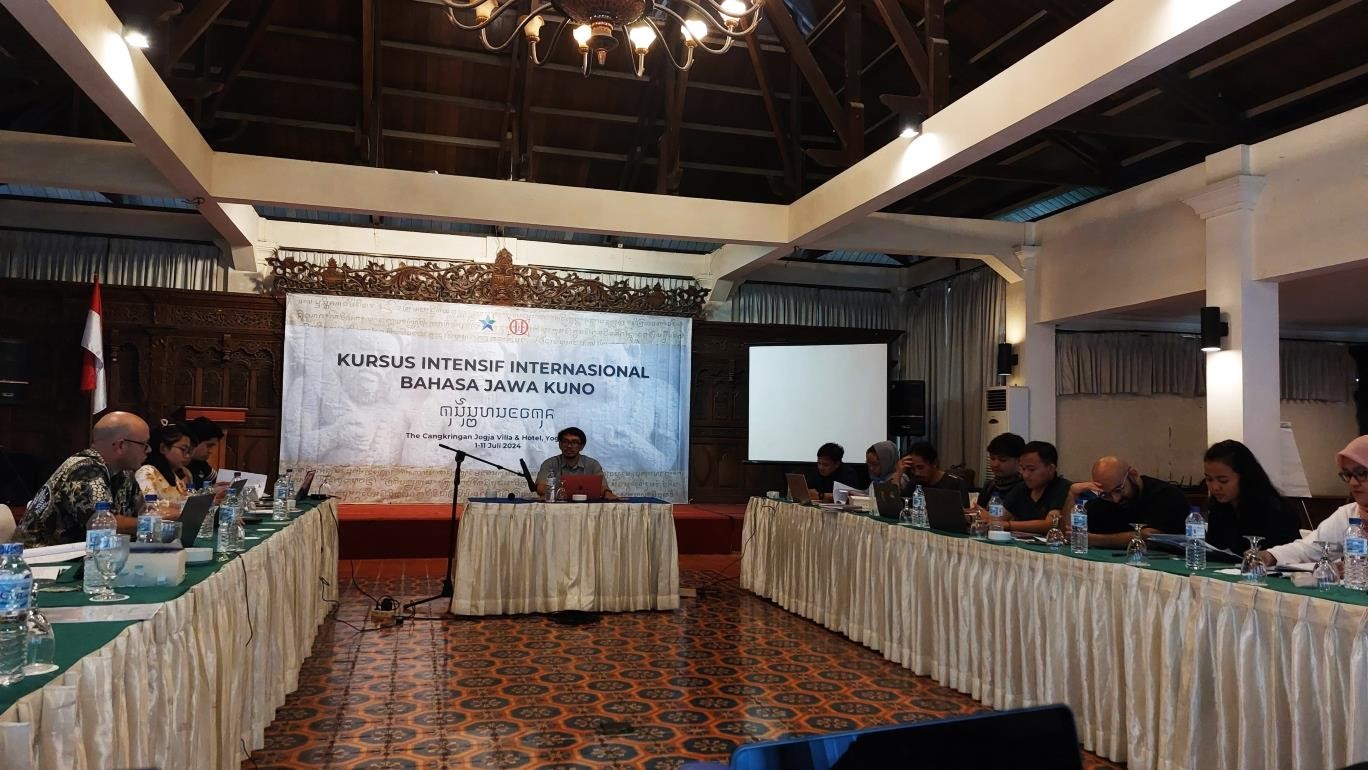
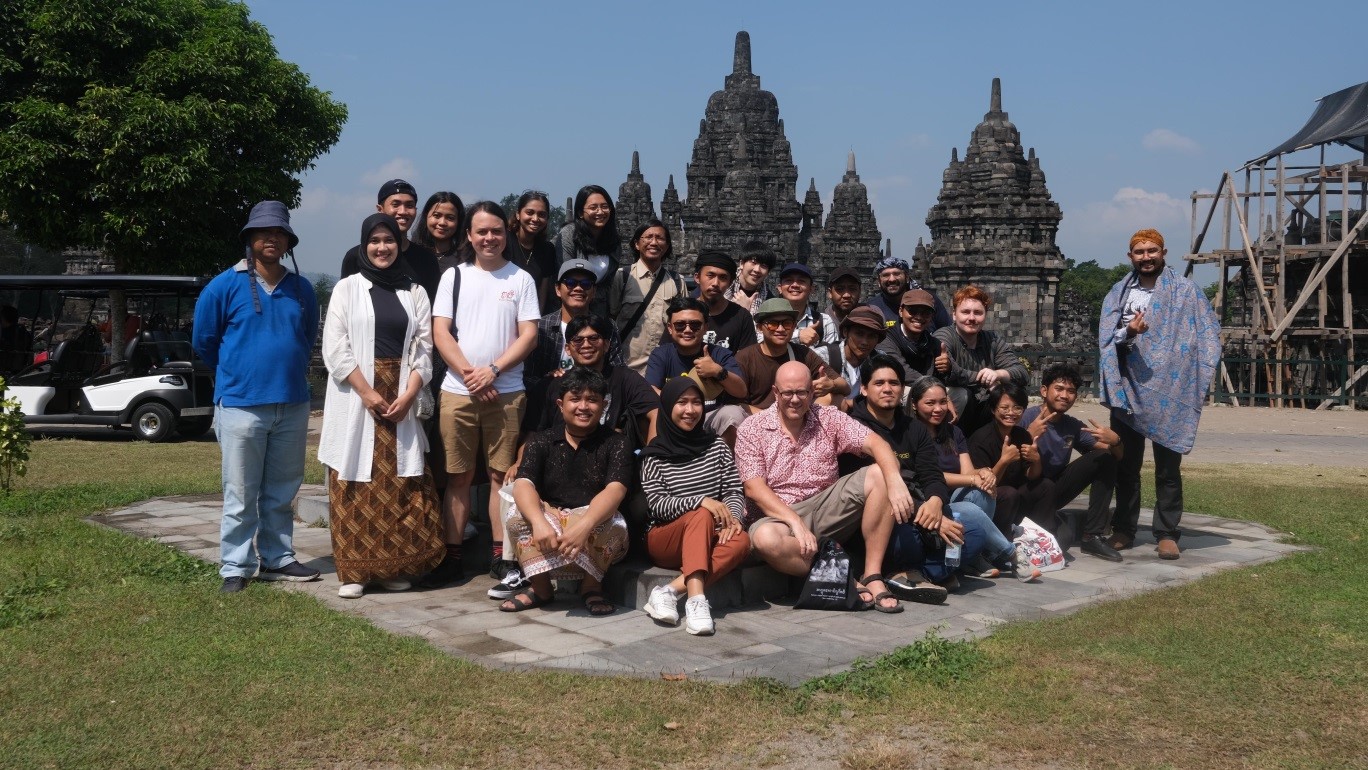
The National Library and École française d'Extrême-Orient (EFEO) collaborated and held an international intensive course in Old Javanese on July 01-10, 2024. This activity took place at The Cangkringan Jogja Villas & Spa, Umbulharjo, Cangkringan, Sleman, Yogyakarta, and was attended by 25 participants from various backgrounds. Experts in the field of Old Javanese were present to train the participants to understand the intricacies of the Old Javanese language.

The Javanese Language, Literature, and Culture Study Program, Faculty of Cultural Sciences, Universitas Gadjah Mada (FIB UGM), participated in this activity. Two lecturers of the Javanese Language, Literature, and Culture Study Program, namely Nurmalia Habibah, S.S., M.A., and Zakariya Pamuji Aminullah, S.S., M.A., attended as lecturers. In addition, Haryo Untoro, a student from the same study program, became one of the participants in the intensive course.
Nurmalia Habibah, S.S., M.A., guided the participants in studying the text of Adiparwa

Learning the Kakawin Ramayana text with Zakariya Pamuji Aminullah, S.S., M.A.

For 10 days, the participants practiced the Old Javanese language. In the first five days, the first thing to understand was the morphosyntax of the Old Javanese language. The next five days, the participants began to explore works that use the Old Javanese language, such as Adiparwa, Kakawin Ramayana, Pararaton, Landa Inscription, and others. In addition, participants also participated in an excursion program to several ancient sites of the Hindu-Buddhist period, namely Sewu Temple, Plaosan Temple, and Ratu Boko Temple.

The intensive course in Old Javanese aims to train philologists in the field of Old Javanese and encourage international collaboration in this rare field. The field of Old Javanese plays an important role in revealing various treasures of the past, both in culture, knowledge, history, and other matters. Exploring these treasures is an effort to reveal the identity of the nation and improve the quality of education. To achieve these goals, cooperation from various parties is needed to realize the sustainability of the Old Javanese field and be relevant to the times.

UGM Javanese Culture Beautifies the Briefing and Deployment Ceremony of KKN-PPM UGM Period 2 Year 2024

NewsSDGSStudentStudent's ActivityStudent's Work Wednesday, 3 July 2024

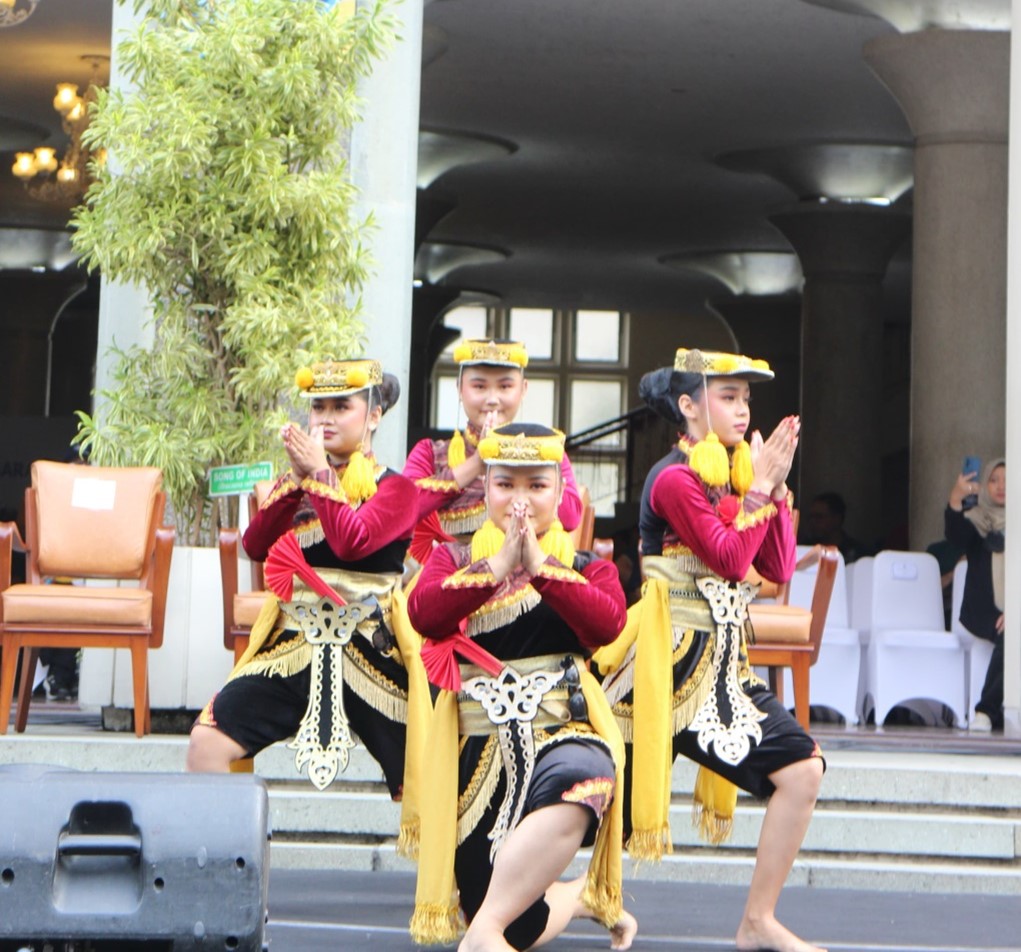
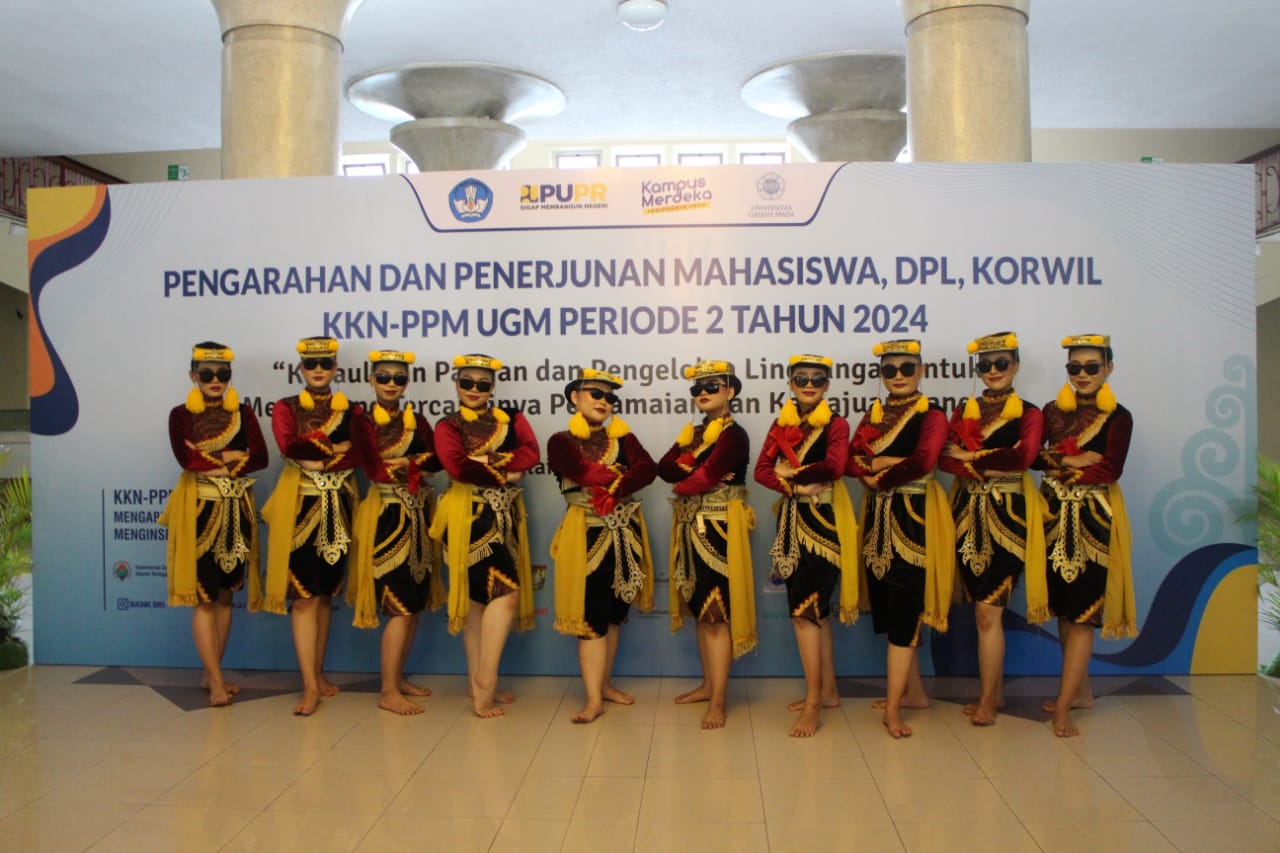
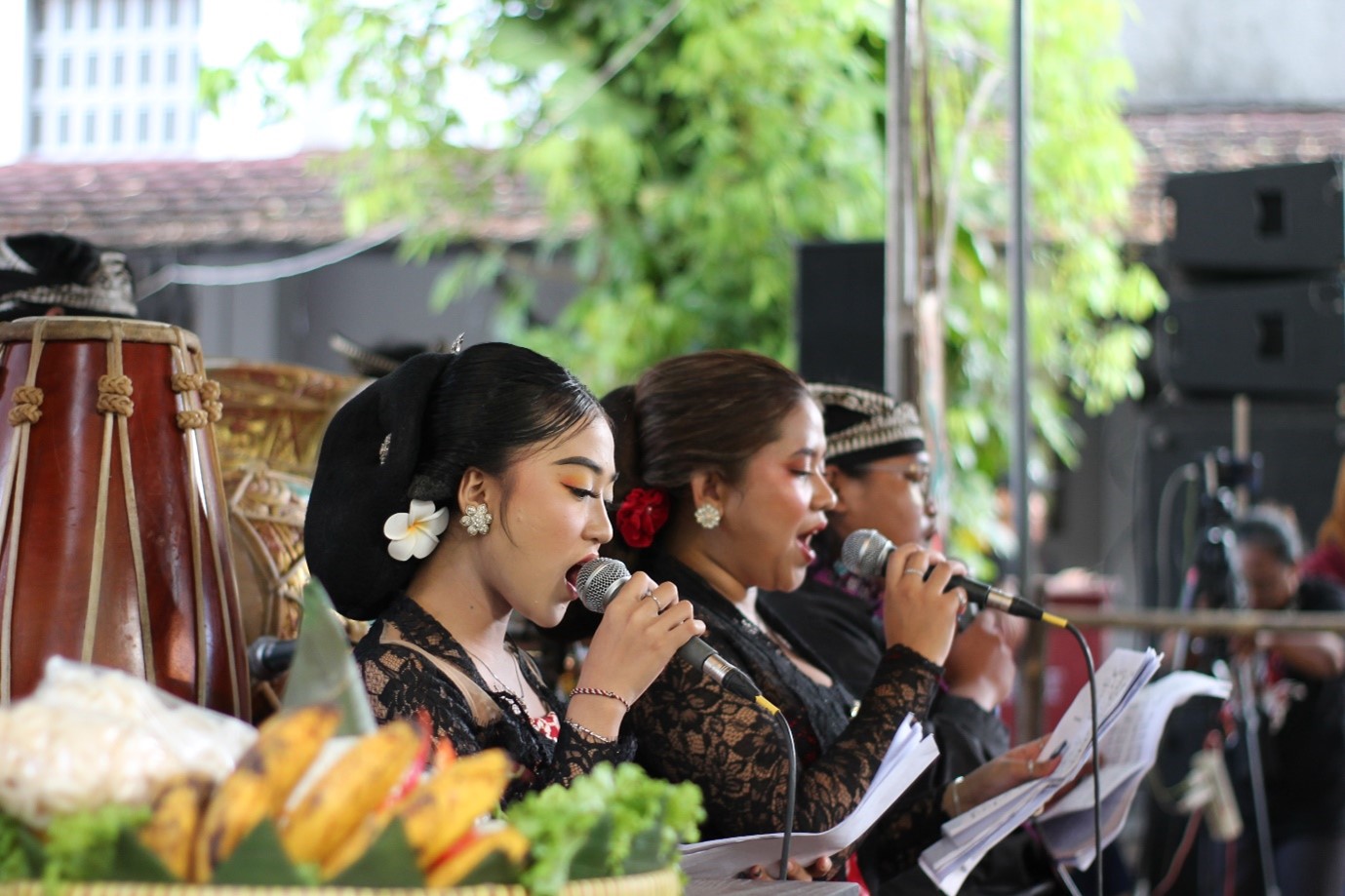
As a form of learning as well as community service, students of Universitas Gadjah Mada (UGM) carry out Real Work Lectures (KKN). On Tuesday (06/28/ 2024), UGM held a Briefing and Deployment Ceremony for KKN-PPM UGM Period 2 Year 2024. The event took place in the courtyard of the Balairung Building at noon with various interesting performances, one of which was the Angguk Dance.

Angguk Dance is a traditional dance typical of Kulon Progo Regency, Yogyakarta Special Region. This performance was performed by students of the Javanese Language, Literature and Culture Study Program. The dancers, namely Arin, Dhiny, Galuh, Kintan, Nanda, Novalia, Wening, Audrey Gizella, Eka, and Pinky, managed to amaze the audience. Nanda, one of the dancers, revealed that the Angguk Dance they performed received a rousing welcome and thunderous applause from the audience. "My friends and I tried to present a satisfying performance. When it was performed, the audience gave a very lively response and thunderous applause," she said in an interview (07/01/ 2024).

Angguk dance is an important element that adorns the Briefing and Deployment Ceremony of KKN-PPM UGM Period 2 Year 2024. More deeply, the presence of Angguk Dance reflects the cultural diversity of Indonesian society. This shows that the UGM KKN-PPM program contributes to a diverse society, in the form of student deployment to 35 provinces in Indonesia.

The Angguk Dance performance is also a concrete effort in nguri-uri (preserving) and ngurip-urip (enlivening) regional culture. The preservation and livelihood of regional culture is a form of preservation and attachment of national identity. By studying, understanding, preserving, and developing local knowledge and wisdom, it contributes to the development of education and provides benefits to society. To realize this, collaboration from various parties is needed to maximize and maintain the sustainability of the program. Therefore, the performance of Angguk Dance in the Briefing and Deployment Ceremony of KKN-PPM UGM Period 2 Year 2024 is related to sustainable development goals (SDGs) points 4 and 17.

Macapatan Friday Legen: Reciting and Contemplating the Serat Wedhatama

NewsSDGSStudentStudent's Activity Wednesday, 3 July 2024

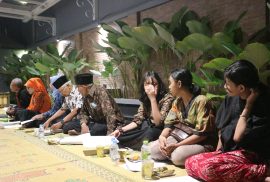
The Language, Literature, and Culture Program Study, Faculty of Cultural Sciences, Universitas Gadjah Mada (FIB UGM), held another Macapatan Jumat Legen event on Thursday, June 27, 2024. The event took place at the Javanese Studies Center (Pusaka Jawa) and raised a popular Javanese literary work, namely Serat Wedhatama.

Serat Wedhatama, a literary work written by Kanjeng Gusti Pangeran Arya Adipati (KGPAA) Mangkunagara IV, is a work full of piwulang about the concept of divinity and moral teachings in life and society. The manuscript of Serat Wedhatama kept at the Mangkunegaran Palace Library in Surakarta consists of 100 stanzas and is divided into several pupuhs, namely:

  1. Pupuh Pangkur: 14 pada (stanzas)
  2. Pupuh Sinom: 18 pada (stanzas)
  3. Pupuh Pocung: 15 pada (stanzas)
  4. Pupuh Gambuh: 35 pada (stanzas)
  5. Pupuh Kinanthi: 18 pada (stanzas)

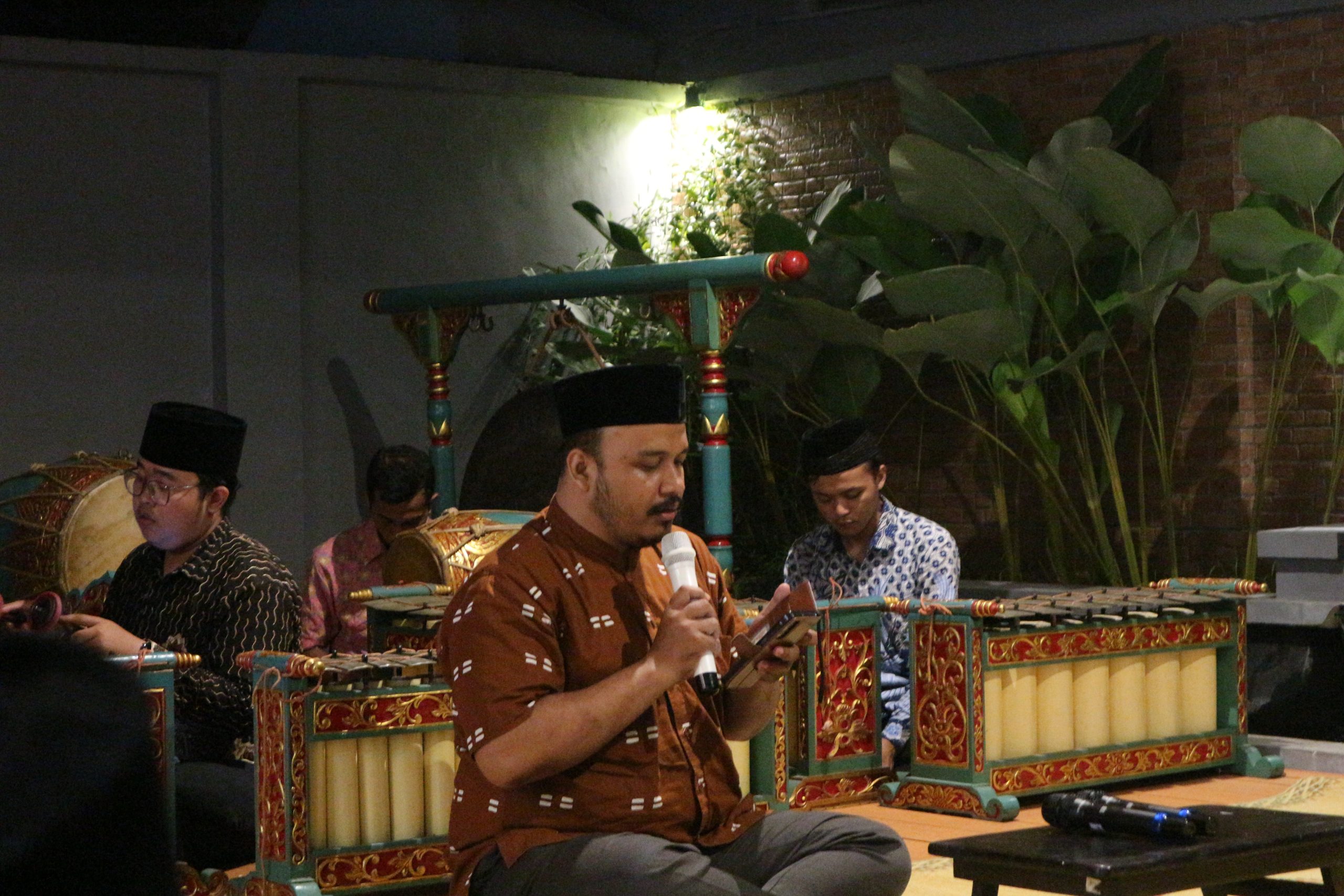
The event presented Prof. Dr. Hendrokumoro, M.Hum., as the speaker, and was attended by participants from various circles. In addition, Dr. Rudy Wiratama, S.I.P., M.A., participated in developing Serat Wedhatama in the opening ceremony and several students of the Javanese Language, Literature and Culture Study Program participated in playing gamelan, adding to the solemn atmosphere of the event. The liveliness of the participants in reading and developing Serat Wedhatama created an atmosphere full of beauty.

Dr. Rudy Wiratama, S.I.P., M.A., and students performing Serat Wedhatama

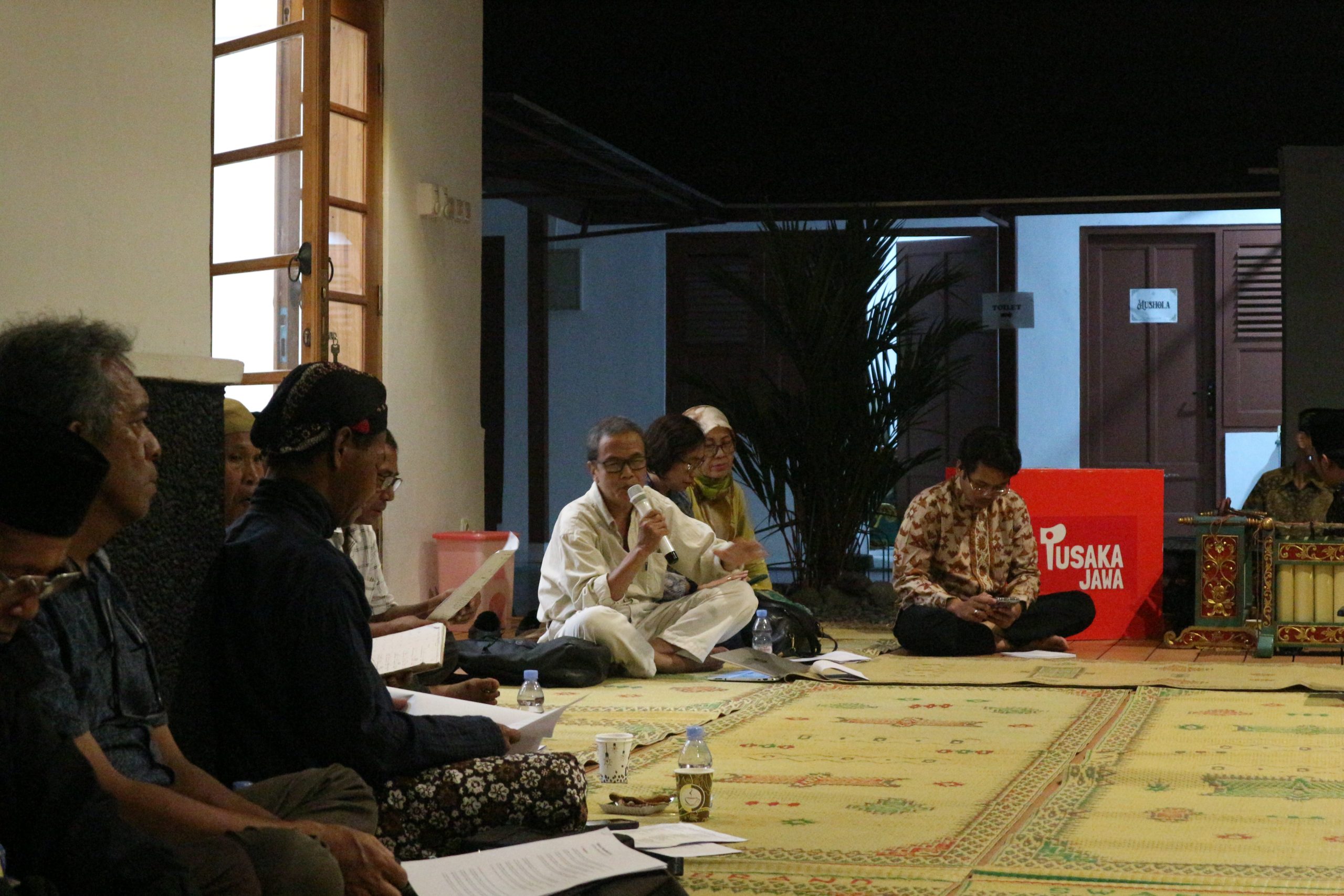
Prof. Dr. Hendrokumoro, M.Hum, on the occasion, emphasized that Serat Wedhatama, with its philosophical values and moral messages, can be applied in daily life. However, the actualization needs to be considered so that it can be relevant to the current conditions.

Prof. Dr. Hendrokumoro, M.Hum. explaining Serat Wedhatama

Macapatan Jumat Legen aims to revive the Macapatan tradition and preserve this tradition for the younger generation. Preserving this tradition and extracting information from literary works such as Serat Wedhatama is an important step in improving the quality of public education. The collaboration of various parties, such as between the Javanese Language, Literature and Culture Study Program and the Pusaka Jawa UGM, is an effort to maximize these preservation efforts. Thus, the organization of Macapatan Jumat Legen is in line with the 4th and 17th points in the Sustainable Development Goals (SDG's).

Understanding the Manuscripts of Widyabudaya Collection of Keraton Ngayogyakarta and Widyapustaka Collection of Pura Pakualaman and its Restoration Stages

NewsOtherSDGSStudentStudent's Activity Wednesday, 29 May 2024

On Monday, May 27, 2024, the Javanese Language, Literature and Culture Study Program held a field lecture in the framework of the Codicology course. This activity was held at Widyabudaya Library of Keraton Ngayogyakarta and Widyapustaka Library of Pura Pakualaman. The participants of this activity were students participating in the 2024 Kodikology course, guided by Dr. Sri Ratna Saktimulya, M.Hum., as the lecturer of the course.

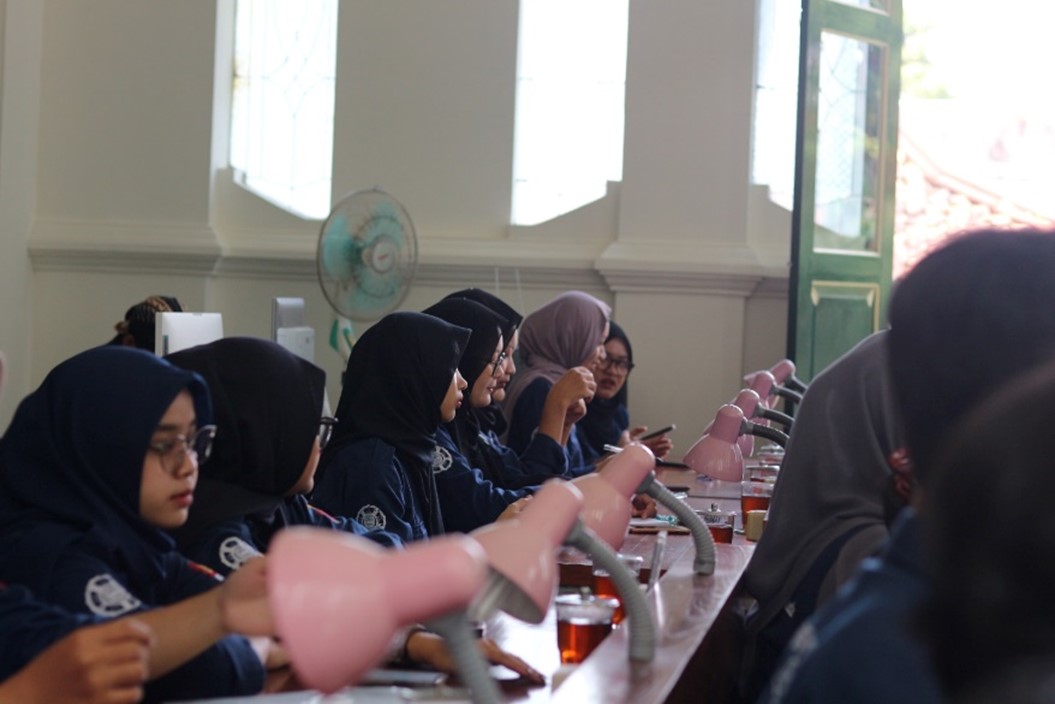
In this field study, students had the opportunity to see and learn firsthand about manuscripts, archives, and preservation efforts. The first location visited was Widyabudaya of Keraton Ngayogyakarta Hadiningrat. Here, students were first entertained with warm tea drinks typical of the Keraton Yogyakarta. After that, they were divided into four groups and guided by the abdi dalem to observe in depth the collection of manuscripts, archives, and the restoration process.

Students observed the explanation and enjoyed the banquet provided by the Keraton Ngayogyakarta.

The second location visited was the Widyapustaka Library of Pura Pakualaman. In this place, the participants were treated to jamu beras kencur and some traditional dishes. After enjoying the meal, the participants were given the opportunity to see the manuscript and archive collections. They also listened to explanations from librarians about the condition, aspects, and preservation of the manuscripts.

Students listen to explanations from the lecturers

The implementation of this field study went well and smoothly. The students were very enthusiastic, as seen from their high curiosity about various manuscript and archive collections, as well as the stages of revitalization. The purpose of this activity is as a preservation event in the form of introducing Indonesian culture, especially Javanese culture, to the younger generation. Thus, it is hoped that the love for the nation's culture in the younger generation will continue to grow and can be realized in real efforts to keep nguri-uri (preserve) and ngurip-urip (revive) the nation's identity.

The existence of various manuscripts and archives is a source of historical traces as well as a mirror of the cultural life of their time. Therefore, preserving historical evidence and extracting information from it needs to be done as a step to understanding the form of culture, knowledge, history, and glory of the archipelago. In addition, synergy from various parties is needed to realize this. This is in line with the fourth and seventeenth points of the Sustainable Development Goals, namely presenting and improving the quality of education and cooperation between partners to achieve goals.


Author           : Nanda Nursa Alya & Haryo Untoro

Editor             : Haryo Untoro

Angguk Dance Presented by Students of Javanese Language, Literature, and Culture Study Program in Mangayubagya Graduate Program of Faculty of Cultural Sciences UGM

College StudentNewsSDGSStudentStudent's Activity Monday, 27 May 2024

On Wednesday, (05/27/2024), the 7th floor Soegondo Auditorium was full of gratitude and happiness. The smiles of the graduates who have successfully completed their studies and achieved satisfactory results. The submission of graduation documents in the form of diplomas and academic transcripts is something to look forward to because it marks the legitimacy of graduating students and officially holds a degree according to the study program they each take.

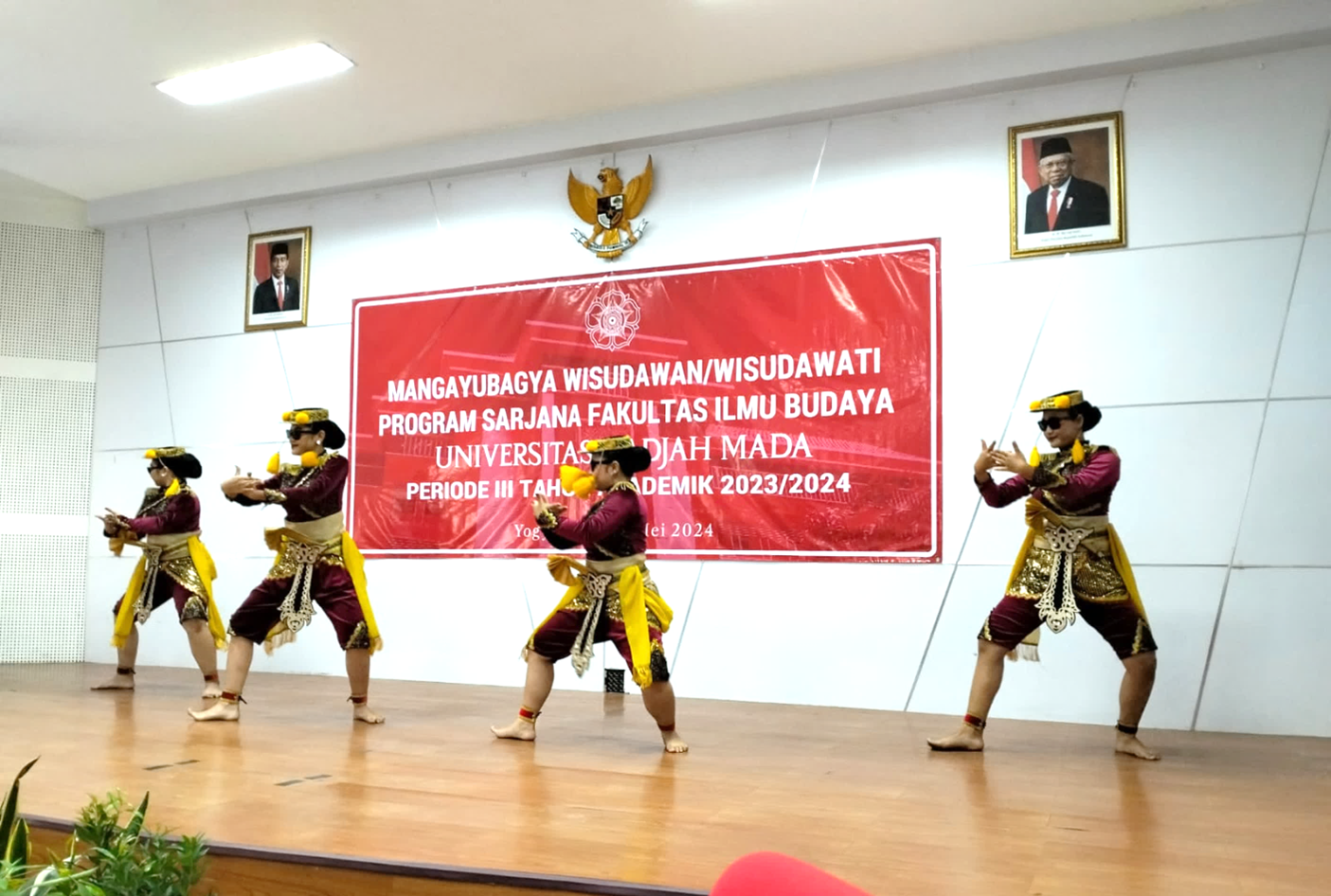
In the event that was full of wisdom, four students of the Javanese Language, Literature, and Culture Study Program, Faculty of Arts, UGM, entertained the graduates and the audience with Angguk Dance. They are Novalia Hidayatus Solihah, Nanda Fitri Riyantika, Wening Hidayati, and Audrey Gizella. The Angguk dance performed by the four female students succeeded in bringing smiles and admiration from the graduates and guests.

Of course, there are various stories behind the success of the Angguk Dance performance, ranging from limited rehearsal time to musical interference during the performance. "Before the performance, we felt anxious because we only had three rehearsals. However, the four of us had the courage to keep performing. During the performance, there were times when the music suddenly repeated itself. We tried to calm down and continue the dance. Alhamdulillah, the whole performance went well. Although there are shortcomings, we feel satisfied and proud to be able to entertain the audience at the Mangayubagya event for graduates of Faculty of Arts UGM," explained Wening Hidayat in an interview (05/24/2024).

Quoting from disbud.kulonprogokab.go.id (2020, August 5), Angguk Dance is a traditional art originating from Kulon Progo Regency. It is believed that this art emerged around 1900, right when the Dutch soldiers and officers occupied the area of Purworejo Regency. The soldiers' dancing and singing became the forerunner of the Angguk Dance that emerged in Kokap Sub-district, an area directly adjacent to Purworejo. Initially, Angguk was danced by men. In 1991, it was first danced by women in Pripih Hamlet, Hargomulyo, Kokap.

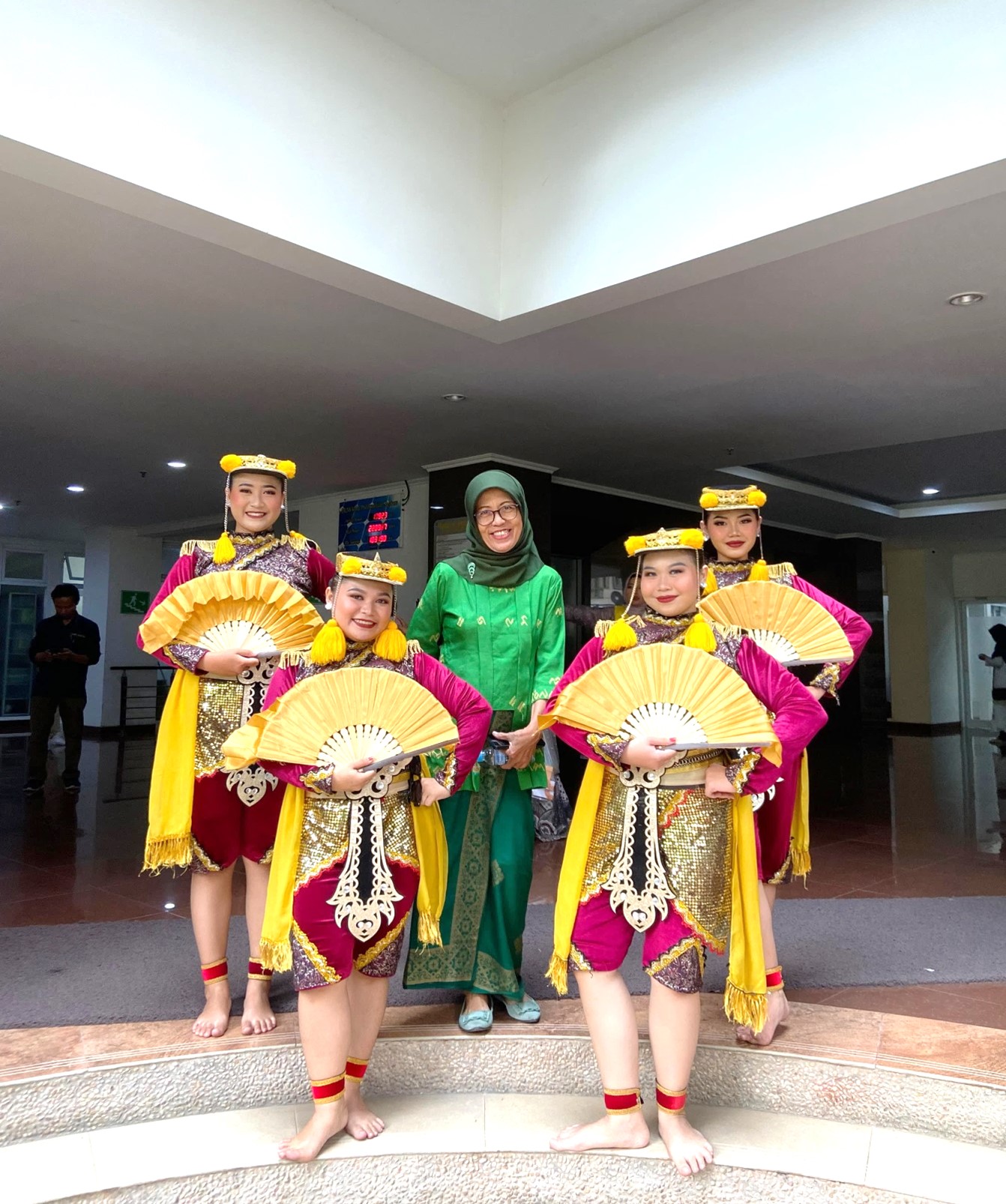
Wening, Nanda, Novalia, and Audrey with Dr. Daru Winarti, M.Hum., Head of the Javanese Language, Literature, and Culture Study Program.

The Angguk Dance performance in the Mangayubagya event for graduates of the Faculty of Cultural Sciences, UGM, was successfully run with great fanfare. This performance is also a concrete manifestation of the students of the Javanese Language, Literature, and Culture Study Program in nguri-uri 'preserving' and ngurip-urip'reviving and enlivening' the culture of the archipelago, especially Javanese culture. The preservation of national identity can be carried out with synergy from various parties so that it can have a broad impact on society and the nation.


Bibliography

Disbud.kulonprogokab,go,id. (2020, August 05). Tari Angguk Kesenian Tradisional Kulon Progo. Accessed on May 24, 2024, from https://disbud.kulonprogokab.go.id/detil/356/tari-angguk-kesenian-tradisional-kulon-progo

General Champion Achieved by Universitas Gadjah Mada in Sarasehan Nusantara XI Imbasadi

ImbasadiNewsSDGSStudentStudent's Activity Wednesday, 22 May 2024

Yogyakarta (05/22/2024) -Universitas Gadjah Mada won the overall champion in the Sarasehan Nusantara XI Imbasadi event. Sarasehan Nusantara XI was held at the State Hindu College Mpu Kuturan Singaraja (STAH N Mpu Kuturan Singaraja) on May 17-19, 2024 offline.  The three-day event raised the theme "Bhinneka Tunggal Ika: Harmony in Diversity" and included various events, such as various competitions, lontar seminars, and the culmination of the event in the form of the awarding night and the election of Putra and Putri Imbasadi 2024.

The competitions held during Sarasehan Nusantara XI were quite diverse. There were six (6) competitions, including the National Scientific Writing Competition (LKTIN), the election of Putra and Putri Imbasadi 2024, national typography competition, poetry musicalization competition, cultural poster competition, and cultural documentary video.

The Universitas Gadjah Mada contingent represented by the Javanese Language, Literature and Culture Study Program, Faculty of Cultural Sciences (FIB) sent eight (8) students to participate in the entire series of events. The eight students included Bima Muslih Wicaksono (class of 2022) as the head of the delegation, Haryo Untoro (class of 2022), Muhammad Siswoyo (class of 2022), Kintan Dewinta Putri (class of 2022), Ganes Larasati (class of 2023), Meifiri Arini Pitaloka (class of 2023), Muhamad Rafi Nur Fauzy (batch 2023), and Rafif Wicaksono (class of 2023).


After participating in a series of events, the delegation of Universitas Gadjah Mada brought good news by getting several nominations for champions in several competitions, namely:


  1. 1st place in the Cultural Poster Competition - Meifira Arini Pitaloka

The Cultural Poster Competition illustrates the diverse backgrounds of Indonesian society, namely ethnicity, religion, and race, which live in harmony.

  1. 1st Runner-up Putri Imbasadi 2024 - Ganes Larasati

The selection of Putra and Putri Imbasadi went through a rigorous selection, starting from filing, talent interest test, public speaking, to the grand final stage. After going through a long series of processes, Ganes Larasati paired with Reidha Prastya from Universitas Sebelas Maret Regional Literature Study Program was given the mandate as the 2nd Runner-up 1.

  1. 2nd place in the National Scientific Writing Competition - Haryo Untoro and Muhammad Siswoyo

The National Scientific Writing Contest that was written contained the title Representation of Jagat Harmony in Syair Drojogan Wayang Kulit Jawa Timuran Subgagrag Surabaya. This research raised the material object in the form of Drojogan poem, a suluk or sulukan that is developed by a puppeteer before the Surabaya subgagrade Timuran Javanese shadow puppet begins. The disclosure of the language style in the Drojogan poem which contains a description of the means, media, and actors of the shadow puppet performance and its preservation is the focus of this Scientific Paper.

  1. 3rd place in National Typography Competition - Muhamad Rafi Nur Fauzy

National Typography Competition in the form of a painting of Joglo, a Javanese traditional house, which is decorated with beautiful and precise Javanese script writing. 

  1. General Champion of Sarasehan Nusantara XI - Universitas Gadjah Mada

In addition to the four competitions above, Universitas Gadjah Mada was crowned the overall champion in the Sarasehan Nusantara XI Imbasadi event.

Coronation of 1st Runner-up Putra and Putri Imbasadi 2024

The awarding of the General Champion trophy to the delegation of Universitas Gadjah Mada

These achievements are inseparable from the spirit of the students of Javanese Language, Literature, and Culture Study Program, Faculty of Cultural Sciences, UGM, in promoting, appreciating, preserving, and enlivening the various cultures that live in Indonesia in a bond of harmony. With the implementation of Sarasehan Nusantara XI and the title obtained, it is hoped that it can spark the enthusiasm of students to continue to maintain and promote existing cultural heritage and can strengthen relations between students of regional literature study programs throughout Indonesia.

Our gratitude goes to all parties who participated in supporting and organizing this event. We also ask for support and blessings so that the Temu Budaya Nusantara XXX activities held at Universitas Gadjah Mada can run successfully.

Indonesia is diverse, Imbasadi unites

Learning about Wayang Visuals and Narratives through Field Study at Sonobudoyo Museum

College StudentNewsSDGSStudentStudent's Activity Monday, 20 May 2024

Yogyakarta (05/20/2024) - Wayang kulit / Puppetry, a traditional art recognized by UNESCO as a Masterpiece of Oral and Intangible Human Cultural Heritage, has high historical, philosophical, and artistic value. The art of puppet is considered one of the pinnacles of Javanese culture, so it is important for the younger generation to recognize, understand, and preserve this noble heritage.

In order to deepen the understanding of shadow puppets, the Javanese Language, Literature, and Culture Study Program organized a field study for the Puppet Literature course on May 16, 2024. This activity was held at the Sonobudoyo Museum in Yogyakarta, giving students the opportunity to see puppets and manuscripts related to puppets.

A group photo of the field course participants observing the puppet collection.

This field study was attended by students participating in the Puppet Literature course and guided by the lecturers, namely R. Bima Slamet Raharja, S.S., M.A., and Dr. Rudy Wiratama, S.I.P., M.A. During the activity, students had direct access to observe various puppet collections and manuscripts related to wayang kulit. The enthusiasm of the students was visible throughout this activity, showing their interest in knowing more about the cultural wealth of the nation.

The output of this field study is not only a presentation of what has been learned but also an introduction and growth of love and pride for the nation's culture. In addition, this activity is expected to add experience and become a means of developing the scientific competence of the participants. Thus, the field course is in line with the fourth point of the sustainable development goals, namely improving the quality of education within the scope of the preservation and development of the nation's culture.


Author: Nanda Nursa Alya

Editor: Haryo Untoro

Gugur Gunung 13 Day 1 – Jawaisme Fest that Pulls at the Heartstrings

College StudentNewsSDGSStudentStudent's ActivityStudent's Work Thursday, 16 May 2024

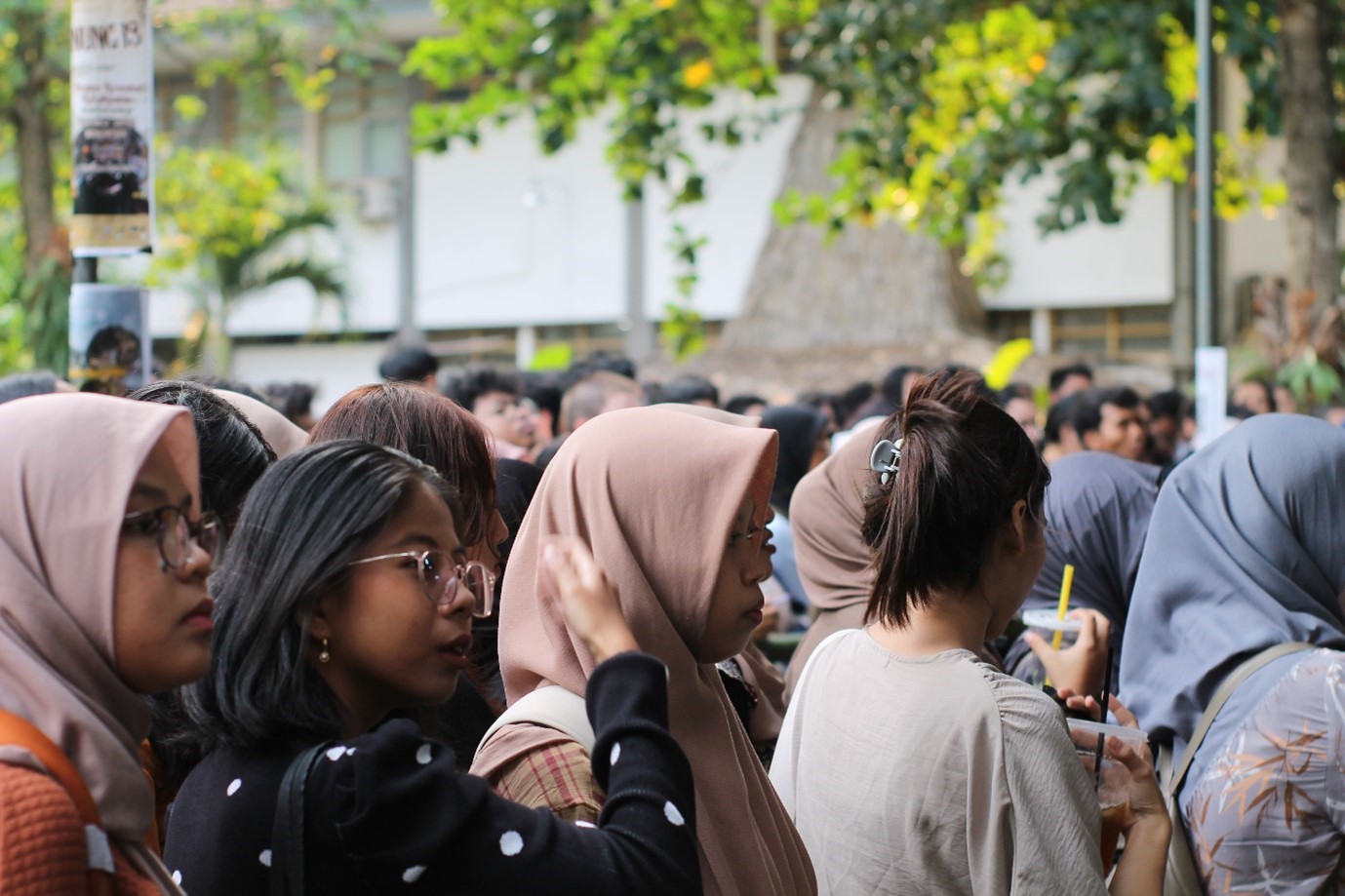
Yogyakarta (05/14/2024) - The first day of the 13th Gugur Gunung was successfully held on Monday, May 13, 2024, at Margono Hall, 1st floor, Faculty of Cultural Sciences (FIB), Universitas Gadjah Mada (UGM). Jawaisme Fest, which is part of this event, managed to attract the attention of various groups, ranging from mahadaya, inculs students, FIB staff, to high school students visiting FIB UGM.

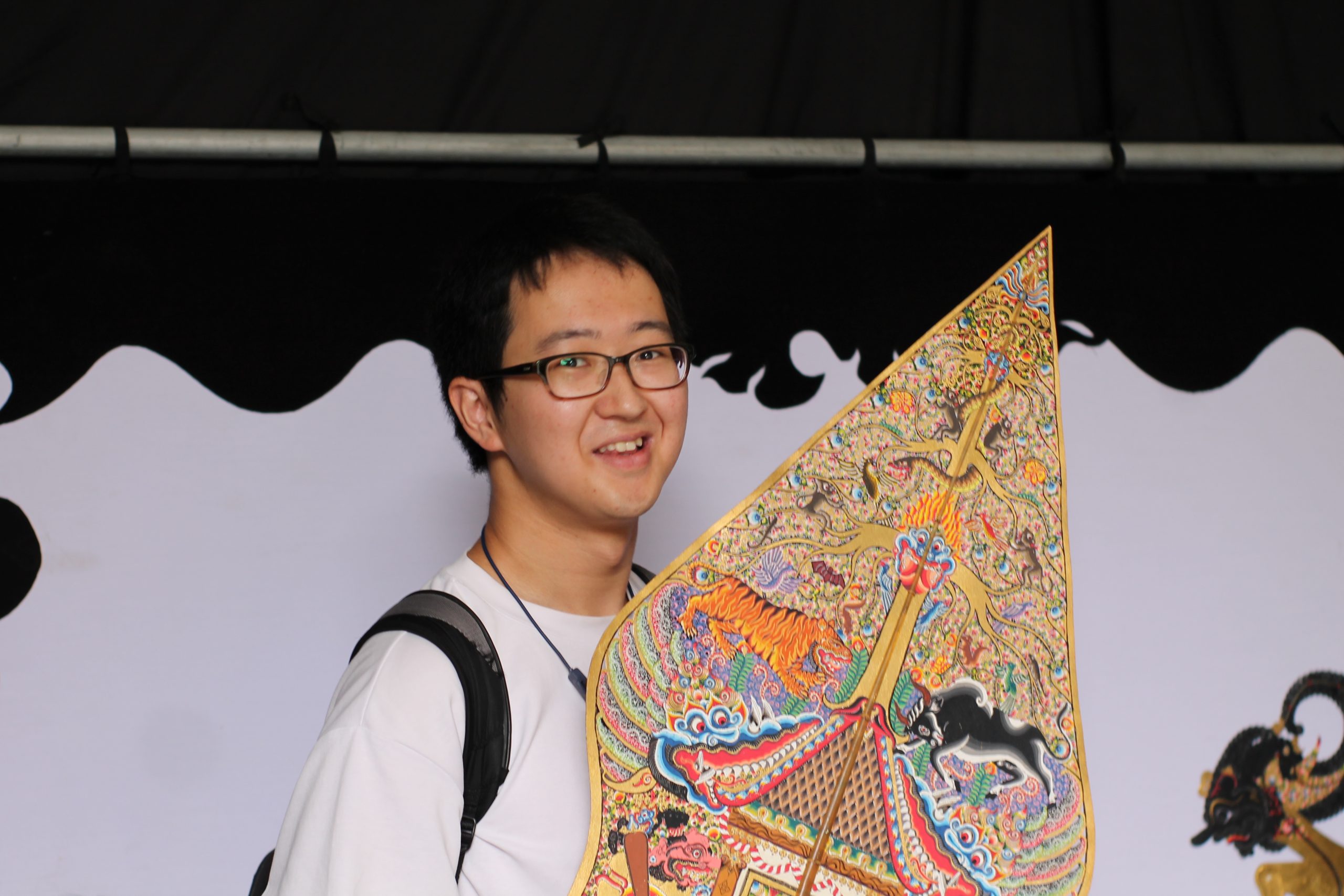
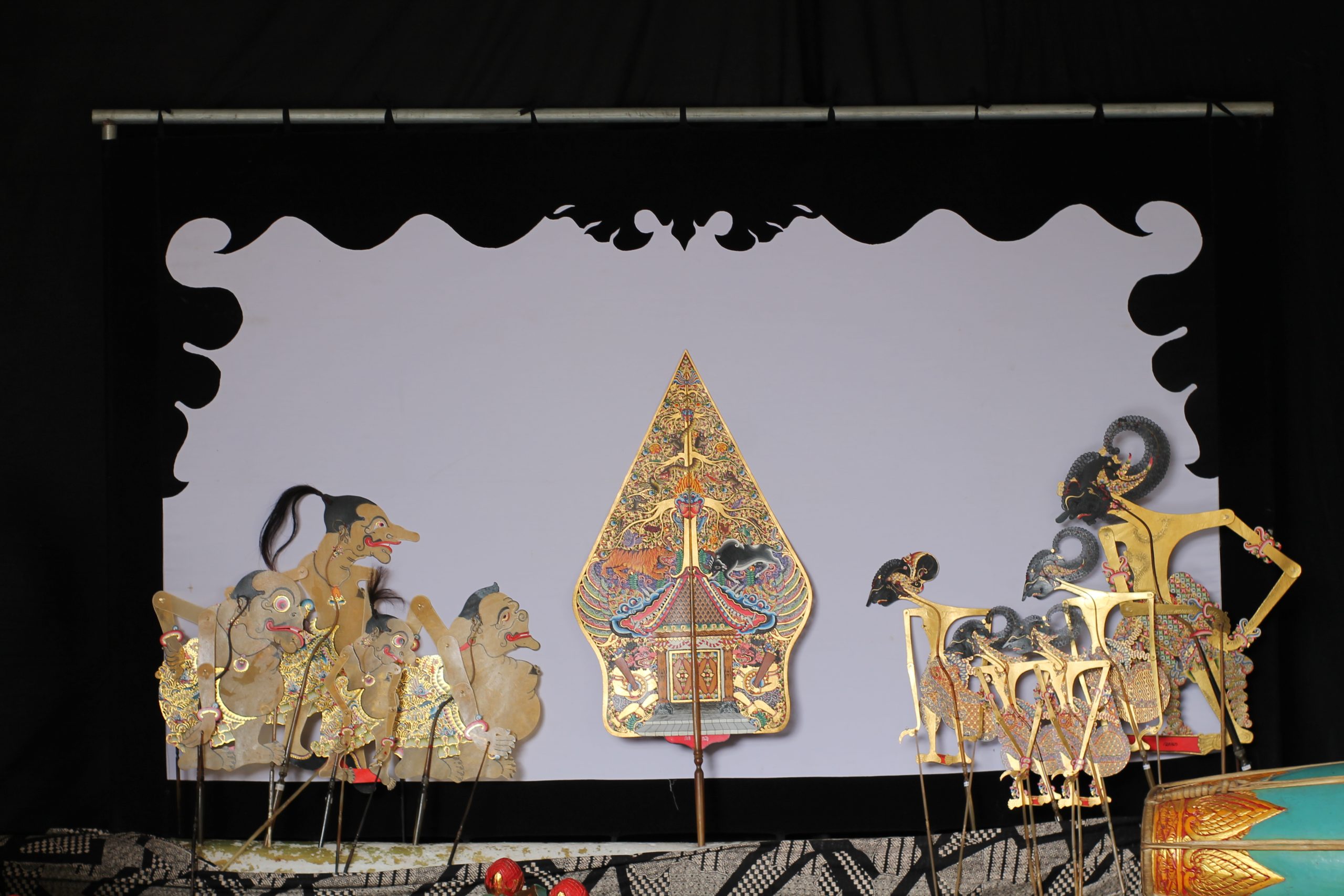
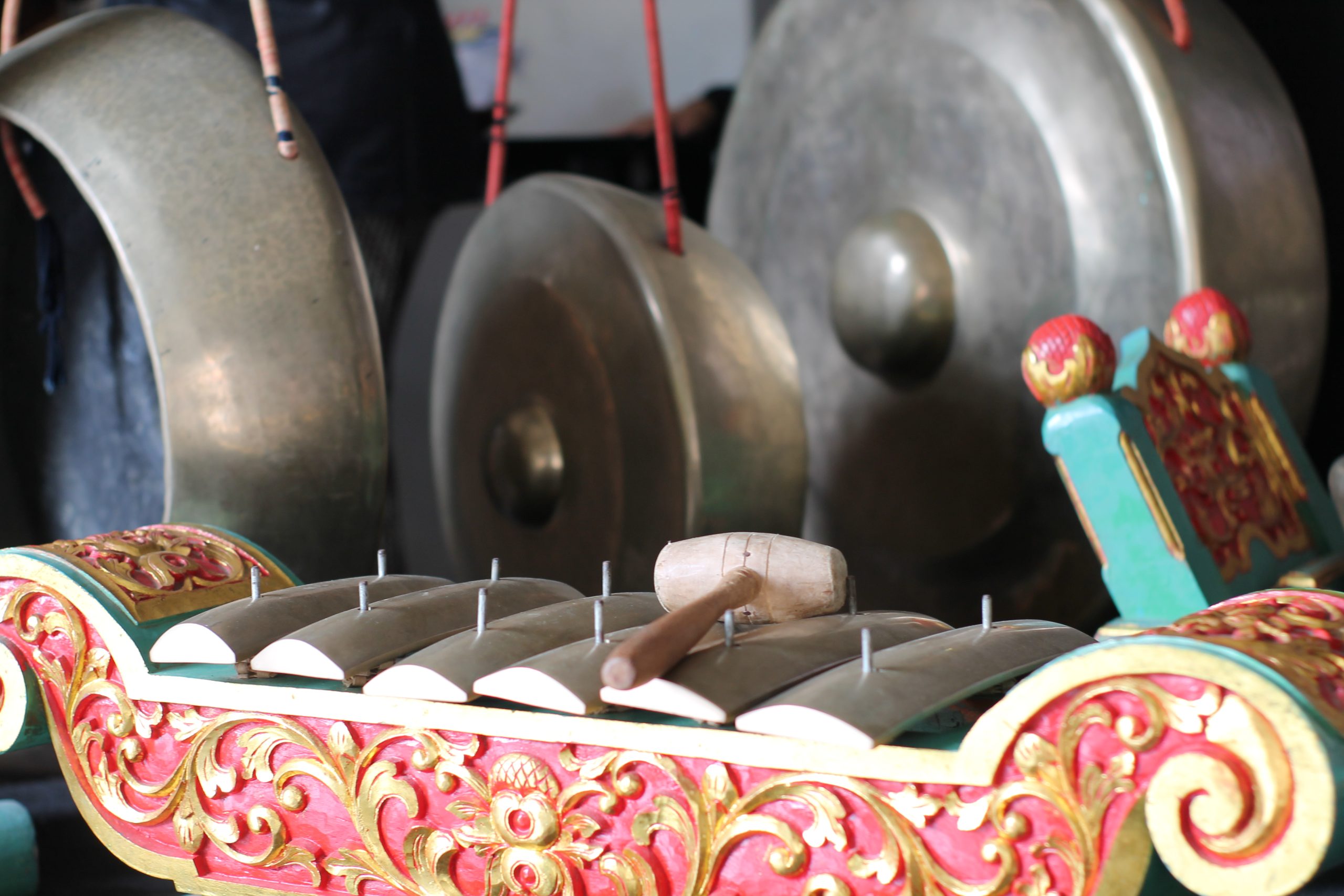
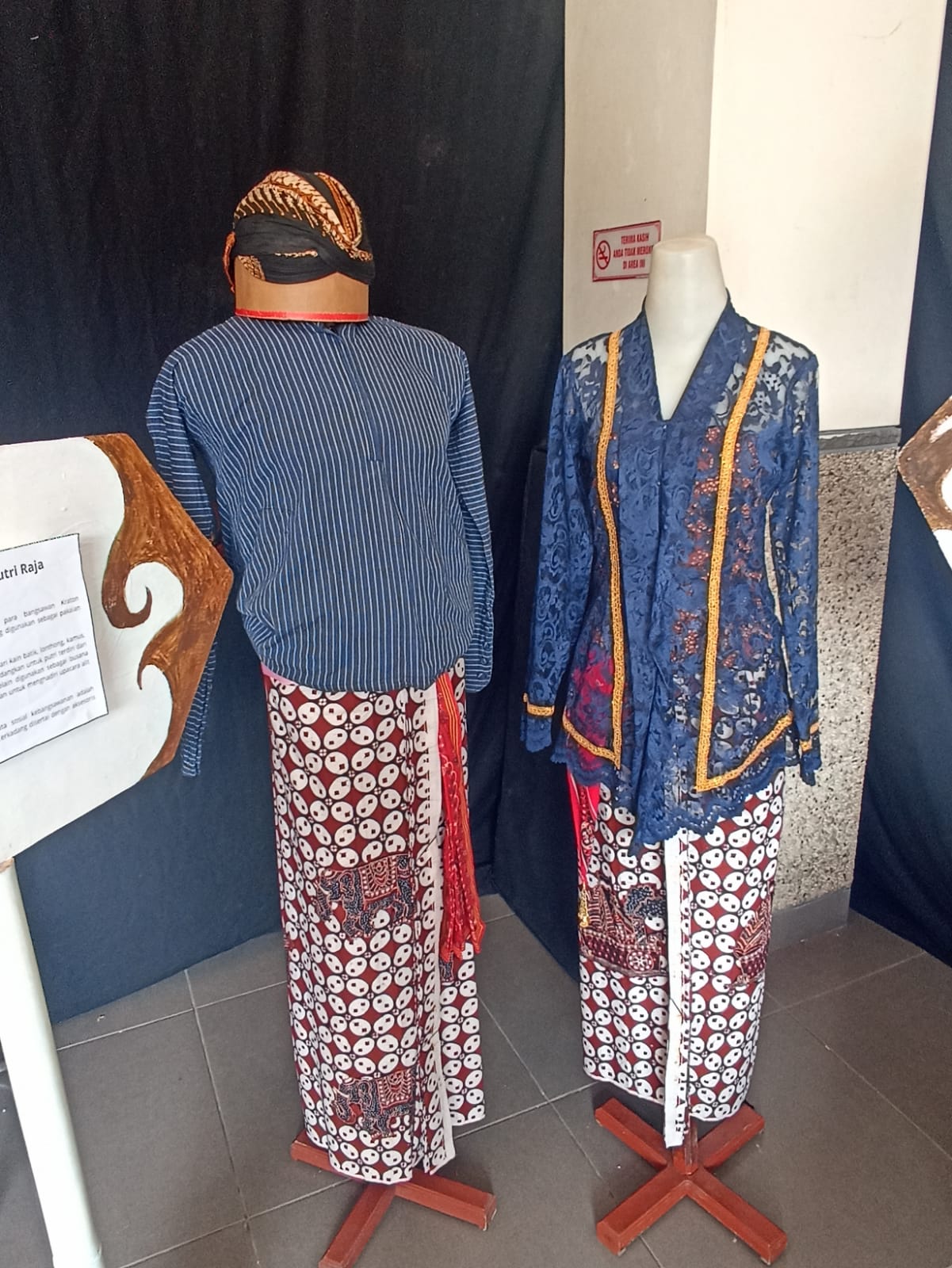
Jawaisme Fest is an exhibition of Javanese art, literature and culture. Some of the cultural products on display are archipelago manuscripts, Javanese traditional daily clothing or Yogyakarta-style padintenan, shadow puppets, gamelan sets, weton procedures, traditional games, and various other cultural products.

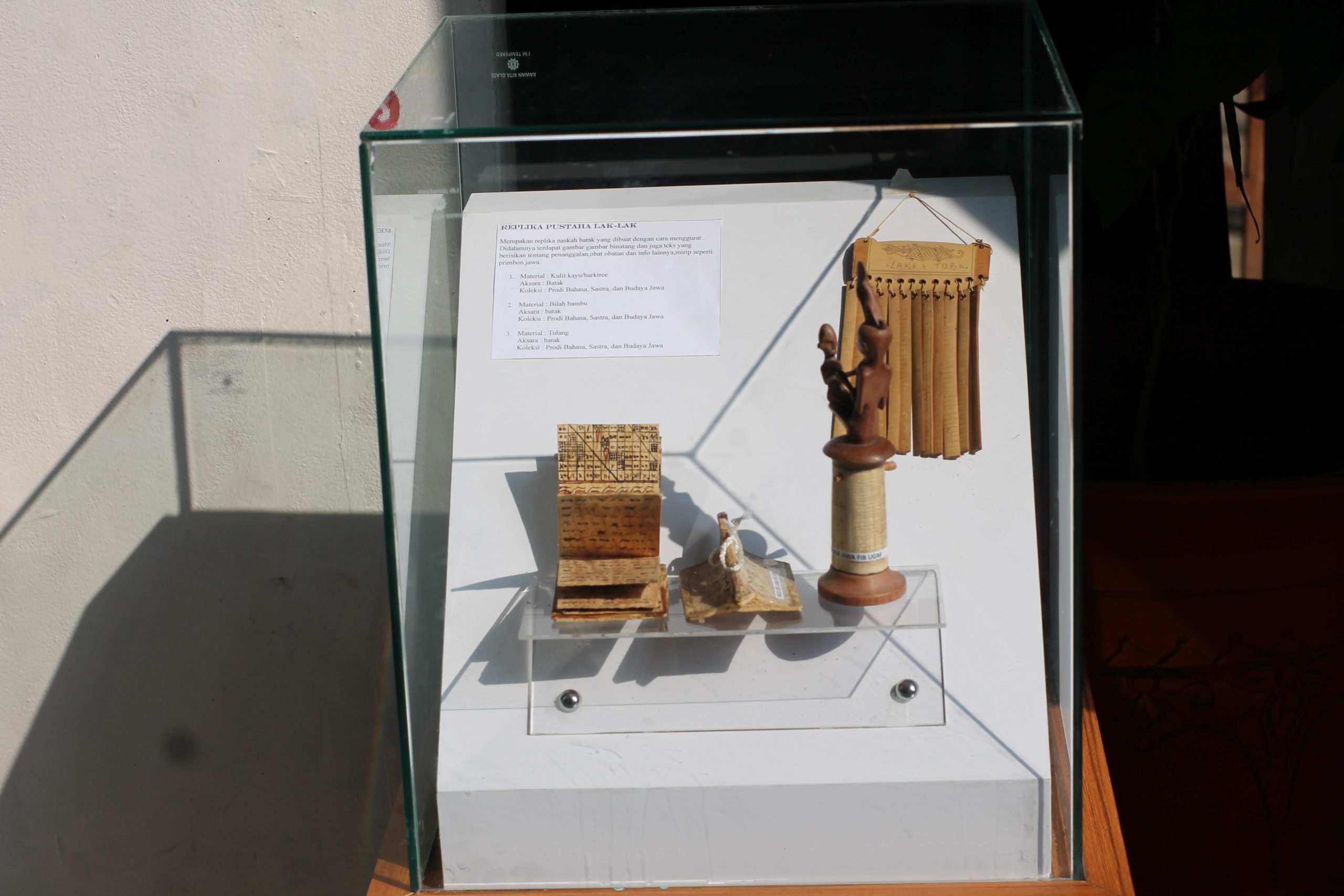
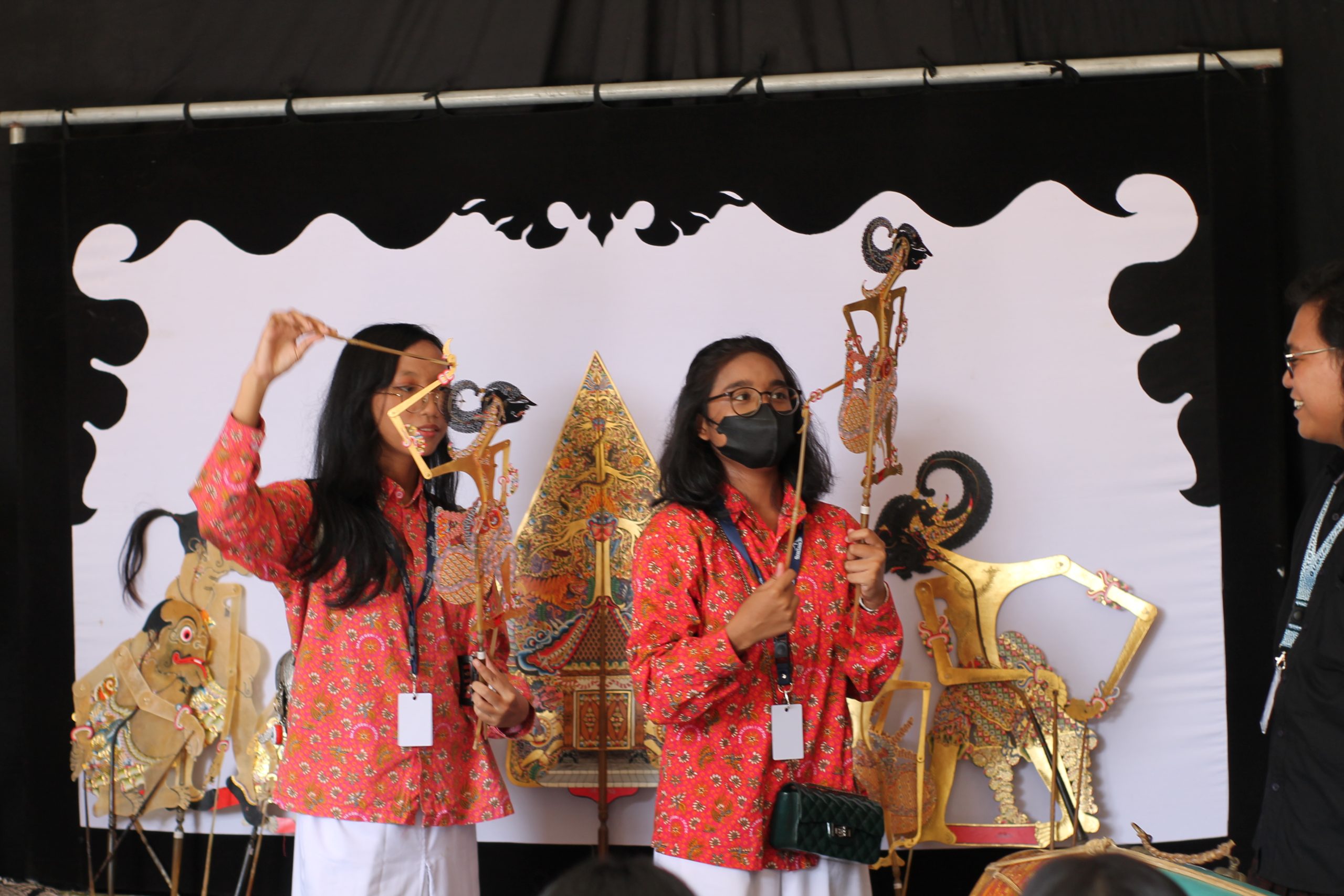
The Nusantara manuscripts on display include Javanese manuscripts, illustrated lontar manuscripts from Bali, and imitations of Batak manuscripts. Shadow puppets with Pandawa (Yudistira, Bima, Arjuna, Nakula, and Sadewa) and Punakawan (Semar, Gareng, Petruk, and Bagong) characters were also present to welcome visitors. Some of the gamelan instruments displayed included saron, kendhang ciblon, kethuk, kempul, and gong. Traditional games such as yoyo, othok-othok hammer, othok-othok boat, bekel, ketapel or plintheng, bas basan, gasing, and various other games bring a nostalgic impression of the past. The Javanese procedures displayed, including the life cycle from birth to death and an introduction to weton, succeeded in sparking visitors' curiosity to find out more.

Javanese Shadow Puppet

Gamelan Instruments

Javanese Traditional Fashion Yogyakarta Style

Replika Naskah Batak

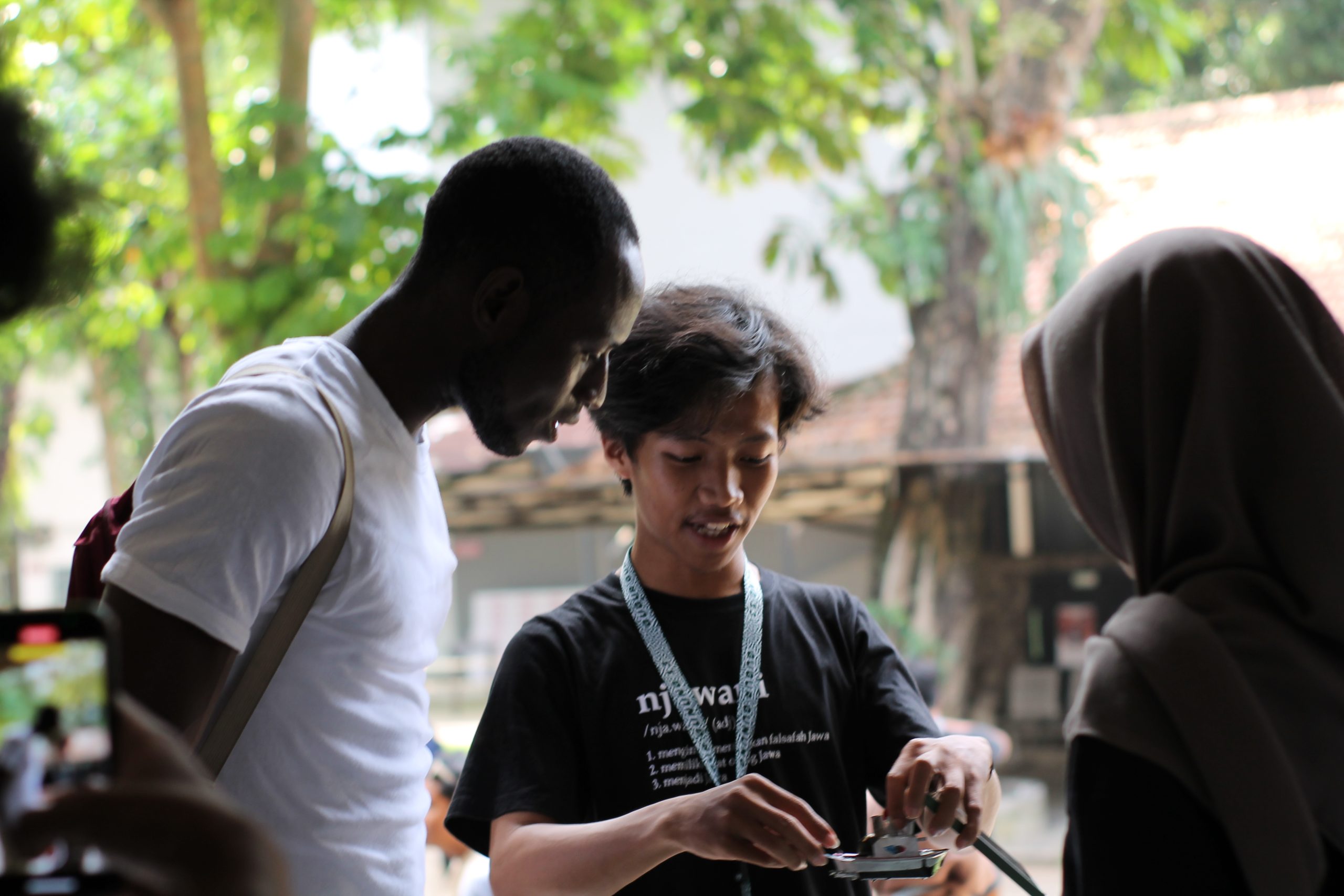
The various cultural products on display attracted the interest of the visitors. They showed their enthusiasm through various questions asked to the stand guards. Visitors were also given the opportunity to try various traditional games, hold and play shadow puppets, sound gamelan instruments, see Nusantara manuscripts, and try their luck at the lucky draw booth.

Two high school students learning about shadow puppets

Traditional othok-othok boat game attracts the attention of inculs students

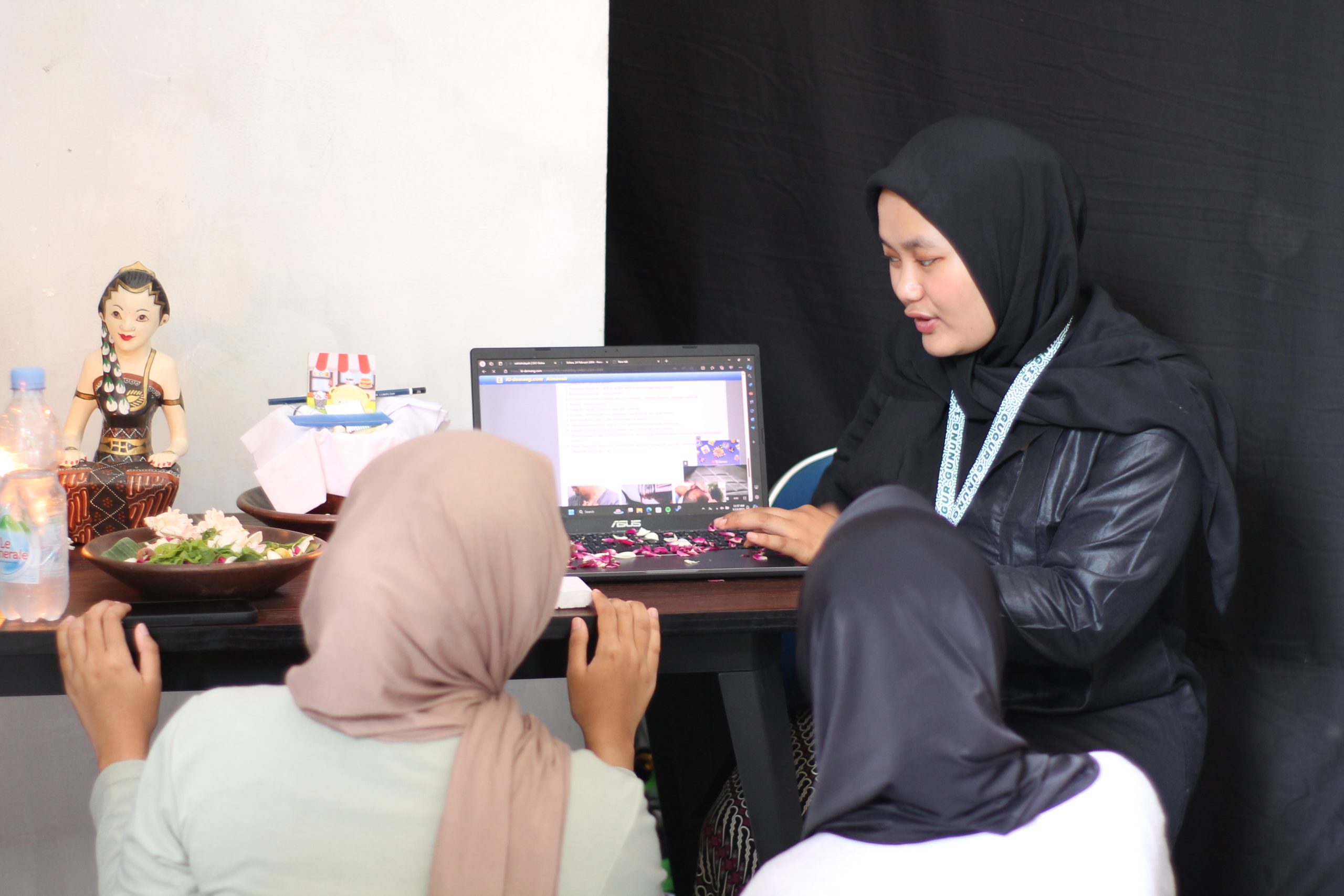
Weton introduction to female students

Jawaisme Fest will still take place on the second day of Gugur Gunung 13, Tuesday, May 14, 2024, from 09.00 to 15.00 WIB. The second day will be even more special with the performance of a Jathilan dance drama entitled “Turangga Sastra Nuswantara” by the students of the Javanese Language, Literature and Culture Study Program. The Jathilan dance drama performance will be even more interesting with the presence of Lala Atila, a famous campursari singer, who will sing in the performance. So, let's get ready for Gugur Gunung 13!

Gugur Gunung 13 Day Two: Jathilan Dance Drama Enlivens Faculty of Cultural Sciences

College StudentNewsOtherSDGSStudentStudent's ActivityStudent's Work Thursday, 16 May 2024

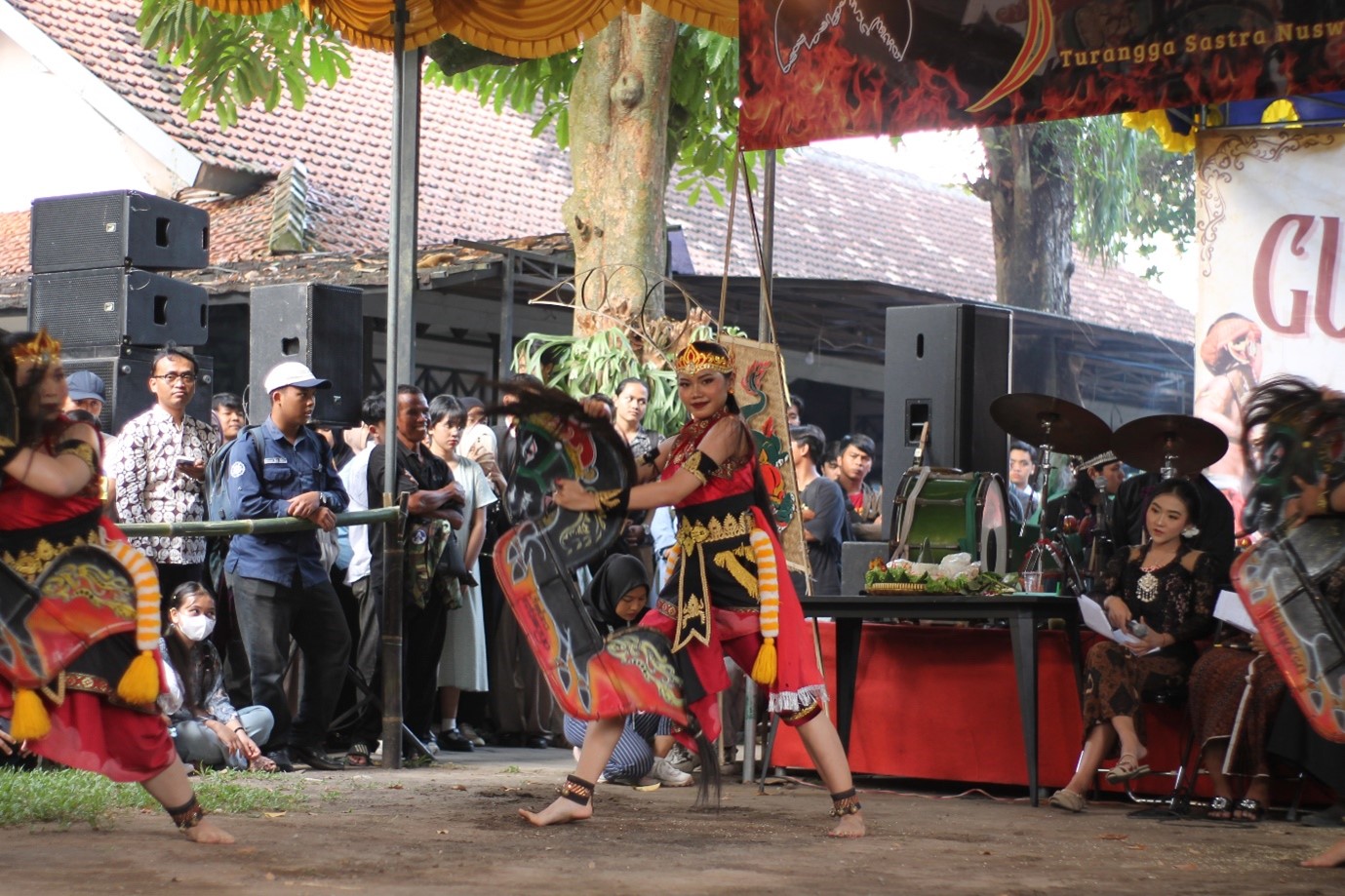
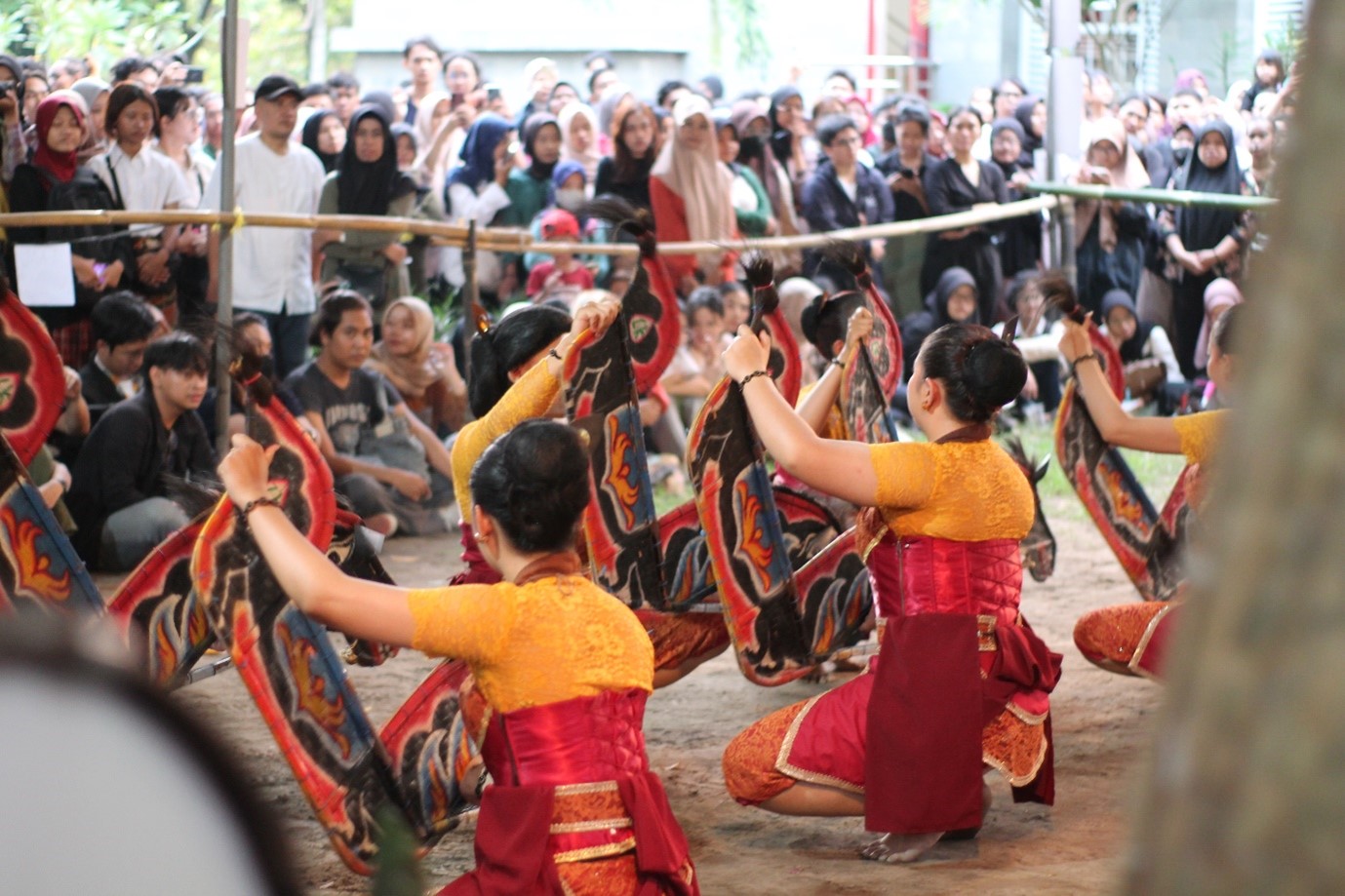
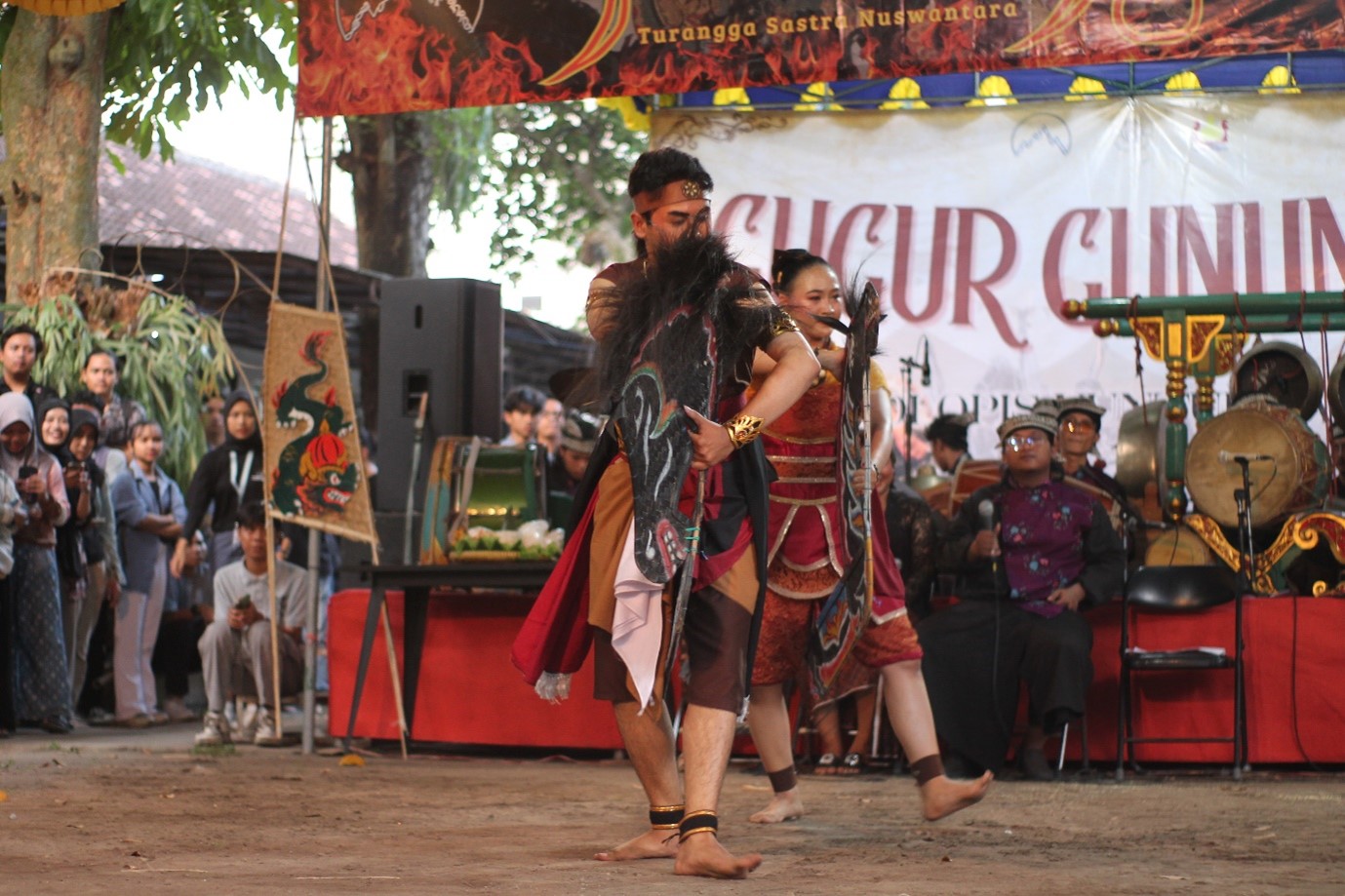
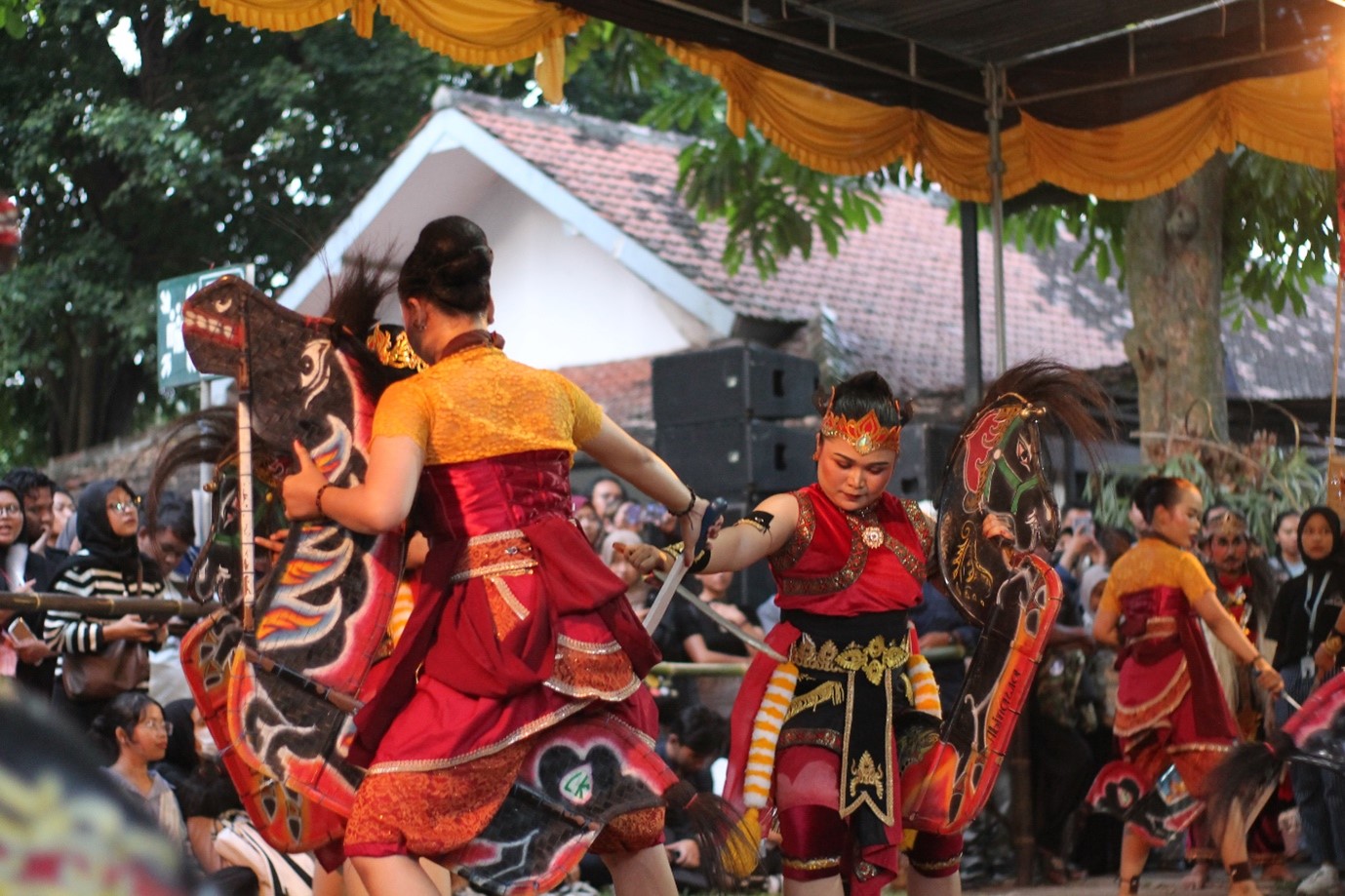
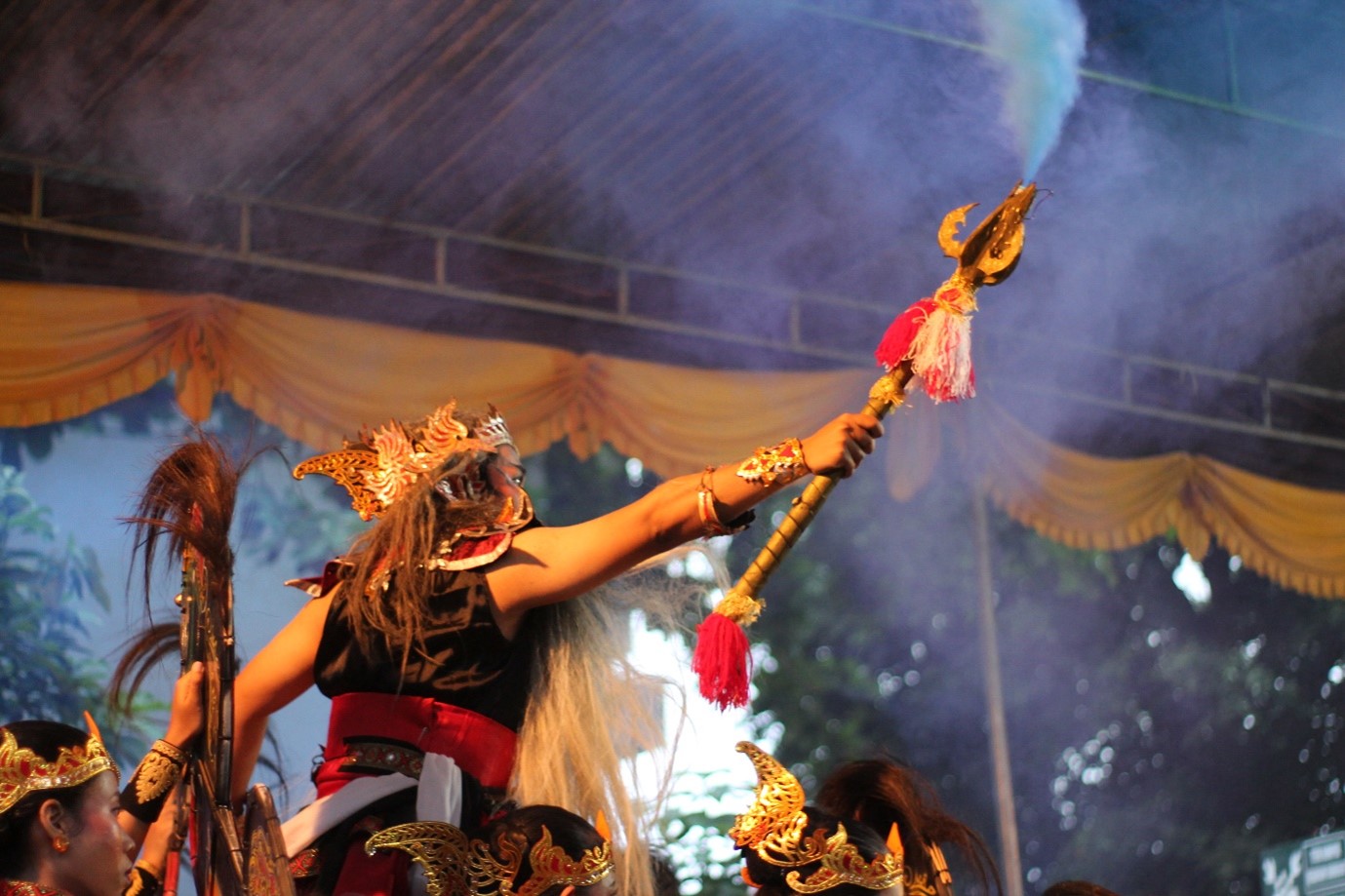
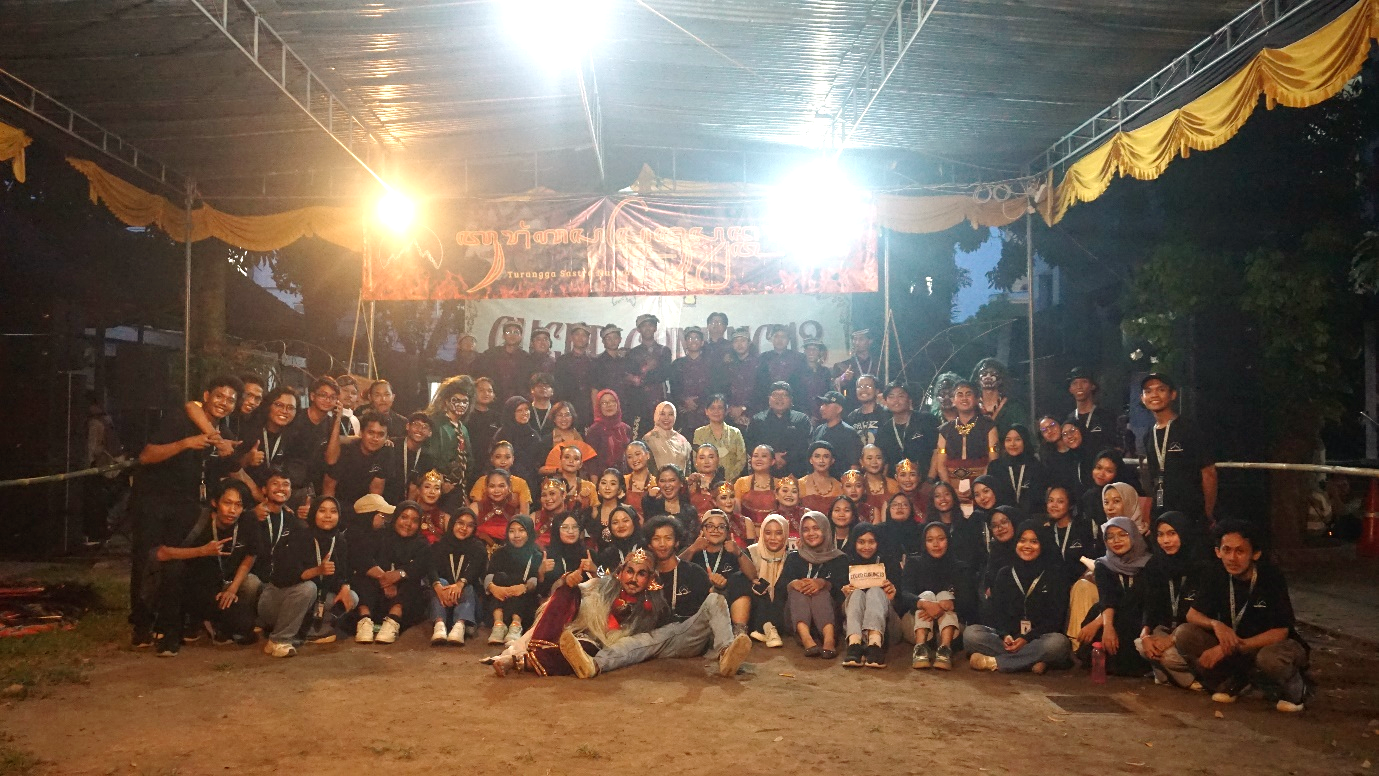
Yogyakarta (05/16/2024) - The second day of Gugur Gunung 13, precisely on Tuesday, May 14, 2024, became an unforgettable moment for all residents of the Faculty of Cultural Sciences, Universitas Gadjah Mada (FIB UGM). Not without reason, because students of the Javanese Language, Literature, and Culture Study Program collaborated in a team called 'Turangga Sastra Nuswantara' to perform Jathilan Dance Drama on the peak day of Gugur Gunung 13.

The Jathilan Dance Drama performance was held at 04.00 PM –05.30 PM WIB on the stage located in Greenland. Each side of the stage was packed with members of the academic community who were interested in the Jathilan Dance Drama performance. The performance of popular art became livelier with the presence of Lala Atila as the sinden of the Jathilan Dance Drama.

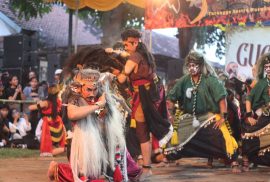
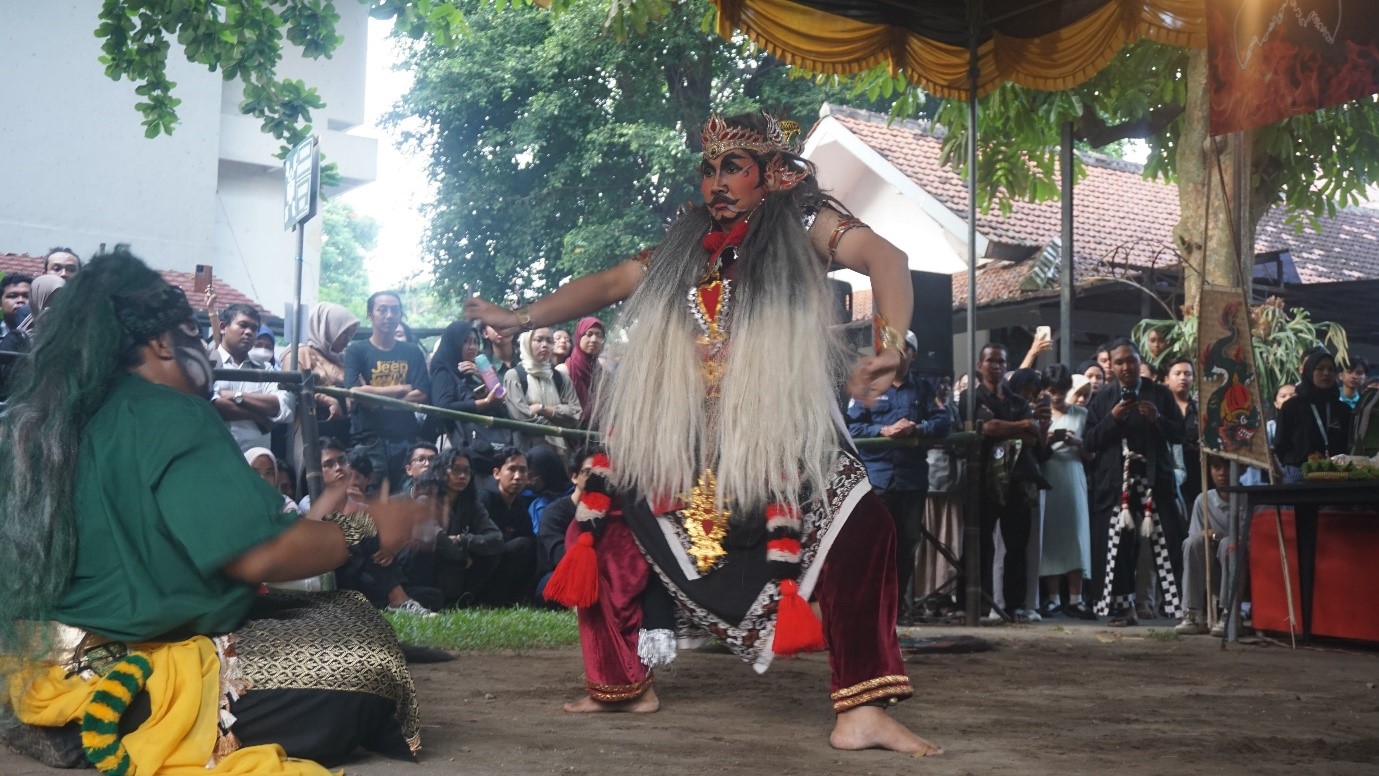
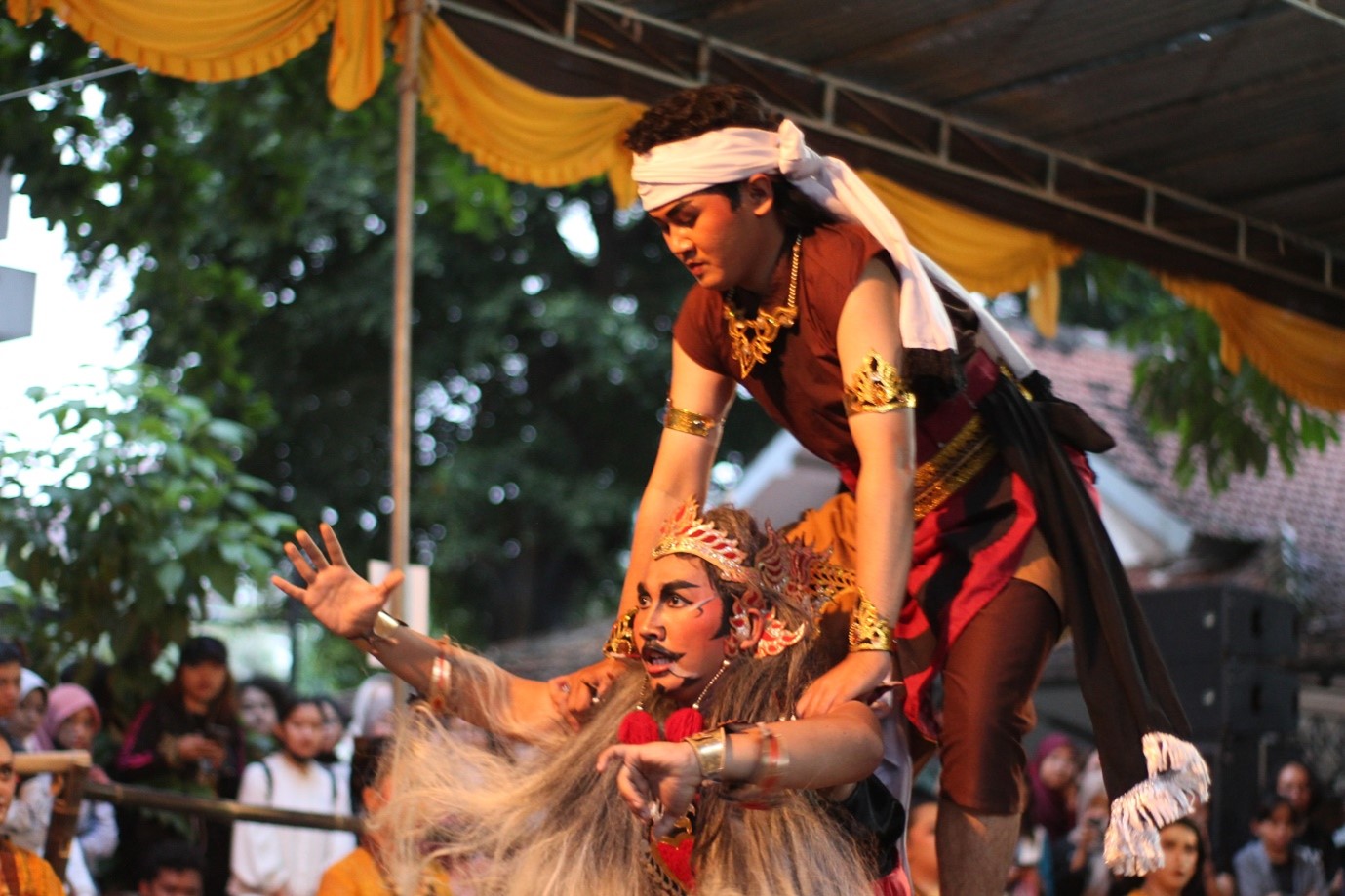
Jathilan Dance Drama is a performance of Jathilan dance, an art that is closely related to the use of jaran kepang, or lumping horse, and contains drama about Javanese mythology. The legend of Javanese mythology is the legend of Ajisaka and his battle with Dewata Cengkar, a giant king in the kingdom of Medang Kamulan. The production of the Jathilan Dance Drama was led by R. Raga Budi Panuntun, a student of the Javanese Language, Literature, and Culture Study Program class of 2021, and directed by Yulian Kethus from the Kidung Cakrawala Art Studio.

Enthusiasm of mahadaya

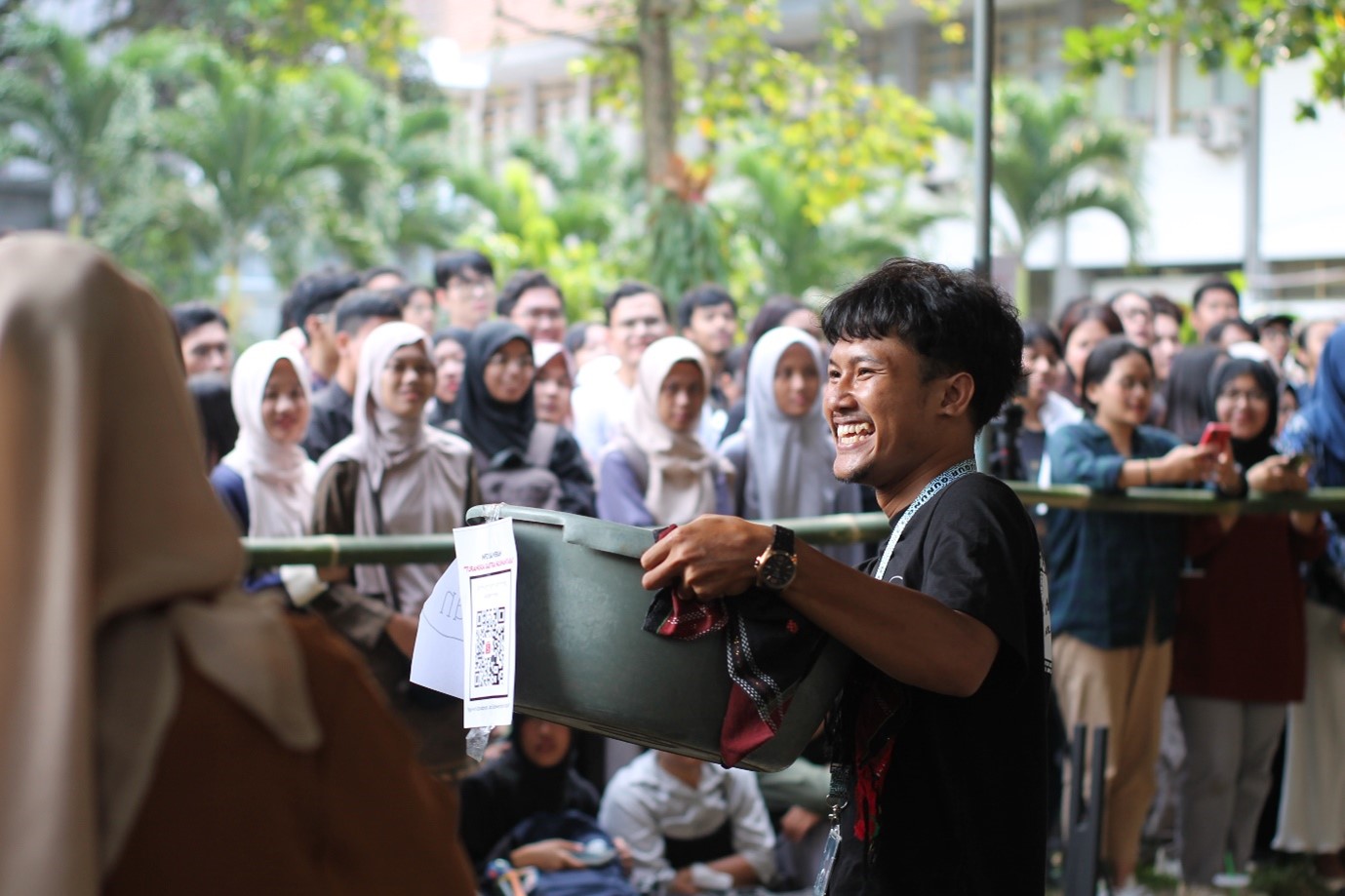
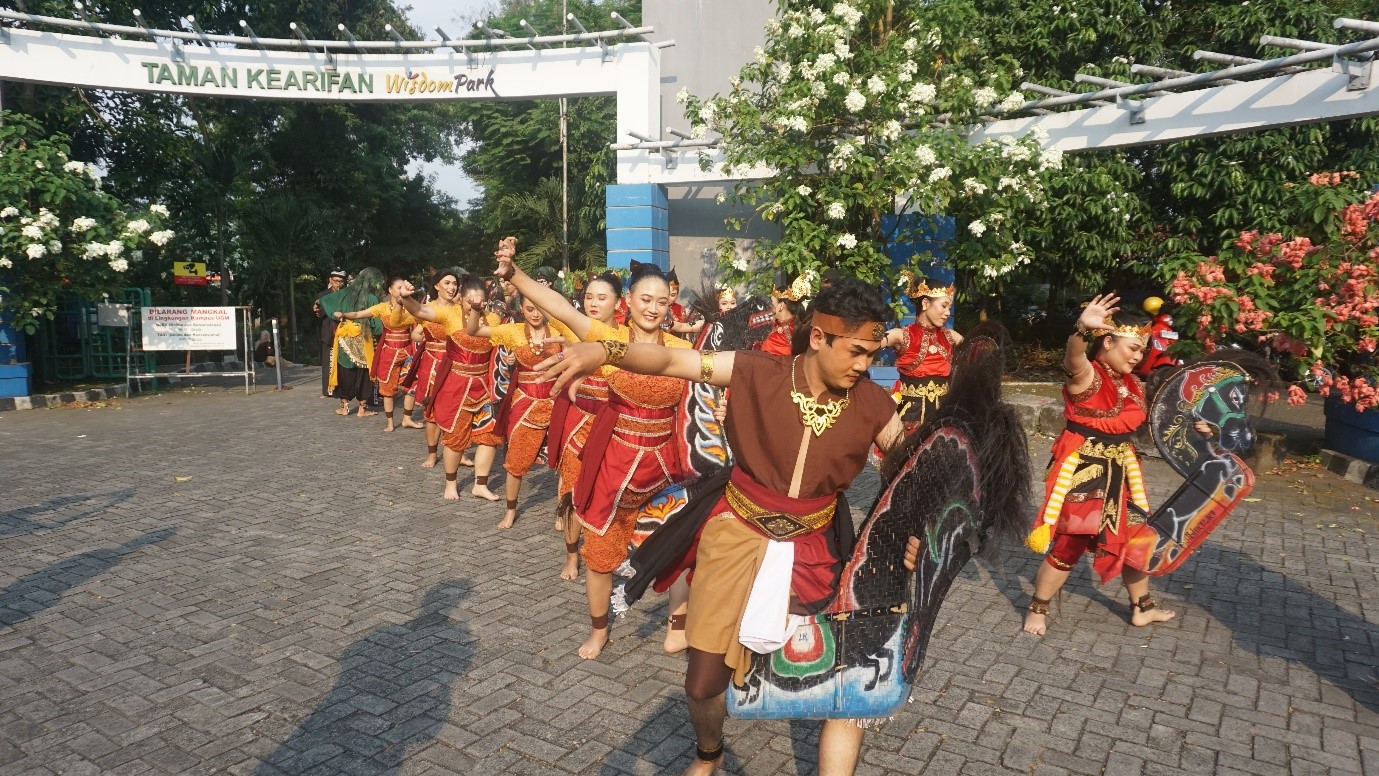
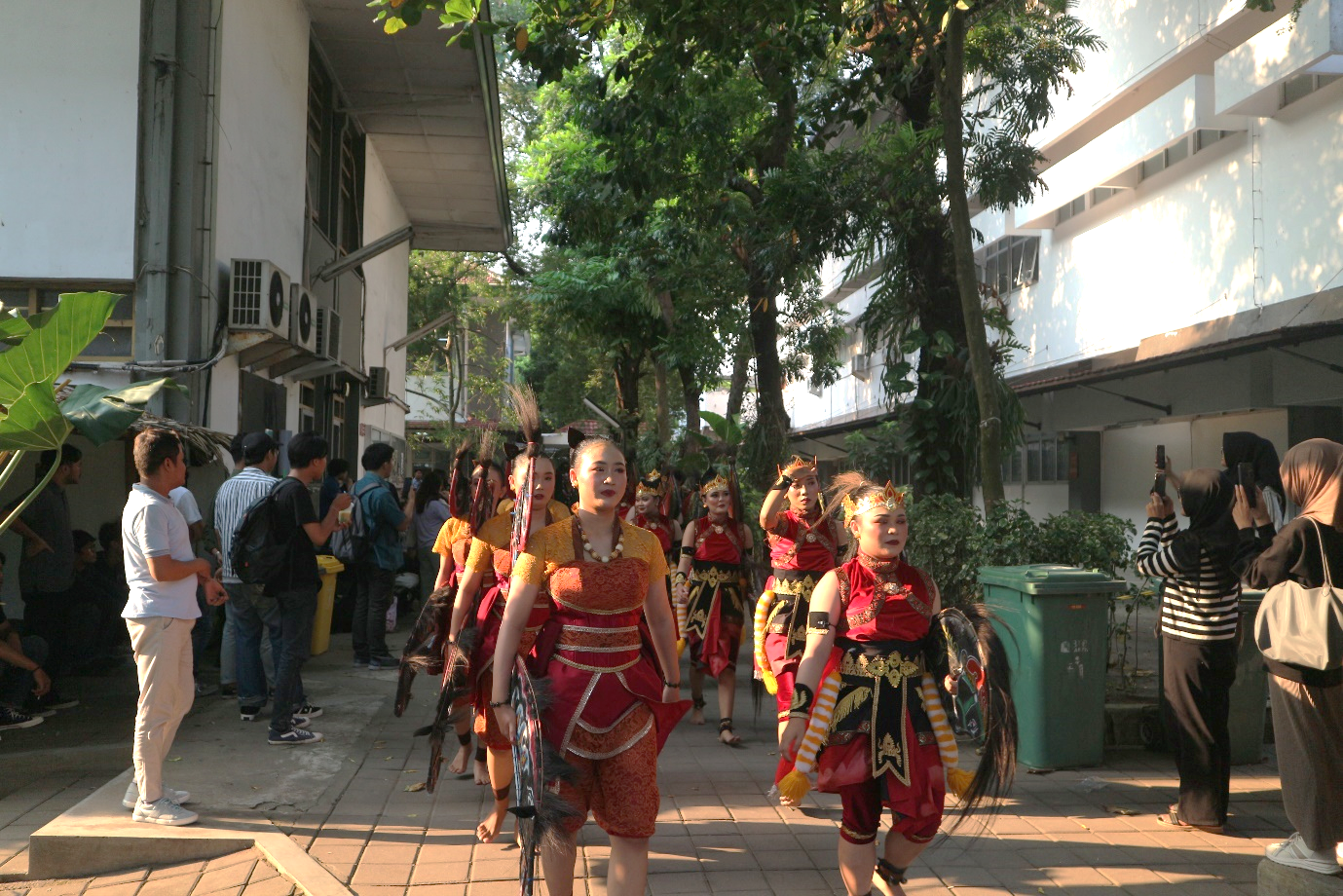
Before the performance began, at 03.00 PM WIB, the performers and staff held a jaran bath and prayer together at Wisdom Park. Afterward, a cultural procession was carried out along the route from Wisdom Park to FIB through the north door.

Kirab Budaya to the Faculty of Cultural Sciences

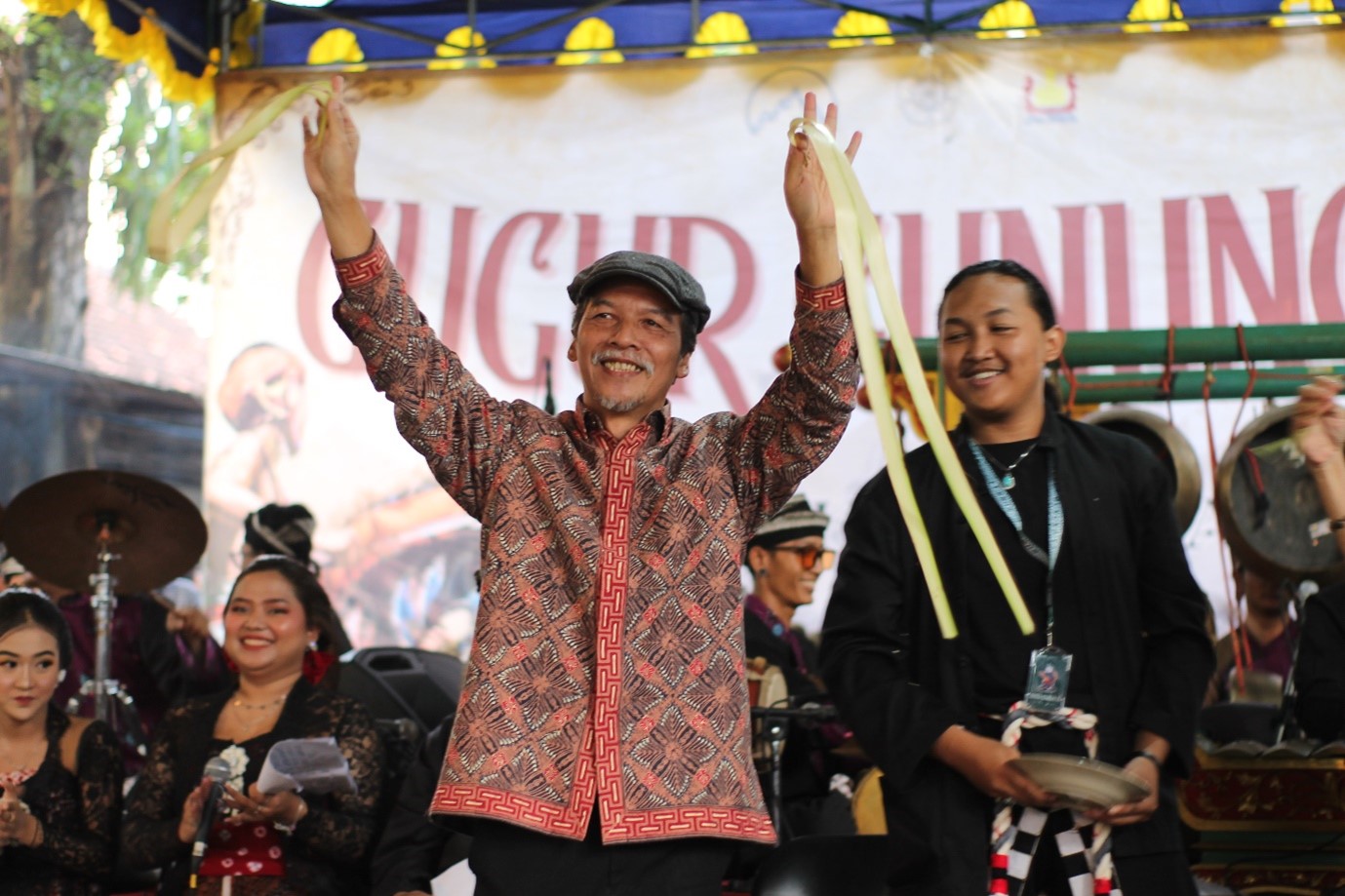
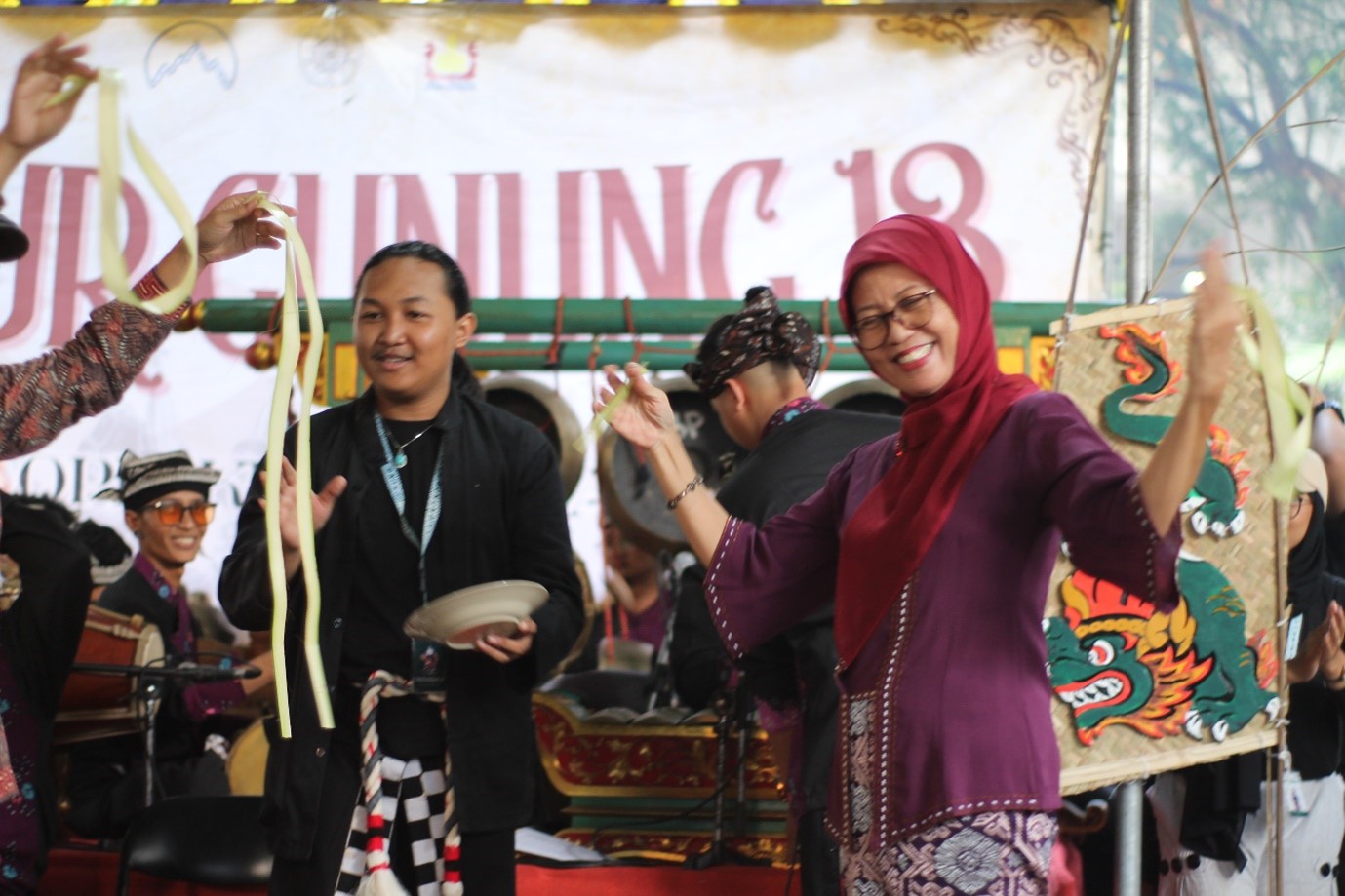
The folk-art performance was opened by R. Sukoco, an alumnus of the Javanese Language, Literature, and Culture Study Program, as the narrator. There were various speeches delivered by Idharul Huda, as the chairman of Gugur Gunung 13, Dr. Daru Winarti, Head of Javanese Language, Literature, and Culture Study Program, and Prof. Dr. Setiadi, S.Sos., M.Si, dean of the Faculty of Cultural Sciences. The event continued with the traditional ceremony of kupat luwar or luwaran kupat, as a form of releasing all things that are not good so that the event can run smoothly.

Kupat Luwar or Luwaran Kupat Procession

The next event was the presentation of the Jathilan Dance Drama which managed to amaze the entire audience. The audience seemed to really enjoy it, even dancing to the music of the Jathilan dance. The highlight of this presentation was the scene of the battle between Aji Saka and Dewata Cengkar. The thrilling battle and Aji Saka's stunning victory drew thunderous applause from all directions.

The end of the Jathilan Dance Drama performance also marked the end of the 13th Gugur Gunung. Various beautiful and fun moments have occurred during Gugur Gunung 13. We would like to thank the enthusiasm and support from the Javanese Language, Literature, and Culture Study Program, sponsors, mahadaya, and the entire academic community of the Faculty of Cultural Sciences, Universitas Gadjah Mada. May the culture of the archipelago be preserved and continue to live from time to time. See you at Gugur Gunung 14.

1…678910…20

Recent Post

  • Seputar Jawa: Banten Javanese Dialect, a Dialect that Exists at the Westernmost of Javanese Island
    March 10, 2026
  • Seputar Jawa: Forms of Javanese Proverbs
    March 9, 2026
  • Graduating in 3.5 Years: The Strategy of Three Students from the Javanese Language, Literature, and Culture Study Program at UGM in Completing Their Studies
    March 2, 2026
  • Seputar Jawa: Basa Kedhaton and Basa Bagongan, Typical Speech Varieties of the Surakarta and Yogyakarta Palaces
    March 2, 2026
  • Three Students from the Javanese Language, Literature, and Culture Study Program Successfully Graduated in 3.5 Years
    February 26, 2026

Calender

April 2026
M T W T F S S
 12345
6789101112
13141516171819
20212223242526
27282930  
« Mar    
  • Fakultas Ilmu Budaya
  • Ujian Masuk UGM
  • PPSMB
  • Alumni
  • Jurnal Humaniora
April 2026
M T W T F S S
 12345
6789101112
13141516171819
20212223242526
27282930  
« Mar    

News

  • Seputar Jawa: Banten Javanese Dialect, a Dialect that Exists at the Westernmost of Javanese Island
    March 10, 2026
  • Seputar Jawa: Forms of Javanese Proverbs
    March 9, 2026
  • Graduating in 3.5 Years: The Strategy of Three Students from the Javanese Language, Literature, and Culture Study Program at UGM in Completing Their Studies
    March 2, 2026
Universitas Gadjah Mada

Javanese Language, Literature, and Culture Program
Department of Language and Literature
Faculty of Cultural Sciences
Universitas Gadjah Mada


Sosiohumaniora St., Bulaksumur, Yogyakarta
Telp : 0274-901134 Ext. 110, Fax : 0274-550451, WhatsApp : 081211911281
Email : nusantara@ugm.ac.id

© 2025 Javanese Language, Literature, and Culture Program FIB UGM

KEBIJAKAN PRIVASI/PRIVACY POLICY