• University
  • Academic Portal
  • University Library
  • Webmail
  • Arnawa
  • UM UGM
  • English
    • Bahasa Indonesia
    • English
Universitas Gadjah Mada Javanese Language, Literature, and Culture Program
Department of Language and Literature
Faculty of Cultural Sciences
Universitas Gadjah Mada
  • Home
  • Profile
    • Vision & Mission
    • Objective
    • Excellence
    • Career Prospects
    • Teaching Staff
  • Academic
    • Curriculum Flow
    • Distribution of Courses
    • Academic Calendar
    • Course and Administration Information
    • Learning Outcomes
    • INTERNATIONAL CONFERENCES AND ACTIVITIES
  • KPPB
    • Collaboration
    • Research
      • Teaching Staff Research
      • Javanese Studies Archive – Arnawa
    • Service
      • Community Services
      • Podcast (Anarka Lālitya)
    • Scholarship
  • Student Affair
    • Student Satisfaction Survey
    • HMJ Kamastawa
    • Student’s Activity
    • Student’s Creations
    • Youtube Channel
    • Instagram
  • Alumnus
    • Alumnus Profile
  • Contact
  • Home
  • Post by
Post by :

haryountoro

Starting with an Oral Tradition Course, Ghibran Arsha Daffa’ Musaffa’ Revives the Gejog Lesung Tradition

College StudentNewsSDGSStudentStudent's ActivityStudent's Work Wednesday, 30 September 2026

Cultural preservation is not only carried out by maintaining the continuity of living traditions but also by reviving arts that are beginning to be abandoned. This effort is being undertaken by Ghibran Arsha Daffa’ Musaffa’, a 2024 student in the Javanese Language, Literature, and Culture Study Program, Faculty of Cultural Sciences, Universitas Gadjah Mada (FIB UGM). His interest in oral traditions, which began through his coursework, inspired Ghibran to take the initiative to revive the Gejog Lesung art tradition in Karang Tengah Hamlet, Bantul Regency, Special Region of Yogyakarta.

Gejog lesung is a traditional art form that uses the rhythmic sounds of a lesung as musical accompaniment. A lesung is a wooden vessel used to pound unhusked rice into rice grains. Over time, the pounding activity produced rhythmic sounds that were subsequently incorporated into artistic performances. In an online interview conducted on 22 September 2026, Ghibran explained that Gejog Lesung performances typically combine the rhythmic pounding of the lesung with traditional songs, such as Gugur Gunung and Prau Layar. In Karang Tengah Hamlet, this art form is represented by the Gejog Lesung Ngudi Lestari group.

According to Ghibran, the existence of the lesung is closely connected to the history of Karang Tengah Hamlet. A stone pounding tool known as watu lumpang was discovered in the area and is estimated to have existed since around 1632 CE. The tradition of pounding has also been practised for a long time, one aspect of which is associated with the role of the Karang Tengah community in providing food supplies for the abdi dalem who built the tomb complex of the Mataram kings in Imogiri. At that time, pounding was carried out to process unhusked rice into rice grains. Over time, stone pounding tools were replaced by wooden lesung, which were considered more flexible to use. The activity of pounding with a lesung produced interesting, rhythmic sounds. These sounds not only accompanied the work but could also boost people's enthusiasm while working and serve as entertaining spectacles. From this practice, Gejog Lesung developed into a form of cultural expression within the local community.
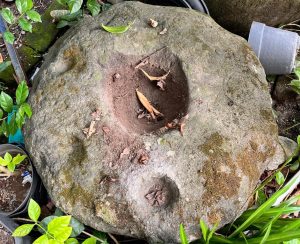
Documentation of Watu Lumpang

The Gejog Lesung Ngudi Lestari group was established in 1965, with performances involving people pounding the lesung and singers performing traditional songs. Later, in 2000, the group began incorporating dancers to visually interpret the songs being performed. For example, when performing Gugur Gunung, the dancers portray activities associated with gotong royong (mutual cooperation). The combination of the sounds of the lesung, singing, and dancing made the performances more diverse.

Throughout its history, Gejog Lesung Ngudi Lestari has frequently performed at various community events, ranging from village anniversary celebrations and community gatherings to cultural events. The group was also once invited to perform at Kanjengan, Imogiri, as part of the Kirab Siwur tradition, a procession in which a siwur is carried as part of the nguras enceh ritual series. The ritual involves cleaning the water vessels and filling them with water at the tomb complex of the Islamic Mataram kings in Imogiri.

However, over time, this artistic activity entered a state of “suspended animation” due to the absence of generational succession. This situation encouraged Ghibran to take part in efforts to preserve the art form in his area. His interest grew further when he took the Oral Tradition course in the Javanese Language, Literature, and Culture Study Program at FIB UGM. The course marked one of the starting points for Ghibran to gain a deeper understanding of the gejog lesung tradition while encouraging him to engage directly in its preservation. “Thanks to the Oral Tradition course, I was encouraged to learn more about this tradition, and it also strengthened my motivation to bring it back,” Ghibran explained.

In addition to being a university student, Ghibran is active in the youth organization Angkatan Muda-Mudi Islam (AMMI) Karang Tengah, particularly in its literacy and education division. Through his involvement in the organization, he initiated the formation of Gejog Lesung Ngudi Lestari New Generation as an effort to continue the artistic tradition that had previously ceased. This initiative involved local young people while also inviting the elders to share their knowledge and skills related to the gejog lesung art form. “We started from scratch and also invited the elders to teach us. They were happy because this art form now has successors,” he added.
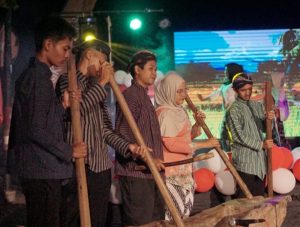
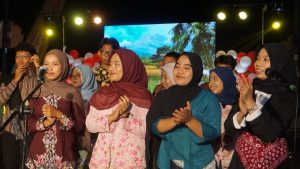
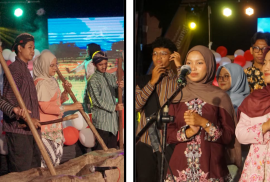
Gejog Lesung Ngudi Lestari New Generation Performance

Rebuilding the artistic group was not without challenges. In the early stages, Ghibran faced difficulties in encouraging young people to get involved. Nevertheless, the gradual approach he adopted began to foster enthusiasm among the members. “At first, it was somewhat difficult, though manageable. Some felt inferior, while others were embarrassed to take part in preserving this tradition. However, Alhamdulillah, with strong efforts, my friends became enthusiastic and even expressed plans to hold regular weekly practice sessions,” Ghibran explained.
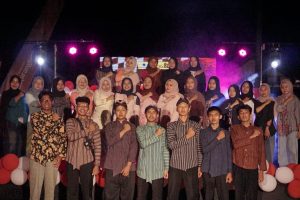
Gradually, these efforts began to bear fruit. Gejog Lesung Ngudi Lestari New Generation performed again, combining the rhythmic pounding of the lesung, singing, dancing, and ketoprak performances during the celebration of the Independence Day of the Republic of Indonesia on 17 August. The performance served as a step towards reintroducing gejog lesung to the community while fostering greater interest among young people in local arts. This effort also attracted the attention of the Bantul Regency Cultural Office and the Deputy Regent of Bantul. Going forward, the art form is planned to be featured in various cultural programmes or events.

Ghibran’s initiative demonstrates that cultural preservation can begin within one's immediate surroundings and develop through the active involvement of young people. Through the knowledge gained at university, support from youth organizations, and the involvement of elders in passing down traditional knowledge, a tradition that had previously ceased can once again find room to develop. The efforts of nguri-uri ‘preserving’ and ngurip-urip ‘reviving’ culture demonstrate that cultural preservation is not merely about safeguarding identity; it also creates opportunities for culture to bring benefits to the community itself.


Author            : Haryo Untoro
Editor             : Haryo Untoro
With Titik Renggani, Students Explore the Dynamics of Javanese Literature on Radio

College StudentSDGSStudentStudent's ActivityStudent's Work Monday, 28 September 2026

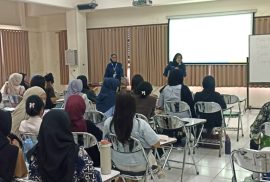
Program Studi Bahasa, Sastra, dan Budaya Jawa menyelenggarakan diskusi rutin bertajuk “Geliat Sastra Jawa dalam Media: Cipta, Karya, dan Perubahannya” pada Jumat, 25 September 2026. Pada edisi September ini, diskusi mengangkat tema “Sastra Jawa dalam Siaran Radio” dan dilaksanakan di Ruang 709 FIB UGM pada pukul 13.00–15.00 WIB.

Dalam kegiatan tersebut, Program Studi Bahasa, Sastra, dan Budaya Jawa menghadirkan Titik Renggani, penyiar senior RRI, pegiat teater, serta pelestari budaya Jawa asal Yogyakarta. Kegiatan dihadiri oleh mahasiswa Program Studi Bahasa, Sastra, dan Budaya Jawa dari berbagai angkatan serta mahasiswa exchange.

Dalam pemaparannya, Titik Renggani berbagi pengalaman mengenai keberadaan sastra dalam siaran radio, khususnya di RRI. Ia menjelaskan berbagai aspek yang berkaitan dengan proses penciptaan karya sastra, seperti radio, geguritan, majalah udara, feautere, dsb., pembacaan atau penyampaian karya sastra melalui siaran, hingga peran voice actor dalam dunia penyiaran. Selain itu, ia juga memaparkan berbagai peluang yang dapat dikembangkan bagi mereka yang memiliki ketertarikan terhadap dunia radio dan industri kreatif.

Salah satu hal yang menarik perhatian peserta adalah informasi mengenai jumlah audiens RRI Yogyakarta. Pada kesempatan tersebut, Titik Renggani menunjukkan data melalui aplikasi RRI Digital dan menyampaikan bahwa pada hari pelaksanaan kegiatan, Jumat, 25 September 2026, RRI Yogyakarta tercatat didengarkan oleh sekitar 208 ribu audiens. Menurut data yang ditunjukkannya, jumlah tersebut berada di atas jumlah audiens RRI Jakarta dan RRI Surabaya pada saat itu.

Titik Renggani juga memberikan motivasi kepada mahasiswa untuk terus mengembangkan kemampuan dan berkarya melalui bidang yang mereka tekuni. “Bila saya saja yang merupakan lulusan ekonomi mampu untuk terus berkarya dalam siaran, termasuk terkait dengan bahasa dan sastra Jawa, teman-teman juga harus mampu karena mendalami ilmu tersebut,” tuturnya.


Setelah sesi pemaparan, kegiatan dilanjutkan dengan diskusi. Suasana diskusi berlangsung serius, tetapi tetap santai sehingga mendorong peserta untuk aktif menyampaikan pertanyaan. Pertanyaan yang muncul pun beragam, mulai dari proses penciptaan karya sastra Jawa, dunia penyiaran dan RRI, hingga kiat-kiat menghasilkan karya yang menarik dan berkualitas.


Diskusi tersebut menjadi ruang bagi mahasiswa untuk melihat sastra Jawa tidak hanya sebagai objek kajian akademik, tetapi juga sebagai bagian dari praktik kreatif yang dapat hadir dalam berbagai media. Pengalaman yang dibagikan Titik Renggani menunjukkan bahwa radio dapat menjadi salah satu ruang bagi sastra Jawa untuk terus digunakan, dikembangkan, dan diperkenalkan kepada masyarakat.


Melalui diskusi ini, peserta memperoleh gambaran mengenai keberadaan dan perkembangan sastra Jawa dalam dunia radio dan penyiaran. Bagi mahasiswa, pengalaman yang dibagikan Titik Renggani juga menjadi wawasan mengenai peluang pengembangan bahasa dan sastra Jawa melalui media kreatif. Diskusi ini sekaligus menunjukkan bahwa upaya nguri-uri ‘melestarikan’ dan ngurip-urip ‘menyemarakkan’ bahasa dan sastra Jawa dapat dilakukan melalui berbagai medium agar tetap hadir dan relevan di tengah perkembangan zaman.


Penulis           : Haryo Untoro
Editor             : Haryo Untoro

Abhiseka Kramasisya 2026: Welcoming New Students through the Introduction to and Expression of Art

College StudentNewsSDGSStudentStudent's Activity Sunday, 20 September 2026

The Student Association of the Department (HMJ) of the Study Program of Javanese Language, Literature, and Culture, Faculty of Cultural Sciences, Universitas Gadjah Mada (FIB UGM), held Abhiseka Kramasisya 2026 on Saturday, 12 September 2026. This activity was a welcoming event and inauguration ceremony for new students of the Study Program of Javanese Language, Literature, and Culture. As part of the initial series of university life, the 2026 cohort of new students participated in the activity to become acquainted with the academic environment while building a sense of togetherness with the academic community of the study program.

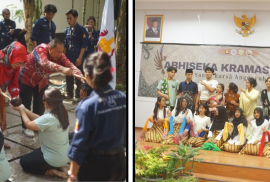
The series of Abhiseka Kramasisya 2026 featured various activities that introduced new students to university life. The activity began with an opening dance performance, followed by remarks from the hosts and the organizing committee. New students also had the opportunity to learn about campus life experiences through a talk show with alumni and a question-and-answer session with lecturers. Interactive games also helped create a more relaxed atmosphere before the series of activities continued with the siraman ceremony as one of the parts of welcoming the new students.

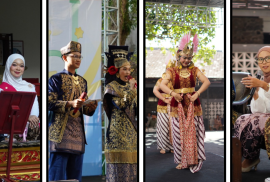
Following the welcoming activities, the event continued with an arts performance that provided a space for new students to express themselves through various forms of performance. The stage provided an opportunity for them to showcase their interests and talents while interacting with other students, the organizing committee, lecturers, and alumni in a more relaxed atmosphere. The creativity of the new students was evident in the various performances presented, one of which was a short theater performance that combined moral messages, humor about campus life, and social criticism. The students not only performed as actors but were also involved in bringing the story to life through character development and the presentation of the performance. The performance received a positive response from the audience through laughter and appreciation expressed throughout the show. More than merely entertainment, the arts performance also provided an opportunity for new students to gain the confidence to perform, create together, and get to know one another through the creative process. The interactions that developed during the performance also strengthened the sense of togetherness among the new students.

Documentation of the student arts performance

Through this series of activities, Abhiseka Kramasisya 2026 was not only a welcoming and inauguration event for new students but also part of an initial introduction to student life within the Study Program of Javanese Language, Literature, and Culture. This introduction did not stop at academic life but also demonstrated that being a student of Javanese Language, Literature, and Culture means having space to develop creativity and various potentials. The arts performance became one of the spaces for introducing this to new students, showing that Javanese language, literature, and culture are not only studied through academic activities but can also be brought to life through creativity and works. Thus, student creativity can become part of efforts to maintain, preserve, and develop Javanese culture so that it remains alive and can provide benefits to society.


Author            : Nurul Fajri Rahmani
Editor             : Haryo Untoro

Javanese Language, Literature, dan Culture Program Fast Track Student Participates in International Linguistics Conference

AlumnusCollege StudentNewsSDGSStudentStudent's Activity Monday, 14 September 2026

On Thursday–Friday, 10–11 September 2026, the Master’s Program in Linguistics and the Department of Indonesian Language and Literature, Faculty of Cultural Sciences, Universitas Gadjah Mada (FIB UGM), held the International Conference on Linguistic Studies. The conference, which carried the theme “Forms, Meanings, and Functions of Language in the Era of Digital Transformation,” took place at the Poerbatjaraka Building, FIB UGM.

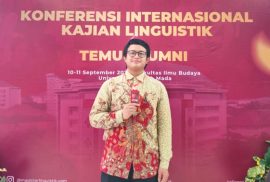
One of the participants in the conference was Haryo Untoro, an alumnus of the Javanese Language, Literature, and Culture Study Program at FIB UGM and a fast track student in the Master’s Program in Linguistics at FIB UGM. At the conference, Haryo had the opportunity to serve as a presenter, presenting his research entitled “Negotiating Cultural Identity in the Translation of Indonesian Poetry into Old Javanese in the Poetry Anthology Jenggala: Kumpulan Puisi Dwibahasa.”

The study examines the processes of cultural identity formation and negotiation in the translation of Indonesian poetry into Old Javanese. The poetry anthology Jenggala: Kumpulan Puisi Dwibahasa serves as the object of study, with Indonesian as the source language and Old Javanese as the target language. Old Javanese has a different position from Indonesian, as it is no longer used as a language of everyday communication and has no native speakers. This condition is one of the issues examined in the study, particularly in relation to how cultural identity is negotiated through translation choices into Old Javanese.

On Thursday, 10 September 2026, Haryo presented his research at the international conference. For Haryo, the conference was his first experience participating in an international conference and presenting his research at an academic forum. In an interview conducted on 18 September 2026, he admitted that he initially felt nervous but nevertheless tried to prepare and deliver his presentation as well as possible.

Participating in an international conference provides an academic experience that can encourage students to continue developing their research skills and confidence in presenting their ideas in academic forums. At the same time, such academic activities demonstrate that the study of regional languages and cultures can continue to develop through research using perspectives that are relevant to the advancement of knowledge.

Through such experiences, students are expected not only to continue developing their academic capacities but also to cultivate a commitment to preserving and developing regional cultures. These efforts can be pursued through various academic activities and research as part of nguri-uri, meaning “preserving,” and ngurip-urip, meaning “keeping alive and fostering,” cultural traditions so that they can conti


Writer            : Nurul Fajri Rahmani
Editor             : Nurul Fajri Rahmani

HMJ Kamastawa Academic Affairs Division Holds KRS and Course Registration Orientation for 2026 Mahadaya

College StudentNewsSDGSStudentStudent's ActivityStudent's Work Friday, 11 September 2026

The Student Association of the Javanese Language, Literature, and Culture Study Program (HMJ Kamastawa), through its Academic Affairs Division, held an orientation session on the Study Plan Card (Kartu Rencana Studi/KRS) and course registration for new students, or Mahadaya, of the 2026 cohort on Monday, 11 August 2026. The activity was organized to prepare new students for the KRS registration period, which took place from 11 to 14 August 2026.

During the session, the Academic Affairs Division of HMJ Kamastawa provided an overview of several matters related to students’ preparation for their university studies. The materials included an introduction to and guidance on using Simaster, an introduction to courses, and an explanation of the 2026 curriculum. In addition to academic matters, participants also received information about Abhiseka Kramasisya 2026 and a brief introduction to Temu Budaya Nusantara (TBN) XXXII, an annual event organized by the Association of Indonesian Regional Language and Literature Students (Ikatan Mahasiswa Bahasa dan Sastra Daerah Se-Indonesia/Imbasadi).

The presentation on the 2026 curriculum also featured the Head of the Javanese Language, Literature, and Culture Study Program, Dr. Sulistyowati, S.S., M.Hum. Her participation gave new students an opportunity to receive a more detailed explanation of the structure and provisions of the curriculum they will follow. This explanation was particularly relevant as there are several differences between the 2026 curriculum and the curriculum applicable to students from previous cohorts.

The orientation was conducted in a serious yet interactive atmosphere. The new students not only listened to the materials presented but also actively raised questions about KRS registration, courses, the curriculum, and academic life throughout their studies in the Javanese Language, Literature, and Culture Study Program. The interaction reflected the new students’ enthusiasm for understanding various aspects of their upcoming academic journey.

Through this activity, the 2026 cohort of Mahadaya gained a clearer understanding of the KRS registration process, course structure, and curriculum they will undertake. In addition to providing academic preparation, the activity served as one of HMJ Kamastawa’s efforts to assist new students in adapting to the university environment and the dynamics of student life.

Through its Academic Affairs Division, HMJ Kamastawa remains committed to supporting students throughout their academic and student life. This support is intended to help new students build their readiness, both academically and through their involvement in the Javanese Language, Literature, and Culture Study Program community.

Writer : Haryo Untoro
Editor  : Haryo Untoro
Getting to Know the Javanese Language, Literature, and Culture Study Program through the Study Program Introduction Session at Pionir Kampung Budaya 2026

College StudentNewsSDGSStudentStudent's ActivityStudent's Work Monday, 7 September 2026

As Pionir Kampung Budaya 2026 entered its second day, new students, or Mahadaya, had the opportunity to become more familiar with the study program that would become their academic home through the study program introduction session. The session was held on Thursday, 6 August 2026, from 10:00 to 11:30 a.m. WIB, in collaboration with the Javanese Language, Literature, and Culture Study Program, Faculty of Cultural Sciences, Universitas Gadjah Mada (FIB UGM), and the Student Association of the Javanese Language, Literature, and Culture Study Program (HMJ Kamastawa).

The session was led directly by the Head of the Javanese Language, Literature, and Culture Study Program, Dr. Sulistyowati, S.S., M.Hum. During the session, Mahadaya were introduced to various aspects of academic life within the study program, including the study program and faculty members, areas of specialization, facilities, and academic services. The three areas of specialization introduced were linguistics, philology, and literature. Students also received information about academic services, including study program administration and the Javanese Language, Literature, and Culture Study Program’s social media platforms.

The introduction also covered information about students and their academic journeys within the Javanese Language, Literature, and Culture Study Program. Mahadaya were introduced to several outstanding students, students participating in the fast-track program, and alumni who have made contributions in various fields. An overview of the 2026 curriculum, as the study program’s new curriculum, was also presented to provide students with an initial understanding of the learning process they would undertake during their studies.

The session took place in a serious yet relaxed atmosphere and was delivered interactively through dialogue between lecturers and students. Interaction was also encouraged through a quiz for Mahadaya based on the material presented earlier. Mahadaya who answered the questions correctly received small gifts as keepsakes.

A video introducing Nurmalia Habibah, S.S., M.A., one of the lecturers currently pursuing her studies abroad.

Presentation of a gift to a Mahadaya who successfully answered the quiz

One of the highlights of the session was the screening of introduction videos featuring several lecturers from the Javanese Language, Literature, and Culture Study Program who are currently pursuing their studies abroad, as well as videos featuring students and alumni. The videos provided an overview of academic experiences, student life, and the contributions of alumni as part of the Javanese Language, Literature, and Culture Study Program community.

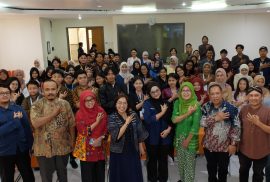
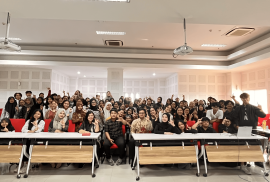
The session concluded with a group photo, marking the first meeting between the 2026 Mahadaya and the academic community of the Javanese Language, Literature, and Culture Study Program. Through this activity, the new students not only gained information about the study program but also received an initial overview of the learning environment, areas of study, and various opportunities for personal and academic development available throughout their studies.

The study program introduction session also contributed to the achievement of the Sustainable Development Goals (SDGs), particularly SDG 4 (Quality Education) through the introduction of the academic environment and learning process to new students, and SDG 17 (Partnerships for the Goals) through collaboration between the study program and student organization.

Welcome to the 2026 cohort of Mahadaya at the Javanese Language, Literature, and Culture Study Program. Let us learn, preserve, and develop Javanese culture together as part of the nation’s cultural heritage and identity, while contributing to society.


Writer : Haryo Untoro
Editor : Haryo Untoro
Javanese Language, Literature, and Culture Program UGM Launches Community Engagement Program with First Meeting at SMA Negeri 1 Depok

AlumnusCollege StudentGeguritanNewsSDGSStudentStudent's ActivityStudent's Work Friday, 4 September 2026

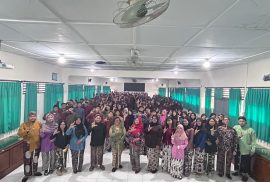
On Thursday, 3 September 2026, the Department of Javanese Language, Literature, and Culture, Faculty of Cultural Sciences, Universitas Gadjah Mada (FIB UGM), conducted a visit and held the first meeting of its community engagement program at SMA Negeri 1 Depok, Sleman. The activity marked the beginning of a collaboration between the Department of Javanese Language, Literature, and Culture at FIB UGM and SMA Negeri 1 Depok, Sleman, through the Pendidikan Khas Kejogjaan (PKJ) program.

The PKJ program is designed to introduce students to various aspects of Javanese language and culture, particularly the Javanese script, unggah-ungguh (Javanese etiquette and social conduct), Javanese character values, and cultural knowledge that can be applied in everyday life. The program provides a learning space that brings together academic knowledge and direct cultural experiences.

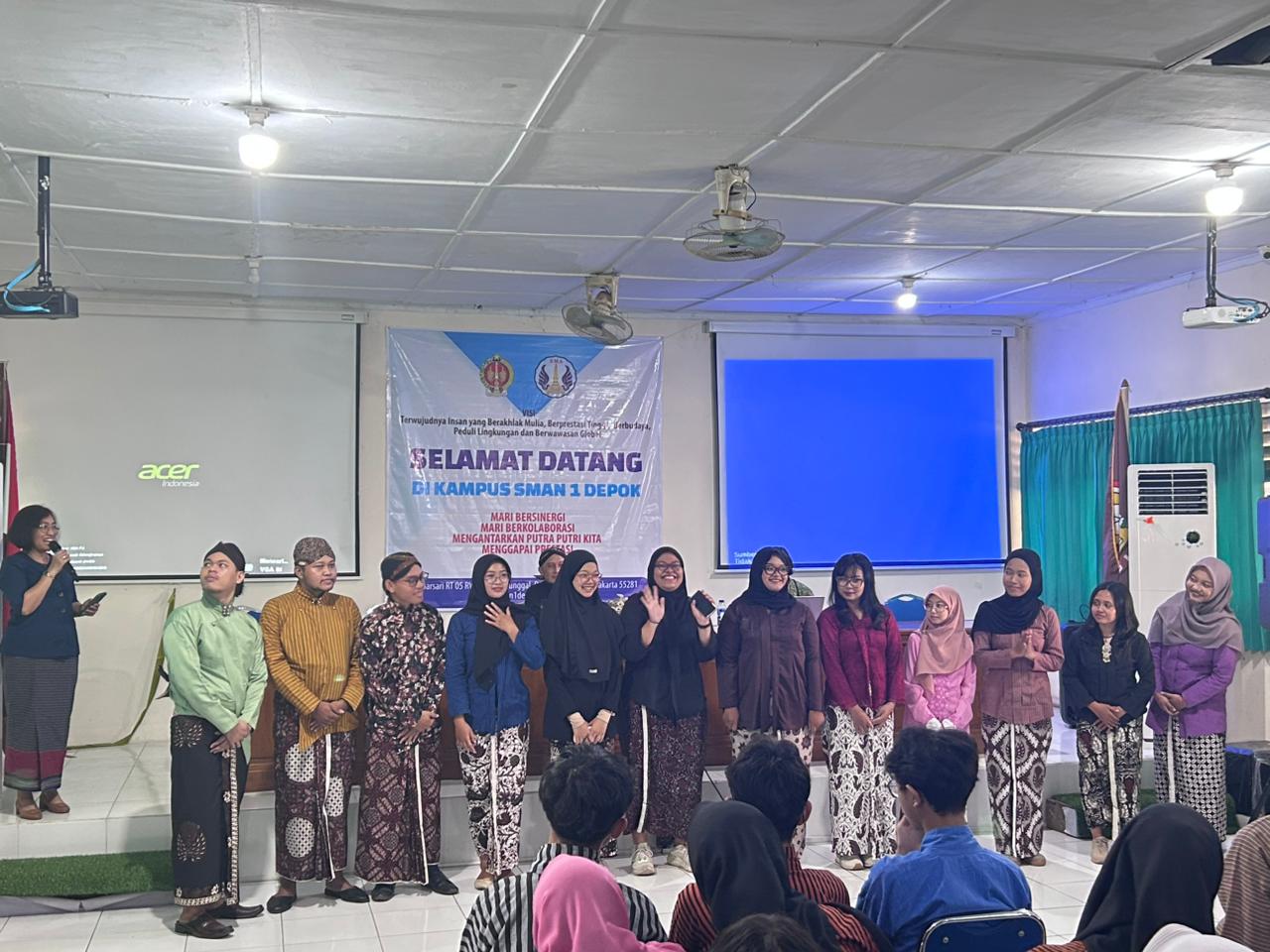
The first meeting began with opening remarks by the Head of the Department of Javanese Language, Literature, and Culture, Dr. Sulistyowati, S.S., M.Hum. The session was followed by an introduction to the team that will serve as facilitators throughout the program. The facilitator team consists of alumni and students of the Department of Javanese Language, Literature, and Culture:

  1. Faradilla Putri Margaretha
  2. Endar Sasmito Aji
  3. Fauzan Adi Fadlurahman
  4. Anggit Galuh Ajar Amanah
  5. Wening Hidayati
  6. Pesdhi Sekar Hayumay
  7. Maysa Putri Fatihah
  8. Muhamad Rafi Nur Fauzy
  9. Pingky Putri Khairani
  10. Meifira Arini Pitaloka
  11. Lakshita Pradnya Dayinta
  12. Dian Patmisari

Introduction of the Facilitator Team

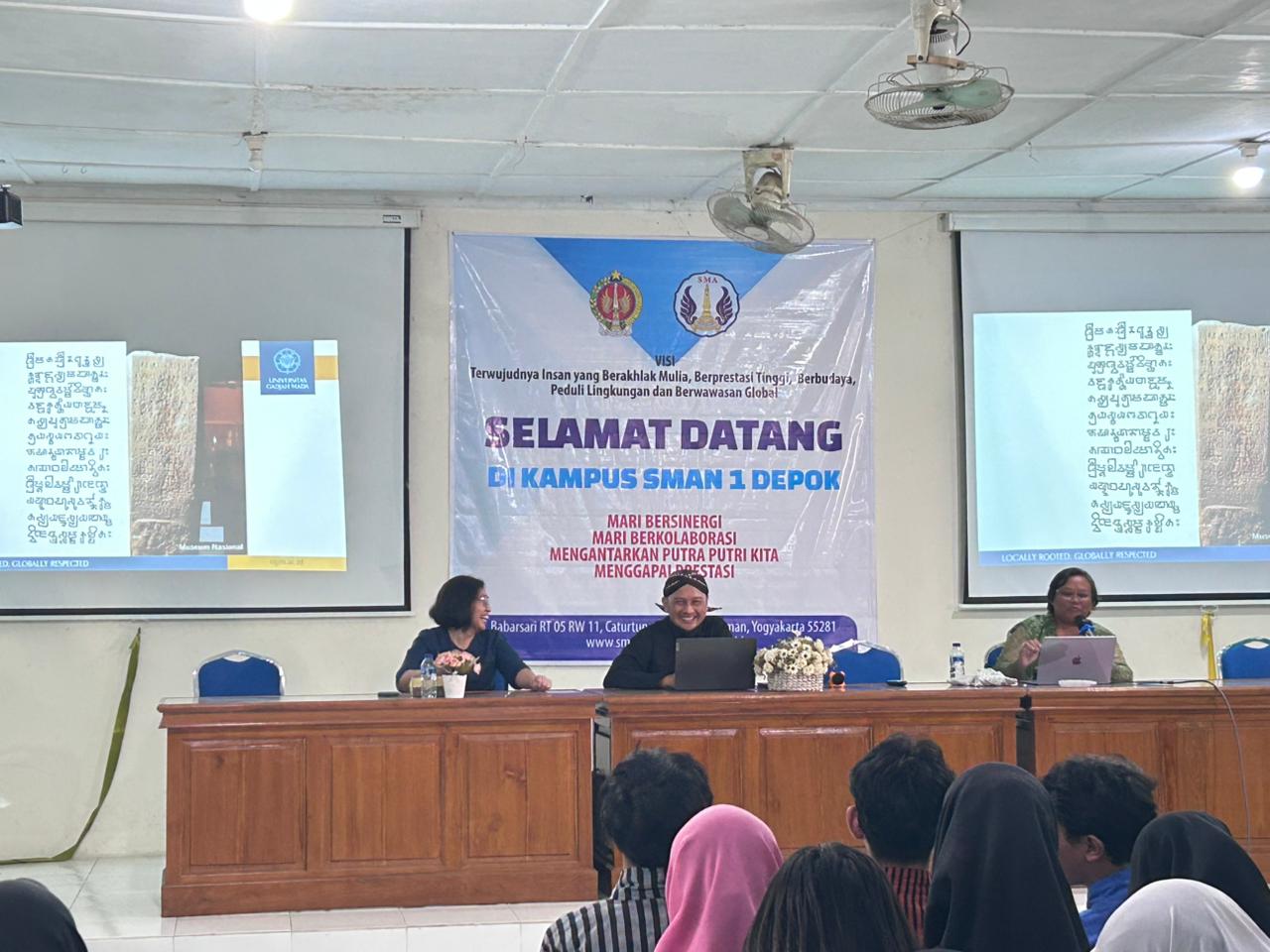
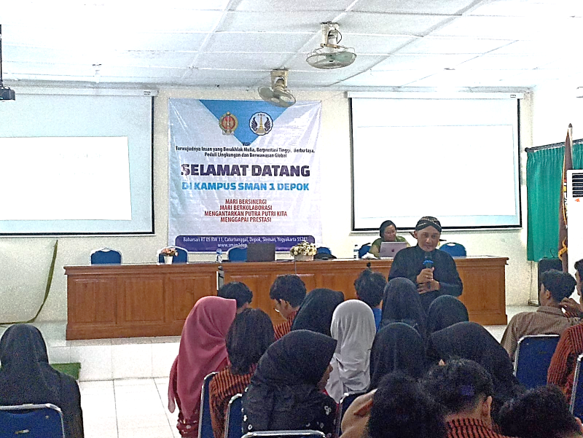
In addition to introducing the facilitator team, the first meeting featured sessions delivered by two lecturers from the Department of Javanese Language, Literature, and Culture. Dr. Yosephin Apriastuti Rahayu, S.S., M.Hum., presented an introduction to Nusantara scripts, including the Javanese script. Meanwhile, Dr. Bima Slamet Raharja, S.S., M.A., discussed the use of Javanese language and culture in everyday life. The sessions were delivered interactively, allowing students to explore aspects of Javanese culture through learning activities closely connected to their everyday experiences.

Presentation of the Materials by Dr. Yosephin Apriastuti Rahayu, S.S., M.Hum., and Dr. R. Bima Slamet Raharja, S.S., M.A.

The first meeting marked the beginning of a series of seven scheduled sessions. Following the introductory meeting, the second through seventh sessions will be facilitated by the team through learning activities and practical sessions with Grade 10 students of SMA Negeri 1 Depok.

The program also contributes to the Sustainable Development Goals (SDGs), particularly SDG 4 (Quality Education) through Javanese language and cultural learning in a school setting; SDG 10 (Reduced Inequalities) through expanding access to cultural knowledge and learning opportunities; and SDG 11 (Sustainable Cities and Communities) through efforts to preserve and pass on Javanese culture to younger generations. In addition, the collaboration between the Department of Javanese Language, Literature, and Culture at FIB UGM and SMA Negeri 1 Depok supports SDG 17 (Partnerships for the Goals) by strengthening collaboration between higher education institutions and schools.

Through this series of activities, the community engagement program serves not only as an application of academic knowledge but also as a collaborative space for introducing and strengthening young people's understanding of Javanese language and culture.


Writer: Haryo Untoro
Editor: Haryo Untoro

UGM Female Student of Javanese Language, Literature, and Culture Documents Temanggung Language and Javanese Script through KKN-PPM in Bansari Village

College StudentNewsSDGSStudentStudent's ActivityStudent's Work Wednesday, 19 August 2026

Eka Nur Cahyani, a student of the Javanese Language, Literature, and Culture (BSBJ) Study Program at the Faculty of Cultural Sciences (FIB), Universitas Gadjah Mada (UGM), implemented a regional language and script preservation program during the UGM Community Empowerment Student Study Service (KKN-PPM) for the second period of 2026. Eka, a 2023 cohort student, was part of the KKN unit "Waksudha Bansari 2026" (code JT123), which carried out service in Bansari Village, Temanggung Regency, from June 20 to August 8, 2026.

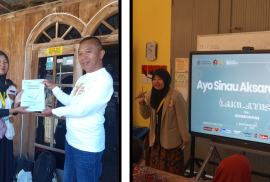
During her time in Bansari Village, Eka conducted two programs related to her field of study: Nyinau Basa Temanggungan (Learning Temanggung Language) and Ayo Sinau Aksara Jawa (Let’s Learn Javanese Script). The first program focused on documenting the Temanggung language (Bansari dialect), while the second was aimed at introducing Javanese script to students at SDN (Public Elementary School) Bansari, specifically in Pringapus hamlet, Bansari Village.

Through the Nyinau Basa Temanggungan program, Eka compiled a pocket dictionary of the Temanggung language (Bansari dialect). Vocabulary data was collected through interviews with village officials and community members who are native speakers, utilizing the Swadesh 200-word list. The Swadesh 200-word list is a basic vocabulary list compiled by linguist Morris Swadesh in 1952. This list contains approximately 200 universal concepts believed to be possessed by nearly all languages; they are relatively stable, rarely borrowed, and tend to persist over long periods (Swadesh, 1952). The data was then analyzed and organized into entries for a pocketbook, complete with word categories and Indonesian equivalents. Uniquely, the compilation of this dictionary also served as an application of knowledge acquired from her Lexicography and Interdisciplinary Linguistics courses. The pocketbook is expected to document the Bansari dialect of the Temanggung language still used by the community while acting as a medium to introduce local language and culture to support the development of Bansari Village as a tourist destination.

Furthermore, the second program, Ayo Sinau Aksara Jawa, was carried out in collaboration with students at SDN Bansari. The activity began with coordination with teachers to determine the state of Javanese script instruction at the school. Subsequently, material was delivered through flashcards, educational games, reading and writing practice, and an introduction to the rules of Javanese script writing.

Enthusiasm of SDN Bansari Students in Participating in the Ayo Nyinau Aksara Jawa Program

In addition to reading and writing, Eka also introduced the iluminasi rerenggan (illuminated ornamentation) found in Javanese manuscripts to the students. Illumination refers to the brightening or heightening of a manuscript page's impression through writing techniques, color patterns, decorative framing of text, rubrics, and calligraphy (Behrend, 1996), including wedana, rerenggan, and stanza markers (Saktimulya, 2015). After being introduced to rerenggan as manuscript decoration, the students were invited to decorate their names written in Javanese script. Through this activity, the students not only practiced writing the script but also became familiar with elements of art and aesthetics in the Javanese manuscript tradition.

In its implementation, both programs naturally faced a number of challenges. In the Nyinau Basa Temanggungan program, for example, differences in vocabulary usage were found between generations. This condition required Eka to verify data with multiple sources to ensure accuracy. Meanwhile, in the Ayo Sinau Aksara Jawa program, challenges arose from the diverse abilities of the students and the perception that Javanese script is a difficult subject to learn.

Nevertheless, both programs received a positive response from the community and the school. In compiling the dictionary, the community and village officials provided information on vocabulary still used in daily conversation. At school, students participated in the Javanese script program with enthusiasm, both through games and script-writing practice. According to Eka, the use of interactive learning media is one way to increase students' interest and ability in reading and writing Javanese script.


The KKN-PPM implementation produced two main outputs. The Nyinau Basa Temanggungan program resulted in a printed and digital pocket dictionary of the Temanggung language (Bansari dialect), which can be accessed via the following link: Google Drive Link.

Meanwhile, the Ayo Sinau Aksara Jawa program produced a number of student works in the form of rerenggan illuminations on Javanese script writing. Both outputs are part of an effort to document local language while introducing Javanese script and traditional arts to the younger generation.

Some examples of work by SDN Bansari students

KKN-PPM programs like the one conducted by Eka serve as a tangible form of introducing, preserving, and "grounding" the wealth of regional culture, specifically Javanese language and culture, through direct involvement in the community. By compiling the pocket dictionary and providing Javanese script instruction to elementary students, the knowledge gained during her studies was applied while providing benefits to the community. These activities also align with the Sustainable Development Goals (SDGs): Point 4 on quality education and Point 17 on partnerships for the goals, through collaboration between students, the community, village government, and schools.


Author            : Eka Nur Cahyani & Haryo Untoro
Editor             : Haryo Untoro


References

Behrend, T. E. (1996). Textual Gateways: The Javanese Manuscript Tradition. Dalam A. Kumar & J. H. McGlynn (Eds.), Illuminations: The Writing Traditions of Indonesia: Featuring Manuscripts from the National Library of Indonesia (pp. 161–200). The Lontar Foundation; New York & Tokyo: Weatherhill, Inc. https://books.google.com/books?id=-n5iAAAAMAAJ 

Swadesh, M. (1952). Lexico-statistic dating of prehistoric ethnic contacts. Proceedings of the American Philosophical Society, 96(4), 452–463.

Saktimulya, S. R. (2015). Naskah-Naskah Skriptorium Pakualaman Periode Paku Alam II (1830–1858): Kajian Kodikologi, Filologi, dan Hermeneutika. École française d'Extrême-Orient.


Contributions of Students and Alumni of the Javanese Language, Literature, and Culture Study Program to Pionir Kampung Budaya 2026

AlumnusCollege StudentNewsSDGSStudentStudent's Activity Friday, 7 August 2026

Questions such as “Nek kuliah neng Sastra Jawa ’ki arep dadi dukun ’pa?” (If you study Javanese Literature, do you want to become a traditional healer?) may still be encountered as a common perception of the field of Javanese language, literature, and culture. In reality, opportunities for students to develop themselves in these fields can take many forms, including performing arts, event hosting, and cultural activities.

This was among the things reflected in the implementation of Pionir Kampung Budaya 2026. A number of students from the Javanese Language, Literature, and Culture Study Program were involved in the series of activities in various roles. Their involvement extended beyond academic activities, encompassing participation in student activity units as well as experience in the arts and event hosting.

One of the groups involved was Gamelan Sastra Nusantara (Gamasutra), a student activity unit under the Student Association of the Javanese Language, Literature, and Culture Study Program (HMJ Kamastawa). Gamasutra performed gamelan music during the morning activities while welcoming the new students, or Mahadaya, of the 2026 cohort. The group also accompanied the opening series of events through the inauguration of Pionir Kampung Budaya 2026.

In addition to Gamasutra, Ratnaraya, a student organization dedicated to traditional dance, also took part in the event. Students from Ratnaraya performed Tari Golek Ayun-Ayun Jugag, a traditional dance from Yogyakarta that portrays a young woman entering adulthood and searching for her identity. The involvement of both student organizations highlights the activities of students in the Javanese Language, Literature, and Culture Study Program in the fields of art and culture.

Student involvement was also evident in event hosting. Two students from the Javanese Language, Literature, and Culture Study Program, Ghibran Arsha Daffa’ Musaffa’ and Ananda Choirul Nur Alalia, served as master of ceremonies (MCs) during Pionir Kampung Budaya 2026. Ghibran is a member of the 2024 cohort, while Ananda is from the 2025 cohort. Both have previous experience as event hosts on various occasions.

The event also involved alumni of the Javanese Language, Literature, and Culture Study Program. Nurma Aisyah, S.S., an alumna of the study program who currently works as an event host and journalist at Tribunnews, participated as one of the speakers. Her involvement represents another example of how graduates of the Javanese Language, Literature, and Culture Study Program have pursued professional careers related to communication and media.

These various roles demonstrate that students from the Javanese Language, Literature, and Culture Study Program can contribute to campus activities through a wide range of fields. Knowledge of language, literature, and culture can go hand in hand with the development of other skills, such as performing arts, public communication, leadership, and event hosting.

Participation in activities such as Pionir Kampung Budaya 2026 can also provide students with opportunities to gain experience beyond the classroom. Such experiences can become part of their learning process while helping them develop skills needed in both academic life and the professional world.


In this regard, Mahadaya are encouraged to continue learning and developing themselves through both academic studies and various activities on and off campus. These experiences can serve as valuable foundations for developing their knowledge, skills, and abilities in accordance with their areas of interest.


Author            : Haryo Untoro
Editor             : Haryo Untoro
Gamasutra Enlivens Pionir Kampung Budaya 2026

College StudentNewsSDGSStudentStudent's ActivityStudent's Work Thursday, 6 August 2026

The Faculty of Cultural Sciences (FIB), Universitas Gadjah Mada (UGM), held Pionir Kampung Budaya on Wednesday–Thursday, 5–6 August 2026, as part of the Pionir Gadjah Mada series. The event served as an introduction to the faculty environment for the 2026 cohort of new students, known as Mahadaya, while also introducing them to various academic and student activities available during their studies at FIB UGM.

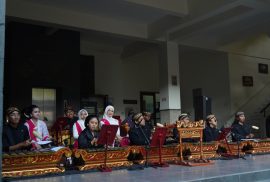
One of the activities featured during the opening of Pionir Kampung Budaya 2026 was a performance by Gamelan Sastra Nusantara (Gamasutra). Several students from the Department of Javanese Language, Literature, and Culture who are members of Gamasutra participated in the event through a traditional Javanese gamelan performance. Gamasutra is a student organization that provides a space for students interested in Javanese gamelan music to learn, practice, and develop their skills in the traditional performing art.

Gamasutra's gamelan performance accompanied the opening of Pionir Kampung Budaya 2026 and welcomed the new Mahadaya students. The performance also accompanied the arrival of the Chair of Pionir Kampung Budaya 2026, the 2026 President of the Student Executive Board (LEM), the Dean of FIB UGM and faculty leadership, as well as heads of departments across FIB UGM. Gamasutra's presence formed part of the event's activities introducing new students to faculty life through artistic and cultural experiences.

Gamasutra's performance continued during the official inauguration of Pionir Kampung Budaya 2026. The students' involvement in the ceremony demonstrated that the new student orientation program extends beyond introducing the academic environment, while also providing opportunities for students to take part directly in artistic and cultural activities within the faculty.

For Gamasutra, participation in Pionir Kampung Budaya provided an opportunity for its members to put their gamelan skills into practice while introducing the art of gamelan to the new students. For the 2026 Mahadaya cohort, the performance became part of their initial experience of student life at FIB UGM, including an introduction to various opportunities for developing their interests and participating in artistic activities during their studies.

The event also forms part of FIB UGM's efforts to provide students with opportunities to develop their interests, skills, and experience in the arts. As an academic environment dedicated to the study of language, literature, and culture, FIB UGM recognizes artistic and cultural activities as an important complement to students' educational experiences beyond the classroom. This effort is aligned with the Sustainable Development Goals (SDGs), particularly SDG 4 (Quality Education) through the development of students' experiences and potential, and SDG 17 (Partnerships for the Goals) through collaboration in organizing activities within the faculty.

Through Pionir Kampung Budaya 2026, Gamasutra's participation brought together the introduction of new students to university life with artistic practice carried out by FIB UGM students. For the 2026 Mahadaya cohort, the experience marked part of their first steps in becoming familiar with the faculty environment, including opportunities to learn, create, and participate in student life at FIB UGM.


Author            : Haryo Untoro
Editor             : Haryo Untoro
123…23

Recent Post

  • Starting with an Oral Tradition Course, Ghibran Arsha Daffa’ Musaffa’ Revives the Gejog Lesung Tradition
    September 30, 2026
  • With Titik Renggani, Students Explore the Dynamics of Javanese Literature on Radio
    September 28, 2026
  • Abhiseka Kramasisya 2026: Welcoming New Students through the Introduction to and Expression of Art
    September 20, 2026
  • Javanese Language, Literature, dan Culture Program Fast Track Student Participates in International Linguistics Conference
    September 14, 2026
  • HMJ Kamastawa Academic Affairs Division Holds KRS and Course Registration Orientation for 2026 Mahadaya
    September 11, 2026

Calender

October 2026
M T W T F S S
 1234
567891011
12131415161718
19202122232425
262728293031  
« Sep    
  • Fakultas Ilmu Budaya
  • Ujian Masuk UGM
  • PPSMB
  • Alumni
  • Jurnal Humaniora
October 2026
M T W T F S S
 1234
567891011
12131415161718
19202122232425
262728293031  
« Sep    

News

  • Starting with an Oral Tradition Course, Ghibran Arsha Daffa’ Musaffa’ Revives the Gejog Lesung Tradition
    September 30, 2026
  • With Titik Renggani, Students Explore the Dynamics of Javanese Literature on Radio
    September 28, 2026
  • Abhiseka Kramasisya 2026: Welcoming New Students through the Introduction to and Expression of Art
    September 20, 2026
Universitas Gadjah Mada

Javanese Language, Literature, and Culture Program
Department of Language and Literature
Faculty of Cultural Sciences
Universitas Gadjah Mada


Sosiohumaniora St., Bulaksumur, Yogyakarta
Telp : 0274-901134 Ext. 110, Fax : 0274-550451, WhatsApp : 08135932426
Email : nusantara@ugm.ac.id

© 2025 Javanese Language, Literature, and Culture Program FIB UGM

KEBIJAKAN PRIVASI/PRIVACY POLICY