• University
  • Academic Portal
  • University Library
  • Webmail
  • Arnawa
  • UM UGM
  • English
    • Bahasa Indonesia
    • English
Universitas Gadjah Mada Javanese Language, Literature, and Culture Program
Department of Language and Literature
Faculty of Cultural Sciences
Universitas Gadjah Mada
  • Home
  • Profile
    • Vision & Mission
    • Objective
    • Excellence
    • Career Prospects
    • Teaching Staff
  • Academic
    • Curriculum Flow
    • Courses Description
    • Distribution of Courses
    • Academic Calendar
    • COURSE AND ADMINISTRATION INFORMATION
    • Learning Outcomes
    • INTERNATIONAL CONFERENCES AND ACTIVITIES
  • KPPB
    • Collaboration
    • Research
      • Teaching Staff Research
      • Javanese Studies Archive – Arnawa
    • Service
      • Community Services
      • Podcast (Anarka Lālitya)
    • Scholarship
  • Student Affair
    • Student Satisfaction Survey
    • HMJ Kamastawa
    • Student’s Activity
    • Student’s Creations
    • Youtube Channel
    • Instagram
  • Alumnus
    • Alumnus Profile
  • Contact
  • Home
  • News
  • Earned a Doctorate After Examining the Pakualaman Scriptorium

Earned a Doctorate After Examining the Pakualaman Scriptorium

  • News
  • 14 August 2023, 15.20
  • Oleh: haryountoro
  • 0

Literature and art at the time of Paku Alam II developed quite rapidly. Paku Alam II is stated as the determinant and setter of the outline of learning literature and art in Pakualaman. The specialty of the scriptorium of Paku Alam II is the manuscript accompanied by many illuminations.

Illumination is the enlightenment or enhancement of the impression of a manuscript page through writing techniques, patterns of coloring, decorative ornaments, or other features. Included in this category are punctuation ornaments, text frames, rubrics, and calligraphic images.

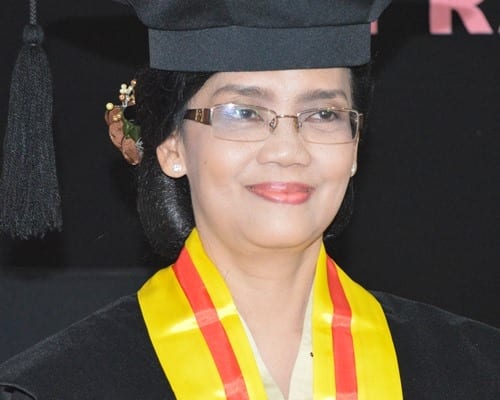
“The illumination of the PA II scriptorium manuscript is in the form of epadan, rubrication, rerenggan, wedana gapura renggan and wedana renggan,” said Sri Ratna Saktimulya, at the open examination of the doctoral program in Humanities (Literature), Monday (6/7) at R. Multimedia Lt. II Building R.M. Margono Djojohadikusumo, Faculty of Cultural Sciences (FIB) UGM.

In the exam, Ratna defended her dissertation entitled Pakualaman Scriptorium Manuscripts of Paku Alam II Period (1830-1858): Study of Codicology, Philology, and Hermeneutics.

Unfortunately, some of these manuscripts do not include data on the date of creation and the name of the author, so they cannot place the text in context. In addition, the work system for creating Paku Alam II scriptorium manuscripts is not yet known, so no description of the script creation process is obtained.

“The purpose of this research is to show a description of the manuscript and how to identify the date of writing based on the style of the letters, the similarity of illumination, and the choice of paper,” said the lecturer in Archipelago Literature, FIB UGM.

Through codicology, philology, and hermeneutics approaches, the date of creation of the manuscript and the names of the scribes can be estimated. Apart from that, it is also known that a manuscript was created, among others, inspired by the situation and conditions surrounding the Pakualaman Temple, and more broadly Yogyakarta.

Ratna Saktimulya explained the results of her research, namely that manuscripts with no dates can be estimated at the time of their creation by taking into account codicological aspects. Periodization of the scriptorium was also realized thanks to the study of codicology and philology.

“The Pakualaman scriptorium texts also direct the reader to the figure of Paku Alam who is wise because he always learns lessons from all events, formulated in piwulang sestradi, inserted between stories and marked with illumination,” he explained (UGM Public Relations/Satria)


Tags: FIB UGM JAVANESE LANGUAGE LITERATURE AND CULTURE MANUSCRIPT PAKUALAMAN SDGS 4: QUALITY EDUCATION SDGS POIN 4

Recent Post

  • Javanese Script Font Socialization Encourages Digital Javanese Script Use
    April 23, 2026
  • Seputar Jawa: The Digital Javanese Script Keyboard System
    April 13, 2026
  • First Gathering of the Sahacitta Cabinet of the Kamastawa Student Association: A Means of Introduction and Strengthening Togetherness
    April 6, 2026
  • Ghibran Arsha Daffa’ Musaffa’ Named Outstanding Student of the Year in 2026
    March 12, 2026
  • Seputar Jawa: Banten Javanese Dialect, a Dialect that Exists at the Westernmost of Javanese Island
    March 10, 2026

Calender

April 2026
M T W T F S S
 12345
6789101112
13141516171819
20212223242526
27282930  
« Mar    
  • Fakultas Ilmu Budaya
  • Ujian Masuk UGM
  • PPSMB
  • Alumni
  • Jurnal Humaniora
April 2026
M T W T F S S
 12345
6789101112
13141516171819
20212223242526
27282930  
« Mar    

News

  • Javanese Script Font Socialization Encourages Digital Javanese Script Use
    April 23, 2026
  • Seputar Jawa: The Digital Javanese Script Keyboard System
    April 13, 2026
  • First Gathering of the Sahacitta Cabinet of the Kamastawa Student Association: A Means of Introduction and Strengthening Togetherness
    April 6, 2026
Universitas Gadjah Mada

Javanese Language, Literature, and Culture Program
Department of Language and Literature
Faculty of Cultural Sciences
Universitas Gadjah Mada


Sosiohumaniora St., Bulaksumur, Yogyakarta
Telp : 0274-901134 Ext. 110, Fax : 0274-550451, WhatsApp : 081211911281
Email : nusantara@ugm.ac.id

© 2025 Javanese Language, Literature, and Culture Program FIB UGM

KEBIJAKAN PRIVASI/PRIVACY POLICY