KAGAMA UGM, in collaboration with KAGAMA Batik and the Javanese Language, Literature, and Culture Study Program at the Faculty of Cultural Sciences (FIB), Universitas Gadjah Mada (UGM), held the 2026 National Batik Day Seminar on Saturday, October 3, 2026. Taking place at the Soegondo Auditorium, FIB UGM, the seminar carried the theme “Preserving Heritage, Nurturing the Future: Batik as a Cultural Identity and a Space for Innovation.” The event was organized to commemorate National Batik Day, which falls on October 2, 2026.
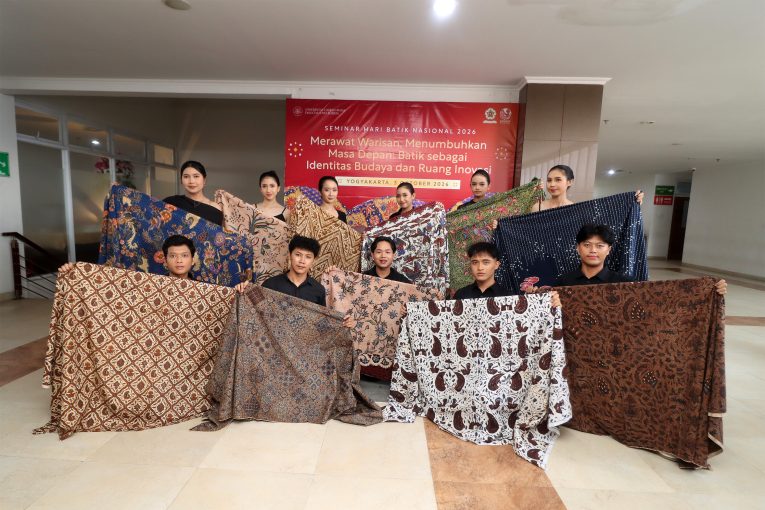
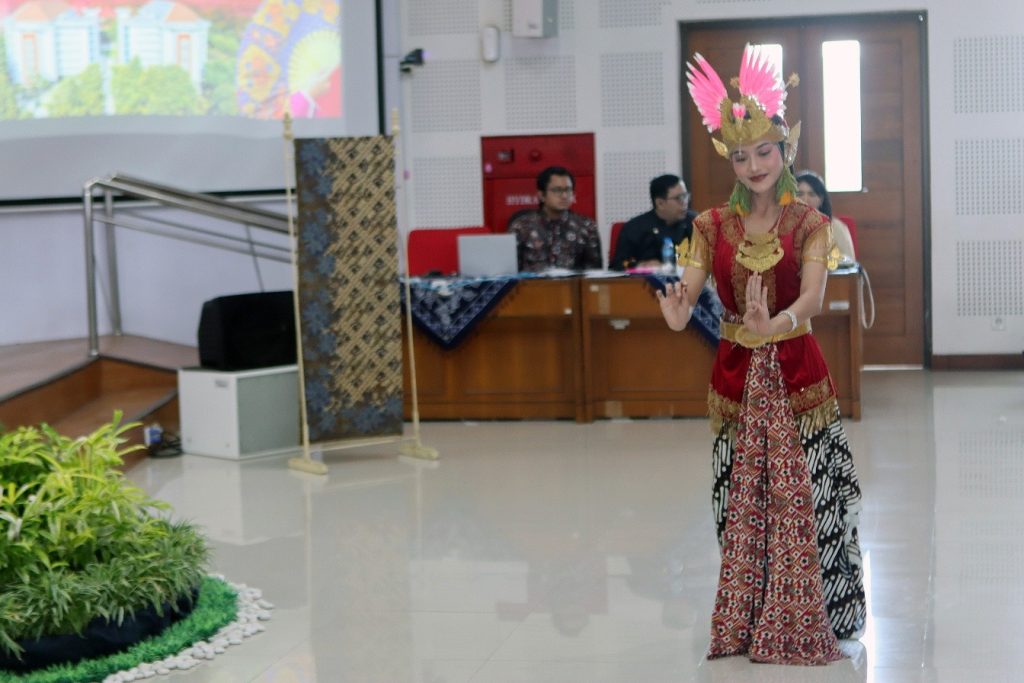
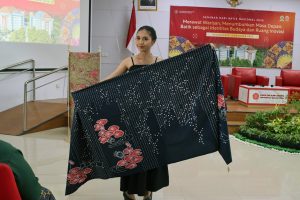
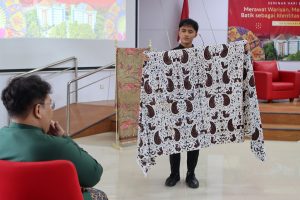
The event opened with a performance of the Golek Ayun-Ayun dance as a welcoming gesture to the guests in attendance. The event was made even more vibrant by a showcase of various types of batik from different regions, ranging from Jakarta batik to Madura batik. This series of activities served as an introduction to the richness of Indonesian batik motifs, the diversity of its traditions, and the cultural values embedded in this heritage.
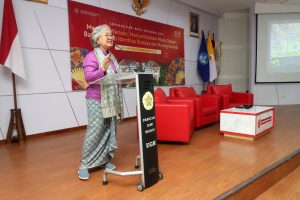
The seminar featured Dr. Eng. Ir. Laretna Trisnantari Adishakti, M.Arch., a retired UGM lecturer and Chair of the UNESCO Chair in Heritage Cities Conservation and Management, as the keynote speaker. In her presentation, she explored various aspects of batik, including its history, local wisdom, and role in sociocultural movements and international relations diplomacy.
Dr. Eng. Ir. Laretna Trisnantari Adishakti, M.Arch., also highlighted the challenges of sustaining batik traditions amid changing times and emphasized the importance of developing sustainable preservation strategies. One of the key points she raised was batik’s role as a tool of diplomacy, both across the Indonesian archipelago and Southeast Asia, as well as on the global stage. Beyond serving as a cultural identity, batik also has the potential to support a regenerative economy—a system that not only generates economic value but also restores the environment, strengthens social and cultural life, and improves community well-being.
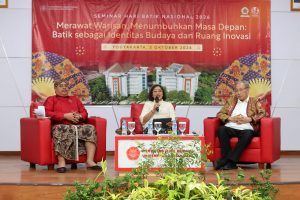
Following the keynote session, the seminar continued with a discussion moderated by Dr. Sulistyowati, S.S., M.Hum., Head of the Javanese Language, Literature, and Culture Study Program at FIB UGM. The seminar featured two speakers with distinct backgrounds and experiences: dr. CHR Sulistyono, M.Sc., FISQua, owner of Batik Nyah Kiok, which produces Lasem batik in Rembang, and Aji Setyowijaya, S.S., a Yogyakarta batik artisan who also specializes in batik tiga negeri, a traditional batik style combining influences from different regions.
In his presentation, dr. CHR Sulistyono, M.Sc., FISQua, explained the history of Batik Nyah Kiok and the development of Lasem batik, including the challenges involved in ensuring its continued survival. He noted that the existence of Lasem batik is closely intertwined with the customs and cultural practices of the communities that use it. Despite its strong historical and cultural significance, batik faces several challenges today. The declining number of artisans and limited generational renewal are issues that require serious attention. These conditions could hinder the continuity of the knowledge, skills, and batik-making traditions passed down from one generation to the next.
Meanwhile, Aji Setyowijaya, S.S., shared his experience of independently pursuing a career in batik. He emphasized the importance of paying greater attention to batik-making techniques and procedures, which he believes have not received sufficient consideration. According to him, batik preservation efforts should encompass the entire production process, including knowledge of the materials and tools used by artisans. Knowledge of production methods, material availability, equipment use, and technical skills must also be safeguarded to ensure that batik-making traditions continue to thrive. Attention to these production-related aspects is increasingly important in sustaining the livelihoods of batik artisans while creating opportunities for innovation without compromising traditional values.
Participants’ enthusiasm was evident in the wide range of questions and responses raised throughout the seminar. The discussions demonstrated that batik is not only an engaging subject from an aesthetic perspective but also a gateway to broader conversations about history, cultural identity, social practices, economic sustainability, and production challenges.
The 2026 National Batik Day Seminar broadened public understanding of batik’s role in Indonesian life, not merely as a cultural heritage, but also as a means of diplomacy, a source of historical knowledge, an economic opportunity, and a space for innovation. Its development must go hand in hand with community empowerment, including the empowerment of women, and environmental awareness, with artisans and communities recognized as essential parts of the batik ecosystem.
Through this seminar, the organizers invited the public to explore and preserve batik in its entirety, encompassing its motifs, philosophical values, knowledge, and skills passed down through generations. In this way, batik can be safeguarded not only as an expression of Indonesian cultural identity but also as a means of supporting community well-being and developing sustainably as a source of inspiration for future generations.