• University
  • Academic Portal
  • University Library
  • Webmail
  • Arnawa
  • UM UGM
  • English
    • Bahasa Indonesia
    • English
Universitas Gadjah Mada Javanese Language, Literature, and Culture Program
Department of Language and Literature
Faculty of Cultural Sciences
Universitas Gadjah Mada
  • Home
  • Profile
    • Vision & Mission
    • Objective
    • Excellence
    • Career Prospects
    • Teaching Staff
  • Academic
    • Curriculum Flow
    • Distribution of Courses
    • Academic Calendar
    • Course and Administration Information
    • Learning Outcomes
    • INTERNATIONAL CONFERENCES AND ACTIVITIES
  • KPPB
    • Collaboration
    • Research
      • Teaching Staff Research
      • Javanese Studies Archive – Arnawa
    • Service
      • Community Services
      • Podcast (Anarka Lālitya)
    • Scholarship
  • Student Affair
    • Student Satisfaction Survey
    • HMJ Kamastawa
    • Student’s Activity
    • Student’s Creations
    • Youtube Channel
    • Instagram
  • Alumnus
    • Alumnus Profile
  • Contact
  • Home
  • 2026
  • October
Arsip 2026:

October

Swagayugama Holds Grand Performance “Cakra Laksana,” with Active Participation from Students of Javanese Language, Literature, and Culture

College StudentNewsSDGSStudentStudent's ActivityStudent's Work Monday, 26 October 2026

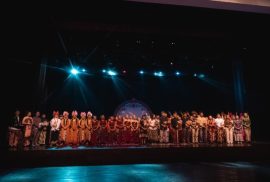
The Student Activity Unit (UKM) Swagayugama has once again demonstrated its commitment to preserving Yogyakarta-style Javanese arts through a grand performance entitled “Cakra Laksana.” Held at the Concert Hall of Taman Budaya Yogyakarta on Saturday (24 October 2026), the event is an annual program that serves as a platform for appreciation and a showcase of members’ work following a period of rehearsals.

This year’s performance featured four artistic presentations in sequence: the Klana Alus Cangklek dance, the “Teguh Jiwa” Karawitan Concert, Beksan Menak Wiragama, and the dance drama Bahara Gati Maya, representing the diversity of traditional Yogyakarta-style Javanese arts. Klana Alus Cangklek, created by KRT. Sasminta Mardawa and Condro Radono, tells the story of Prabu Dasalengkara, who falls in love with Dewi Siti Sendari. The “Teguh Jiwa” Karawitan Concert featured Ladrang Teguh Jiwa Laras Slendro Pathet Sanga, composed by Raden Wedono Yosef Larassumbogo during the Second Dutch Military Aggression to depict the 1 March 1949 General Offensive through a combination of instruments imitating the sounds of warfare and the Kinanthi Teguh Jiwa vocal ensemble. Meanwhile, Beksan Menak Wiragama highlights the spirit of learning and valuing the process through the example set by Patih Gadjah Mada, as well as the agility of female warriors. The performance concluded with Bahara Gati Maya, a dance drama depicting Prince Mangkubumi’s inner struggle to understand the meaning of the fight and the ego of victory amid the suffering of the people caused by war.

Students from the Javanese Language, Literature, and Culture Study Program also played an active role in making the performance a success. Their involvement extended beyond a single type of performance and encompassed various aspects of the event, from onstage performances to organizing committee duties.

Onstage, students participated as dancers and gamelan musicians. As dancers, they took part in several dance performances, including a dance drama that draws on the traditions of Yogyakarta-style Javanese performing arts. Meanwhile, as gamelan musicians, they accompanied the “Teguh Jiwa” Karawitan Concert and helped provide musical accompaniment for dance performances and dance dramas alongside other Swagayugama members.

In addition to participating in the performances, students also contributed as members of the organizing committee. They took part in various stages of the event, from preparation through execution. These roles were an important part of ensuring the smooth running of the entire performance.

The students’ active involvement in “Cakra Laksana” demonstrates the connection between classroom learning and the direct practice of cultural preservation. Through their participation in both performing arts and event organization, students of the Javanese Language, Literature, and Culture Study Program contributed to sustaining Yogyakarta-style Javanese arts so that they remain alive and continue to be known by future generations.


Author            : Nindy Rosalina Ekaputri
Editor             : Haryo Untoro
Students of Javanese Language, Literature, and Culture at FIB UGM Receive Awards at the 32nd Temu Budaya Nusantara at UNS

College StudentNewsSDGSStudentStudent's Activity Monday, 19 October 2026

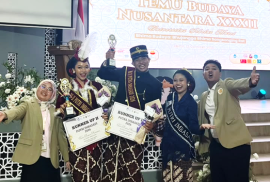
Students from the Study Program of Javanese Language, Literature, and Culture at the Faculty of Cultural Sciences, Universitas Gadjah Mada (FIB UGM), achieved notable accomplishments at the 32nd Temu Budaya Nusantara (TBN), organized by the Indonesian Association of Regional Language and Literature Students (Ikatan Mahasiswa Bahasa dan Sastra Daerah Indonesia, or Imbasadi) at Universitas Sebelas Maret (UNS) on October 12–15, 2026. Carrying the theme “Muda Berkarya, Kami Bhima Budaya” (Young People Creating, We Are Bhima Budaya), the event provided a platform for students from various universities to develop their potential, broaden their cultural knowledge, and strengthen connections among students.

As an annual Imbasadi event, the 32nd Temu Budaya Nusantara featured a range of cultural and academic activities. These included a National Deliberation Meeting, cultural seminars, and a closing ceremony featuring an awards presentation and the inauguration of the new Imbasadi board for the 2026/2028 period. Through these activities, students from universities across Indonesia offering regional language and literature study programs had the opportunity to build connections, exchange ideas, and broaden their cultural perspectives.

FIB UGM’s Study Program of Javanese Language, Literature, and Culture participated in the event by sending six delegates. The delegates were Shabrina Fitra Azzahra (class of 2024), Eva Wulandari (class of 2025), Yogi Setiyawan (class of 2025), Muthiah Rahmadani (class of 2026), Januar Aziz Maulana (class of 2026), and Fabiola Anenina Karissa (class of 2026).

UGM’s participation in the 32nd TBN was marked by several notable achievements. Two students, Januar Aziz Maulana and Fabiola Anenina Karissa, received nominations for Runner-Up II Imbasadi 2026. Meanwhile, Muthiah Rahmadani won third place in the batik design competition. In addition to these achievements, Yogi Setiawan was entrusted with the role of Imbasadi President for the 2026/2027 term. These accomplishments reflect the contributions of students from FIB UGM’s Study Program of Javanese Language, Literature, and Culture to appreciating, preserving, and promoting the rich cultural heritage of the Indonesian archipelago through academic and cultural activities. They also demonstrate the students’ active role in strengthening collaboration and fostering connections among students from universities throughout Indonesia.

Through the organization of Temu Budaya Nusantara and the achievements attained, it is hoped that students will become increasingly committed to safeguarding and preserving regional cultural heritage. The event is also expected to further strengthen ties among regional language and literature students throughout Indonesia.

FIB UGM’s Study Program of Javanese Language, Literature, and Culture extends its appreciation to all parties who supported the event. A spirit of togetherness and a shared appreciation for culture are expected to continue serving as the foundation for students to pursue creative endeavors and contribute to preserving Indonesia’s cultural diversity.


Indonesia is diverse, Imbasadi unites.


Author            : Haryo Untoro
Editor             : Haryo Untoro

Exploring, Rediscovering, and Understanding the Rich Heritage of Indonesian Batik at the 2026 National Batik Day Seminar

NewsSDGS Tuesday, 6 October 2026

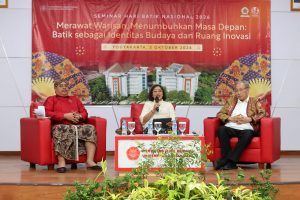
KAGAMA UGM, in collaboration with KAGAMA Batik and the Javanese Language, Literature, and Culture Study Program at the Faculty of Cultural Sciences (FIB), Universitas Gadjah Mada (UGM), held the 2026 National Batik Day Seminar on Saturday, October 3, 2026. Taking place at the Soegondo Auditorium, FIB UGM, the seminar carried the theme “Preserving Heritage, Nurturing the Future: Batik as a Cultural Identity and a Space for Innovation.” The event was organized to commemorate National Batik Day, which falls on October 2, 2026.

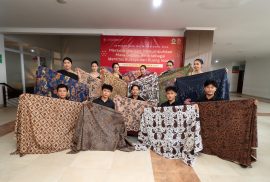
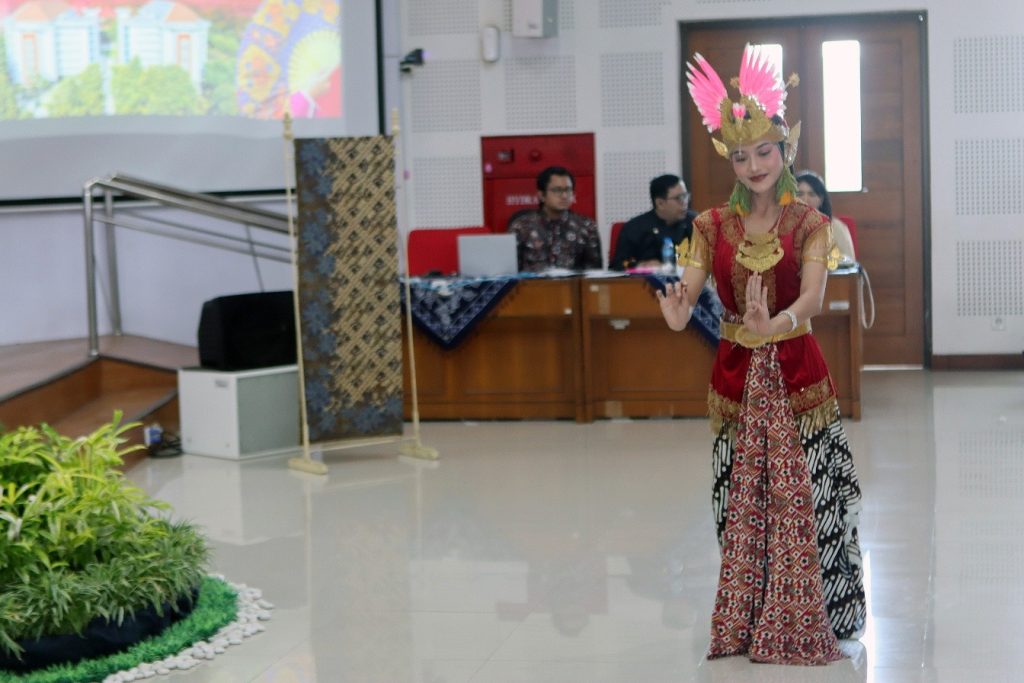
The event opened with a performance of the Golek Ayun-Ayun dance as a welcoming gesture to the guests in attendance. The event was made even more vibrant by a showcase of various types of batik from different regions, ranging from Jakarta batik to Madura batik. This series of activities served as an introduction to the richness of Indonesian batik motifs, the diversity of its traditions, and the cultural values embedded in this heritage.

The seminar featured Dr. Eng. Ir. Laretna Trisnantari Adishakti, M.Arch., a retired UGM lecturer and Chair of the UNESCO Chair in Heritage Cities Conservation and Management, as the keynote speaker. In her presentation, she explored various aspects of batik, including its history, local wisdom, and role in sociocultural movements and international relations diplomacy.

Dr. Eng. Ir. Laretna Trisnantari Adishakti, M.Arch., also highlighted the challenges of sustaining batik traditions amid changing times and emphasized the importance of developing sustainable preservation strategies. One of the key points she raised was batik’s role as a tool of diplomacy, both across the Indonesian archipelago and Southeast Asia, as well as on the global stage. Beyond serving as a cultural identity, batik also has the potential to support a regenerative economy—a system that not only generates economic value but also restores the environment, strengthens social and cultural life, and improves community well-being.

Following the keynote session, the seminar continued with a discussion moderated by Dr. Sulistyowati, S.S., M.Hum., Head of the Javanese Language, Literature, and Culture Study Program at FIB UGM. The seminar featured two speakers with distinct backgrounds and experiences: dr. CHR Sulistyono, M.Sc., FISQua, owner of Batik Nyah Kiok, which produces Lasem batik in Rembang, and Aji Setyowijaya, S.S., a Yogyakarta batik artisan who also specializes in batik tiga negeri, a traditional batik style combining influences from different regions.

In his presentation, dr. CHR Sulistyono, M.Sc., FISQua, explained the history of Batik Nyah Kiok and the development of Lasem batik, including the challenges involved in ensuring its continued survival. He noted that the existence of Lasem batik is closely intertwined with the customs and cultural practices of the communities that use it. Despite its strong historical and cultural significance, batik faces several challenges today. The declining number of artisans and limited generational renewal are issues that require serious attention. These conditions could hinder the continuity of the knowledge, skills, and batik-making traditions passed down from one generation to the next.

Meanwhile, Aji Setyowijaya, S.S., shared his experience of independently pursuing a career in batik. He emphasized the importance of paying greater attention to batik-making techniques and procedures, which he believes have not received sufficient consideration. According to him, batik preservation efforts should encompass the entire production process, including knowledge of the materials and tools used by artisans. Knowledge of production methods, material availability, equipment use, and technical skills must also be safeguarded to ensure that batik-making traditions continue to thrive. Attention to these production-related aspects is increasingly important in sustaining the livelihoods of batik artisans while creating opportunities for innovation without compromising traditional values.

Participants’ enthusiasm was evident in the wide range of questions and responses raised throughout the seminar. The discussions demonstrated that batik is not only an engaging subject from an aesthetic perspective but also a gateway to broader conversations about history, cultural identity, social practices, economic sustainability, and production challenges.

The 2026 National Batik Day Seminar broadened public understanding of batik’s role in Indonesian life, not merely as a cultural heritage, but also as a means of diplomacy, a source of historical knowledge, an economic opportunity, and a space for innovation. Its development must go hand in hand with community empowerment, including the empowerment of women, and environmental awareness, with artisans and communities recognized as essential parts of the batik ecosystem.

Through this seminar, the organizers invited the public to explore and preserve batik in its entirety, encompassing its motifs, philosophical values, knowledge, and skills passed down through generations. In this way, batik can be safeguarded not only as an expression of Indonesian cultural identity but also as a means of supporting community well-being and developing sustainably as a source of inspiration for future generations.


Writer : Haryo Untoro
Editor : Haryo Untoro

Recent Post

  • HMJ Kamastawa Serves the Community: Teaching Javanese Language Etiquette and Sharing Happiness at Sanggar Puspa Budaya
    November 2, 2026
  • Swagayugama Holds Grand Performance “Cakra Laksana,” with Active Participation from Students of Javanese Language, Literature, and Culture
    October 26, 2026
  • Students of Javanese Language, Literature, and Culture at FIB UGM Receive Awards at the 32nd Temu Budaya Nusantara at UNS
    October 19, 2026
  • Exploring, Rediscovering, and Understanding the Rich Heritage of Indonesian Batik at the 2026 National Batik Day Seminar
    October 6, 2026
  • Starting with an Oral Tradition Course, Ghibran Arsha Daffa’ Musaffa’ Revives the Gejog Lesung Tradition
    September 30, 2026

Calender

October 2026
M T W T F S S
 1234
567891011
12131415161718
19202122232425
262728293031  
« Sep   Nov »
  • Fakultas Ilmu Budaya
  • Ujian Masuk UGM
  • PPSMB
  • Alumni
  • Jurnal Humaniora
October 2026
M T W T F S S
 1234
567891011
12131415161718
19202122232425
262728293031  
« Sep   Nov »

News

  • HMJ Kamastawa Serves the Community: Teaching Javanese Language Etiquette and Sharing Happiness at Sanggar Puspa Budaya
    November 2, 2026
  • Swagayugama Holds Grand Performance “Cakra Laksana,” with Active Participation from Students of Javanese Language, Literature, and Culture
    October 26, 2026
  • Students of Javanese Language, Literature, and Culture at FIB UGM Receive Awards at the 32nd Temu Budaya Nusantara at UNS
    October 19, 2026
Universitas Gadjah Mada

Javanese Language, Literature, and Culture Program
Department of Language and Literature
Faculty of Cultural Sciences
Universitas Gadjah Mada


Sosiohumaniora St., Bulaksumur, Yogyakarta
Telp : 0274-901134 Ext. 110, Fax : 0274-550451, WhatsApp : 08135932426
Email : nusantara@ugm.ac.id

© 2025 Javanese Language, Literature, and Culture Program FIB UGM

KEBIJAKAN PRIVASI/PRIVACY POLICY