• University
  • Academic Portal
  • University Library
  • Webmail
  • Arnawa
  • UM UGM
  • English
    • Bahasa Indonesia
    • English
Universitas Gadjah Mada Javanese Language, Literature, and Culture Program
Department of Language and Literature
Faculty of Cultural Sciences
Universitas Gadjah Mada
  • Home
  • Profile
    • Vision & Mission
    • Objective
    • Excellence
    • Career Prospects
    • Teaching Staff
  • Academic
    • Curriculum Flow
    • Courses Description
    • Distribution of Courses
    • Academic Calendar
    • COURSE AND ADMINISTRATION INFORMATION
    • Learning Outcomes
    • INTERNATIONAL CONFERENCES AND ACTIVITIES
  • KPPB
    • Collaboration
    • Research
      • Teaching Staff Research
      • Javanese Studies Archive – Arnawa
    • Service
      • Community Services
      • Podcast (Anarka Lālitya)
    • Scholarship
  • Student Affair
    • Student Satisfaction Survey
    • HMJ Kamastawa
    • Student’s Activity
    • Student’s Creations
    • Youtube Channel
    • Instagram
  • Alumnus
    • Alumnus Profile
  • Contact
  • Home
  • College Student
  • Learning by Imagining: One of the Learning Methods in the Codicology Course

Learning by Imagining: One of the Learning Methods in the Codicology Course

  • College Student, News
  • 18 February 2025, 15.52
  • Oleh: fegaachilleamaydena
  • 0

Studying and understanding ancient manuscripts may sound complicated to some people. However, in the Codicology course taught by Dr. Sri Ratna Saktimulya, M. Hum., we can understand it better from a fun side!

Codicology itself is a course that focuses on the science of dealing with the physical condition of manuscripts. So basically here, students will study the physical condition of manuscripts in terms of materials, size, paper and everything related to the physical nature of the manuscript, as well as the elements in the text, such as illumination, stamps, script, and others.
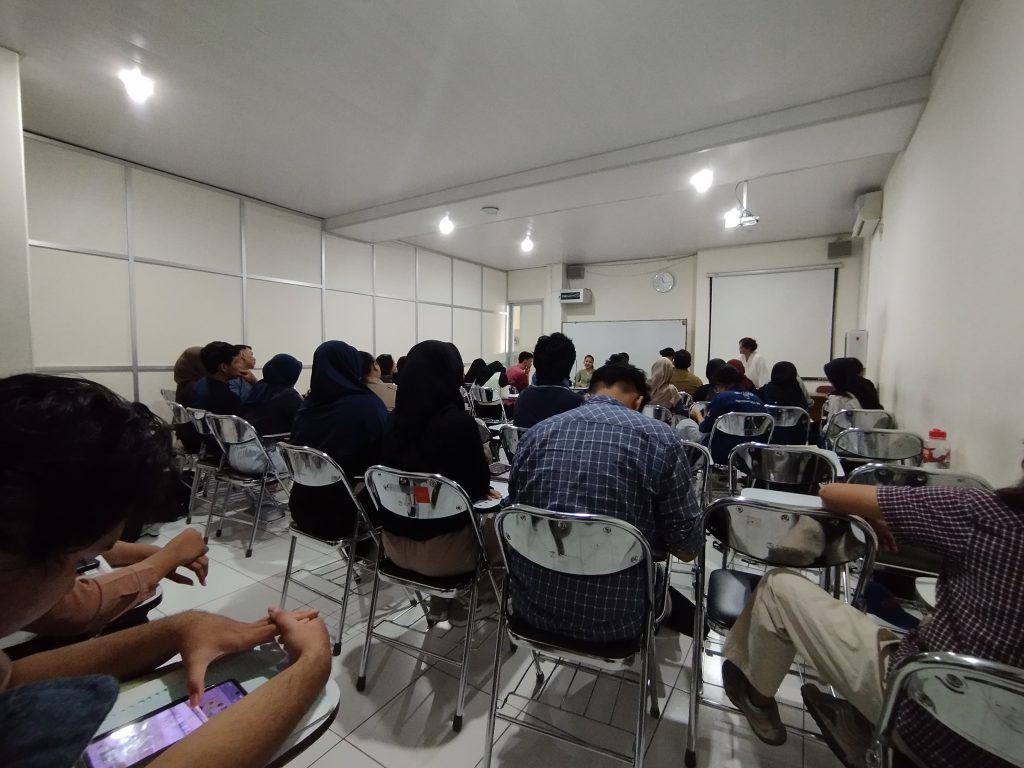
On Monday, February 17, 2025, Mrs. Sakti entered the Codicology class bringing a new learning method for students. In this second meeting, students conducted a case study. The case given was the analysis of a manuscript. However, what was different here was the object of study. The object that became the example of the manuscript was the student himself.

There were 5 students who were chosen to be the 'objects of study', while their friends formed groups to discuss and analyze each of the objects. The things that were asked to be described included manuscripts, texts, and history.
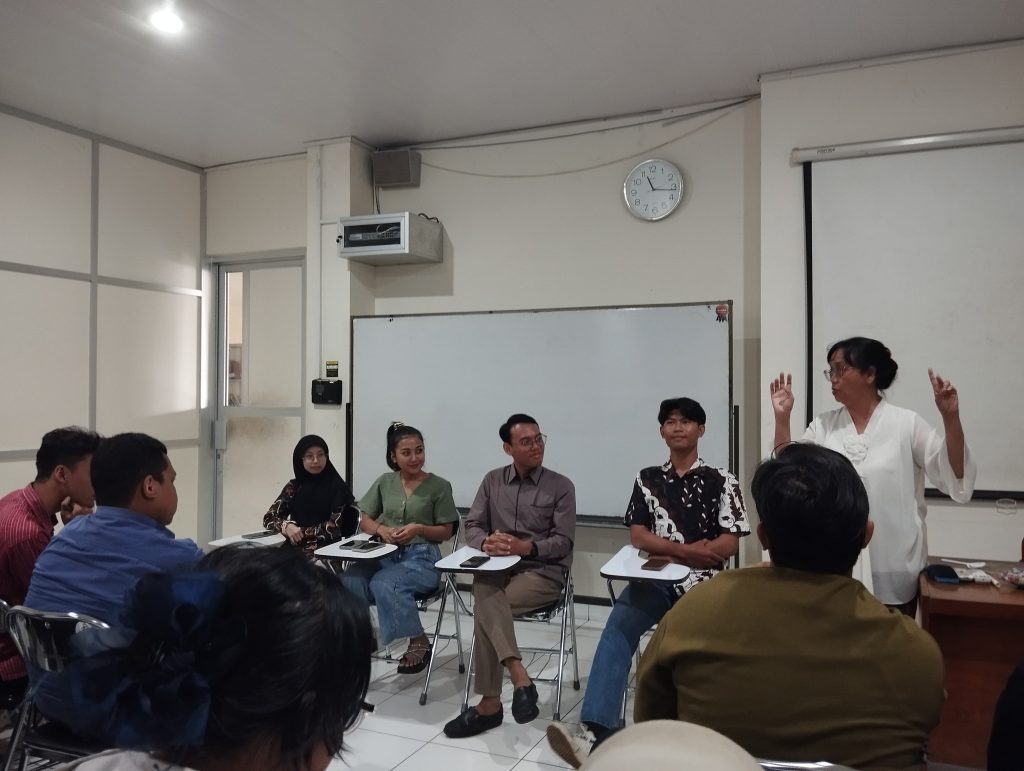
An example of the requested script analysis is a physical description of the object of study. For example, in that day's meeting, according to the 'script', the object had curly hair, was 165 cm tall, had narrow eyes, had brown skin, and so on. Then in text, students could describe that the object was shy, kind, liked to show off, and so on. Finally, historically, students were asked to mention the life journey of 'the script' such as year of birth, parents, home address, age, and et cetera.

By imagining things like this, students can understand better how to analyze and describe scripts more concretely. And in the future, students are expected to be more enthusiastic about dissecting Javanese Literature scripts so that the essence of the script can be conveyed to the public.
Tags: LEARNING SDGS 4: QUALITY EDUCATION STUDY CASE-BASED

Leave A Comment Cancel reply

Your email address will not be published. Required fields are marked *

*

Recent Post

  • Seputar Jawa: Basa Kedhaton and Basa Bagongan, Typical Speech Varieties of the Surakarta and Yogyakarta Palaces
    March 2, 2026
  • Handover of HMJ Kamastawa Positions for the 2026/2027 Period
    February 24, 2026
  • Dr. Arsanti Wulandari, M.Hum., Becomes Speaker in FGD “Islam in Javanese Babad: Efforts to Revitalize Mataraman Islam”
    February 10, 2026
  • Seputar Jawa: Preservation of Javanese Script through the Use of Free Digital Fonts
    January 28, 2026
  • Introducing the Cultural Literature Cluster of Universitas Gadjah Mada in the Saba Tilik 6.0 X Saba Education Fair Activity
    January 24, 2026

Calender

March 2026
M T W T F S S
 1
2345678
9101112131415
16171819202122
23242526272829
3031  
« Feb    
  • Fakultas Ilmu Budaya
  • Ujian Masuk UGM
  • PPSMB
  • Alumni
  • Jurnal Humaniora
March 2026
M T W T F S S
 1
2345678
9101112131415
16171819202122
23242526272829
3031  
« Feb    

News

  • Seputar Jawa: Basa Kedhaton and Basa Bagongan, Typical Speech Varieties of the Surakarta and Yogyakarta Palaces
    March 2, 2026
  • Handover of HMJ Kamastawa Positions for the 2026/2027 Period
    February 24, 2026
  • Dr. Arsanti Wulandari, M.Hum., Becomes Speaker in FGD “Islam in Javanese Babad: Efforts to Revitalize Mataraman Islam”
    February 10, 2026
Universitas Gadjah Mada

Javanese Language, Literature, and Culture Program
Department of Language and Literature
Faculty of Cultural Sciences
Universitas Gadjah Mada


Sosiohumaniora St., Bulaksumur, Yogyakarta
Telp : 0274-901134 Ext. 110, Fax : 0274-550451, WhatsApp : 081211911281
Email : nusantara@ugm.ac.id

© 2025 Javanese Language, Literature, and Culture Program FIB UGM

KEBIJAKAN PRIVASI/PRIVACY POLICY