• University
  • Academic Portal
  • University Library
  • Webmail
  • Arnawa
  • UM UGM
  • English
    • Bahasa Indonesia
    • English
Universitas Gadjah Mada Javanese Language, Literature, and Culture Program
Department of Language and Literature
Faculty of Cultural Sciences
Universitas Gadjah Mada
  • Home
  • Profile
    • Vision & Mission
    • Objective
    • Excellence
    • Career Prospects
    • Teaching Staff
  • Academic
    • Curriculum Flow
    • Distribution of Courses
    • Academic Calendar
    • Course and Administration Information
    • Learning Outcomes
    • INTERNATIONAL CONFERENCES AND ACTIVITIES
  • KPPB
    • Collaboration
    • Research
      • Teaching Staff Research
      • Javanese Studies Archive – Arnawa
    • Service
      • Community Services
      • Podcast (Anarka Lālitya)
    • Scholarship
  • Student Affair
    • Student Satisfaction Survey
    • HMJ Kamastawa
    • Student’s Activity
    • Student’s Creations
    • Youtube Channel
    • Instagram
  • Alumnus
    • Alumnus Profile
  • Contact
  • Home
  • College Student
  • page. 16
Arsip:

College Student

LILIN PUTIH

CerkakCollege StudentStudent's Work Friday, 15 September 2023

Dening: Anggra Dini          

Ing sawijining dina, Sinta Dewi, Mbakyu ku sing paling ayu dhewe, ngajak aku menyang daleme Budhe Rini kanggo nyuwun ajar matematika. Mbak Sinta pancen lare sing pinter, dheweke mesthi pikantuk biji sing apik. Saiki Mbak Sinta wis paring yuswa 18 taun. Dheweke sekolah ing SMA 1 Mlati.

          “Tika, ayo melu mbak menyang daleme Budhe Rini.” dhawuhe Mbak Sinta.

          “Mangga Mbak Sin, aku ndherek Mbak Sinta. Nanging, ana apa Mbak kok kesah daleme Budhe?” pitakonku.

          “Mbak kepingin nyuwun warah saka Budhe Rini, amarga biji matematika Mbak wingi mudhun.” wangsulane Mbak Sinta.

          “Nggih Mbak, mangga, aku ndherek Mbak Sinta wae.” clathuku.

          “Aja lali gawe jaket ya Tik, amarga awakedhewe bakal bali bengi. Mbak ya uwis matur marang Bapa karo Ibu yen awakedhewe menyang daleme Budhe Rini.”

          “Siap Mbak Sinta.”

          Dadi adhine Mbak Sinta pancen nyenengake. Dheweke apikan, pangerten marang adhine, lan luhur budine. Ananging, kadhang aku mesakake marang slirane. Saben dina kudu sinau lan ajar bab kang durung bisa dimangerteni supaya ora didukani bapa lan ibu, lan bisa maringi tuladha sing apik marang adhine. Dadi Mbak Sinta pancen ora gampang, ananging dheweke bisa ngadhepi sakabehing prakara.

          Aku lan Mbak Sinta pancen cedhak saka cilik amarga ibu lan bapa nyambut dadi dosen ing Universitas Gadjah Mada, saengga wekdal sing diduweni bapa lan ibu ing omah mung wanci bengi lan nalika prei. Masiya ing omah mung wanci bengi lan nalika prei, ananging bapa lan ibu saestu tresna marang aku lan Mbak Sinta. Apa wae sing dibutuhake putrane mesthi disedyakake. Nanging bapa lan ibu duweni pangajab kanggo putrane. Apa wae sing uwis diparingake kuwi ya kanggo paring semangat ing laku ngangsu kaweruh. Aja nganti kabeh sing wis diparingi malah ndadekake lena ing laku.

          Nalika teka ing daleme Budhe Rini, Mbak Sinta sinau kanthi setiti. Ing kono aku ya ora mung meneng wae, ananging uga melu ngangsu kaweruh.

          “Assalamualaikum Budhe Rini, kula Sinta lan Tika, Budhe.” Mbak Sinta uluk salam nalika teka.

          “Waalaikumsalam Ndhuk, ayo mlebu rene.” Budhe Rini ngutus aku lan Mbak Sinta mlebu daleme Budhe.

          “Inggih Budhe.”

          “Kok dingaren ora karo Bapa lan Ibumu, durung pada bali apa kepiye?” pandangone Budhe Rini.

          “Inggih Budhe, Bapa lan Ibu dereng kondur, saengga kula kaliyan Dhik Tika sowan piyambak.” wangsulane Mbak Sinta.

          “Woalah mangkono ta, yawis dimimik dhisik kuwi es sing wis dak siapake, enak lho kuwi, Budhe dhewe sing gawe.” ngendikane Budhe Rini.

          “Inggih Budhe, kula mimik nggih.” celathuku.

          “Iya wis ta, yen kurang dak gawekake maneh.”

          Sawise mimik es sing wis digawekake Budhe Rini, Mbak Sinta nyuwun ajar bab matematika sing durung bisa dimangerteni dening Mbak Sinta. Aku uga melu sinau lan ajar bab matematika. Budhe Rini pancen wasis bab matematika, amarga dheweke lulusan S3 matematika.

          “Budhe, badhe nyuwun pirsa, menika kok saged pikantuk asil sekawanlikur kados pundi nggih Budhe?” Mbak Sinta tangklet marang Budhe Rini.

          “Sik-sik, dak delenge soale ya Ndhuk… Oalah, ngene lho iki, kene Budhe nyuwun kertas sing isih durung ana isine.”

          “Mangga Budhe kertasipun.” wangsulane Mbak Sinta.

……

          “Ngono Ndhuk cara mangsuli soale kaya ngono. Saiki coba dijajal soal sing padha ya.” ngendikane Budhe Rini marang Mbak Sinta.

          “Inggih Budhe, siap.”

          “Budhe, kula inggih badhe nyuwun ajar bab matematika menika, kula mboten saged nggarap lho Budhe.” celathuku marang Budhe Rini.

          “Kene-kene Ndhuk cah ayu, kaya apa ta angele kok ponakane Budhe iki ora bisa mangsuli?”

          “Woalah, iki carane kaya ngene lho Ndhuk, digatekake yaa.”

……

          “Woalah makaten Budhe, kok gampil nggih hehehe.”

          “Lha iya ta, Tika mung kurang setiti wae nalika ngerjakake. Mula kudu luwih setiti ya. Wis kono dijajal soal sing liyane.”

          “Inggih siap Budhe.” celathuku.

          Sawise ngangsu kaweruh menyang Budhe Rini, aku lan Mbak Sinta pamit arep mantuk amarga ya uwis bengi.

          “Budhe, kula kaliyan Dhik Tika pamit wangsul nggih, benjing kula kaliyan Dhik Tika sowan daleme Budhe malih.” Mbak Sinta pamit marang Budhe Rini.

          “Iya Ndhuk, cah ayu ayu. Ati-ati ya yen bali. Aja lali ngajak bapa lan ibumu ya yen arep rene. Budhe uga titip salam kanggo bapa lan ibumu ya.”

          “Inggi Budhe, siap. Pamit rumiyin nggih Budhe. Assalamualaikum.”

          “Waalaikumsalam Ndhuk.”

          Aku lan Mbak Sinta gegojegan ing sadawane dalan, ananging ana salah sawijining tuladha sing agawe aku trenyuh.

          “Mbak Sinta dhek mau maeme akeh apa ora?”

          “Ora Tik, Mbak Sinta mung maem saithik, amarga masakane Budhe Rini pedhes hehe.”

          “Aku ya iya e Mbak, Tika kepingin tuku ayam kentaki ing cedhak omahe awake dhewe, Mbak Sinta kersa ora?” pitakonku.

          “Wah ayo wae Tik. Sarujuk Aku.”

          “Yeay, mangga Mbak.”

          “Woiya Dhik, Mbak Sinta duwe pesen kanggo Tika.”

          “Apa Mbak?”

          “Saka Mbak Sinta, Tika kan ngerti yen saya suwe lan saya dhuwur olehe ngangsu kaweruh kuwi saya angel lakune. Mbak Sinta pesen marang Tika, kudu tetep bisa lumaku ing dalan sing bener, aja nganti gawe duka bapa lan ibu. Tika kudu bisa dadi lilin putih ing satengahing pawongan akeh.”

          “Lilin putih? Tika ora ngerti maksud ngendikane Mbak Sinta?”

          “Maksude lilin putih kuwi kaya ngene lho Tik, awake dhewe kudu bisa dadi pawongan sing bisa migunani kanggo liyan. Kapinteran sing kok duweni kuwi kudu bisa migunani uga kanggo awakmu utawa kanggo liyan. Aja dadi bocah pinter sing kuminter.”

          “Terus lilin putih kuwi kepiye Mbak?”

          “Maksude mangkene, awake dhewe kudu bisa dadi lilin putih sing migunani, masiya cilik, dheweke bisa madhangi panggonan sing peteng. Wis ngerti saiki?”

          “Woalah nggih Mbak Sinta, Tika ngerti apa maksud ngendikane Mbak Sinta. Yen Mbak Sinta kersa, Tika nyuwun Mbak Sinta terus paring piwulang ya yen Tika rumangsa kangelan utawa Tika ana salah.”

          “Iya Dhik, Mbak Sinta kan tresna marang Tika. Mbak Sinta bakal terus ngelingake Tika yen Tika salah lan bakal ngancani Tika yen Tika butuh Mbak Sinta.”

          “Matur nuwun Mbak Sinta.”

          Kaya sing uwis dak critakake, Mbak Sinta pancen uwong sing apikan lan tresna marang adhine. Mula kuwi, ora mokal yen akeh uwong seneng marang budi luhur sing diduweni Mbak Sinta. Saka Mbak Sinta, aku nyinau akeh bab ing laku salaku.

---Cunthel---

YOUTUBER KONDHANG

CerkakCollege StudentStudent's Work Friday, 15 September 2023

Dening: Yulian Pamungkas

      Ing Kutha Tulungagung ana bocah enom jenenge Agus. Urip wong loro karo ibune, amarga bapake wis seda nalika agus isih SD. Agus duwe kanca cedhak, jenenge Ipan. Agus dadi bocah kang bodho lan nakal. Dheweke duweni pakulinan seneng balapan liar saben bengi lan yen menang dheweke seneng ngentekake dhuwit kanggo mendem. Senajan Agus kuwi bocahe nakal, nanging dheweke isih sembada, amarga katrampilane bisa agawe dheweke kapilih dadi pasarta lomba makili Kutha Tulungagung lan menang ing kancah balapan montor Provinsi Jawa Timur. Agus duweni akeh prestasi saka balapan masiya dheweke ora tamat anggone sekolah.
      Ing taun 2020 sak dunya kena pageblug Corona. Kabeh kagiyatan akeh sing dibatalke lan akeh para buruh uga karyawan kang dipecat saka papan pagaweyane. Agus bingung amarga dheweke nganggur ora duwe bayaran. Agus biasane oleh dhuwit saka balapan lan nyambi ngewangi tanggane giling tebu.
      “Gus, Ibuk ora bisa nempur amerga dhuwit olehmu menehi wis entek.” sambate ibune Agus.
      “Banjur kepiye Buk? Njuk ora bisa madhang dina iki?” Agus mangsuli ibune.
      “Ya ora bisa Gus, coba mubenga, goleka panggaweyan supaya ana dhuwit kanggo nempur.”
      “Nggih Buk.”
      Agus mubeng desa, takon-takon panggaweyan marang tangga lan kancane. Muspra, kabeh sing ditakoni Agus padha ora bisa menehi panggaweyan. Agus leren ing pos rondha cedhak omahe. Ing pos rondha kono ya ana Ipan.
      “Seka ngendi Gus kok sajake ketok kesel?” takone Ipan.
      “Golek panggaweyan Pan, kowe saiki kerja apa?” Agus genti takon.
      “Halah padha wae Gus, teplok covid-19 kae ya rung ana gaweyan maneh.” wangsulane Ipan
      “Lha terus apa solusimu?” Agus takon menyang Ipan.
      “Mbuh ya, apa coba adewe mara ning omahe Modin, menawa dheweke ana solusi.” wangsulane Ipan.
      “Sip, yoh lek ngono, saiki wae ya ndak kesoren.”
      Agus lan Ipan banjur budhal menyang omahe Modin. Tekan omahe Modin, Agus lan Ipan langsung sambat yen lagi susah ora duwe panggaweyan.

      “Din, kowe duwe panggaweyan kanggo aku ro Ipan ora? Apa wae aku gelem tinimbang blas ora kerja.” sambate Agus.
      “Hooh Din, nyuwun tulung banget iki, makku karo make Agus wis ora kuat nempur.” Ipan ngimbuhi.
      “Piye ya Gus, Pan. Pancen iki jamane angel. Aku dhewe ya bingung karo kahanan sing kaya saiki.” wangsulane Modin.
   “Wis ta Din sembuarang pokoke, tinimbang ra ana blas mengko makku malah tambah ngamuk yen aku ora oleh panggawean.” Ipan ngeyel.
      “Yawis-yawis. Sakjane aku kepingin bangun channel youtube.” Modin mangsuli.
      “Ha piye kuwi, youtube ki kepiye?” Agus takon merga bingung.
      “Sik ta Gus, aja nyela sek ben dijlentrehake karo Modin.” Ipan nyeneni Agus.
      “Dadi adewe gawe video drama kehidupan ngono, njuk mengko diunggah ning youtube. Mengko yen akeh sing nonton adewe isa oleh dhuwit teka youtube.” wangsulane Modin.
      “Oke siap, gasss pokoke.” Agus sarujuk.
      “Aku ya sarujuk.” Ipan sarujuk.
     “Tapi ana syarate, yaiku kowe-kowe kabeh kudu leren lek mendem karo main judi. Dhuwite kudu dicelengi saengga yen kepthuk kahanan angel kaya ngene iki isih ana dhuwit.”
      “Iya, siap laksanakan bos.” wangsulane Agus karo Ipan bareng.
      Agus, Ipan, lan Modin awit anggone gawe video. Senajan mung nganggo piranti sak anane tapi dheweke padha tlaten. Katlatenan iku mau duweni asil, yaiku video-ne Agus lan Ipan viral. Modin minangka sutradara, produser, lan kameramen ya ora keri melu kondhang amarga pakaryane sing apik banget. Agus lan Ipan saya suwe saya kondhang lan akeh omah produksi film sing padha ngajaki main film bioskop. Modin yo semana uga dadi sutradara kang kondhang ning Indonesia.

GAMBUH

College StudentMacapatStudent's Work Friday, 15 September 2023

Dening R. Raga Budi Panuntun

Sajatine ngudi ngelmu

Sapa wae bisa disinau

Trapsilaning tata krama nora lali

Jaya kang kudu kagayuh

Wasana mrih karahayon


Cagaking gesang puniku

Kraos suka syukur mring Hyang Luhur

Manggih ayem tentrem sajroning panggalih 

Gampil nyirnaaken bendu

Lara-lapa mesthi kawon

UGM Javanese Literature Students Win Three Championships at Sarasehan Nusantara Imbasadi IX

College StudentNewsSDGSStudentStudent's ActivityStudent's Work Friday, 15 September 2023

Singaraja - The 9th Sarasehan Nusantara IMBASADI, held at Ganesha University of Education Singaraja, Bali, from May 12th to May 15th, 2022, has been held. The event, which carried the theme "Tresnaning Budaya, Hitaning Bhuwana: Cultural Romance towards World Harmony," spanned three days and concluded with the selection of Putra and Putri Imbasadi 2022 and an Awarding Night on May 14th.

The 9th Sarasehan Nusantara IMBASADI featured various competitions, including the National Scientific Paper Competition, Nusantara Typography Competition, Regional Pop Song Competition, Nusantara TikTok Contest, Cinematography Video Competition, and the Selection of Putra Putri Imbasadi 2022.

Delegates from the Javanese Literature Program at Gadjah Mada University participated in these activities by taking part in all the competitions. UGM's delegation was represented by Zainal Fanani (class of 2019) as the delegation leader, along with Dewi Lestari (class of 2019), Vighna Rivattyannur Hernawan (class of 2020), Nurma Aisyah (class of 2021), Adjit Royan Mustafa Ganda Sukma (class of 2021), Nanda Nursa Alya (class of 2021), and Idharul Huda (class of 2021). The first five mentioned attended the event in Bali in person, while the latter two participated virtually through Zoom Meetings, as the 9th Sarasehan Nusantara was conducted in a hybrid manner.

From these competitions, the UGM delegation achieved the following awards:

  1. 2nd Place in the National Scientific Paper Competition (Vighna Rivattyannur Hernawan as the team leader, with two members: Nurma Aisyah and Idharul Huda).
  2. 2nd Place in the Regional Pop Song Cover Competition (Vighna Rivattyannur Hernawan).
  3. Runner-up 2 in the Putri IMBASADI 2022 Selection (Nurma Aisyah)

(National Scientific Paper Championship Acceptance)

(Regional Pop Song Cover Championship Acceptance)

(Putra Putri IMBASADI championship Acceptance)

The winning National Scientific Paper Competition, titled "Tabloid Carakita: Javanese Script across Languages as an Implementation of Cultural Harmony (A Sociolinguistic Study)," focused on Tabloid Carakita as a material object that can contribute to the preservation of Javanese script in the millennial era. It leveraged the fact that people commonly speak or use Indonesian, Javanese, and English in their daily lives.

Meanwhile, the 2nd Place Regional Pop Song Cover comprised a medley of two songs: "Jenang Gula" and "Gethuk." These songs were chosen because they contain elements of Javanese culture.  Jenang Gula song contains wangsalan, a kind of Javanese riddle. While the Gethuk song contains Javanese rhymes commonly known as parikan.

The final championship achieved was the Runner-up 2 in the Putri IMBASADI category. The selection process was rigorous, including deep interviews and staged eliminations from the top 5 to the top 3. Nurma Aisyah partnered with Gus Bija from I Gusti Bagus Sugriwa State Hindu University, both entrusted with the title of Runner-up 2.

According to the representative IMBASADI students, participating in IMBASADI provided them with valuable experiences and relationships. They expressed their gratitude to all parties who continuously supported them. IMBASADI stands as evidence that it serves as a platform for competitions and successes for students of regional languages and literature.

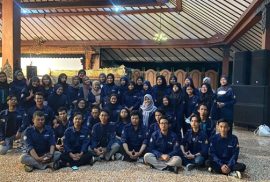
(Group Photo with LO Undiksha After the Closing Night)

(International Summer Course on Indonesian as a Foreign Language: through an Exploration into Javanese Culture)

College StudentNewsSDGSStudentStudent's Activity Thursday, 14 September 2023

This activity was organized by the Javanese Literature Study Program at Gadjah Mada University in collaboration with Osaka University which has been established since 2017. This year is the third year this activity has been held.

The Indonesian language short course has the goal of being an introduction to Javanese culture so that it can improve Indonesian language skills, both orally and in writing from the results of exploration of Javanese culture in Yogyakarta and Central Java.

Course Description. This Indonesian Short Course through Javanese Cultural Exoticism is a manifestation of teaching Indonesian to foreign speakers (BIPA) which was held in Yogyakarta and Central Java by inviting approximately 10 expert lecturers from Asia, Australia, Europe and America. This activity was attended by 27 Japanese students from Osaka University who were devoted to the Graduate School of Language and Culture Studies/School of Foreign Studies. The learning will be carried out for 9 days.

Learning Outcomes. Participants are expected to be able to demonstrate understanding and actively practice Indonesian, both in written and spoken form. In addition, participants are also expected to be able to produce written and oral products as well as develop the insights they have gained during the short course.

Method. The teaching method used in this Indonesian short course is a combination of face-to-face and virtual meetings. Meanwhile, the learning process is carried out by explanation, collaborative learning, self learning, and structured assignments. Theoretical knowledge is conveyed asynchronously (and some synchronous topics, offline) which is then followed by excursions to cultural heritage sites. There was also an interview session with Java Study Program students as tutors.

Time and place. The Indonesian short course will be held on 16 - 24 September 2022 in Yogyakarta and Central Java.

Implementation Schedule

The schedule can be viewed and downloaded via the link below:

http://bit.ly/JadwalKursusSingkat

Authors:

Early Anggra

Vighna Hernawan

Gugur Gunung 11 Webinar: History, Function, and Existence of Javanese Fables

Ambal WarsaCollege StudentNewsSDGSStudent Thursday, 14 September 2023

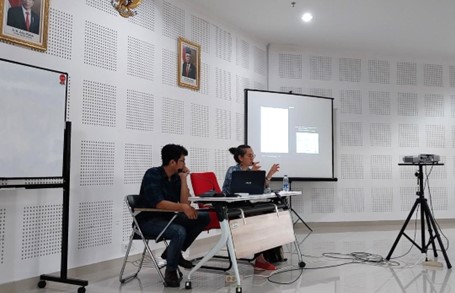
On Sunday (December 19, 2021), the Javanese Literature Program held the second webinar as a continuation of a series of events. The webinar titled "History, Function, and Existence of Javanese Fables" was moderated by Nurma Aisyah, a student of the Javanese Literature Program from class of 2021, and accompanied by one of the Javanese Literature lecturers, Zakariya Pamuji Aminullah, S.S., M.A., as the speaker.

The "History, Function, and Existence of Javanese Fables" webinar delved into the journey of birds and monkeys from the Sanskrit tradition to the Middle Javanese era. Mr. Zakariya presented that fables are stories about animals that behave like humans. The story of animals made like humans is a metaphorical depiction. Fables predominantly feature characters that are either human or deities. Usually, the animal characters used in fables play crucial roles in society, such as cows, horses, snakes, goats, birds, and others. The webinar also discussed the Pancatantra, a literary work that takes the form of framed stories.

After the presentation session, the webinar proceeded with a Q&A session. There were eight questioners, each with one question. One of the interesting questions, which might also be a common inquiry from the public, came from Irfan Wahyu, a Javanese Literature student. Irfan asked about the popularity of fables, specifically those involving the character "kancil" (mouse deer), and why fables are mainly targeted at children. Mr. Zakariya explained that Indonesian education has not adapted to fables effectively. Some efforts have been made by libraries to implement the transliteration of manuscripts, and academic communities are encouraged to disseminate these transliterations to the wider public. From the perspective of researchers, they face a significant responsibility in transforming the contents of manuscripts into works that can be accessible to the broader society.

The conclusion drawn from the "History, Function, and Existence of Javanese Fables" webinar is that fables serve as a medium between humans and animals. Meanwhile, the Pancatantra has political motives and has spread widely across the world. The popular story of birds and monkeys, despite having various versions, shares a common message.

Cakra Manggala, the New Cabinet of KAMASTAWA

College StudentNewsSDGSStudentStudent's ActivityStudent's Work Thursday, 14 September 2023

The name "Cakra Manggala" has been chosen as the cabinet name by the daily executive board of the Family of Javanese Literature Students (KAMASTAWA) for the period 2022/2023. The name "Cakra Manggala" is derived from "cakra," symbolizing a round-toothed weapon. From "cakra," the daily executive board holds high hopes that the Cakra Manggala cabinet will work diligently and firmly in their respective fields. Additionally, "cakra" can also be interpreted as precision or meticulousness. Through this analogy, the Cakra Manggala cabinet is expected to work with utmost diligence.

On the other hand, "manggala" is inspired by the headgear worn by Sultan Agung. "Manggala" symbolizes blessings and leadership, thereby making this cabinet a symbol of continuous blessings and good fortune and a driving force for Javanese Literature students as a whole. Therefore, with the name "Cakra Manggala," the daily executive board hopes that the Cakra Manggala cabinet will work together with precision and optimal coordination, both in their respective fields and as a whole, while always being filled with blessings and good fortune in every process they undergo.

In this new management, the members of the Cakra Manggala cabinet are active undergraduate students in their second and third years of study. The cabinet consists of 46 members, with one person as the president, one vice chairman, two treasurers, two secretaries, five members in the Human Resources Development division, six members in the Public Relations and Organization division, six members in the Social Community division, four members in the Media and Information division, five members in the Scientific division, five members in the Entrepreneurship and Logistics division, and nine members in the Interest and Talent division.

Through various planned programs and guidance from Mr. Imam Prakoso as the advisor, the daily executive board of KAMASTAWA, in the Cakra Manggala cabinet, aspires to uphold the reputation of Javanese Literature and contribute optimally to the Javanese Literature study program. Moreover, the success of all the planned programs is also dependent on the support of all Javanese Literature students. Thus, the new leadership aims for optimal cooperation so that both the executives and non-executive members can work together to maintain the name of Javanese Literature.

ANJANGSANA of HIMA PBD FBS UNY & HMJ KAMASTAWA FIB UGM: ‘Strengthening Connections and Striving for Organizational Excellence’

College StudentNewsSDGSStudentStudent's Activity Thursday, 14 September 2023

Yogyakarta - The bonding event between the Student Association of Local Language Education, Faculty of Languages and Literatures, Universitas Negeri Yogyakarta (HIMA PBD FBS UNY), and the Student Association of Javanese Literature Department, known as KAMASTAWA, Faculty of Cultural Sciences, Universitas Gadjah Mada (UGM), was warm. The event, which became the work program of the Public Relations and Organisation Division of HMJ Kamastawa, was held on Saturday (16/4) in a mixed manner at Soegondo Building 310.

The event, titled "Anjangsana: Nyambung Silaturahmi saha Ngindhakaken Kualitas Organisasi Tumuju Jinawi," aimed to foster camaraderie between the two associations by exchanging experiences and stories about each student association. HIMA PBD FBS UNY consists of six divisions, namely the Core Daily Board, Public Relations Division, Talent and Interest Division (Bakmi), Spiritual Division, Writing Division, and Welfare Division. Meanwhile, HMJ KAMASTAWA has 8 divisions, namely the Core Daily Board, Human Resources Development Division (PSDM), Public Relations and Organization Division (RPO), Social Community Division (Sosmas), Media and Information Division (Medinfo), Academic Division, Entrepreneurship and Logistics Division (Kewirugistik), and Talent and Interest Division (Mikat), which is further divided into Arts and Sports Sub-Divisions.

The event commenced with an opening, followed by speeches from the event organizer of Anjangsana (Miftahul Jannah), the chairman of HIMA PBD FBS UNY (Helmi Andriansyah), the chairman of KAMASTAWA (Yulian Pamungkas), the head of the PBD FBS UNY program (Dr. Drs. Afendy Widayat, M. Phil.), and the head of the Javanese Literature program (Dr. Daru Winarti, M.Hum.). Subsequently, profiles and work programs of each association were presented, followed by games, sharing of impressions and messages, and finally the closing.

(illustration: Anjangsana Activity)

Through the knowledge shared by each division, both parties had the opportunity to ask questions and evaluate each other's work, albeit limited to certain divisions. After presenting the work programs that would be explored from each association, three programs from KAMASTASWA were selected, namely the Academic Division's Work Program "Dakon: Platform for Aspirations and Consultations," the Talent and Interest Division's Work Program "Ratnatraya," and the Social Community Division's Work Program "Learning Together." Meanwhile, two work programs from the PBD UNY student association were selected for exploration, namely the Writing Division's Work Program "Udyana" and the Talent and Interest Division's Work Program "Collaboration of Three Studio."

(illustration: Handing of Mementos by the KAMASTAWA Chairman to the HIMA PBD UNY Chairman)

(illustration: Handing of Mementos by the HIMA PBD UNY Chairman to the KAMASTAWA Chairman)

This Anjangsana activity strengthened the relationship between the two student associations. At the end of the event, a memento exchanges and an additional activity of gift exchange were held as a token of appreciation for the successful event.

Kepyakan Kabinet Cakra Manggala

College StudentNewsSDGSStudentStudent's Activity Thursday, 14 September 2023

On Sunday (March 6, 2022), the Student Association of Javanese Literature Study Program (HMJ), commonly referred to as KAMASTAWA launched its new cabinet and officially inaugurated the new management members. The event was titled "Kepyakan HMJ KAMASTAWA Cakra Manggala Cabinet" and was conducted virtually using the Zoom platform. The event was attended by Dr. Daru Winarti, M. Hum, the head of the Javanese Literature program, lecturer in Javanese Literature program, the KAMASTAWA chairman of 2020, the KAMASTAWA chairman of 2021, and all the newly appointed daily board members of HMJ KAMASTAWA.

The event was attended by Dr. The host delivered an opening speech, and a prayer followed. Finally, a group photo was taken. Following the speeches by Dr. Daru Winarti, M. Hum., Imam Prakoso, S.S., M.A., and Yulian Pamungkas, the new KAMASTAWA chairman, the grand design and introduction of each division were presented. The event concluded with socializing, another group photo, and closing remarks from the host.

During the launch of the new cabinet, the newly appointed KAMASTAWA chairman presented several aspects, including the cabinet's logo and its philosophy, the action plan, and the cabinet's organizational structure. The newly chosen name for the cabinet of the 2022/2023 term is "Cakra Manggala". Cakra Manggala was selected as the new cabinet's name because the 2022/2023 management aims for significant progress for HMJ KAMASTAWA. The name represents the hope that the members of the Cakra Manggala cabinet will work together meticulously and optimally, both in their respective fields and as a cohesive unit, while always being blessed and fortunate throughout the process.

The new cabinet consists of seven division coordinators who lead their respective divisions, with Yulian Pamungkas as the chairman of the Javanese Literature Class of 2020, and Muhammad Ikhsan from the same class as the vice-chairman. During the cabinet name launch and inauguration of the new management members, the KAMASTAWA chairman gave a speech and expressed hopes that the new cabinet members would collaborate effectively to optimize the implementation of their action plans. Moreover, during the friendly session (consisting of prayers and wishes from faculty members and the previous HMJ chairman), many hopes and prayers were given for the new Cakra Manggala cabinet to process smoothly and for the chosen logo's philosophy to be realized optimally.

Gugur Gunung Webinar 11 “The Tradition of Kidung: History and Uniqueness of Kidung Surajaya”

Ambal WarsaCollege StudentNewsSDGSStudent Thursday, 14 September 2023

On Saturday, December 18, 2021, the Javanese Literature program held a webinar titled "The Tradition of Kidung: History and Uniqueness of Kidung Surajaya." The webinar was one of two webinars organized to celebrate the anniversary of the Javanese Literature study program. This particular webinar was part of the 11th Gugur Gunung event. The first day of the webinar was moderated by Refiana Nur Pawesti, a Javanese Literature student class of 2020. The presentation was delivered by one of the expert Javanese Literature lecturers, Yosephin Apriastuti Rahayu, S.S., M.Hum.

In the first day's webinar, it was explained that Kidung Surajaya had been previously researched by Ms. Kartika Setyawati, a Javanese Literature lecturer at Universitas Gadjah Mada. The kidung was examined as part of her dissertation. At the beginning of the webinar, Ms. Apriastuti discussed the characteristics of kidung based on Zoetmulder's perspective in Kalangwan. One of Zoetmulder's opinions conveyed by Ms. Apriastuti was that most kidung texts were written in Bali. Zoetmulder also revealed that kidung texts typically contain excerpts of stories.

Ms. Apriastuti explained that Kidung Surajaya is part of the Merapi-Merbabu manuscript collection, which is only found in the National Library of Indonesia. It consists of seven pupuh (a type of poetic meter) with the metrical pattern of macapat. The text was written in the 17th century based on the long version colophon written in Buda script and Mid-Javanese language. Kidung Surajaya has two versions, the long version (D, F, H manuscripts) and the short version (B, E, G, I, J manuscripts). The long version contains around 87 lempir (leaves) with approximately 798 stanzas, while the short version contains 4-14 lempir.

In summary, Kidung Surajaya narrates the journey of Ki Singamada, who is grieving after the passing of his parents. The remarkable aspects of Kidung Surajaya are the advice from the teachers, the protagonist's journey, depictions of nature, the Surajaya initiation ceremony, various flora and fauna, betel leaf, food and drinks served, time indicators, and more. The kidung also provides insights into the agricultural practices of society, the surrounding natural environment, types of flowers, characteristics of women in the past, and much more.

Upon careful observation and analysis, implicit meanings can be found in the names of the characters. For instance, the name Surawani/Surajaya means a brave and victorious person, while the name Hantakarana Ragasamaya means a body that is resilient.

After studying the text, it can be concluded that the purpose of writing Kidung Surajaya was to bring comfort, alleviate sorrow, portray the essence of love, showcase beauty and self-expression, and increase praise. Based on the content and meanings shared, Kidung Surajaya provides many valuable lessons for reflection in life. Its uniqueness and life advice make it worthy of further study and exploration.

1…141516171819

Recent Post

  • Preserving the Yogyakarta Batik Tradition through the Work of Aji Setyowijaya, an Alumnus of the Department of Javanese Language, Literature, and Culture
    July 31, 2026
  • Muhamad Rafi Nur Fauzy and Meifira Arini Pitaloka, Two Students of the Javanese Language, Literature, and Culture Study Program Accepted into the FIB UGM Fast Track Program
    July 22, 2026
  • Caring for the Arts, Preserving Harmony: Gamasutra Performs at the UGM Philosophy Faculty Karawitan Festival 2026
    July 20, 2026
  • International Workshop Membaca Ulang Wayang: Mengenang yang Silam, Menjelang yang Datang (Rereading Wayang: Remembering the Past, Looking Toward the Future)
    July 10, 2026
  • Javanese Language, Literature, and Culture Study Program Lecturer Earns Doctoral Degree through a Study of the Middle Javanese Uttarakāṇḍa Manuscript
    July 8, 2026

Calender

August 2026
M T W T F S S
 12
3456789
10111213141516
17181920212223
24252627282930
31  
« Jul    
  • Fakultas Ilmu Budaya
  • Ujian Masuk UGM
  • PPSMB
  • Alumni
  • Jurnal Humaniora
August 2026
M T W T F S S
 12
3456789
10111213141516
17181920212223
24252627282930
31  
« Jul    

News

  • Preserving the Yogyakarta Batik Tradition through the Work of Aji Setyowijaya, an Alumnus of the Department of Javanese Language, Literature, and Culture
    July 31, 2026
  • Muhamad Rafi Nur Fauzy and Meifira Arini Pitaloka, Two Students of the Javanese Language, Literature, and Culture Study Program Accepted into the FIB UGM Fast Track Program
    July 22, 2026
  • Caring for the Arts, Preserving Harmony: Gamasutra Performs at the UGM Philosophy Faculty Karawitan Festival 2026
    July 20, 2026
Universitas Gadjah Mada

Javanese Language, Literature, and Culture Program
Department of Language and Literature
Faculty of Cultural Sciences
Universitas Gadjah Mada


Sosiohumaniora St., Bulaksumur, Yogyakarta
Telp : 0274-901134 Ext. 110, Fax : 0274-550451, WhatsApp : 08135932426
Email : nusantara@ugm.ac.id

© 2025 Javanese Language, Literature, and Culture Program FIB UGM

KEBIJAKAN PRIVASI/PRIVACY POLICY