• University
  • Academic Portal
  • University Library
  • Webmail
  • Arnawa
  • UM UGM
  • English
    • Bahasa Indonesia
    • English
Universitas Gadjah Mada Javanese Language, Literature, and Culture Program
Department of Language and Literature
Faculty of Cultural Sciences
Universitas Gadjah Mada
  • Home
  • Profile
    • Vision & Mission
    • Objective
    • Excellence
    • Career Prospects
    • Teaching Staff
  • Academic
    • Curriculum Flow
    • Courses Description
    • Distribution of Courses
    • Academic Calendar
    • COURSE AND ADMINISTRATION INFORMATION
    • Learning Outcomes
    • INTERNATIONAL CONFERENCES AND ACTIVITIES
  • KPPB
    • Collaboration
    • Research
      • Teaching Staff Research
      • Javanese Studies Archive – Arnawa
    • Service
      • Community Services
      • Podcast (Anarka Lālitya)
    • Scholarship
  • Student Affair
    • Student Satisfaction Survey
    • HMJ Kamastawa
    • Student’s Activity
    • Student’s Creations
    • Youtube Channel
    • Instagram
  • Alumnus
    • Alumnus Profile
  • Contact
  • Home
  • 2026
Arsip:

2026

Prof. Dr. Hendrokumoro, M.Hum.: Express Yourself, but Stay Njawani ‘Rooted in Javanese Values’

College StudentNewsSDGSStudentStudent's ActivityStudent's Work Friday, 22 May 2026

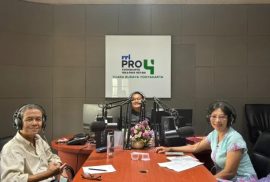
Prof. Dr. Hendrokumoro, M.Hum., during the Kawruh broadcast on Pro 4 Radio Republik Indonesia Yogyakarta. From Gen Z Expresses Modernity while Remaining Grounded and Njawani [Photo], by Titik Renggani, 2026, rri.co.id. Fully cited from: https://rri.co.id/yogyakarta/budaya/2433916/gen-z-berekspresi-modern-namun-tetap-membumi-dan-njawani.

The rapid flow of global culture has made today’s younger generation vulnerable to being swept along and potentially losing their identity. To address this challenge, locally grounded character education is considered an important foundation for preserving identity while shaping strong personal character. This issue was discussed by Prof. Dr. Hendrokumoro, M.Hum., a lecturer in the Javanese Language, Literature, and Culture Study Program, Faculty of Cultural Sciences, Universitas Gadjah Mada, during the Kawruh broadcast on Pro 4 Radio Republik Indonesia Yogyakarta on Friday, May 22, 2026, from 09:00 to 10:00 WIB. The broadcast carried the theme “Slay tapi Njawani: Manifesto Pendidikan Karakter Berbasis Lokal di Hari Kebangkitan Nasional [Slay but Njawani: A Manifesto of Locally-Based Character Education on National Awakening Day]” in commemoration of National Awakening Day (Renggani, 2026).

In his presentation, Prof. Dr. Hendrokumoro, M.Hum., explained that modernity is not something to be rejected. Young people are encouraged to express themselves while still holding firmly to Javanese cultural values, or njawani. These values are reflected in attitudes such as andhap asor (humility), avoiding arrogance, and upholding ethical behavior.

He also emphasized that preserving culture does not mean abandoning progress. On the contrary, local wisdom can go hand in hand with modernity. In the context of language, for instance, although language continues to evolve dynamically, young people still need to understand the concept of empan papan, which means using language appropriately according to the situation and context.

Furthermore, he highlighted that instilling ethical and moral values cannot be achieved solely through a blame-oriented approach. The process must involve listening, guiding, and positioning things proportionally. In this regard, the role of parents is crucial as role models, as expressed in the Javanese principle ing ngarsa sung tuladha, ing madya mangun karsa, tut wuri handayani, “those in front set an example, those in the middle build initiative, and those behind provide encouragement.”

This discussion is expected to broaden public understanding of the importance of maintaining a balance between culture and modern progress. Culture does not need to be abandoned for the sake of modernity; rather, it should be harmonized to remain relevant in contemporary life.

In addition, this activity aligns with the Sustainable Development Goals (SDGs), particularly SDG 4 on quality education through the dissemination of knowledge to the public. It also supports SDG 17 on partnerships by emphasizing the importance of collaboration among educational institutions, cultural institutions, and society in preserving the cultural heritage of the Indonesian archipelago, especially Javanese culture.


Bibliography

Renggani, T. (2026, 23 Mei). Gen Z Berekspresi Modern namun Tetap Membumi dan Njawani [Foto]. rri.co.id. Diakses pada 24 Mei 2026, dari https://rri.co.id/yogyakarta/budaya/2433916/gen-z-berekspresi-modern-namun-tetap-membumi-dan-njawani.


List of Figures

Renggani, T. (2026, May 23). Gen Z Expresses Modernity While Remaining Grounded and Njawani [Photo]. rri.co.id. Fully cited from https://rri.co.id/yogyakarta/budaya/2433916/gen-z-berekspresi-modern-namun-tetap-membumi-dan-njawani.


Author            : Haryo Untoro
Editor             : Haryo Untoro
Cipta Karya Sastra Jawa: A Creative Space for Students to Learn and Develop Literary Works

College StudentNewsSDGSStudentStudent's ActivityStudent's Work Thursday, 21 May 2026

In an effort to improve students’ writing skills, particularly in the field of Javanese literature, the Javanese Language, Literature, and Culture Study Program Universitas Gadjah Mada organized a teaching practitioner activity themed Javanese Literary Creation. The activity was held in Margono Room 404, Faculty of Cultural Sciences, Universitas Gadjah Mada as part of the Productive Written Javanese course on April 14 and 21, 2026.

The activity featured Sri Suryani as the teaching practitioner, guiding students to become more familiar with the world of Javanese literary writing. This class formed part of the Productive Written Javanese course for the 2026 academic year, taught by Dr. Sulistyowati, M.Hum.

During the first meeting on April 14, 2026, students received material on modern Javanese literary works and creative writing techniques, particularly short stories (cerkak). In addition to the presentation session, students and the teaching practitioner discussed the planned outputs of the activity, namely an anthology of cerkak and geguritan. Students were also given the opportunity to submit their written works, which would later be discussed in the following session.

Meanwhile, during the second meeting on April 21, 2026, students studied geguritan with a focus on stylistic elements. The activity then continued with a discussion of the works submitted in the previous meeting. Students presented drafts of their writing and discussed them with the teaching practitioner and fellow participants. The discussion session was lively and interactive, as students not only learned how to write, but also gained an understanding of the processes of developing, editing, and preparing literary works for publication.

The teaching practitioner activity was carried out smoothly and successfully, supported by the strong enthusiasm of students from the Javanese Language, Literature, and Culture Study Program in learning about Javanese literary writing. Through this activity, students not only gained an understanding of the creative process of literary writing, but also acquired practical experience in developing their works more thoroughly. The outputs of the activity, in the form of Javanese literary works such as cerkak and geguritan, are expected to serve as learning media as well as a means for younger generations to foster love and pride for Indonesian culture, particularly Javanese culture. In addition, this activity aligns with the goals of the Sustainable Development Goals (SDGs), especially SDG 4 on quality education through the strengthening of students’ literacy and creativity competencies, and SDG 17 on partnerships for the goals through collaboration between academics and practitioners in developing experience-based learning.


Author            : Haryo Untoro
Editor             : Haryo Untoro

The Javanese Language, Literature, and Culture Study Program, FIB UGM, Graduated 11 Students in the 2025/2026 Academic Period III Graduation Ceremony

College StudentNewsSDGSStudentStudent's Work Thursday, 21 May 2026

Thursday, (6/21/2026), was a joyful day for the entire family of the Javanese Language, Literature, and Culture Study Program. During the Undergraduate and Applied Undergraduate Graduation Ceremony for Academic Year 2025/2026 Period III, a total of 11 students were officially declared graduates and successfully completed their studies at the Faculty of Cultural Sciences, Universitas Gadjah Mada. The students who attended the graduation ceremony were:


  1. Agnes Anggito Sekar Laras
  2. Azaliya Khoirunnisa
  3. Dewi Halimatus Solikhah N
  4. Endar Sasmito Aji
  5. Haryo Untoro
  6. Jifani Wahyu Anggra Rani
  7. Muhammad Siswoyo
  8. Novia Hikmatul Mubarokah
  9. Rizqy Salsabila Ratna Purwadi
  10. Septi Indah Lestari
  11. Yosafat Dimas Rangga Adigama


This graduation ceremony also became a source of pride for the Javanese Language, Literature, and Culture Study Program. During the Mangayubagya Wisudawan/Wisudawati Sarjana Periode III Tahun Akademik 2025/2026 held by the Faculty of Cultural Sciences UGM, the Dean of the Faculty of Cultural Sciences UGM, Prof. Dr. Setiadi, S.Sos., M.Si.,, announced that Novia Hikmatul Mubarokah had achieved the distinction of obtaining the third-highest Grade Point Average (GPA) in the Faculty of Cultural Sciences graduation ceremony for this period.

This graduation marks the beginning of the graduates’ journey and dedication to society. The spirit and hard work demonstrated throughout their years of study are expected to serve as valuable provisions in facing both professional and academic endeavors in the future.

This graduation marks the beginning of a new journey for the graduates after completing their years of study. The knowledge, experiences, and spirit they have developed are expected to serve as a strong foundation in facing both professional life and their role in society. The graduates are also expected to continue preserving, safeguarding, and developing the cultural heritage of the Indonesian archipelago, especially Javanese culture, so that it may remain alive and beneficial to society as well as contribute to the progress of the nation.


Author            : Haryo Untoro

Editor             : Haryo Untoro
Javanese Script Font Socialization Encourages Digital Javanese Script Use

College StudentNewsSDGSStudentStudent's ActivityStudent's Work Thursday, 23 April 2026

Yogyakarta, Selasa, 22 April 2026 — Program Studi Bahasa, Sastra, dan Budaya Jawa, Fakultas Ilmu Budaya Universitas Gadjah Mada, menyelenggarakan kegiatan sosialisasi fon aksara Jawa di ruang Margono 402. Kegiatan ini ditujukan bagi perwakilan dosen dan mahasiswa sebagai upaya meningkatkan pemahaman penggunaan aksara Jawa dalam ranah digital.

Sosialisasi ini dilatarbelakangi oleh berbagai kendala yang selama ini dihadapi civitas academica dalam penggunaan fon aksara Jawa. Sejumlah permasalahan yang kerap muncul antara lain perbedaan tata letak papan tombol dengan sistem huruf Latin, ketidakterbacaan fon pada perangkat tertentu yang ditandai dengan kemunculan simbol tofu atau kotak (tanda tidak terbaca), hingga perbedaan kompatibilitas antara sistem papan tombol atau keyboard layout seperti Windows dan Macintosh. Kondisi tersebut dinilai menghambat penggunaan aksara Jawa, padahal aksara ini menjadi bagian penting dalam kajian serta preservasi budaya di lingkungan program studi.

Untuk menjawab persoalan tersebut, kegiatan ini menghadirkan Setya Amrih Prasaja, S.S., M.Pd., alumni Program Studi Bahasa, Sastra, dan Budaya Jawa, yang dikenal sebagai pengembang fon aksara Jawa digital. Selain itu, kegiatan ini juga dihadiri oleh perwakilan Dinas Kebudayaan (Kundha Kabudayan) Daerah Istimewa Yogyakarta sebagai bentuk dukungan terhadap upaya pelestarian budaya melalui teknologi.

Dalam pemaparannya, narasumber menjelaskan proses pengembangan fon dan keyboard layout aksara Jawa, termasuk tantangan teknis yang dihadapi dalam penerapannya di berbagai platform. Ia juga menguraikan langkah-langkah pengenalan aksara Jawa digital di tingkat nasional maupun internasional, serta pengembangan sistem yang dapat dioperasikan pada berbagai perangkat. Tidak hanya itu, peserta juga diperkenalkan pada sejumlah fon aksara Jawa yang dapat diakses secara bebas tanpa kendala lisensi.

Melalui kegiatan ini, peserta diharapkan memperoleh pemahaman yang lebih komprehensif mengenai penggunaan papan tombol dan fon aksara Jawa dalam konteks digital. Lebih lanjut, sosialisasi ini diharapkan dapat mendorong penyebarluasan pengetahuan kepada civitas academica dan khalayak yang lebih luas, sebagai bagian dari upaya pelestarian sekaligus penguatan eksistensi aksara Jawa di era digital.

Penulis           : Haryo Untoro
Editor             : Haryo Untoro
Seputar Jawa: The Digital Javanese Script Keyboard System

College StudentNewsSDGSStudentStudent's ActivityStudent's Work Monday, 13 April 2026

Typing Javanese script on digital devices is often not as easy as imagined. Instead of displaying the expected letters, the screen often displays a row of blank squares or tofu, a sign that the font is not legible. This problem is not isolated. In addition to font limitations, the differences in typing systems between the Latin alphabet and Javanese script also make it difficult for users to adapt. Furthermore, keyboard layouts vary across operating systems, from Windows to Macintosh to Android. This directly complicates the use and preservation of Javanese script, especially in the digital realm.

A number of Javanese script fonts are already available and can be used freely, such as NyK Ngayogyan and NyK Ngayogyan Jejeg, developed by the Yogyakarta Special Region Cultural Office. However, the problems don't stop at visual appearance. Without a uniform keyboard system, users continue to face obstacles in their daily typing practices.

This situation prompted the development of a Javanese script keyboard system based on the Indonesian script keyboard (SNI 9048). This system was designed with reference to the Serat Wulangreh manuscript as a cultural basis, while also being adapted to the needs of use on various digital devices. Through this standardization, it is hoped that uniformity in typing Javanese script will be achieved, eliminating the need for users to adapt to different systems.

This keyboard system is now available for various devices and is freely accessible to the public. Users can download and install it according to their operating system, whether Windows, Macintosh, or Android. The Javanese script keyboard system can be downloaded from https://wongsayuk.webnode.page/my-work/ or https://wongsaayuk.webnode.page by selecting the download menu. On the page, there is a "Javanese Aksara Keyboard" section, then select the SNI Nataksara system in various formats depending on the device: .exe file for Windows, .dmg file for Macintosh, and .apk file for Android.

After downloading and installing, users are advised to restart their device if the system is not immediately usable. An installation guide (pitoedoeh) is also provided to facilitate the installation process and ensure optimal system use.

Once the system is installed, understanding the keyboard layout is the next important step. Users need to understand the differences between the SNI 9048-based system and the device's native system, particularly on Windows devices. These differences can be seen in the image below.

Javanese script keyboard version SNI 9048
Downloaded from Javanese script keyboard version SNI 9048, by S.A. Prasaja, n.t. wongsayuk (https://wongsayuk.webnode.page/my-work/).

Javanese script keyboard version Windows
Downloaded from Javanese script keyboard version Windows, by S.A. Prasaja, n.t. wongsayuk (https://wongsayuk.webnode.page/my-work/).

The implementation of this standardized keyboard system is a crucial step in addressing the various technical challenges users have faced. Furthermore, the presence of Javanese script in the digital space serves not only as a visual element but also as part of efforts to maintain cultural continuity amidst technological advancements.

Ultimately, preserving Javanese script is not simply a matter of maintaining it; it also requires the courage to develop and adapt it to the times. Continuous support from various parties is key to ensuring that Javanese script not only remains alive but also remains present and empowered within the ever-changing digital ecosystem.


Author            : Haryo Untoro
Editor             : Haryo Untoro
 

Bibliography

Prasaja, S.A. (t.t.) Papan Tombol Aksara Djawa Versi SNI 9048. Wongsayuk. https://wongsayuk.webnode.page/my-work/

Prasaja, S.A. (t.t.) Papan Tombol Aksara Djawa Versi Windows. Wongsayuk. https://wongsayuk.webnode.page/my-work/

First Gathering of the Sahacitta Cabinet of the Kamastawa Student Association: A Means of Introduction and Strengthening Togetherness

College StudentNewsSDGSStudentStudent's ActivityStudent's Work Monday, 6 April 2026

On Saturday (4/4/2026), the Student Association of the Javanese Language, Literature, and Culture Student Association, or Kamastawa Student Association, held its first meeting, or inaugural meeting, of the Sahacitta Cabinet in the Auditorium on the 7th floor of the Soegondo Building. This event served as a means of building camaraderie among the board members and introducing the organizational structure and work program plans for the next term.

The event began at 7:30 a.m. WIB with an opening reception, followed by a serving of cokekan (rice cake) to open the atmosphere. In addition to all board members and students, the event was also attended by lecturers from the Javanese Language, Literature, and Culture Study Program, Faculty of Cultural Sciences, Gadjah Mada University, as a token of support for student activities.

The event was then officially opened by various Executive Chairs and the Chair of Kamastawa Student Association 2026. On this occasion, the advisor of Kamastawa Student Association, Dr. Rudy Wiratama, S.IP., M.A., also delivered various keynotes and symbolically inaugurated the Sahacitta Cabinet.

Entering the main session, the board introduced the Sahacitta Cabinet by explaining the philosophy of the name, visual identity, and direction of the organization. Etymologically, "Sahacitta" comes from the Sanskrit words "saha," meaning "together," and "citta," meaning "feeling." This naming reflects the spirit of togetherness and a unified consciousness to achieve the organization's goals.

The event continued with an explanation of the division structure and the board members who will implement the work program for the period. Each division explained its function and focus as part of the organization's development efforts, as well as its contribution to the preservation and development of Javanese language, literature, and culture.

The event concluded with a joint documentation session marking the beginning of the Sahacitta Cabinet administration. Through this activity, it is hoped that all board members can work synergistically to strengthen the organization's role, both in the academic environment and in the wider community.

Author            : Haryo Untoro
Editor             : Haryo Untoro
Ghibran Arsha Daffa’ Musaffa’ Named Outstanding Student of the Year in 2026

College StudentNewsSDGSStudentStudent's ActivityStudent's Work Thursday, 12 March 2026

On Tuesday (March 3, 2026), the Faculty of Cultural Sciences (FIB) of Gadjah Mada University (UGM) held an Open Senate Meeting to commemorate its 80th Anniversary. Amidst the solemn celebration, the "Outstanding Student of the 2026 Javanese Language, Literature, and Culture Study Program" award was presented to selected individuals, one of whom was Ghibran Arsha Daffa’ Musaffa’ from the Javanese Language, Literature, and Culture Study Program.

Ghibran's selection as an Outstanding Student was not without reason. Ghibran is known as a student who is actively involved in Javanese culture. Some of his achievements include third place in the Nusantara Cultural Gathering Storytelling Competition, second place in the Youth Ceremony Competition for the Bantul Regency Language and Literature Competition in 2025, and being selected as a finalist for the 2025 Dimas Diajeng Yogyakarta City Competition.

Besides competitions, Ghibran is also active in various other activities. He was involved as an actor in the play "Adisari Cahaya Kasih di Balik Penaklukkan," served as Master of Ceremonies (MC) at the Closing Ceremony of Wonderful Indonesia Wellness, and even served as a storyteller in the Dimas Diajeng Yogyakarta Field Program in Sleman Tourism Village.

However, behind these successes, Ghibran revealed that his journey has been a long process. In an online interview on Friday (April 24, 2026), he shared that his drive to achieve has been growing since elementary school.

"My motivation started with something simple and perhaps funny. Since elementary school, I wanted to earn extra pocket money because our family was financially poor at the time," Ghibran said. He recalls a time when his pocket money was only Rp 2,000 in fourth grade. At that time, his mother challenged him to keep his allowance. From there, she encouraged him to pursue competitions with prizes.

His first victory in the Bantul Regency-wide Ngudar Kawruh Tembang competition was a turning point. From then on, Ghibran realized that achievement wasn't just about money, but also a path to success. His achievements earned him admission to junior high school through the achievement pathway and even opportunities to appear on national media outlets like TVRI.

Entering his studies at UGM, Ghibran set out to make a real contribution to his alma mater. "I may not have been the most outstanding student academically, but I always tried to give the university a 'souvenir' in the form of a trophy," he said. Ultimately, he earned the opportunity to recite poetry before the Indonesian Minister of Education in 2024.

For him, the title of Outstanding Student is not just an award. He feels gratitude, but also a sense of responsibility. This motivates him to continue working hard. "My plans for the future: I want to graduate on time, but still actively participate in competitions. I want to continue being a useful person," he explained.

He also shared the key to his consistency. Since childhood, he has been writing down his goals on a piece of paper and sticking it on his bedroom wall. "Never be ashamed to dream big. For me, dreaming is the first step to achievement. Through hard work and prayer, each dream becomes a reality," he concluded. He also emphasized the importance of gratitude in every step of the process, both during victories and facing failures.


Author            : Haryo Untoro
Editor             : Haryo Untoro

Seputar Jawa: Banten Javanese Dialect, a Dialect that Exists at the Westernmost of Javanese Island

NewsSDGS Tuesday, 10 March 2026

Javanese has often been associated with the regions of Yogyakarta and Surakarta, which are known as the centers of Javanese culture. In addition, people are also familiar with the straightforward East Javanese dialect or the Banyumasan dialect, which is often considered unique by other Javanese speakers. However, not many people realize that Javanese is also alive and thriving outside these main areas, namely in Banten Province, at the western tip of Java Island. In this region, a language variation known as the Banten dialect of Javanese has developed.

In his classification of Javanese dialects, Ras (1994) divides Javanese into three major groups, namely the western, central, and eastern Javanese dialects. The Banten Javanese dialect (BJDB) belongs to the western Javanese dialect group and is often referred to as Serang Javanese or Jaseng, because most of its speakers are located in the city of Serang and Serang Regency (Rohbiah & Mu'awwanah, 2021).

There are several sources that mention different areas of BJDB usage. Research by Danasasmita and Pronggodigdo states that this dialect is used in the former Banten Residency, which includes the regencies of Serang, Pandeglang, and Lebak. Meanwhile, the West Java Provincial Tourism Office also includes the Tangerang area as a region where speakers of this dialect are found (Iskandarwassid, Mulyana, Hudari, et al., 1985). Geographically, the existence of this language is quite unique because it is located between several other language communities, namely Betawi speakers in the Jakarta area, Sundanese speakers in southern Banten, and Lampung speakers across the Sunda Strait (Rohbiah & Mu'awwanah, 2020).

The Influence of History on Dialect Development

The emergence of the Javanese language in Banten cannot be separated from the long historical process of the region. In the early 16th century, the Banten region was still under the rule of the Sunda Kingdom. This situation changed after the Sunda-Portuguese Treaty in 1522. The treaty sparked a conflict that led to the conquest of the Port of Banten in 1526 and Sunda Kelapa in 1527 by the armies of Demak and Cirebon (Iskandarwassid, Mulyana, Hudari, et al., 1985).

After the conquest, Banten was led by Syarif Hidayatullah, who came from Cirebon. However, politically, Banten was actually controlled by the Sultan of Demak. Under the leadership of Syarif Hidayatullah, Banten developed into an Islamic kingdom that was active in the trade and transportation network for Javanese and Islamic traders (Iskandarwassid, Mulyana, Hudari, et al., 1985). Patmadiwiria (1977) added that the settlement of Banten's conquering soldiers from Java also brought with it the Javanese language and culture. Therefore, it can be understood that the Demak and Cirebon Sultanates were the cause or origin of the emergence of the Banten dialect.

The influence of Javanese culture also grew stronger in the 17th century when the Mataram Sultanate expanded its influence to West Java. The spread of Javanese culture at that time occurred not only among the elite, but also among the lower classes (Iskandarwassid, Mulyana, Hudari, et al., 1985).

In addition to historical factors, geographical conditions also shaped the development of BJDB. The existence of the Port of Merak, which served as a connecting route between Java and Sumatra, enabled intensive interaction with the Lampung community. This interaction gave rise to communities of Lampung language speakers in several coastal areas of Banten, such as in the Anyer District. This cultural contact then influenced the vocabulary of the Banten dialect of Javanese (Rohbiah & Mu'awwanah, 2021).

Unique Pronunciation

As a dialect, BJDB has distinctive characteristics, especially in terms of pronunciation and vocabulary. One of the most prominent unique features is the variation in the pronunciation of the phoneme /a/. In a study conducted by Iskandarwassid, Mulyana, Hudari, et al. (1985), it is mentioned that this sound has three different pronunciations, depending on the region of the speaker.

In the areas of Serang City, Cilegon, and the surrounding regions, the phoneme /a/ is often pronounced closer to the sound [ɤ], which is similar to the sound “eu” in Sundanese (Patmadiwiria, 1977; Iskandarwassid, Mulyana, Hudari, et al., 1985). Meanwhile, in the suburbs of Serang, such as Barugbug, Pagelaran, Cikande, and Kragilan, the phoneme /a/ is still pronounced as [a]. In some areas, such as Rancasawah and parts of Cilegon, the phoneme /a/ is pronounced as [ɔ] (Iskandarwassid, Mulyana, Hudari, et al., 1985).

Variations in the sound of the phoneme /a/ occur in several circumstances, including the following (Karia, 1914; Iskandarwassid Mulyana, Hudari, et al., 1985):

  1. The phoneme /a/ in open syllables will produce variations in sound. Examples: sira [sirɤ], ora [orɤ], and kula [kulɤ].
  2. Specifically in the Serang City area and its surroundings, /a/ can be pronounced [ɤ] in one-syllable words, such as mah [mɤh]. However, other one-syllable words such as lah, la, and tah are still pronounced [a].
  3. If /a/ is located in a word with an open syllable, then followed by a suffix, /a/ is pronounced as /a/. Examples: sira [sirɤ] becomes sirane [siranI] and apa [apɤ] becomes apane [apanI].

Distinct Vocabulary

In addition to pronunciation, BJDB also has a number of words that differ from the standard Javanese language used in Yogyakarta and Surakarta. Here are five examples and their pronunciations based on and adapted from Karia (1914), Iskandarwassid, Mulyana, Hudari, et al. (1985), Poerwadarminta (1939), Sulistyowati (2015), and Patmadiwiria (1977):

  1. kastelâ or kêstelâ ‘papaya’, which in standard Javanese is called kates
  2. sirâ ‘you’, which in standard Javanese is called kowe
  3. kepremen ‘how’, which in standard Javanese to kepiye
  4. ayun ‘want’, which in standard Javanese is called arep
  5. ning ‘if’, which in standard Javanese is called yen
  6. derbe ‘have’, which in standard Javanese is called duwe
  7. linggar ‘go’, which in standard Javanese to lungå

These vocabulary differences show that BJDB has unique lexical developments and is not completely identical to standard Javanese.

*For convenience, the author provides special symbols for <a>, which is pronounced [a], <å>, which is pronounced [ɔ], and <â>, which is pronounced [ɤ].

Language Contact Results

The uniqueness of BJDB is also reflected in the large number of words resulting from contact with other languages. Sundanese, Betawi, Malay, and Lampung languages have also influenced the vocabulary of this dialect. Based on Rohbiah & Mu'awwanah (2021), the following are examples of the influence of each of these languages.

  1. From Sundanese, for example, the words kolot, meaning ‘old’, and beuleum, meaning ‘to burn’, are used by BJDB speakers in Binong Village, Pamarayan District, instead of the words tuâ and ngobong in BJDB.
  2. From the Betawi language, there are the words engkong, which means ‘grandfather’, and betot, which means ‘to pull’, which are used by BJDB speakers in Pedaleman Village, Tanara District, instead of using the words ende lanang and narik in BJDB.
  3. The influence of the Malay language can be seen in the use of the word laki to refer to ‘husband’ by BJDB speakers in Kampung Baru & Binong Villages, Pamarayan District, Pontang & Wanayasa Villages, Pontang District, Tanara & Pedaleman Villages, Tanara District, and Anyar & Cikoneng Villages, Anyar District, instead of using the words rayat lanang in BJDB.
  4. The influence of the Lampung language is evident in the words eppak, which means ‘four’, and duwai, which means ‘lake’, used by BJDB speakers in Anyar Village, Anyar District, instead of using the words papat and danau in BJDB.

This phenomenon of absorption usually occurs in areas that have a high intensity of cultural contact with certain language communities.

Bibliography

Iskandarwassid; Mulyana, Y.; Hudari, A; Sjarif, T.K.S. (1985). Struktur Bahasa Jawa Dialek Banten. Jakarta: Departemen Pendidikan dan Kebudayaan.

Karia, M. M. D. (1914). Dialect Djawa Banten. Batavia: G Kolff & Co.

Patmadiwiria, M. (1977). Kamus Dialek Jawa Banten-Indonesia. Jakarta: Departemen Pendidikan dan Kebudayaan.

Poerwadarminta, W.J.S. (1939). Baoesastra Jawa. Batavia: J.B. Wolters’ Uitgevers-Maatschappij N. V. Groningen.

Ras, J.J. (1994). Inleiding tot het Modern Javaans. Leiden: KITLV.

Rohiah, T.S., & Mu’awwanah, U. (2020). Inovasi Leksikal Bahasa Jawa Banten di Perbatasan Kabupaten Serang Provinsi Banten: Kajian Geografis – Linguistik. Serang: Media Madani

Sulistyowati. (2018). Kompleksitas dan Fleksibilitas Realisasi Bunyi Vokal Bahasa Jawa. Mutiara dalam Sastra Jawa Edisi 4, 4(3), 29-45.


List of Figures

Akbar. (2025, October 13th). Keraton Kaibon, Jejak Kejayaan Kesultanan Banten di Kota Serang [Picture]. Serangkota.go.id. https://serangkota.go.id/detailpost/keraton-kaibon-jejak-kejayaan-kesultanan-banten-di-kota-serang.

Author: Haryo Untoro
Editor: Haryo Untoro & Nurul Fajri Rahmani
Thumbnail Maker: Nurul Fajri Rahmani

Seputar Jawa: Forms of Javanese Proverbs

NewsSDGS Monday, 9 March 2026

Indonesians often use proverbs or idioms when communicating. One example is the frequent use of the Malay idiom “tak kenal maka tak sayang” to lighten the mood in various formal and informal settings. However, upon closer examination, Javanese culture also has idioms and proverbs that are worth exploring. In his dissertation, Hendrokumoro (2016) explains that Javanese culture has eight types of proverbs, including paribasan, bêbasan, saloka, pêpindhan, sanepa, panyandra, isbat, and sêmboyan.

The first form described is the paribasan. Technically, paribasan is a grammatical unit with a fixed structure that is straightforward and does not contain a metaphor, yet carries a figurative meaning (Padmosoektojo, 1958). One example is the expression ana catur mungkur, which literally means “there is talk of leaving.” The meaning behind this expression is the wise attitude of someone who refuses to pay attention to gossip or negative talk from others (Padmosoektojo, 1958:62).

Furthermore, there is a Javanese proverb known as bebasan.” Bebasan is a proverb with a fixed form, figurative meaning, and emphasizes the metaphorical description of a person’s condition or behavior (Padmosoekotjo, 1958). An example is wis kêbak sundukane “the pricks are already full”, indicating that the person in question has committed many mistakes. This metaphor originates from the culture of elders or leaders in the past who used to insert pins to record the mistakes of their subordinates. If the pins were full, it meant that the person had committed far too many mistakes (Padmosoektojo, 1958:62).

The next category is saloka, Javanese proverbs that take the form of fixed phrases and share similarities in both usage and meaning (Padmosoekotjo, 1958). The primary focus is on the subject or person; what is being likened is a person, a trait, or a situation, using metaphors involving animals or objects (Padmosoekotjo, 1958; Subalidinata, 1968; Dirdjosiswojo, 1956). An example of a saloka is asu bêlang kalung wang ‘a spotted dog wearing a money necklace’, which depicts the common people or the lower class possessing abundant wealth (Padmosoekotjo, 1958:76).

Additionally, there are pêpindhan that function as instruments of comparison. Unlike other forms, pêpindhan often use comparative terms such as lir, pindha, kaya, or their synonyms to equate objects with humans (Padmosoekotjo, 1958; Hadiwidjana, 1967). For example, the expression kuning pindha mas sinangling ‘yellow like gold that has been polished’ is used to describe a yellow color that shimmers beautifully, much like gold that has been polished. Furthermore, sangling itself is a tool used for polishing gold (Padmosoekotjo, 1958: 95).

The next category is sanepa. Sanepa is a metaphor whose meaning actually conveys the opposite or a negation (Subalidinata, 1968). The expression suwe banyu sinaring—“water takes a long time to filter”—for example, is actually used to describe someone who responds very quickly to something (Hendrokumoro, 2016).

Javanese proverbs also employ aesthetic or beautiful forms in the sense of panyandra or candra. Panyandra or candra is used to describe physical beauty as a form of impressive praise (Padmosoekotjo, 1958; Hendrokumoro, 2016). One form of bodily beauty often praised is drijine mucuk eri, which describes fingers as beautiful as thorn tips, characterized by fingertips that are smaller than the base of the finger (Hendrokumoro, 2016).

Another form of Javanese proverb is called Isbat. The form of isbat is similar to saloka, whose content or intended meaning relates to metaphysical, philosophical, or occult dimensions containing spiritual messages (Widati et al., 2015; Subalidinata, 1968). The expression golek gêni adêdamar ‘searching for fire while carrying a lamp’ serves as a philosophical metaphor suggesting that in the pursuit of true knowledge, one requires a foundation of knowledge to serve as a guide (Widati et al., 2015).

Finally, as a source of inspiration, the term sêmboyan refers to a set of phrases designed to foster optimism and guide action (Hendrokumoro, 2016). The legendary motto rawe-rawe rantas, malang-malang putung—“swinging objects are struck down, obstructing objects are severed”—reflects an unyielding determination to overcome all obstacles in order to achieve the desired goal (Hendrokumoro, 2016:92).


Bibilography

Dirdjosiswojo. (1956). Paribasan. Jogjakarta: Kalimosodo.

Hendrokumoro. (2016). Peribahasa dalam Bahasa Jawa. Disertasi. Yogyakarta: Program Pascasarjana, Fakultas Ilmu Budaya, Universitas Gadjah Mada.

Padmosoekotjo, S. (1958). Ngengrengan Kasusastraan Djawa I: Kanggo Para Siswa Sekolah Guru lan Sekolah Landjutan Lijane. Jogjakarta: Hien Hoo Sing.

Subalidinata, R.S. (1968). Sarining Kasusastraan Djawa. Jogjakarta: Jaker.

Widati, S., Rahayu, P., dan Prabowo, D.P. (2015). Ensiklopedi Sastra Jawa. Yogyakarta: Kementerian Pendisikan dan Kebudayaan, Balai Bahasa Provinsi Daerah Istimewa Yogyakarta

Author: Haryo Untoro
Editor  : Haryo Untoro, Nurul Fajri Rahmani

Graduating in 3.5 Years: The Strategy of Three Students from the Javanese Language, Literature, and Culture Study Program at UGM in Completing Their Studies

College StudentNewsSDGSStudentStudent's Activity Monday, 2 March 2026

Graduating in 3.5 years is no longer impossible for students. This is proven by three students from the Javanese Language, Literature, and Culture Program at UGM, namely Yasmin Nabiha Sahda, Pesdhi Sekar Hayumay, and Hanundita Salma. The three students officially graduated on Wednesday, February 25, 2026, after completing their education in only seven semesters.

During an interview on Friday, February 27, 2026, the three shared tips on how students can complete their thesis and graduate quickly. Yasmin Nabiha Sahda (Yasmin) advised students to finalize their research topic by the sixth semester. According to her, this strategy is very effective so that students can immediately focus on studying the literature and developing a research framework without wasting time during the thesis writing process.

In addition to early preparation, interest and time management also greatly influence the thesis writing process. Pesdhi Sekar Hayumay (Pesdhi) emphasized that choosing a research topic that suits one's abilities and personal interests will make the research process run more smoothly. She also added that setting clear work targets and mastering relevant theories can help students stay focused during the research process.

Meanwhile, Hanundita Salma (Hanun) said that a thesis that seems difficult should be broken down into several small stages so that the work feels more focused. Hanundita also highlighted the importance of a supportive group of friends and active communication with lecturers as discussion partners to speed up the process of completing the final assignment.

In addition, these three graduates also shared messages for their fellow students who are still struggling. Yasmin encouraged them to truly use their time in college to enrich themselves with a deep understanding of Javanese literature. Meanwhile, Pesdhi and Hanun agreed that the key to completing a final project is not speed alone, but perseverance in tackling the thesis without losing the joy of the process.

Their experiences demonstrate that a thesis can be completed gradually with proper planning. Through these tips and experiences, it is hoped that they can serve as a reference and inspire students who are planning and completing their thesis projects.


Author                        : Haryo Untoro
Editor                         : Haryo Untoro & Nanda Nursa Alya
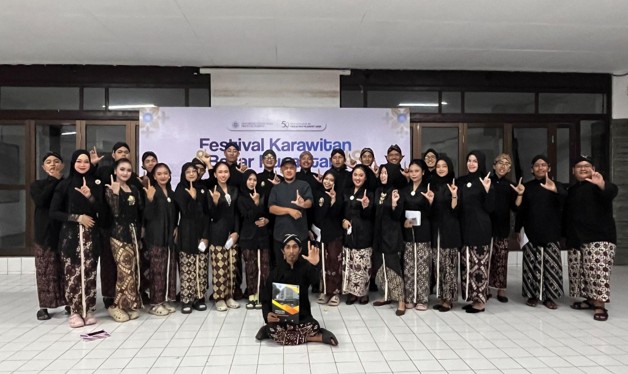
Thumbnail Maker    : Haryo Untoro
12

Recent Post

  • Prof. Dr. Hendrokumoro, M.Hum.: Express Yourself, but Stay Njawani ‘Rooted in Javanese Values’
    May 22, 2026
  • Cipta Karya Sastra Jawa: A Creative Space for Students to Learn and Develop Literary Works
    May 21, 2026
  • The Javanese Language, Literature, and Culture Study Program, FIB UGM, Graduated 11 Students in the 2025/2026 Academic Period III Graduation Ceremony
    May 21, 2026
  • Javanese Script Font Socialization Encourages Digital Javanese Script Use
    April 23, 2026
  • Seputar Jawa: The Digital Javanese Script Keyboard System
    April 13, 2026

Calender

June 2026
M T W T F S S
1234567
891011121314
15161718192021
22232425262728
2930  
« May    
  • Fakultas Ilmu Budaya
  • Ujian Masuk UGM
  • PPSMB
  • Alumni
  • Jurnal Humaniora
June 2026
M T W T F S S
1234567
891011121314
15161718192021
22232425262728
2930  
« May    

News

  • Prof. Dr. Hendrokumoro, M.Hum.: Express Yourself, but Stay Njawani ‘Rooted in Javanese Values’
    May 22, 2026
  • Cipta Karya Sastra Jawa: A Creative Space for Students to Learn and Develop Literary Works
    May 21, 2026
  • The Javanese Language, Literature, and Culture Study Program, FIB UGM, Graduated 11 Students in the 2025/2026 Academic Period III Graduation Ceremony
    May 21, 2026
Universitas Gadjah Mada

Javanese Language, Literature, and Culture Program
Department of Language and Literature
Faculty of Cultural Sciences
Universitas Gadjah Mada


Sosiohumaniora St., Bulaksumur, Yogyakarta
Telp : 0274-901134 Ext. 110, Fax : 0274-550451, WhatsApp : 081211911281
Email : nusantara@ugm.ac.id

© 2025 Javanese Language, Literature, and Culture Program FIB UGM

KEBIJAKAN PRIVASI/PRIVACY POLICY