- Home
- 2026
- page. 2
2026
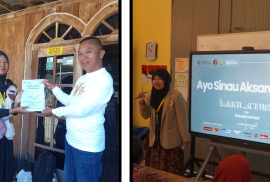
UGM Female Student of Javanese Language, Literature, and Culture Documents Temanggung Language and Javanese Script through KKN-PPM in Bansari Village
College StudentNewsSDGSStudentStudent's ActivityStudent's Work Wednesday, 19 August 2026
Eka Nur Cahyani, a student of the Javanese Language, Literature, and Culture (BSBJ) Study Program at the Faculty of Cultural Sciences (FIB), Universitas Gadjah Mada (UGM), implemented a regional language and script preservation program during the UGM Community Empowerment Student Study Service (KKN-PPM) for the second period of 2026. Eka, a 2023 cohort student, was part of the KKN unit "Waksudha Bansari 2026" (code JT123), which carried out service in Bansari Village, Temanggung Regency, from June 20 to August 8, 2026.
During her time in Bansari Village, Eka conducted two programs related to her field of study: Nyinau Basa Temanggungan (Learning Temanggung Language) and Ayo Sinau Aksara Jawa (Let’s Learn Javanese Script). The first program focused on documenting the Temanggung language (Bansari dialect), while the second was aimed at introducing Javanese script to students at SDN (Public Elementary School) Bansari, specifically in Pringapus hamlet, Bansari Village.
Through the Nyinau Basa Temanggungan program, Eka compiled a pocket dictionary of the Temanggung language (Bansari dialect). Vocabulary data was collected through interviews with village officials and community members who are native speakers, utilizing the Swadesh 200-word list. The Swadesh 200-word list is a basic vocabulary list compiled by linguist Morris Swadesh in 1952. This list contains approximately 200 universal concepts believed to be possessed by nearly all languages; they are relatively stable, rarely borrowed, and tend to persist over long periods (Swadesh, 1952). The data was then analyzed and organized into entries for a pocketbook, complete with word categories and Indonesian equivalents. Uniquely, the compilation of this dictionary also served as an application of knowledge acquired from her Lexicography and Interdisciplinary Linguistics courses. The pocketbook is expected to document the Bansari dialect of the Temanggung language still used by the community while acting as a medium to introduce local language and culture to support the development of Bansari Village as a tourist destination.
Furthermore, the second program, Ayo Sinau Aksara Jawa, was carried out in collaboration with students at SDN Bansari. The activity began with coordination with teachers to determine the state of Javanese script instruction at the school. Subsequently, material was delivered through flashcards, educational games, reading and writing practice, and an introduction to the rules of Javanese script writing.

Enthusiasm of SDN Bansari Students in Participating in the Ayo Nyinau Aksara Jawa Program
In addition to reading and writing, Eka also introduced the iluminasi rerenggan (illuminated ornamentation) found in Javanese manuscripts to the students. Illumination refers to the brightening or heightening of a manuscript page's impression through writing techniques, color patterns, decorative framing of text, rubrics, and calligraphy (Behrend, 1996), including wedana, rerenggan, and stanza markers (Saktimulya, 2015). After being introduced to rerenggan as manuscript decoration, the students were invited to decorate their names written in Javanese script. Through this activity, the students not only practiced writing the script but also became familiar with elements of art and aesthetics in the Javanese manuscript tradition.
In its implementation, both programs naturally faced a number of challenges. In the Nyinau Basa Temanggungan program, for example, differences in vocabulary usage were found between generations. This condition required Eka to verify data with multiple sources to ensure accuracy. Meanwhile, in the Ayo Sinau Aksara Jawa program, challenges arose from the diverse abilities of the students and the perception that Javanese script is a difficult subject to learn.
Nevertheless, both programs received a positive response from the community and the school. In compiling the dictionary, the community and village officials provided information on vocabulary still used in daily conversation. At school, students participated in the Javanese script program with enthusiasm, both through games and script-writing practice. According to Eka, the use of interactive learning media is one way to increase students' interest and ability in reading and writing Javanese script.
The KKN-PPM implementation produced two main outputs. The Nyinau Basa Temanggungan program resulted in a printed and digital pocket dictionary of the Temanggung language (Bansari dialect), which can be accessed via the following link: Google Drive Link.
Meanwhile, the Ayo Sinau Aksara Jawa program produced a number of student works in the form of rerenggan illuminations on Javanese script writing. Both outputs are part of an effort to document local language while introducing Javanese script and traditional arts to the younger generation.


Some examples of work by SDN Bansari students
KKN-PPM programs like the one conducted by Eka serve as a tangible form of introducing, preserving, and "grounding" the wealth of regional culture, specifically Javanese language and culture, through direct involvement in the community. By compiling the pocket dictionary and providing Javanese script instruction to elementary students, the knowledge gained during her studies was applied while providing benefits to the community. These activities also align with the Sustainable Development Goals (SDGs): Point 4 on quality education and Point 17 on partnerships for the goals, through collaboration between students, the community, village government, and schools.
Author : Eka Nur Cahyani & Haryo Untoro
Editor : Haryo Untoro
References
Behrend, T. E. (1996). Textual Gateways: The Javanese Manuscript Tradition. Dalam A. Kumar & J. H. McGlynn (Eds.), Illuminations: The Writing Traditions of Indonesia: Featuring Manuscripts from the National Library of Indonesia (pp. 161–200). The Lontar Foundation; New York & Tokyo: Weatherhill, Inc. https://books.google.com/books?id=-n5iAAAAMAAJ
Swadesh, M. (1952). Lexico-statistic dating of prehistoric ethnic contacts. Proceedings of the American Philosophical Society, 96(4), 452–463.
Saktimulya, S. R. (2015). Naskah-Naskah Skriptorium Pakualaman Periode Paku Alam II (1830–1858): Kajian Kodikologi, Filologi, dan Hermeneutika. École française d'Extrême-Orient.


Contributions of Students and Alumni of the Javanese Language, Literature, and Culture Study Program to Pionir Kampung Budaya 2026
AlumnusCollege StudentNewsSDGSStudentStudent's Activity Friday, 7 August 2026
Questions such as “Nek kuliah neng Sastra Jawa ’ki arep dadi dukun ’pa?” (If you study Javanese Literature, do you want to become a traditional healer?) may still be encountered as a common perception of the field of Javanese language, literature, and culture. In reality, opportunities for students to develop themselves in these fields can take many forms, including performing arts, event hosting, and cultural activities.
This was among the things reflected in the implementation of Pionir Kampung Budaya 2026. A number of students from the Javanese Language, Literature, and Culture Study Program were involved in the series of activities in various roles. Their involvement extended beyond academic activities, encompassing participation in student activity units as well as experience in the arts and event hosting.
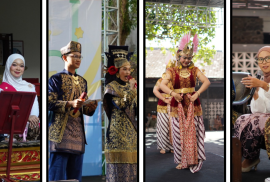
One of the groups involved was Gamelan Sastra Nusantara (Gamasutra), a student activity unit under the Student Association of the Javanese Language, Literature, and Culture Study Program (HMJ Kamastawa). Gamasutra performed gamelan music during the morning activities while welcoming the new students, or Mahadaya, of the 2026 cohort. The group also accompanied the opening series of events through the inauguration of Pionir Kampung Budaya 2026.
In addition to Gamasutra, Ratnaraya, a student organization dedicated to traditional dance, also took part in the event. Students from Ratnaraya performed Tari Golek Ayun-Ayun Jugag, a traditional dance from Yogyakarta that portrays a young woman entering adulthood and searching for her identity. The involvement of both student organizations highlights the activities of students in the Javanese Language, Literature, and Culture Study Program in the fields of art and culture.
Student involvement was also evident in event hosting. Two students from the Javanese Language, Literature, and Culture Study Program, Ghibran Arsha Daffa’ Musaffa’ and Ananda Choirul Nur Alalia, served as master of ceremonies (MCs) during Pionir Kampung Budaya 2026. Ghibran is a member of the 2024 cohort, while Ananda is from the 2025 cohort. Both have previous experience as event hosts on various occasions.
The event also involved alumni of the Javanese Language, Literature, and Culture Study Program. Nurma Aisyah, S.S., an alumna of the study program who currently works as an event host and journalist at Tribunnews, participated as one of the speakers. Her involvement represents another example of how graduates of the Javanese Language, Literature, and Culture Study Program have pursued professional careers related to communication and media.
These various roles demonstrate that students from the Javanese Language, Literature, and Culture Study Program can contribute to campus activities through a wide range of fields. Knowledge of language, literature, and culture can go hand in hand with the development of other skills, such as performing arts, public communication, leadership, and event hosting.
Participation in activities such as Pionir Kampung Budaya 2026 can also provide students with opportunities to gain experience beyond the classroom. Such experiences can become part of their learning process while helping them develop skills needed in both academic life and the professional world.
In this regard, Mahadaya are encouraged to continue learning and developing themselves through both academic studies and various activities on and off campus. These experiences can serve as valuable foundations for developing their knowledge, skills, and abilities in accordance with their areas of interest.
Author : Haryo Untoro
Editor : Haryo Untoro
Gamasutra Enlivens Pionir Kampung Budaya 2026
College StudentNewsSDGSStudentStudent's ActivityStudent's Work Thursday, 6 August 2026
The Faculty of Cultural Sciences (FIB), Universitas Gadjah Mada (UGM), held Pionir Kampung Budaya on Wednesday–Thursday, 5–6 August 2026, as part of the Pionir Gadjah Mada series. The event served as an introduction to the faculty environment for the 2026 cohort of new students, known as Mahadaya, while also introducing them to various academic and student activities available during their studies at FIB UGM.
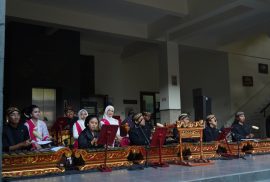
One of the activities featured during the opening of Pionir Kampung Budaya 2026 was a performance by Gamelan Sastra Nusantara (Gamasutra). Several students from the Department of Javanese Language, Literature, and Culture who are members of Gamasutra participated in the event through a traditional Javanese gamelan performance. Gamasutra is a student organization that provides a space for students interested in Javanese gamelan music to learn, practice, and develop their skills in the traditional performing art.
Gamasutra's gamelan performance accompanied the opening of Pionir Kampung Budaya 2026 and welcomed the new Mahadaya students. The performance also accompanied the arrival of the Chair of Pionir Kampung Budaya 2026, the 2026 President of the Student Executive Board (LEM), the Dean of FIB UGM and faculty leadership, as well as heads of departments across FIB UGM. Gamasutra's presence formed part of the event's activities introducing new students to faculty life through artistic and cultural experiences.
Gamasutra's performance continued during the official inauguration of Pionir Kampung Budaya 2026. The students' involvement in the ceremony demonstrated that the new student orientation program extends beyond introducing the academic environment, while also providing opportunities for students to take part directly in artistic and cultural activities within the faculty.
For Gamasutra, participation in Pionir Kampung Budaya provided an opportunity for its members to put their gamelan skills into practice while introducing the art of gamelan to the new students. For the 2026 Mahadaya cohort, the performance became part of their initial experience of student life at FIB UGM, including an introduction to various opportunities for developing their interests and participating in artistic activities during their studies.
The event also forms part of FIB UGM's efforts to provide students with opportunities to develop their interests, skills, and experience in the arts. As an academic environment dedicated to the study of language, literature, and culture, FIB UGM recognizes artistic and cultural activities as an important complement to students' educational experiences beyond the classroom. This effort is aligned with the Sustainable Development Goals (SDGs), particularly SDG 4 (Quality Education) through the development of students' experiences and potential, and SDG 17 (Partnerships for the Goals) through collaboration in organizing activities within the faculty.
Through Pionir Kampung Budaya 2026, Gamasutra's participation brought together the introduction of new students to university life with artistic practice carried out by FIB UGM students. For the 2026 Mahadaya cohort, the experience marked part of their first steps in becoming familiar with the faculty environment, including opportunities to learn, create, and participate in student life at FIB UGM.
Author : Haryo Untoro
Editor : Haryo Untoro
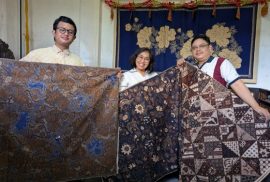
The Department of Javanese Language, Literature, and Culture, Faculty of Cultural Sciences, Universitas Gadjah Mada, has produced many alumni who have contributed to the preservation and development of the Javanese language, literature, and culture. One of them is Aji Setyowijaya, a member of the 2008 cohort who is now dedicated to the world of batik as a craftsman of traditional Yogyakarta batik.
The Department of Javanese Language, Literature, and Culture had the opportunity to visit and interview Aji Setyowijaya, hereafter referred to as Mas Aji, in person on Tuesday, 21 July 2026. The 2008 alumnus, who was also a recipient of a scholarship from Yayasan Arsari Djojohadikusumo (YAD), also known as Yayasan Keluarga Hasyim Djojohadikusumo (YKHD), explained that his interest in batik began with his admiration for inherited batik cloths. He often came across old batik fabrics of exceptional quality and beauty, but they had become so fragile that they were no longer suitable for use. “I used to enjoy looking at inherited batik cloths. The fabrics were beautiful and I wanted to wear them, but they had become too fragile. Eventually, I was motivated to try reproducing old batik cloths. At the same time, during my university years, I also enjoyed wearing rasukan, or traditional Javanese attire,” he said.
This interest encouraged him to begin learning batik-making in 2009. He studied various batik techniques by observing and learning directly at several batik centers in Yogyakarta. During this early period, Mas Aji focused on understanding the principles and techniques of traditional Yogyakarta batik as the primary foundation before developing his own works.
Building on this understanding, between approximately 2013 and 2015, Mas Aji began producing antique batik, also known as batik kama or batik lawasan. According to him, during that period both the public and collectors highly appreciated batik lawasan because it was assumed to have originated several decades earlier. “At that time, in the batik trade, people appreciated antique batik, or kama, or lawasan, with the assumption that the batik was 50–70 years old,” he explained.
However, this experience also gave rise to a sense of concern. According to Mas Aji, batik should not merely be regarded as a classical work that ends with reproducing the past. Batik should continue to develop without abandoning its traditional roots. Based on this perspective, he began incorporating his personal identity into every work he created while also expanding his exploration beyond the characteristic style of Yogyakarta batik.
In line with this spirit, since 2018 Mas Aji has devoted himself to studying natural dye techniques for traditional Yogyakarta batik. For him, learning about natural dyes is not merely about producing a wider range of colors, but also about rediscovering the technical knowledge inherited from earlier generations of batik artisans.
In his creative process, Mas Aji does not work alone. He collaborates with his colleague, Yahya Adi Sutikno, who focuses on the design process, while Mas Aji is primarily responsible for production. This collaboration enables them to produce a wide range of batik works through complementary approaches.
Their works include sample pieces featuring various batik motifs on a single piece of cloth consisting of 27, 260, and even 480 motif samples, as well as replicated batik, batik lawasan, and batik resulting from transformation, media transfer, and various forms of creative batik. Their exploration extends beyond batik cloth itself to other textile media, such as sarung and other types of fabric.
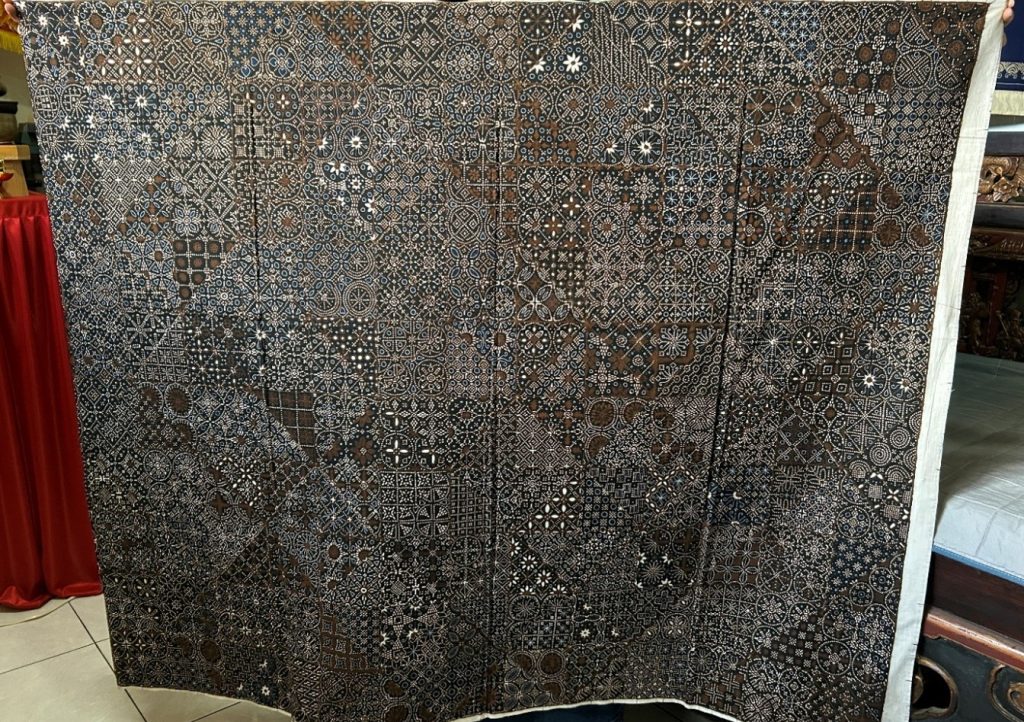
Yogyakarta batik featuring 480 sample pieces of Yogyakarta motifs
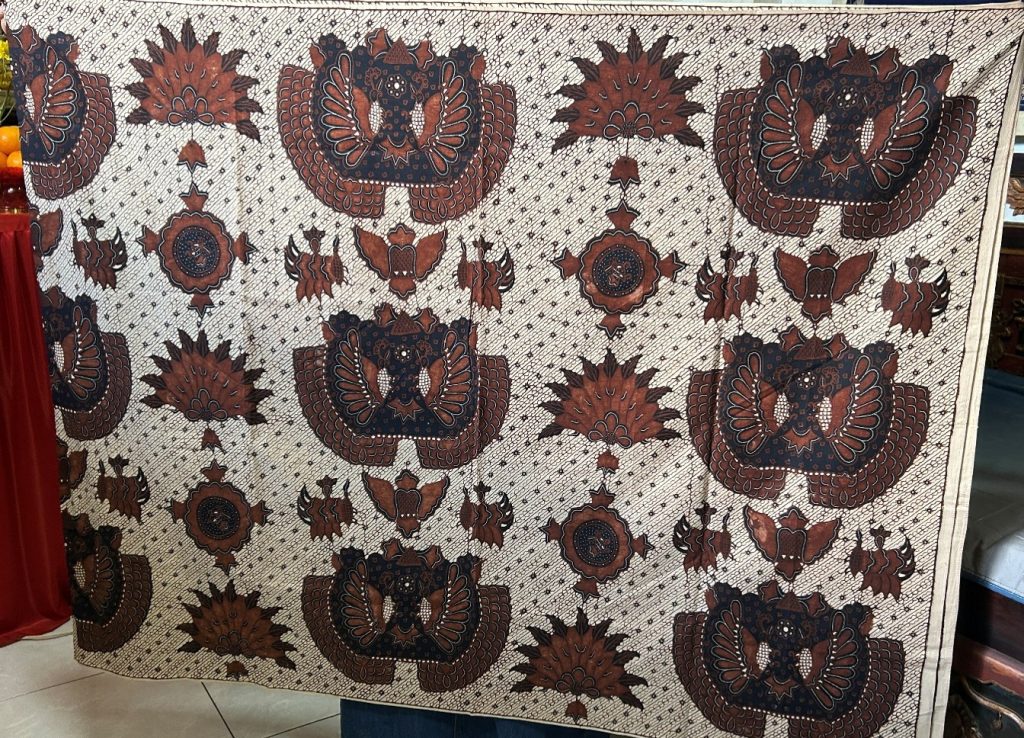
Yogyakarta batik with the Gurda motif
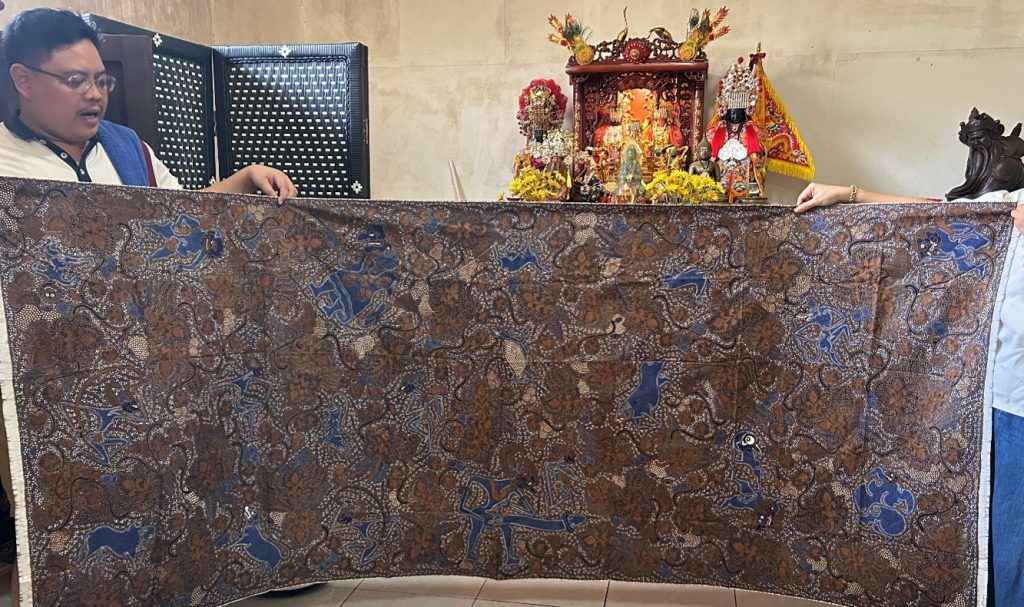
Batik featuring a divergent carangan storyline titled "Bima Tani"
In addition to producing batik cloth, Mas Aji is also active in Perkumpulan Wastra Indonesia, a community that brings together enthusiasts and advocates of Indonesian traditional textiles. His dedication to batik is also reflected in his contribution to the book Pesona Padu Padan Wastra Indonesia as a fashion contributor featuring the use of traditional Yogyakarta batik.
Behind all of these creative processes, Mas Aji believes that one aspect that must continue to be preserved in the world of batik is technical knowledge. According to him, discussions of batik have largely focused on philosophical meanings, symbolism, and cultural values, while knowledge of batik-making techniques is at risk of disappearing if it is not documented and passed on. “In my opinion, that domain (philosophy) is not easily lost because there is already abundant literature about it. But technical knowledge can disappear. For example, where should a parang motif begin, and in which direction should it be made? There are specific ways and methods.” For Mas Aji, preserving technical knowledge is just as important as preserving the philosophical values of batik because both are integral parts of the batik-making tradition.
Toward the end of the interview, Mas Aji also shared a message for students of the Department of Javanese Language, Literature, and Culture, encouraging them not to be afraid of exploring opportunities beyond the classroom. “Make big problems smaller, and ignore the small ones. Do not hesitate or be afraid to try and explore. Also, do not limit your horizons to classroom learning alone.”
Mas Aji Setyowijaya’s journey demonstrates that the study of the Javanese language, literature, and culture does not end within the academic sphere, but can also be realized through cultural preservation practices that benefit society. Through his dedication to studying batik-making techniques, reproducing traditional batik, developing innovations grounded in established principles, and continuously exploring new possibilities in the world of wastra, Mas Aji has shown that cultural heritage can continue to live and develop with the times without losing its identity.
For mahadaya who would like to learn more about Mas Aji’s works and activities, they may visit his Instagram account, @setyowijaya, and his Facebook page, Batik Setyowijaya. Through these social media platforms, Mas Aji shares his creative processes, his works, and his activities in preserving and developing the art of batik.
Author : Haryo Untoro
Editor : Haryo Untoro

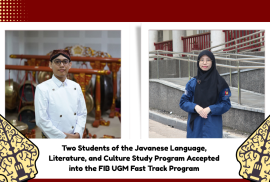
Muhamad Rafi Nur Fauzy and Meifira Arini Pitaloka, Two Students of the Javanese Language, Literature, and Culture Study Program Accepted into the FIB UGM Fast Track Program
College StudentSDGSStudent Wednesday, 22 July 2026
Two students from the Javanese Language, Literature, and Culture Study Program, Faculty of Cultural Sciences (FIB), Universitas Gadjah Mada (UGM), Muhamad Rafi Nur Fauzy and Meifira Arini Pitaloka, have successfully been selected as recipients of the Undergraduate–Master's (S1–S2) Fast Track Program at FIB UGM. The announcement was made on Friday (17/7/2026) through the official social media account of the Faculty of Cultural Sciences UGM. Through this program, students have the opportunity to pursue undergraduate (S1) and master's (S2) studies concurrently, allowing them to complete their study period in a shorter time. Both students chose to continue their studies in the Master's Program in Literature at FIB UGM.
In an online interview conducted on Monday (20/7/2026), both students expressed their gratitude and enthusiasm for being selected as recipients of the FIB UGM Fast Track Program. For Muhamad Rafi Nur Fauzy, the program serves as an opportunity to deepen the knowledge he has acquired during his undergraduate studies. "I aspire to gain a deeper understanding of Javanese Language, Literature, and Culture so that the knowledge I acquire can later benefit society," he explained. Likewise, Meifira Arini Pitaloka viewed the opportunity to continue her studies through the Fast Track Program as a chance to further develop her academic interests while broadening her knowledge. "I want to continue exploring what I am passionate about by making the most of every opportunity and determination I have," she said.
Regarding their prospective research at the master's level, the two students have different academic interests. Rafi hopes to further explore Javanese literature and culture, particularly the existence of the Panji stories in Central Java. "I am interested in further studying Javanese literature and culture, for example, the existence of the Panji stories in Central Java, while the world of Panji itself is more widely associated with Malang," he explained. Meanwhile, Meifira plans to explore a broader range of literary studies. "I want to try not to limit myself only to Javanese literature. My planned research will still be related to images, perhaps in areas such as comic literature or children's literature," she shared.
Both students have also prepared themselves to face the challenges of participating in the Fast Track Program. According to Rafi, the greatest challenge lies in managing his time effectively in order to balance undergraduate and master's studies. "I want to be more disciplined, make better use of my time for my studies, and set aside time for field research," he said. On the other hand, Meifira believes that mental preparedness is an equally important aspect. In addition to striving to do her best, she also emphasized the importance of prayer and self-awareness throughout the academic journey. "I will do my best, never forget to pray, and continue building self-awareness in facing the challenges ahead," she explained.
Concluding the interview, both students shared messages for their fellow students, encouraging them to remain enthusiastic and consistent throughout their academic journey. Rafi encouraged students to consistently pursue what they are genuinely passionate about so that the learning process becomes more enjoyable. "Consistently pursue what you truly enjoy. That way, the learning process will become more enjoyable. Stay motivated, and go through it with ease. Melu ilining banyu ning ora nganti keli (go with the flow of the water, but do not let yourself be carried away by it)," he said. Meifira also shared a similar message. According to her, every choice that has been made should be pursued wholeheartedly and with full responsibility. "Do what you love and love what you do," she said.
The achievement of Muhamad Rafi Nur Fauzy and Meifira Arini Pitaloka in becoming recipients of the FIB UGM Fast Track Program is expected to inspire other students of the Javanese Language, Literature, and Culture Study Program to continue developing their academic potential and make the most of the opportunities available to them. It is hoped that their journey in pursuing master's studies will contribute to the advancement of knowledge, particularly in the fields of Javanese language, literature, and culture.

Caring for the Arts, Preserving Harmony: Gamasutra Performs at the UGM Philosophy Faculty Karawitan Festival 2026
College StudentNewsSDGSStudentStudent's Activity Monday, 20 July 2026
Gamasutra, Gamelan Mahasiswa Sastra Nusantara (the Nusantara Literature Student Gamelan Ensemble), took part in the Karawitan Festival and Nusantara Bazaar organized by the Faculty of Philosophy, Universitas Gadjah Mada (UGM), on Saturday, 18 July 2026. The Karawitan Festival is part of a series of events held in anticipation of the 59th Anniversary of the UGM Faculty of Philosophy. The event was held at the UGM Faculty of Philosophy Field and, this year, marked its eighth edition.
This year, the Karawitan Festival was attended by 52 karawitan ensembles from within UGM as well as art communities from various regions. All performances were held over two days, Saturday and Sunday (18–19 July 2026), with performances scheduled from 07.00 to 22.00 WIB. The event was also broadcast online via a live stream on the Faculty of Philosophy’s YouTube channel. As one of the groups participating in the festival, Gamasutra not only performed but also took part in enlivening the Nusantara Bazaar.
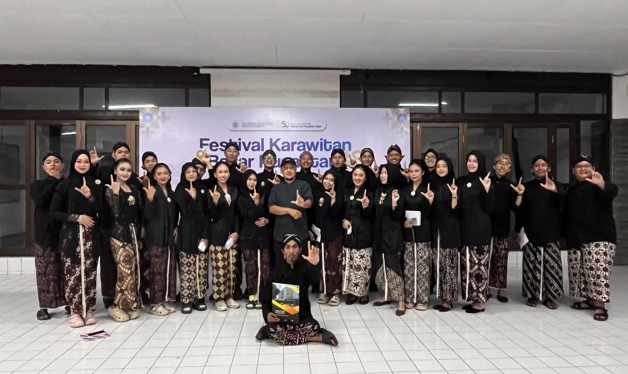
Gamasutra performed on the first day at 21.00 WIB. The repertoire began with the ladrang Sumyar, followed by several gendhing dolanan, including Emplek-emplek Ketepu, Kembang Jagung, Aku Duwe Pitik, and Manggung Sore, and concluded with Ayak-ayak Pamungkas RRI jugag. Ahead of the performance, Gamasutra members held rehearsals to ensure that the performance would run smoothly and achieve the best possible result. The rehearsals were held over approximately two weeks, with six meetings in total. All Gamasutra members demonstrated great enthusiasm throughout the rehearsal process and eventually performed at the festival.
The 2026 Karawitan Festival was one of Gamasutra’s activities in preserving the cultural arts of the Nusantara. The activity is in line with Sustainable Development Goal (SDG) 4, Quality Education. Gamasutra serves as a means of learning together, particularly in deepening knowledge and skills in karawitan. In addition, Gamasutra’s participation in the Karawitan Festival organized by the UGM Faculty of Philosophy also represents an implementation of SDG 17, Partnerships for the Goals. In this context, the goal to be achieved is the preservation of the cultural arts of the Nusantara.
Author: Carlos Jose Prabakusuma
Editors: Carlos Jose Prabakusuma and Haryo Untoro
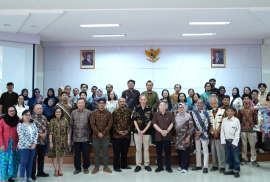
In commemoration of the 80th Anniversary of the Faculty of Cultural Sciences (FIB), Universitas Gadjah Mada (UGM), the Undergraduate Program in Javanese Language, Literature, and Culture, Faculty of Cultural Sciences UGM, organized an International Workshop entitled Rereading Wayang: Remembering the Past, Looking Toward the Future on Thursday (9/7/2026). The event invited academics, students, and the general public to revisit the art of wayang, not only as a cultural heritage of the past but also as a tradition that continues to develop and remains relevant in responding to present and future challenges.
To comprehensively explore the theme, the workshop featured three speakers with expertise in their respective fields: Prof. Matthew Isaac Cohen, Ph.D., Alan H. Feinstein, Ph.D., and Dr. G.R. Lono Lastoro Simatupang, M.A. The discussion was moderated by Zakariya Pamuji Aminullah, S.S., M.A.
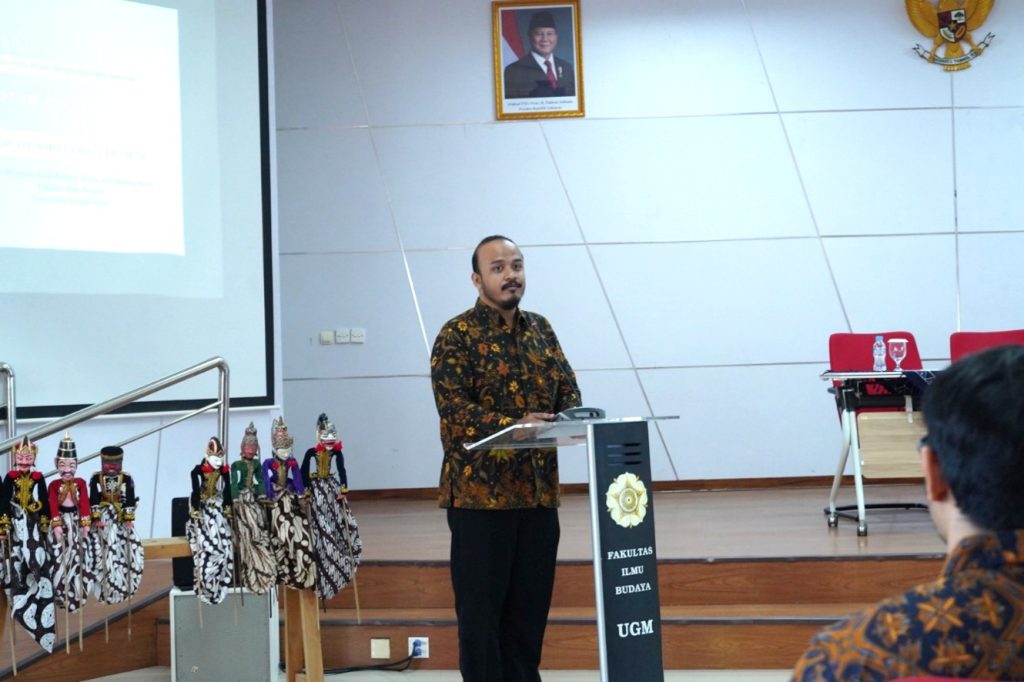
Remarks by Dr. Rudy Wiratama, S.I.P., M.A., Chair of the Organizing Committee
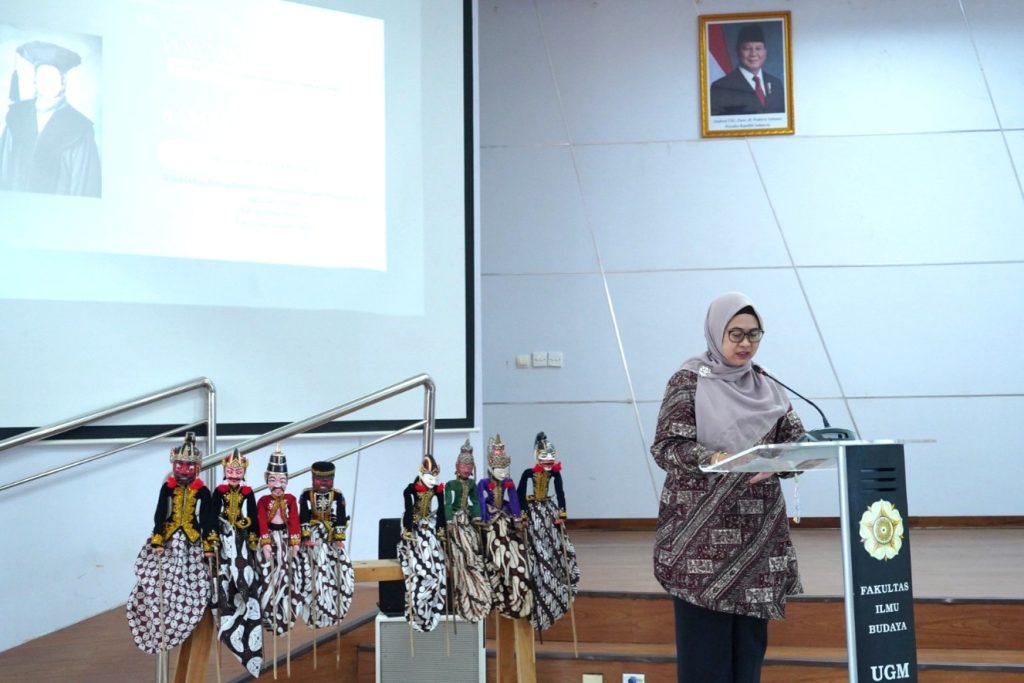
Remarks by Dr. Mimi Savitri, M.A., Vice Dean for Research, Community Service, Cooperation, and Alumni of the Faculty of Cultural Science UGM
The event commenced at 09.00 WIB with opening remarks by Dr. Rudy Wiratama, S.I.P., M.A., Chair of the Organizing Committee, followed by remarks from Dr. Mimi Savitri, M.A., Vice Dean for Research, Community Service, Cooperation, and Alumni of the Faculty of Cultural Sciences UGM. Following the opening session, the international workshop officially began.
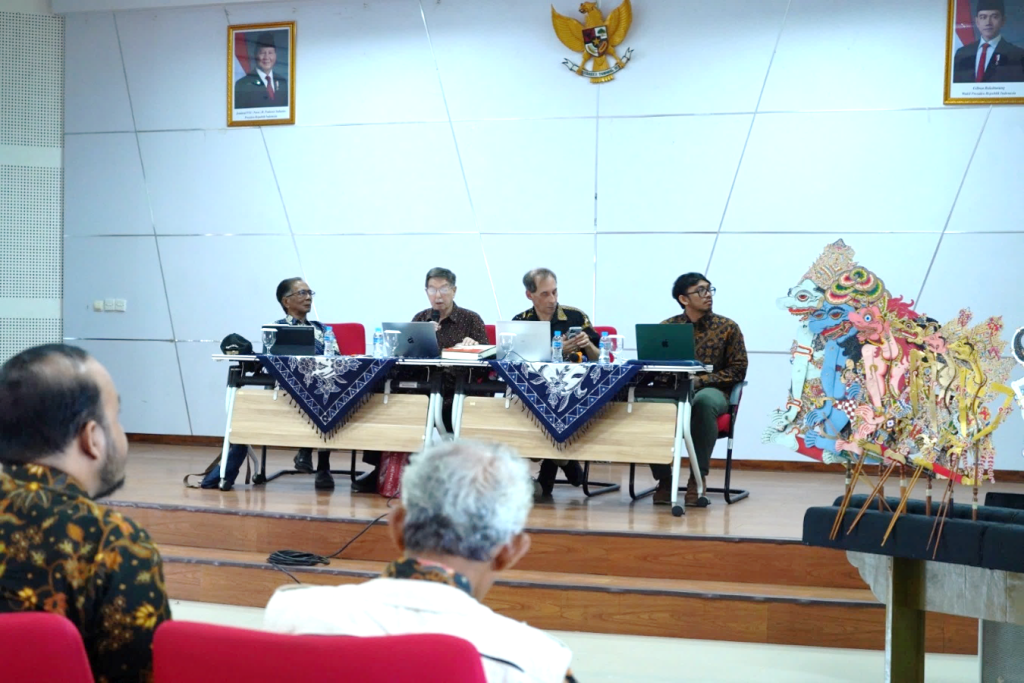
As the first speaker, Prof. Matthew Isaac Cohen, Ph.D., discussed the life of wayang art in the virtual sphere, particularly its development, which became increasingly visible during the pandemic. According to him, the presence of wayang art in the digital world had actually begun long before the pandemic through live-streamed wayang kulit performances. "The life of wayang art in the virtual world had actually begun before the pandemic era, with the emergence of live-streamed wayang kulit performances," he explained. He further elaborated that the existence of wayang in the virtual sphere has continued to transform through various forms of innovation, ranging from the establishment of communities such as Posko Dalang Nusantara, the publication of the book #Dalang Goes to Twitter, the emergence of Wayang Jemblung during the pandemic, to the development of wayang in the form of artificial intelligence (AI)-based animation.
The second speaker, Alan H. Feinstein, Ph.D., presented the topic of the historiography and documentation of Javanese wayang stories. He explained that efforts to document wayang stories have been carried out since the colonial period, both through documentation projects of lakon carangan and through the collection of various ancient manuscript sources. According to him, wayang can be studied from various scholarly perspectives; therefore, documenting facts, data, documents, and various other forms of evidence is essential. This is necessary because wayang performances are ephemeral and leave no trace once the puppeteer concludes the performance.
In the final session, Dr. G.R. Lono Lastoro Simatupang, M.A., discussed the existence of women in wayang performing arts from the perspectives of female puppeteers, wayang characters, women's representation, and the stories performed. He explained that women's participation in the world of wayang has shown positive development, although it still requires further strengthening. "I recommend increasing the number of female puppeteers, enhancing women's skills in wayang performing arts, and creating lakon carangan that are in accordance with contemporary developments," he stated.
Through this workshop, Javanese wayang was understood not only as a performing art but also as a reflection of continuously evolving social and cultural dynamics. The presentations demonstrated that the existence of wayang has always been intertwined with the context of its era while continuing to transform without losing the cultural values that form its foundation. In line with the theme Rereading Wayang: Remembering the Past, Looking Toward the Future, the workshop demonstrated that the preservation of wayang is carried out not only through the transmission of tradition but also through documentation, critical reinterpretation, and various innovations that maintain its relevance amid contemporary developments.


Tuesday (7/7/2026) was a joyful day for the Javanese Language, Literature, and Culture Study Program, Faculty of Cultural Sciences (FIB), Universitas Gadjah Mada (UGM). Yosephin Apriastuti Rahayu, S.S., M.Hum., a lecturer in the field of Old Javanese and Middle Javanese philology, successfully earned a doctoral degree after undergoing a public doctoral defense at Universiteit Leiden.
In her dissertation entitled Learning from the Scribes: A Study of the Old Javanese Uttarakāṇḍa from the Merapi-Merbabu Tradition, Mrs. Apriastuti examines Uttarakāṇḍa, an Old Javanese prose literary work that constitutes the seventh book of the Rāmāyaṇa. The research focuses on four Uttarakāṇḍa manuscripts from the Merapi-Merbabu and Balinese tradition collections to understand how scribes copied, preserved, and transmitted these manuscripts.
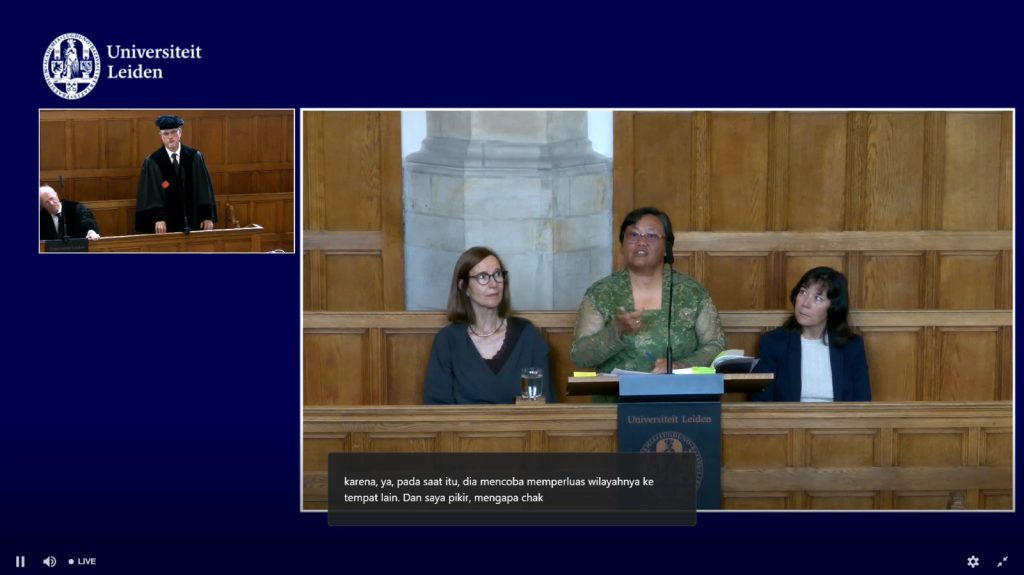
Through this research, Mrs. Apriastuti found that the process of manuscript copying is not merely copying the text, but involves a series of activities, such as reading, remembering, reflecting, dictating, and rewriting the contents of the manuscript. The research also shows differences in orthographic systems as well as writing variations influenced by their respective traditions and cultures. These findings help identify copying errors while supporting efforts to reconstruct a textual form that is closer to the original manuscript. In addition, this research demonstrates differences in characteristics between the Merapi-Merbabu writing tradition and the Balinese tradition.
After presenting the results of her research, Mrs. Apriastuti answered various questions from the examiners. The discussion covered several topics, including the role of the Merapi-Merbabu manuscript tradition as a link between Classical Javanese culture and the Javanese and Balinese traditions, the development of writing systems from the Old Javanese period to the modern Javanese script, as well as the cultural and literary relationships among the Sanskrit, Old Javanese, and Balinese traditions.
Mrs. Apriastuti's success in earning a doctoral degree also constitutes an important contribution to the development of Old Javanese philological studies. The research not only enriches the understanding of the manuscript tradition in the Indonesian archipelago, but also supports efforts to preserve written cultural heritage, particularly Old Javanese manuscripts, which serve as important sources for understanding the history, literature, and culture of Indonesia.


Students from the Javanese Language, Literature, and Culture Program Served as Procession Attendant in the Dalem Mangkunegaran Heritage Procession on 1 Sura Be 1960
College StudentNewsSDGSStudentStudent's Activity Wednesday, 17 June 2026
Left: Portrait of Nindy Rosalina Ekaputri. Right: The Mangkunegaran Royal Heirloom Parade procession (Courtesy of Vinta, 2025 via Diskominfo SP Surakarta).
Nindy Rosalina Ekaputri, a student in the Javanese Language, Literature, and Culture program and a recipient of a scholarship from the Arsari Djojohadikusumo Foundation (YAD), had the opportunity to participate in the Kirab Pusaka Dalem Mangkunegaran procession as part of the celebration of the Javanese New Year, 1 Sura Be 1960, which carried the theme “SuraMulihPulih.” This participation was a valuable experience for Nindy, allowing her to gain firsthand insight into Javanese cultural practices that she had previously studied through lectures and academic research.
Prior to the procession, participants took part in a dress rehearsal held the day before. During this activity, participants received instructions regarding the rules of the procession, their positions in the lineup, and the route to be taken. The entire formation of participants was determined by the Mangkunegaran authorities to maintain order and harmony during the procession.
On the day of the event, the series of activities began with a communal meal, the nyuwun palilah dalem ritual, and a joint prayer. Next, the sacred heirlooms were brought out from Dalem Ageng and handed over to G.P.H. Paundrakarna Jiwo Suryonegoro, the Cucuk Lampah Kirab, the procession leader who guided the parade and ensured the events proceeded in accordance with established traditions. The procession was then officially launched by K.G.P.A.A. Mangkoenagoro X at 8:30 p.m. WIB.
During the procession, six royal heirlooms are paraded around the central area of Surakarta. Throughout the procession, all participants observe a vow of silence and walk barefoot. For Nindy, this silence was not merely a rule to be followed, but rather a space for the most honest inner dialogue. This process invited the procession participants to deeply reflect on the concepts of atita (letting go of the past), atiki (being fully present in the moment), and anagata (embracing the future), which form the philosophical core of the 1 Sura commemoration at Mangkunegaran. The serene atmosphere enveloping the procession is truly in harmony with the theme “SuraMulihPulih”, a call to reflect on oneself and prepare for a better life.
Public enthusiasm was palpable along the entire parade route. Thousands of residents crowded various spots to witness the procession, which unfolded in an orderly and solemn manner. In addition to watching the parade, the public was also eagerly awaiting the water used to wash the heirlooms. In Javanese tradition, this water is often regarded as a symbol of blessings and good fortune for those who receive it.
After the procession concluded, the series of activities continued with the distribution of udik-udik to the community by K.G.P.A.A. Mangkoenagoro X, G.P.H. Paundrakarna Jiwo Suryonegoro, and G.R.Aj. Ancillasura Marina Sudjiwo. Parade participants also received servings of black and white sticky rice, which symbolize balance and harmony in life.
For Nindy, participating as a heirloom escort was an experience that enriched her understanding of Javanese culture. This experience demonstrated that cultural preservation is not only achieved through classroom learning but also through direct involvement in traditions that remain alive within the community. Through the participation of the younger generation, cultural heritage such as the Dalem Mangkunegaran Sacred Relics Procession is expected to be preserved and passed down to future generations.
Author: Nindy Rosalina Ekaputri
Editors : Nindy Rosalina Ekaputri & Haryo Untoro
List of Figures
Vita. (2024, July 8). Ribuan warga saksikan Kirab Pusaka Malam Satu Suro di Surakarta [Thousands of residents witness the Malam Satu Suro Royal Heirloom Parade in Surakarta]. Dinas Komunikasi, Informatika, Statistik dan Persandian Kota Surakarta. https://diskominfosp.surakarta.go.id/detail-berita/ribuan-warga-saksikan-kirab-pusaka-malam-satu-suro-di-surakarta-7537