• University
  • Academic Portal
  • University Library
  • Webmail
  • Arnawa
  • UM UGM
  • English
    • Bahasa Indonesia
    • English
Universitas Gadjah Mada Javanese Language, Literature, and Culture Program
Department of Language and Literature
Faculty of Cultural Sciences
Universitas Gadjah Mada
  • Home
  • Profile
    • Vision & Mission
    • Objective
    • Excellence
    • Career Prospects
    • Teaching Staff
  • Academic
    • Curriculum Flow
    • Courses Description
    • Distribution of Courses
    • Academic Calendar
    • COURSE AND ADMINISTRATION INFORMATION
    • Learning Outcomes
    • INTERNATIONAL CONFERENCES AND ACTIVITIES
  • KPPB
    • Collaboration
    • Research
      • Teaching Staff Research
      • Javanese Studies Archive – Arnawa
    • Service
      • Community Services
      • Podcast (Anarka Lālitya)
    • Scholarship
  • Student Affair
    • Student Satisfaction Survey
    • HMJ Kamastawa
    • Student’s Activity
    • Student’s Creations
    • Youtube Channel
    • Instagram
  • Alumnus
    • Alumnus Profile
  • Contact
  • Home
  • Post by
Post by :

haryountoro

The Challenge Facing Young Puppeteer Rafi Nur Fauzy in Performing Wayang Gedhog on National Puppetry Day

College StudentNewsSDGSStudentStudent's ActivityStudent's Work Thursday, 4 December 2025

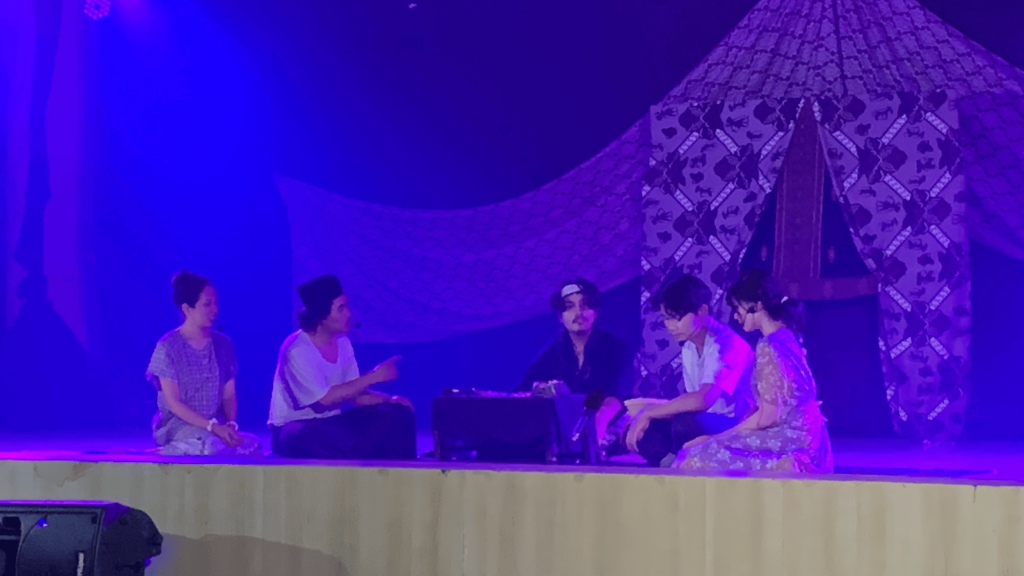
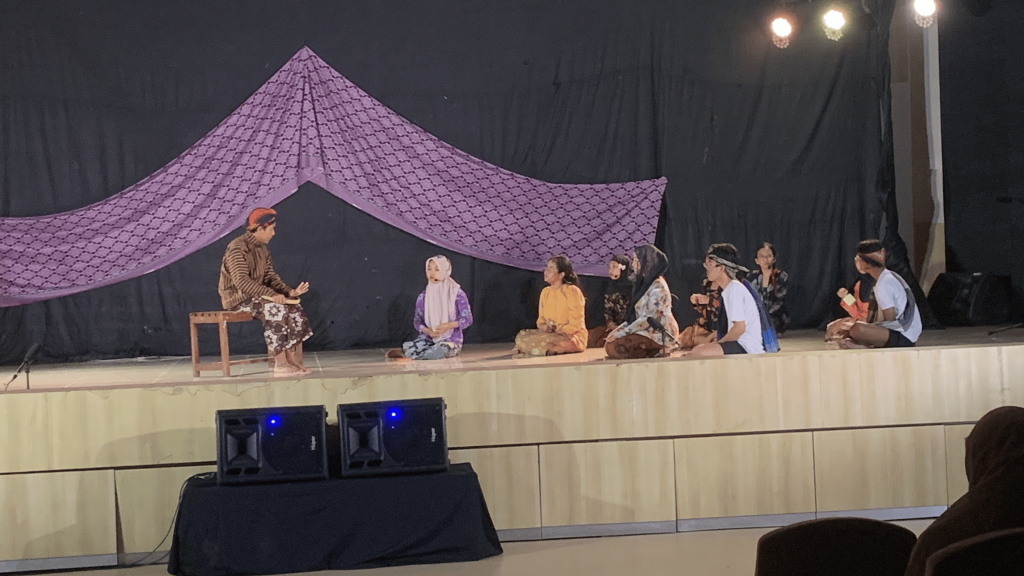
The Surakarta Style Javanese Arts Unit (UKJGS) of Universitas Gadjah Mada (UGM) is collaborating with the Student Association of the Department of Puppetry (HMJ Pedhalangan) of the Indonesian Institute of the Arts (ISI) Yogyakarta to hold a collaborative Wayang Gedhog performance in commemoration of National Puppetry Day. The performance will take place on Thursday, November 27, 2025, at 7:00 p.m. WIB at the Pendapa Tari ISI Yogyakarta. This event is a collaborative synergy between young artists from UKJGS UGM and HMJ Pedalangan ISI Yogyakarta in preserving this rare performing art.

The Wayang Gedhog performance to commemorate National Wayang Day was organized by HMJ Pedalangan ISI Yogyakarta, inviting UKJGS UGM to participate. As the coordinator of the Pedhalangan division at UKJGS UGM and a student of the Javanese Language, Literature, and Culture Program at UGM, Muhammad Rafi Nur Fauzy explained that this is a great opportunity to introduce UKJGS's work in the field of pedalangan, while also enlivening the National Wayang Day celebration.

The role of puppeteer in this Wayang Gedhog performance was entrusted to Rafi, accompanied by music from other UKJGS members. This performance featured Wayang Gedhog because Wayang Gedhog performances are rarely staged. This type of puppet show had been dormant for a long time and was revived several decades ago. Wayang Gedhog performances are actually considered stiff because they are constrained by the palace hierarchy in their content. Wayang Gedhog was also featured as an introduction to the rich heritage of puppetry to the general public.

The story of Panji Laleyan Duta (Sayembara Keris Jaka Piturun) was chosen to be performed because it was relevant to the current situation and information that was happening and becoming a hot topic of discussion in society, namely the polemic over the change of king in the Surakarta (Solo) Palace. According to Rafi, we need to question how this Javanese monarchy can survive in the midst of a democratic situation. Not only in the Surakarta Palace, but also in Yogyakarta.

As a student of the Javanese Language, Literature, and Culture Study Program at UGM, Rafi expressed his joy and pride at having the opportunity to perform Wayang Gedhog. Currently, not many puppeteers are willing to perform Wayang Gedhog because the performance is considered difficult due to its fixed accompaniment. Only a few puppeteers understand the performance. With the guidance of Dr. Rudy Wiratama, S.I.P., M.A., a lecturer in the Javanese Language, Literature, and Culture Program, Rafi was able to successfully perform Wayang Gedhog, which is considered difficult.

The Wayang Gedhog performance supports the achievement of SDG point 4 Quality Education and point 8 Decent Work and Economic Growth, namely as a medium of education and introduction to the treasure trove of wayang and enriching knowledge about cultural heritage in the academic environment, as well as an opportunity for the regeneration of performing arts and livelihoods for young artists. Not only that, this performance contributes to the achievement of SDG point 16 Peace, Justice, and Strong Institutions by using the role of art as a means to voice constructive criticism of the leadership polemic in the Surakarta Palace. The participatory collaboration between UKJGS UGM and HMJ Pedhalangan ISI Yogyakarta supports the achievement of SDGs and point 17 Partnerships for the Goals.


Author: Maysa Putri Fatihah

Editor: Haryo Untoro

HMJ Kamastawa Grand Meeting: Wreksi Pinandhita Elected as Chairperson for the 2026 Term

College StudentNewsSDGSStudentStudent's Activity Thursday, 4 December 2025

The Grand Meeting of the Student Association of the Department of Javanese Language, Literature, and Culture (HMJ Kamastawa) was held on Sunday, November 30, 2025, in the Auditorium of the Soegondo Building, Faculty of Cultural Sciences, Gadjah Mada University. During this General Meeting, a report on the activities of the 2025 management was presented, followed by a session on the Articles of Association/Bylaws (AD/ART), and concluded with a deliberation to elect the chairperson of HMJ Kamastawa for the 2026 term.

The General Assembly of HMJ Kamastawa is an annual mandatory event aimed at creating a forum for discussion among students of the Javanese Language, Literature, and Culture Program. This forum was created as a platform for aspirations, opinions, and openness of HMJ Kamastawa as a special member organization under the Javanese Language, Literature, and Culture Program. The General Meeting was attended by offline participants present at the forum and online participants via Google Meet.

This Grand Meeting was opened by the Master of Ceremony (MC). This was followed by a speech by the Chairman of HMJ Kamastawa for the 2025 period, Dwiyan Teguh Darmawan, and a speech by the Head of the Javanese Language, Literature, and Culture Study Program, Dr. Daru Winarti, M.Hum. After the speeches, the election of chairpersons I and II was held with the approval of the participants of the Grand Meeting. The chair of session I began the first session of the Grand Meeting with a report on the activities of the 2025 management. The first session of the Grand Meeting went well and quickly, with a few evaluations and suggestions from the participants of the Grand Meeting adding to the report.

The second session was marked by the handover from chairperson I to chairperson II. The second session was a hearing on the Articles of Association/Bylaws (AD/ART) of HMJ Kamastawa for the 2026 management period. The majority of participants in the second session of the Grand Meeting actively debated crucial points in the AD/ART that required adjustments to the situation and conditions. The decisions of the meeting were made through deliberation, voting, and unanimous approval by the participants of the Grand Meeting.


The inal session of the HMJ Kamastawa Grand Meeting was the election of the chairperson of HMJ Kamastawa for the 2026 term. This election was carried out in the following stages.

  1. Reading of the requirements for the chairperson of HMJ Kamastawa,
  2. Nomination of chairperson candidates by participants of the Grand Meeting present at the forum,
  3. Verification of the eligibility of chairperson candidates,
  4. Presentation of personal statements by each chairperson candidate,
  5. Question and answer session by participants of the Grand Meeting present at the forum with the chairperson candidates,
  6. Deliberation on the election of the chairperson,
  7. Announcement of the elected chairperson, and
  8. Remarks by the elected chairperson.

The candidates for chairperson of HMJ Kamastawa nominated by the participants of the Grand Meeting were Wreksi Awinanggya Pinandhita, Bayu Seta Ardiansyah, Nurcholish Ramadhan, Inoora Putri Haliza, Muhammad Jundy Ashiddiqie, and Zahra Nova Putri. During the verification of the requirements for chairperson candidates, candidate Nurcholish Ramadhan was disqualified because he did not meet one of the requirements for chairperson candidates, namely not serving as chairperson in a student organization at Gadjah Mada University. After going through the deliberation stage for the election of the chairperson, a unanimous vote resulted in the election of Wreksi Awinanggya Pinandhita as the chairperson of HMJ Kamastawa for the 2026 period.

Wreksi Pinandhita stated that his election as chairman of HMJ Kamastawa would be a new challenge and must be carried out as well as possible as a mandate from the students of the Javanese Language, Literature, and Culture Study Program. Wreksi hopes that the management he will lead in the next year will run smoothly and better than the previous period with the support of the Javanese Language, Literature, and Culture student family.


The HMJ Kamastawa Grand Meeting directly contributes to the achievement of SDG point 4, Quality Education, which supports and develops students' leadership and soft skills. Not only that, the Grand Meeting also supports the achievement of SDG point 16, Peace, Justice, and Strong Institutions, by practicing the grand meeting as the highest democratic and transparent forum. Finally, this activity is also in line with SDG point 17, Partnerships for the Goals. The presence of the HMJ Kamastawa Grand Deliberation is also a form of commitment by students of the Javanese Language, Literature, and Culture Study Program to nguri-uri ‘preserve’ and ngurip-urip ‘revitalize’ the culture of the archipelago, especially Javanese culture.


Author: Maysa Putri Fatihah

Editor: Haryo Untoro

Exploring the Types and Meanings of Sesajen Culture in the Javanese Language, Literature, and Culture Study Program Workshop

College StudentNewsSDGSStudentStudent's Activity Friday, 28 November 2025

The Javanese Language, Literature, and Culture Study Program held a workshop titled “Exploring the Types and Meanings of Culture from Sesajen” on Thursday, November 27, 2025, at the Margono 4th floor lobby. This event was attended by Dr. R. Bima Slamet Raharja, S.S., M.A., as the lecturer in charge of the course, as well as students from the Javanese Language, Literature, and Culture Study Program and various other study programs. The guest speaker was Faizal Noor Singgih, S.T.P., a cultural practitioner and ceremonial master of ceremonies.

In his presentation, Faizal Noor Singgih explained various aspects of offerings, ranging from types and functions to cultural meanings. He emphasized that offerings in Javanese tradition are essentially a form of prayer or hope to God Almighty through a series of symbols contained within them. In addition to being a spiritual tool, offerings also serve as a medium of social communication, a form of respect from the Javanese people towards their environment, and an expression of the local community's culture.

The participants were enthusiastic, saying that this activity provided them with new insights into offerings as part of Javanese culture. The workshop was closed with a prayer and a meal together.

Through this workshop, it is hoped that students will gain a deeper understanding of Javanese culture. The presence of speakers from the cultural sector is considered to enrich perspectives, both in terms of theory and practice. Thus, cooperation from various parties is essential to continue studying, preserving, and reviving Javanese culture.

Comparative Study of Javanese Literature at UNNES and Javanese Language, Literature, and Culture at UGM: Strengthening Friendship and Collaboration for Sustainable Javanese Culture

College StudentNewsSDGSStudentStudent's ActivityStudent's Work Thursday, 13 November 2025

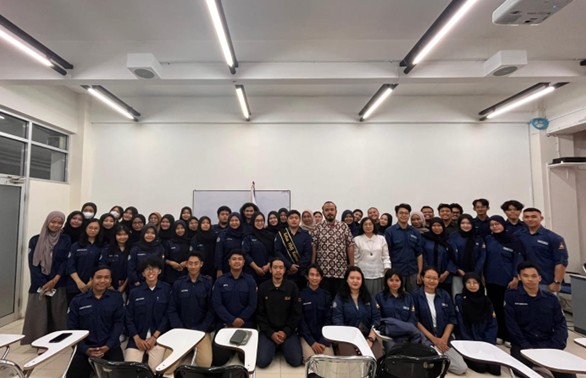
Yogyakarta, November 12, 2025 — The Javanese Literature Study Program, Semarang State University (UNNES), conducted a comparative study with the Javanese Language, Literature, and Culture Study Program, Gadjah Mada University (UGM). The event, held in the Multimedia Room on the 2nd floor of Margono Building, Faculty of Cultural Sciences (FIB) UGM, served as a platform for networking and knowledge exchange among students from both universities.

Forty UNNES Javanese Literature students from the class of 2023 attended the event and were welcomed by nine UGM Javanese Language, Literature, and Culture students from the class of 2022, including Alfonsus Dipa Wicaksana, Anggit Galuh Ajar Amanah, Fauzan Adi Fadlurahman, Haryo Untoro, Muhammad Siswoyo, Novia Hikmatul Mubarokah, Pesdhi Sekar Hayumay, Saktia Hidayah, and Yasmin Nabiha Sahda.

The event was opened by Yasmin Nabiha Sahda, who introduced the agenda. Next, Novia Hikmatul Mubarokah presented the profile of the UGM Javanese Language, Literature, and Culture Study Program, including the curriculum, student activities, and various academic and non-academic programs that have been organized. A similar presentation was then delivered by a representative of UNNES students who introduced the structure and activities of the Javanese Literature Study Program.

The next session was filled with a “Study Interest Discussion” activity, featuring three UGM student representatives: Fauzan Adi Fadlurahman (Philology), Muhammad Siswoyo (Linguistics), and Saktia Hidayah (Literature). They gave an introduction to their respective fields of study, followed by an interactive discussion. UNNES students enthusiastically asked various questions about learning methods, tips for completing assignments, and the direction of studies in these fields. A warm and friendly atmosphere was created through dialogue, jokes, and the sharing of experiences among participants.

Towards the end of the event, remarks were delivered by the Head of the Javanese Language, Literature, and Culture Study Program at UGM, Dr. Daru Winarti, M.Hum., and a representative from the Javanese Literature Study Program at UNNES, Dr. Prembayun Miji Lestari, M.Hum. Both emphasized the importance of collaboration between students and educational institutions in strengthening the development of knowledge and preservation of Javanese culture.

Opening remarks from the Head of the Javanese Language, Literature, and Culture Study Program, Dr. Daru Winarti, M.Hum.

Opening remarks from the representative of the UNNES Javanese Literature Study Program lecturers, Dr. Prembayun Miji Lesatri, M.Hum.

The event concluded with a joint documentation session as a symbol of unity and commitment to continue cooperation.

Through this comparative study, it is hoped that the relationship between the two study programs will become closer and more productive. In addition to broadening the academic horizons of students, this activity is also a concrete step in the joint effort to preserve and develop Javanese cultural heritage in higher education.

Discussing the Relevance of Javanese Literature Today in Javanese Literature History Lectures

College StudentNewsSDGSStudentStudent's Activity Tuesday, 11 November 2025

The relevance of the Javanese language and literature amid contemporary challenges was the main topic in the Javanese Literature History course in the Javanese Language, Literature, and Culture Study Program. The lecture, which took place on Monday, November 10, 2025, featured an alumnus, practitioner, and observer of Javanese culture, Paksi Raras Alit, S.S., M.A., as a guest speaker.

The course, taught by Dr. R. Bima Slamet Raharja, M.A., was attended by all students from the class of 2024. The presence of Paksi Raras Alit aimed to provide a practical perspective on the sustainability of literary heritage in the modern era.

In his presentation, Paksi Raras Alit emphasized that the teachings and knowledge contained in Javanese culture are still very relevant to current social conditions. He cited his latest work, a book entitled Ajaran Bahagia dari Jawa: Filosofi untuk Hidup Tenang dan Legawa (Teachings of Happiness from Java: Philosophy for a Peaceful and Contented Life). The book was written in order to explore the Javanese philosophy of life to achieve happiness. According to him, the wisdom contained in Javanese literature can offer guidance or knowledge towards inner peace.

This activity was very well received by the students. Their enthusiasm was evident from the variety of questions they asked, despite the limited discussion time. Shabrina Fitra Azzahra, one of the course participants, shared her views in an online interview on November 21, 2025. She stated that she discovered various other perspectives on Javanese literature.

This activity not only increased knowledge, but also boosted the enthusiasm of students in the Javanese Language, Literature, and Culture Study Program. This enthusiasm was manifested in their determination to nguri-uri ‘preserve’ and ngurip-urip ‘revitalize’ Javanese culture. Through a strong commitment to preservation and cooperation with various parties, it is hoped that the valuable messages and information contained in Javanese literary works can be “reintroduced” and bring tangible benefits to the wider community.

Students of the Javanese Language, Literature, and Culture Study Program Attend FGD on Mapping Ancient Manuscripts at the Salatiga City Library and Archives Office

College StudentNewsSDGSStudent's Activity Sunday, 2 November 2025

Students from the Javanese Language, Literature, and Culture Study Program participated in a Focus Group Discussion (FGD) on mapping ancient manuscripts organized by the Library and Archives Office (Dinpersip) of Salatiga City, Central Java, on Tuesday, October 28, 2025. The event took place in the Regional Secretariat room of the Salatiga City Library and Archives Office. The students were accompanied by their supervising lecturer, Yosephin Apriastuti Rahayu, S.S., M.Hum., a lecturer in the Javanese Language, Literature, and Culture Study Program who specializes in philology.

The event began with an opening and remarks from the Mayor of Salatiga and the Head of the Library and Archives Office. In her remarks, the Head of the Library and Archives Office of Salatiga City, Sri Sarwanti, S.H., M.Si., said that there were 37 ancient manuscripts in the Salatiga area. Of these, five manuscripts have been transcribed and translated. All manuscript data has been digitized and stored in the Khastara system owned by the National Library of the Republic of Indonesia or Perpusnas.

The event was interspersed with macapat songs and continued with a presentation on the mapping and preservation of ancient manuscripts, especially those still stored in communities or non-institutions.

One of the interesting points was presented by Dr. Munawar Holil, S.S., M.Hum., a lecturer in philology from the Regional Literature Study Program for Javanese Literature, University of Indonesia. He provided information about the discovery of a manuscript containing the story of Sri Tanjung, with a different version of the story compared to the popular one. This manuscript was found by residents at an antique market.

This FGD activity was enthusiastically welcomed by the students. In an interview on November 4, 2025, one of the participants, Novia Hikmatul Mubarokah, said that this activity provided valuable experience regarding the process of archiving manuscripts. “I feel very happy and interested, because the FGD discussed ancient manuscripts from the city of Salatiga that have been documented by the archives office,” she said.

Mapping ancient manuscripts is considered an important step in preserving the nation's cultural and intellectual heritage. Manuscripts are not only traces of culture, but also reflect the civilization of the archipelago, containing values, ideas, literary works, and religious knowledge from the past.

The participation of students from the Javanese Language, Literature, and Culture Study Program in this activity is expected to motivate the younger generation to continue preserving manuscripts, exploring the information contained within them, and developing this knowledge so that it can be useful to society. In addition, cooperation between various parties, from the government, academics, communities, to the public, is expected to continue as an effort to care for and preserve the cultural heritage of the Indonesian nation.

Wayang Golek Menak: Preserving the Existence of Art, Literature, and History through Media Conversion

NewsSDGS Saturday, 1 November 2025

Yogyakarta, November 29, 2025 — The Department of Javanese Language, Literature, and Culture, Faculty of Cultural Sciences, Gadjah Mada University (FIB UGM), held an event titled “Dari Kertas Naik ke Pentas: Workshop Alih Wahana Epos Jawa-Islam dari Teks Sastra ke Lakon Pertunjukan” [From Paper to Stage: Workshop on Adapting Javanese-Islamic Epics from Literary Texts to Performance Play] in the Gamelan Room, Margono Building, 4th floor of FIB UGM. This public event attracted participants from various backgrounds, including students, academics, arts and culture enthusiasts, and the general public.

This workshop served as a cross-disciplinary discussion forum that combined perspectives from literature, history, and performing arts, particularly in the context of Menak puppet theater, a cultural heritage that represents a fusion of Islamic values, Javanese traditions, and puppet theater arts. Three speakers were present at this event, namely Dr. Drs. Sudibyo, M.Hum. (Head of the Department of Language and Literature, FIB UGM), Kusnanta Riwus Ginanjar, S.Sn. (actor, scriptwriter, director, and Menak puppet show puppeteer), and Rinal Khaidar Ali, ST., M.Eng. (Menak puppet show activist). The event was moderated by Dr. Rudy Wiratama, S.I.P., M.A., lecturer at the Javanese Language, Literature, and Culture Study Program.

Presentation of material by Kusnanta Riwus Ginanjar, S.Sn.

The first presentation was delivered by Kusnanta Riwus Ginanjar, S.Sn. He discussed the existence of Menak puppet theater from an artistic perspective and its function as a learning medium. In addition, Kusnanta emphasized the importance of adapting classical literary works so that they do not remain merely as written texts. This is done so that these works can continue to be preserved and known to the wider community.

Presentation of material by Rinal Khaidar, ST.,M.Eng.

The second speaker, Rinal Khaidar Ali, ST., M.Eng., highlighted the current condition of Menak puppet theater in Indonesia, particularly in the Java region. He said that its existence is currently in decline. “There are no longer any Menak puppet craftsmen in Yogyakarta, located in the Sentolo area. Even in Kebumen, their numbers are dwindling,” he explained.

Presentation of material by Dr. drs. Sudibyo, M.Hum.

The third session was presented by Dr. Sudibyo, M.Hum., who discussed the historical dimensions of the Menak story. He explained that the Menak epic originated in Persia based on the heroic story of Amir Hamzah bin Abdul Muthalib, the uncle of the Prophet Muhammad. The story then spread to the Arab and Malay worlds before finally being adapted into Javanese culture. Later, during the Mataram Kartasura Sultanate, this story was rewritten in Javanese by carik Narawita and then updated by the poet Yasadipura. According to him, this adaptation process was not merely a translation, but also a creative form of cultural contextualization with the addition of interludes.

To conclude, this event featured a Menak golek puppet show entitled “Menak Iskandar” by Dr. Rudy Wiratama, S.I.P., M.A. The story is sourced from Serat Iskandar Jawi or Caritanira Iskandar, which was composed at the Kartasura Palace in 1729 AD by order of Kangjeng Ratu Mas Balitar, the queen consort of Pakubuwana I.  

Wayang golek performance of the Menak story “Menak Iskandar”

The story tells of the journey of Prabu Iskandar Zulkarnain, King of Ngerum, in his efforts to conquer the eastern and western worlds in order to spread the teachings of the Prophet Ibrahim. However, his struggle was hindered by King Ubur of Jabarsah and the army of giant worshippers Ya'juj and Ma'juj. Based on the advice of Prophet Kilir, Iskandar built a great wall that enclosed Ja-Makjuja until the end of time. Nevertheless, Iskandar was still worried that Ja-Makjuja would escape one day. He asked Prophet Kilir for the elixir of life. Prophet Kilir then departed for the land of Lulmat in the country of Jaminambar, where a lake called Ma'ul Hayat was located. Next, Prophet Kilir drank the water, performed ablution, and prayed at the edge of the lake. After finishing his prayers, by God's will, Prophet Kilir gained immortality without having the chance to give the water to Iskandar. Iskandar, who was waiting for Prophet Kilir at the cave entrance, then realized that no power is eternal except that of Allah. He returned to the kingdom of Ngerum with his entire army.

This workshop is a tangible manifestation of academic and cultural efforts to revive Menak puppet theater as a literary and performing arts heritage in Indonesia. Through this activity, it is hoped that cross-disciplinary awareness can be built regarding the importance of preserving traditions while developing new forms that are relevant to the present day. Furthermore, the synergy between academics, artists, and the community is expected to continue to be encouraged so that Menak puppet theater art and literature remain a source of inspiration, cultural identity, and a living educational tool within the community.

Sastra Menitra: Warm Memories from Dr. Sri Ratna Saktimulya, M.Hum., for the Javanese Language, Literature, and Culture Study Program

College StudentNewsSDGSStudentStudent's ActivityStudent's Work Friday, 31 October 2025

Yogyakarta, October 29, 2025 — A warm and emotional atmosphere enveloped the 4th floor hallway of the Margono Building on Wednesday afternoon. The Department of Javanese Language, Literature, and Culture, Faculty of Cultural Sciences, witnessed a special event hosted by Dr. Sri Ratna Saktimulya, M.Hum., a retired lecturer from the department. On this occasion, she distributed a book titled Sastra Menitra to the program and students from various batches as a memento and token of appreciation for the academic journey she had undertaken with the students.

The Sestra Manitra book is not merely a collection of writings, but rather a collaborative work by students from the classes of 2022, 2023, and 2024 who took courses taught by Dr. Sri Ratna Saktimulya, M.Hum., in the even semester of the 2024/2025 academic year. The course covered Creative Written Javanese Language, Philology, Codicology, Communicative Spoken Javanese Language, and New Javanese Poetry Texts.

Presentation of the Sestra Manitra book to representatives of the class of 2022

Presentation of the Sestra Manitra book to representatives of the class of 2023

Presentation of the Sestra Manitra book to representatives of the class of 2024

The class of 2022 contributed through Javanese-language coverage, while the class of 2023 presented illumination results in the form of rubrikasi, renggan, wedana renggan, and wedana gapura renggan. Meanwhile, the class of 2024 wrote various forms of Javanese literature, including parikan, geguritan, macapat, sengkalan, wangsalan, saduran, piwulang, and dongeng.

Etymologically, the title Sastra Menitra means “writings that are composed with deep feeling based on real means.” This meaning reflects the depth of the writings produced by the students through the use of the five senses—sight, hearing, smell, taste, and touch—as gifts and creative powers from God Almighty.

The event began at 4:30 p.m. with an opening and prayer led by Dr. Sri Ratna Saktimulya, M.Hum. The event continued with a speech from the Head of the Javanese Language, Literature, and Culture Study Program, Dr. Daru Winarti, M.Hum. The atmosphere became solemn when all participants sang the song Panyuwunan “permohonan” (prayer) composed by the late Dr. I. Kuntara Wiryamartana, SJ. The situation became even more solemn with the reading of a poem recited by Noviyanti Alfitri, a student from the class of 2024.

Entering the main session, Dr. Sri Ratna Saktimulya, M.Hum., symbolically handed over the book Sastra Menitra to Dr. Daru Winarti, M.Hum., which was then followed by distribution to lecturers and students. More than just a book handover ceremony, this moment became a form of deep appreciation and remembrance for the entire academic community.

In the introduction to the book, Dr. Sri Ratna Saktimulya, M.Hum., expressed her hope that Sastra Menitra would become a fond memory for students and a sincere tribute to the late Dr. I. Kuntara Wiryamartana, SJ., who had been a teacher and role model from his undergraduate studies to his current service.

She also hopes that this work will inspire the younger generation to continue learning, studying, and preserving Javanese culture. “May Sastra Menitra be useful for anyone who wants to study Javanese language, literature, and culture,” wrote Dr. Sri Ratna Saktimulya, M.Hum.

The book handover ceremony for Sastra Menitra concluded in a warm and grateful atmosphere, marking a beautiful farewell between a dedicated educator and the students who will carry forward the spirit of preserving Javanese culture in the future.

The Javanese Language, Literature, and Culture Study Program Participates in the 2025 Nusantara Manuscript Community (Manassa) Event

NewsSDGS Thursday, 23 October 2025

The Javanese Language, Literature, and Culture Program demonstrated its role in the preservation and development of the archipelago's manuscript heritage through its participation in a series of activities organized by the Nusantara Manuscript Society (Manassa) 2025. This prestigious event included the 20th Nusantara Manuscript International Symposium, the 2025 National Collective Memory Manuscript Award (IKON), and the 8th National Conference of the Nusantara Manuscript Society, which will take place on October 15-17, 2025, at the Auditorium of the National Library of the Republic of Indonesia and the National Research and Innovation Agency (BRIN) Building in Jakarta. This event, attended by researchers, academics, and manuscript enthusiasts from various regions in Indonesia, is an important forum for strengthening collaboration in the preservation, research, and utilization of ancient Nusantara manuscripts as the nation's cultural heritage.

On this occasion, Dr. Arsanti Wulandari, M.Hum., a lecturer in the Javanese Language, Literature, and Culture Study Program, together with Nanda Nursa Alya, S.S., an alumnus from the same study program, actively participated not only as participants but also as speakers at the XX International Symposium on Nusantara Manuscripts.

The symposium, held on Thursday, October 16, 2025, at the BRIN Widya Graha Building, began with participant registration at 8:15 a.m. Western Indonesian Time, followed by the opening and panel sessions divided into 11 major themes. In each panel, researchers presented their research results and discussed various aspects of manuscript writing in a scientific manner.

During the session, Dr. Arsanti Wulandari, M.Hum., together with Nanda Nursa Alya, S.S., presented a paper entitled Hybridity of Snacks in Manuscript NB 499: A Linguistic and Cultural Review. The research addressed the theme of “Traditional Knowledge and Technology” by examining a manuscript from the National Library of Indonesia collection labeled R. Aj. Kramahudjana and stamped with the Internationale Crediet en Handelsvereeniging Rotterdam (1931) book stamp.

This study highlights the phenomenon of cultural hybridity—a blend of Javanese and European (Dutch and French) elements—as reflected in the culinary diversity described in the manuscript. One interesting example is the Purpercĕs Pohung snack, which etymologically is a vernacularization of the Dutch word poffertjes (a type of small cake) and the Javanese word pohung (cassava). The phoneme poffertjes was adapted to purpercĕs, demonstrating the dynamics of language and cultural interaction at that time.

The appearance of the Prastila (top right), Bludĕr Pohung (top left), Purpercĕs Pohung (bottom). Documentation by Dr. Arsanti Wulandari, M.Hum.

The participation of the Javanese Language, Literature, and Culture Study Program in the Manassa 2025 event is a tangible manifestation of academics' commitment to preserving Nusantara manuscripts as a relevant source of knowledge for modern life. Through such studies, knowledge from the past is revived to benefit the wider community, in line with the Sustainable Development Goals (SDGs), particularly those related to quality education, sustainable cities and communities, and partnerships to achieve goals.

The Javanese Language, Literature, and Culture Study Program Celebrates Its 70th Anniversary through the 14th Gugur Gunung

College StudentNewsSDGSStudentStudent's ActivityStudent's Work Wednesday, 22 October 2025

The Javanese Language, Literature, and Culture Study Program, Faculty of Cultural Sciences, Gadjah Mada University, is once again holding its annual Gugur Gunung 14 event as part of the 70th anniversary of the study program's establishment. Established on September 19, 1955, the Javanese Language, Literature, and Culture Study Program has now entered its seventh decade of research, development, and preservation of Javanese culture in both academic and wider communities.

This year, Gugur Gunung carries the theme Tataning Ucap Sirnaning Dhesti, which means “organizing speech to avoid misfortune.” This theme forms the basis of values in fostering a spirit of mutual cooperation, unity, and togetherness in order to achieve the noble goal of preserving and realizing the sustainability of Javanese language, literature, and culture.

The first series of activities is a Javanese cultural exhibition which will be held on September 17-18, 2025, on the 1st floor of the Margono Building, from 10:00 a.m. to 4:00 p.m. During the exhibition, visitors are invited to explore various forms of Javanese culture through traditional games, gamelan musical instruments, wayang kulit (shadow puppets), ancient manuscripts, and weton (birth date calculations). Visitors can not only observe, but also interact directly and gain knowledge about the philosophical meaning behind each culture on display.

The highlight of the Gugur Gunung 14 event will be held on September 19, 2025, at the Poerbatjaraka Building Auditorium on the 3rd floor. The highlight of the evening will feature a variety of art performances, including classical dance, creative dance, and the dance drama “Adisari: Cahaya Kasih di Balik Penaklukan” (Adisari: The Light of Love Behind Conquest).

Full screenshot of the Faculty of Cultural Sciences Knowledge Channel (2025, September 30) at [13:00]. Accessed from https://www.youtube.com/watch?v=gLnTciXTCEg.

The dance drama was adapted from the text and illustrations of the Babad Metawis Skriptorium Pakualaman manuscript, which was initiated by Sri Paku Alam II. In addition to showcasing the richness of traditional art, the event was made even more special by the collaborative performance of students from Osaka University. It also served as a moment of farewell and appreciation for Dr. Sri Ratna Saktimulya, M.Hum., who was retiring from her position.

The Gugur Gunung 14 event is not just an anniversary celebration, but also a concrete means of preserving and reviving Javanese culture. Through this event, the Javanese Language, Literature, and Culture Study Program affirms its commitment to maintaining the sustainability of the noble values of Javanese culture so that they remain relevant amid the tide of modernity.

Bibliography

Kanal Pengetahuan Fakultas Ilmu Budaya UGM. (2025, 29 September). Alih Wahana Manuskrip Kuna ke Seni Pertunjukan, Adisari: Cahaya Kasih di Balik Penaklukan [Video]. Youtube. Retrieved from https://www.youtube.com/watch?v=gLnTciXTCEg.

123…19

Recent Post

  • The Challenge Facing Young Puppeteer Rafi Nur Fauzy in Performing Wayang Gedhog on National Puppetry Day
    December 4, 2025
  • HMJ Kamastawa Grand Meeting: Wreksi Pinandhita Elected as Chairperson for the 2026 Term
    December 4, 2025
  • Exploring the Types and Meanings of Sesajen Culture in the Javanese Language, Literature, and Culture Study Program Workshop
    November 28, 2025
  • Comparative Study of Javanese Literature at UNNES and Javanese Language, Literature, and Culture at UGM: Strengthening Friendship and Collaboration for Sustainable Javanese Culture
    November 13, 2025
  • Discussing the Relevance of Javanese Literature Today in Javanese Literature History Lectures
    November 11, 2025

Calender

January 2026
M T W T F S S
 1234
567891011
12131415161718
19202122232425
262728293031  
« Dec    
  • Fakultas Ilmu Budaya
  • Ujian Masuk UGM
  • PPSMB
  • Alumni
  • Jurnal Humaniora
January 2026
M T W T F S S
 1234
567891011
12131415161718
19202122232425
262728293031  
« Dec    

News

  • The Challenge Facing Young Puppeteer Rafi Nur Fauzy in Performing Wayang Gedhog on National Puppetry Day
    December 4, 2025
  • HMJ Kamastawa Grand Meeting: Wreksi Pinandhita Elected as Chairperson for the 2026 Term
    December 4, 2025
  • Exploring the Types and Meanings of Sesajen Culture in the Javanese Language, Literature, and Culture Study Program Workshop
    November 28, 2025
Universitas Gadjah Mada

Javanese Language, Literature, and Culture Program
Department of Language and Literature
Faculty of Cultural Sciences
Universitas Gadjah Mada


Sosiohumaniora St., Bulaksumur, Yogyakarta
Telp : 0274-901134 Ext. 110, Fax : 0274-550451, WhatsApp : 081211911281
Email : nusantara@ugm.ac.id

© 2025 Javanese Language, Literature, and Culture Program FIB UGM

KEBIJAKAN PRIVASI/PRIVACY POLICY